
Improve math skills Addition Worksheets for Ages 5-9
17 filtered results
Difficulty Level
Grade
Age
-
From - To
Subject
Activity
Standards
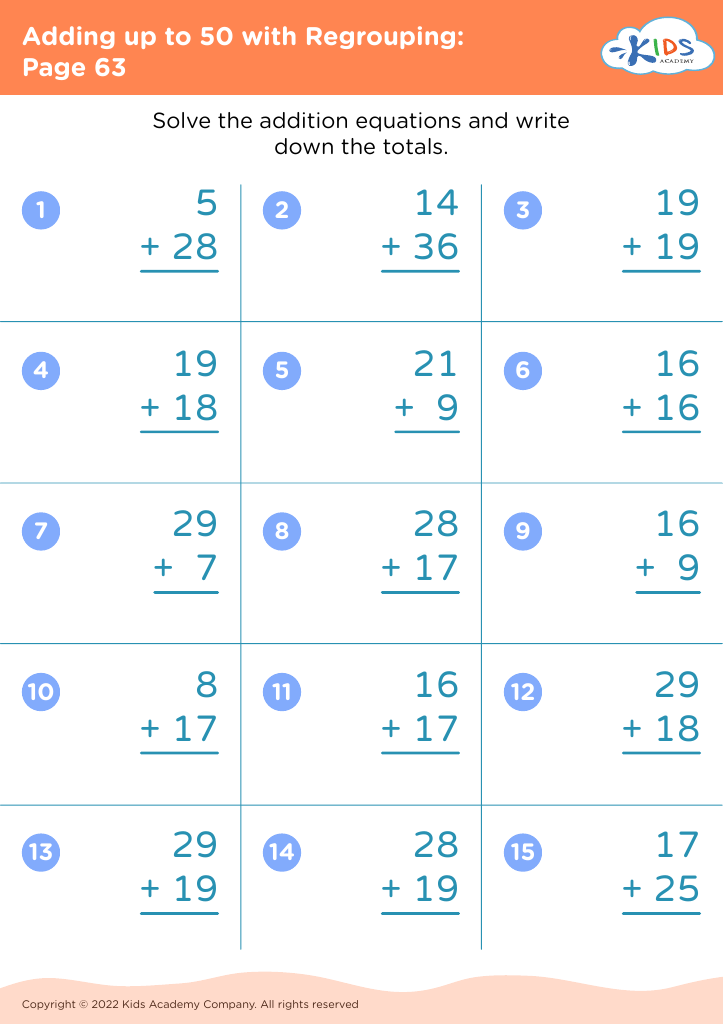
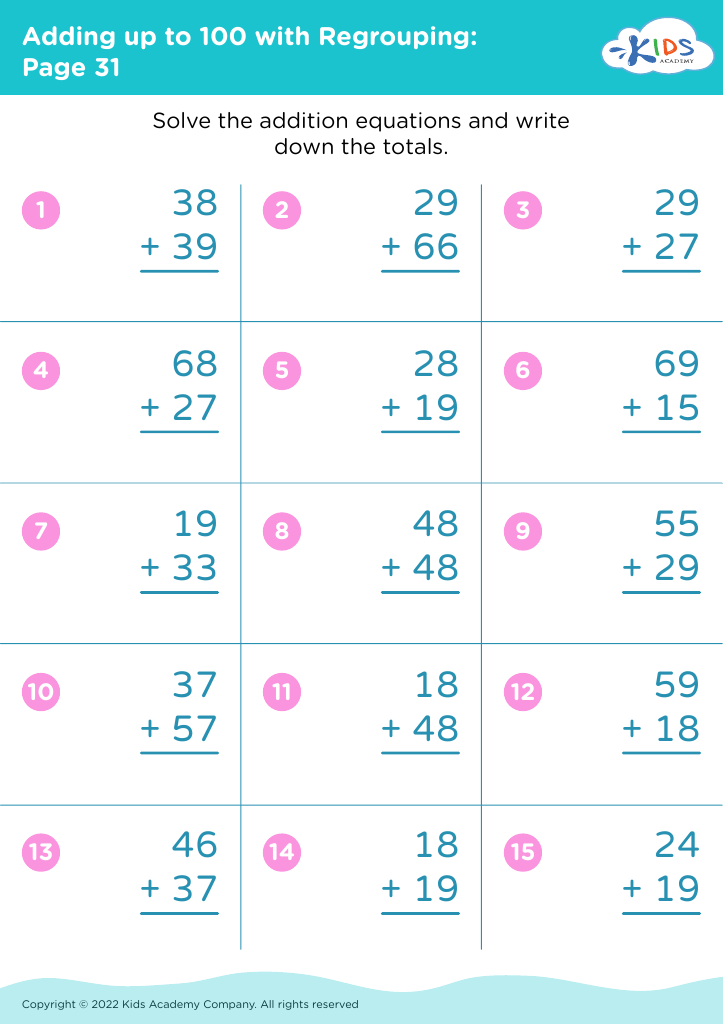
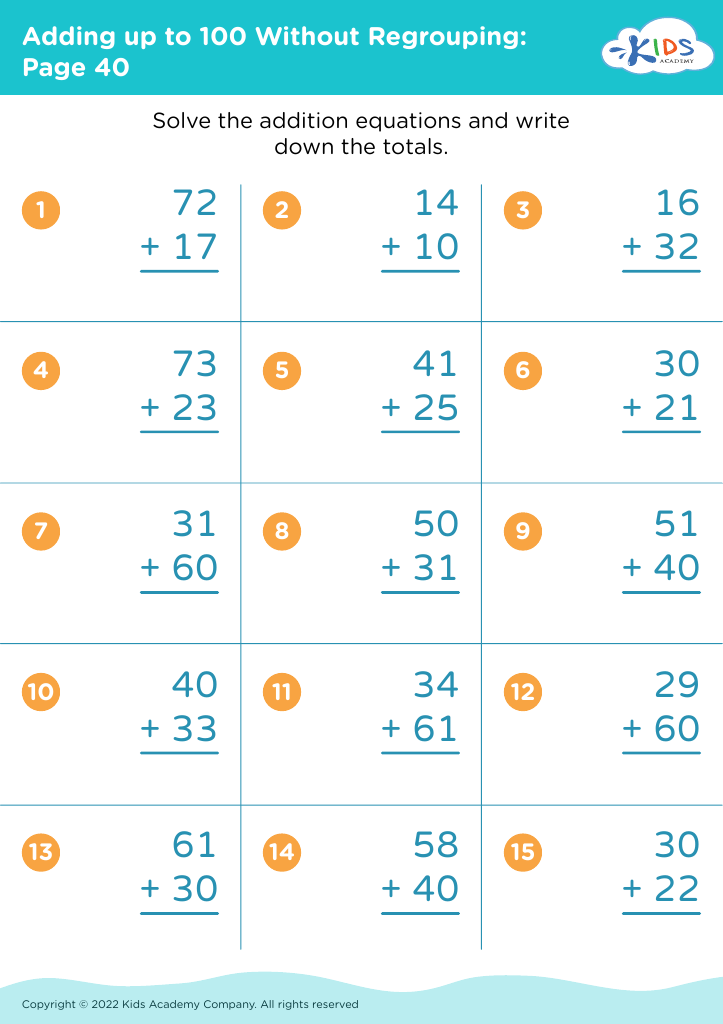
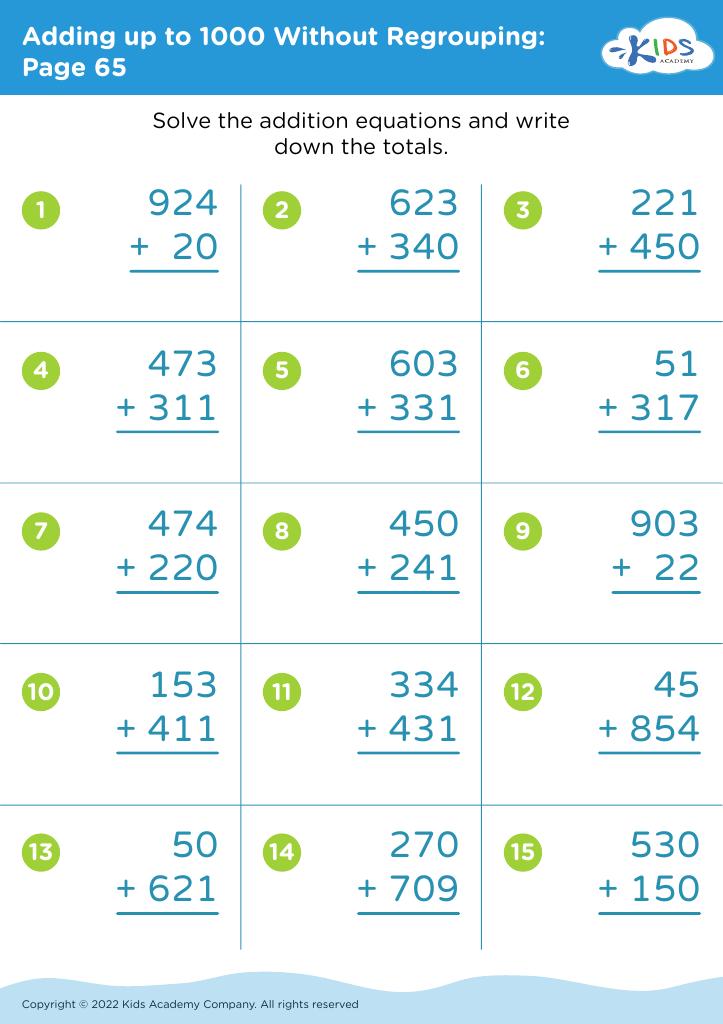
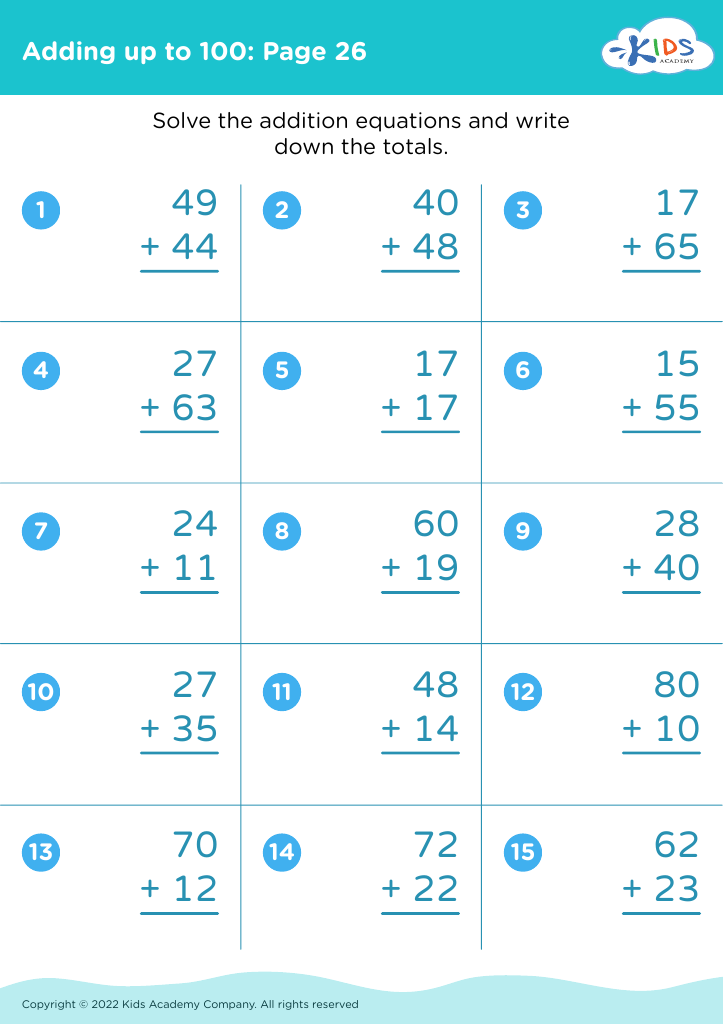
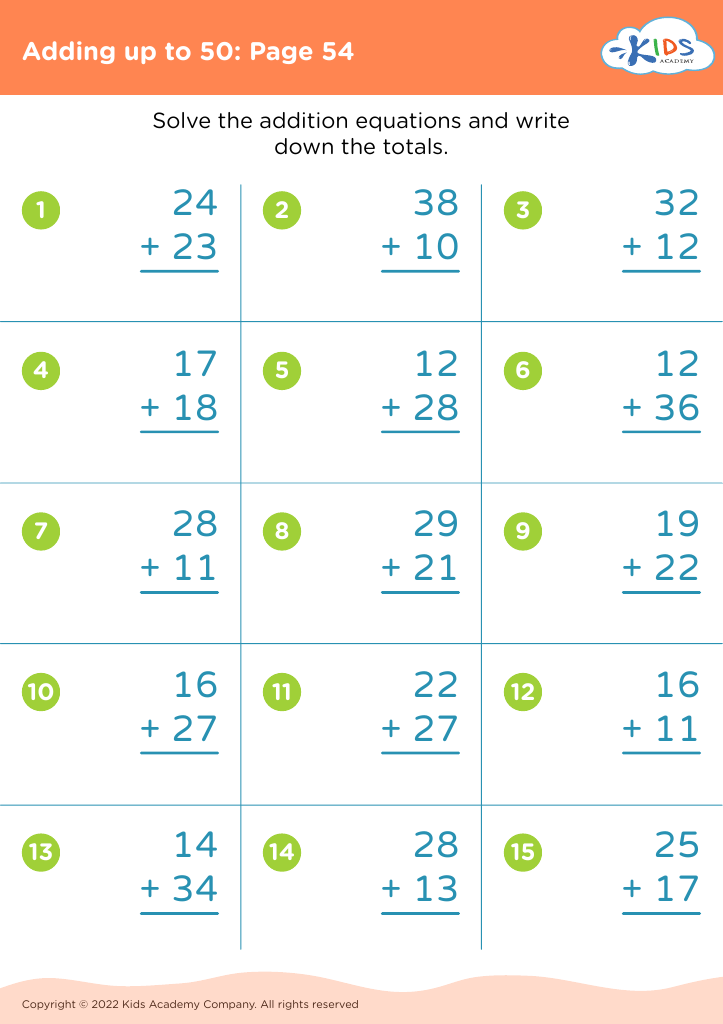
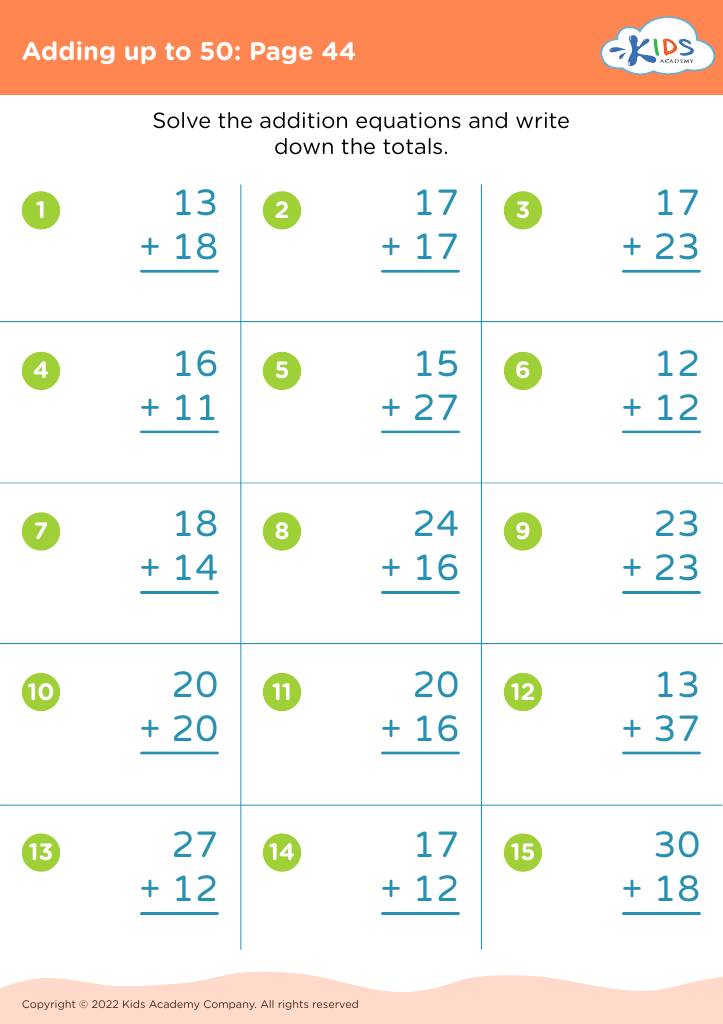
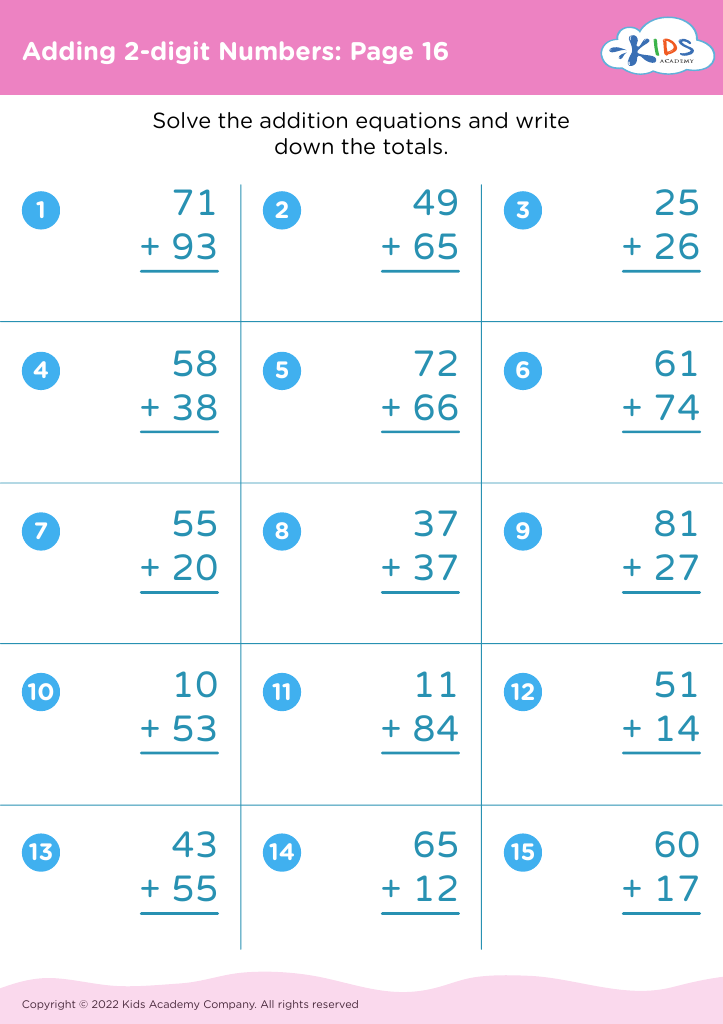
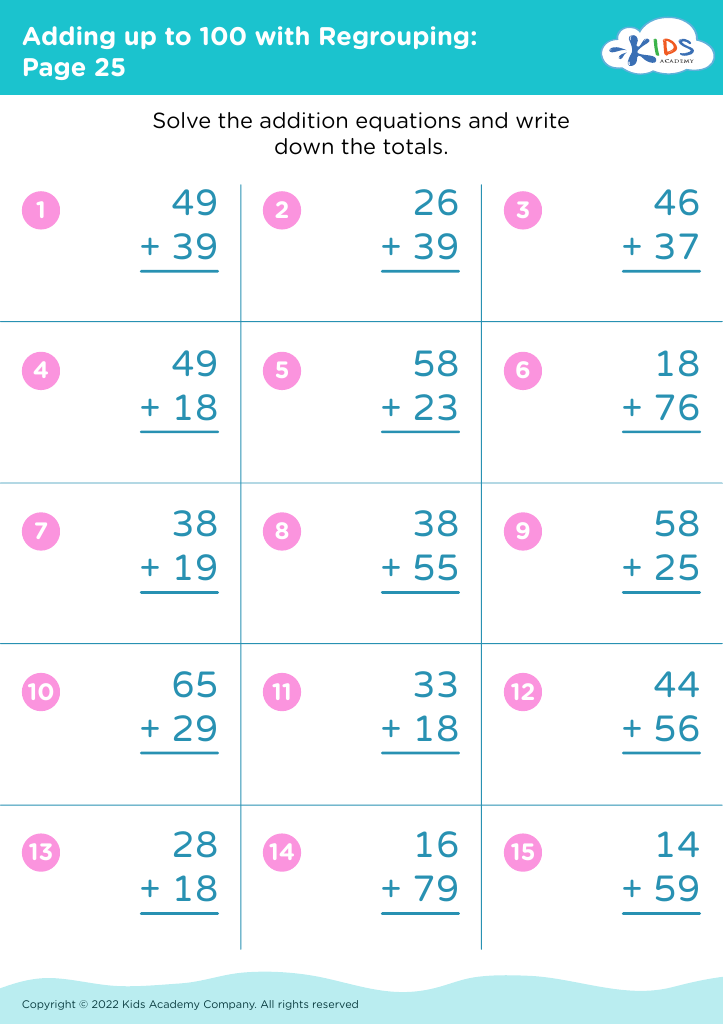
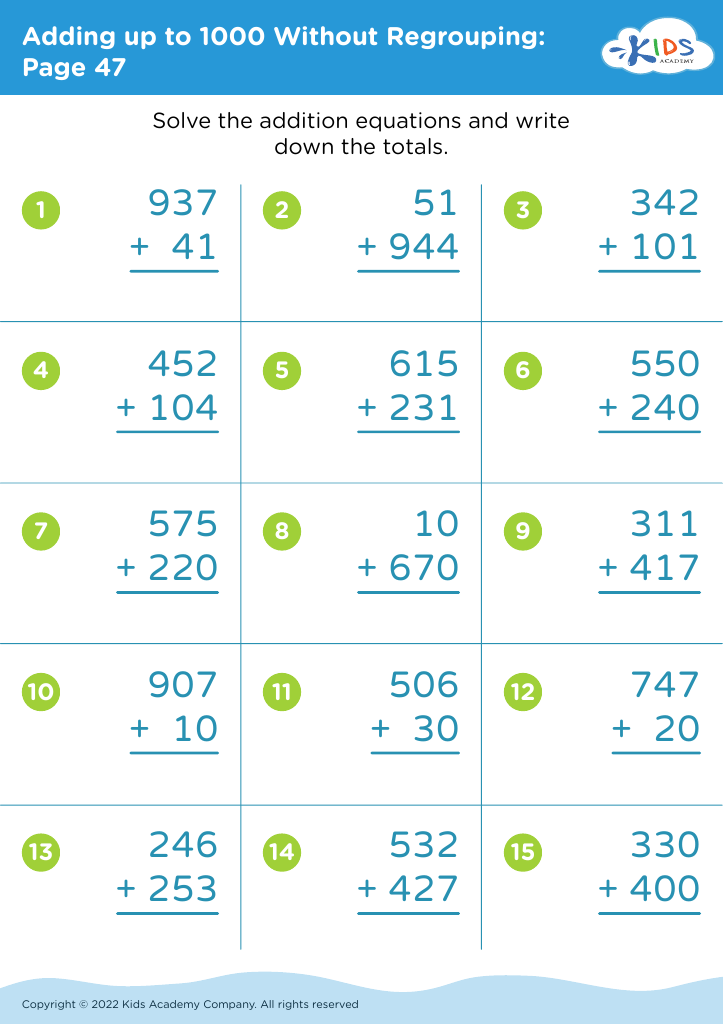
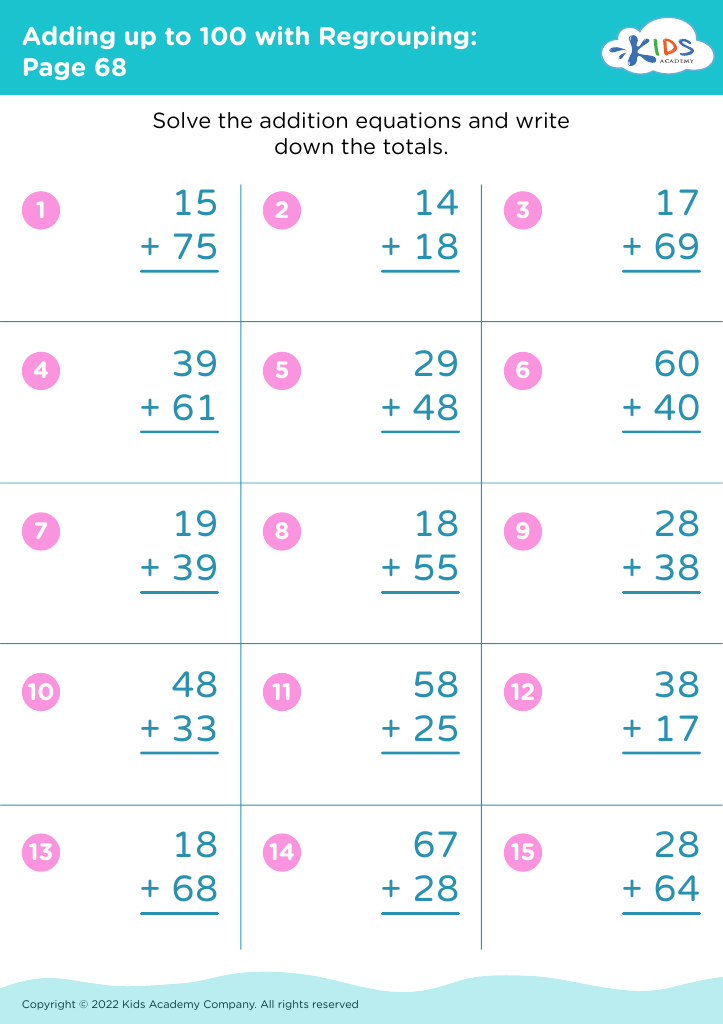
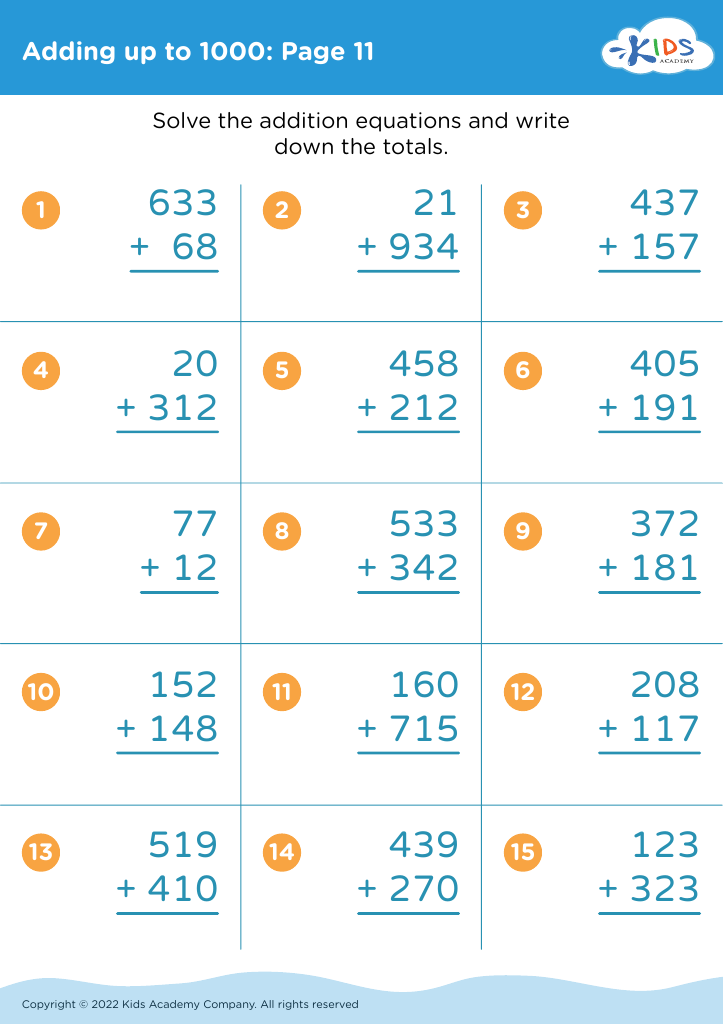
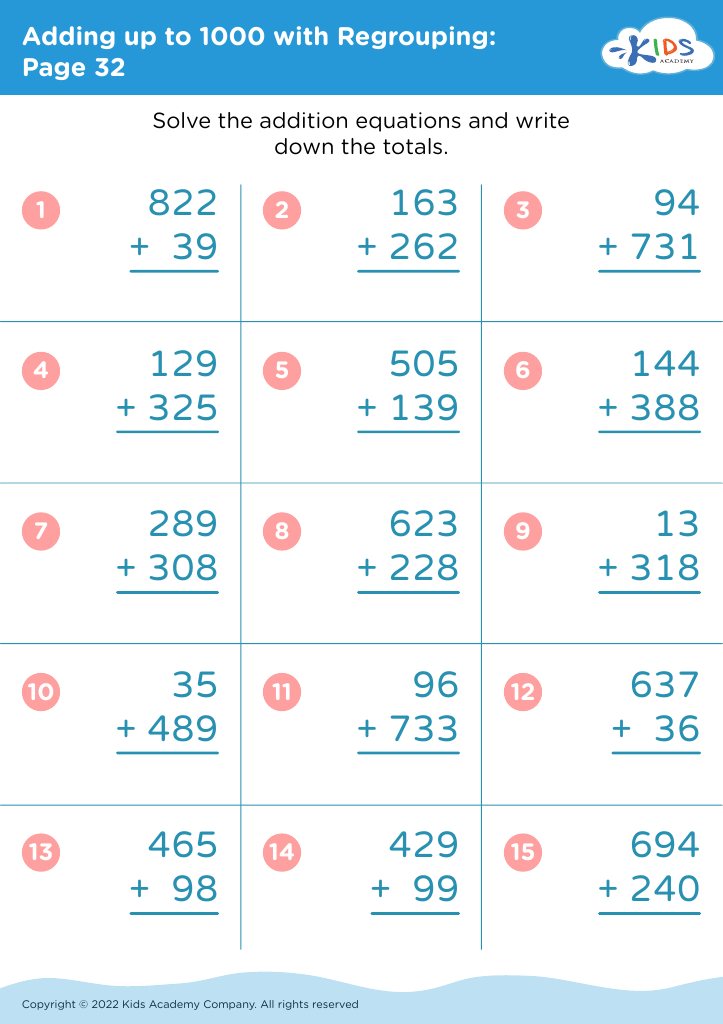
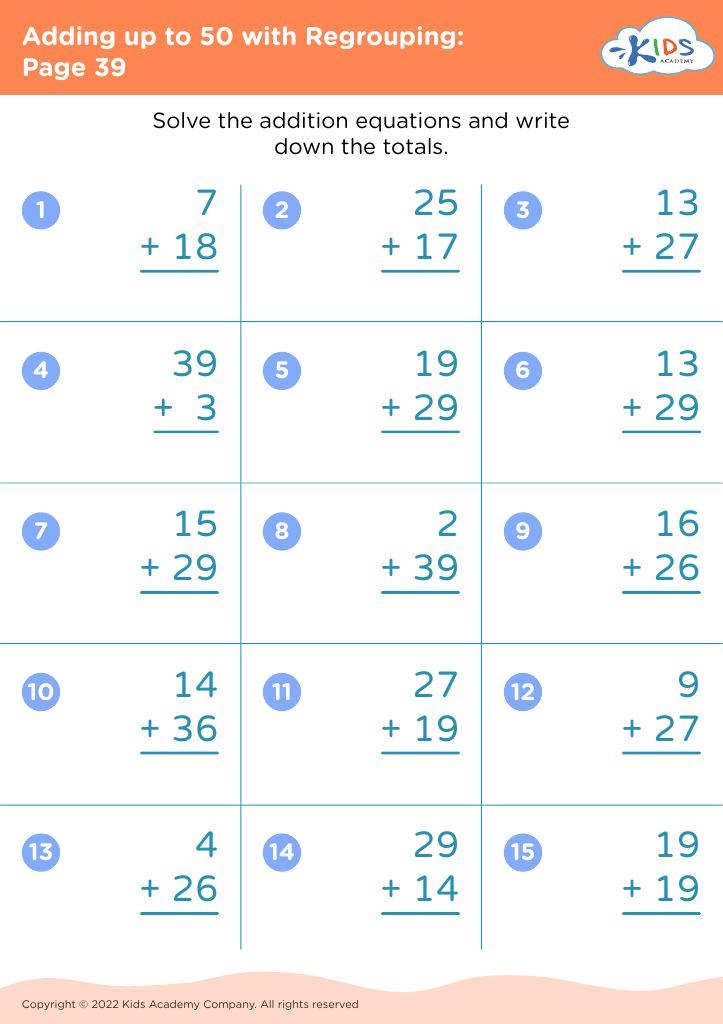
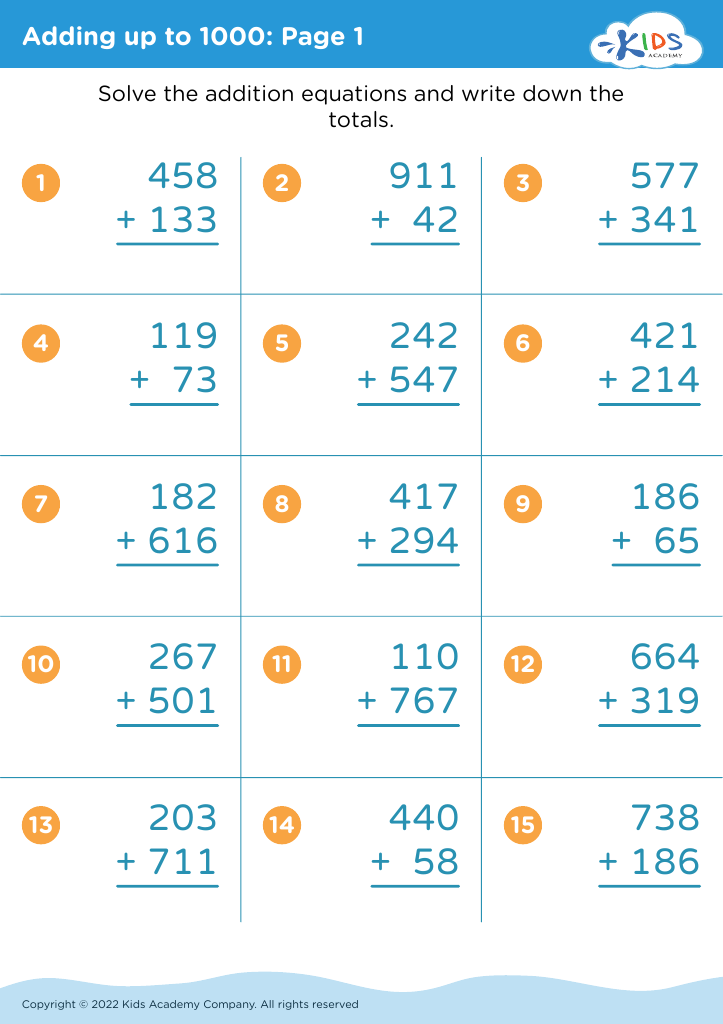
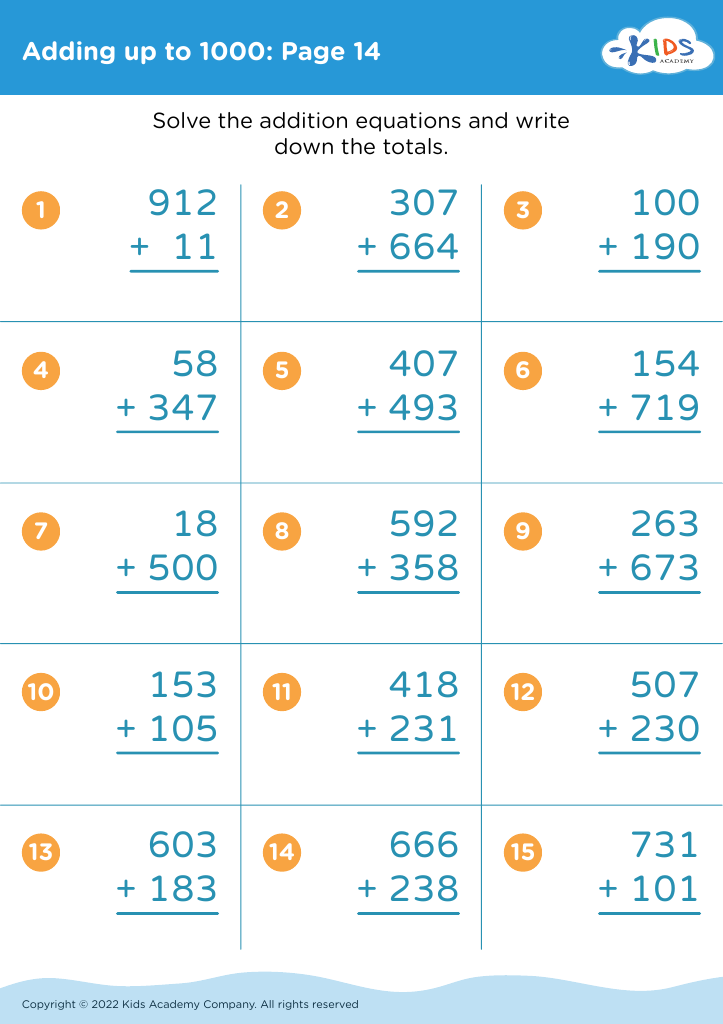
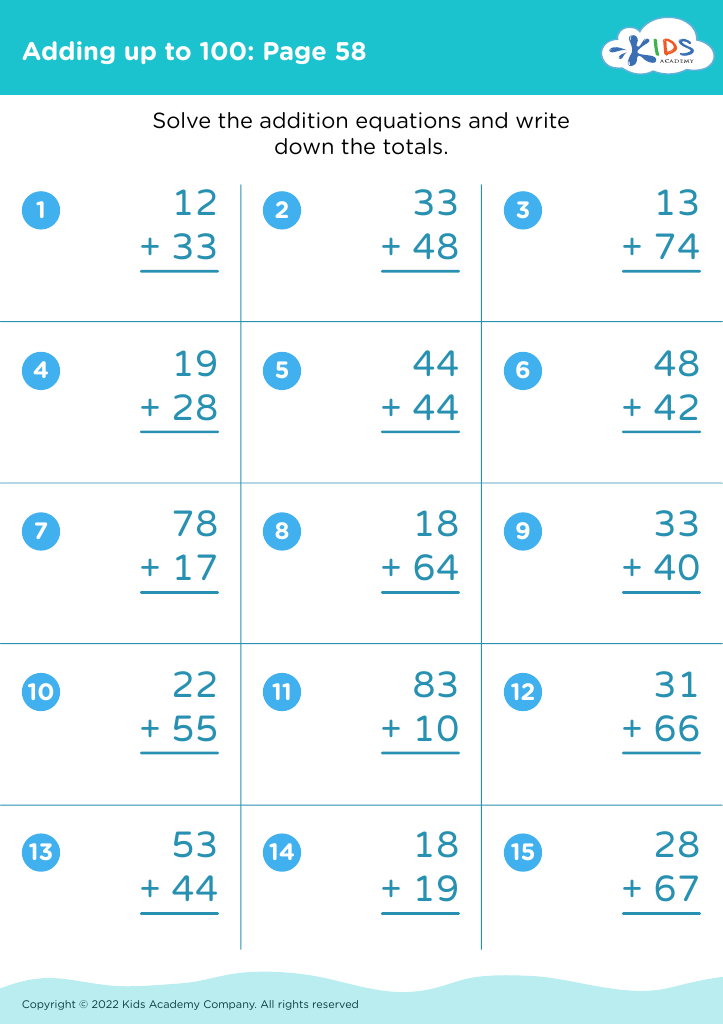
Unlock your child’s potential with our targeted "Improve Math Skills: Addition Worksheets" designed for ages 5-9. Tailored to instill confidence, these engaging and educational worksheets improve basic math proficiency through fun, interactive exercises. With each sheet focusing on incremental levels of difficulty, children build a solid foundation in addition while polishing their problem-solving skills. Our high-quality, printable worksheets are perfect for both classroom and home use, making math practice enjoyable and accessible. Dive into a world where learning addition becomes an adventure, fostering a lifelong love for math in your young learner. Start today and see their confidence soar!
Favorites
With answer key
Interactive
Join Kids Academy for Free
Who is primarily going to use this learning content?








Cultivating strong addition skills in children aged 5-9 is crucial for several reasons, both academically and developmentally. Mathematics serves as a foundational skill that extends far beyond the classroom. Mastering addition at an early age sets the stage for understanding more complex mathematical concepts such as subtraction, multiplication, and division. These skills are not only essential for higher academic achievement but also for everyday problem-solving and logical thinking.
Moreover, developing math skills early can boost a child's confidence and academic self-esteem. When children grasp addition, they are more likely to participate actively in class and tackle new challenges with a positive mindset. This, in turn, nurtures a growth mindset, encouraging them to persevere through difficult tasks and view mistakes as learning opportunities.
Parents and teachers play pivotal roles in this learning process. By engaging in activities that enhance addition skills, such as counting games, interactive apps, or hands-on practice with manipulatives, adults can make learning math fun and relevant. Furthermore, early proficiency in addition can lead to better performance in standardized tests, opening doors to advanced educational opportunities.
In summary, improving addition skills for children aged 5-9 equips them with essential life-long tools, fosters academic achievement, and builds a solid foundation for future mathematical concepts.








