Learn subtraction Addition Worksheets for Ages 5-9
4 filtered results
-
From - To
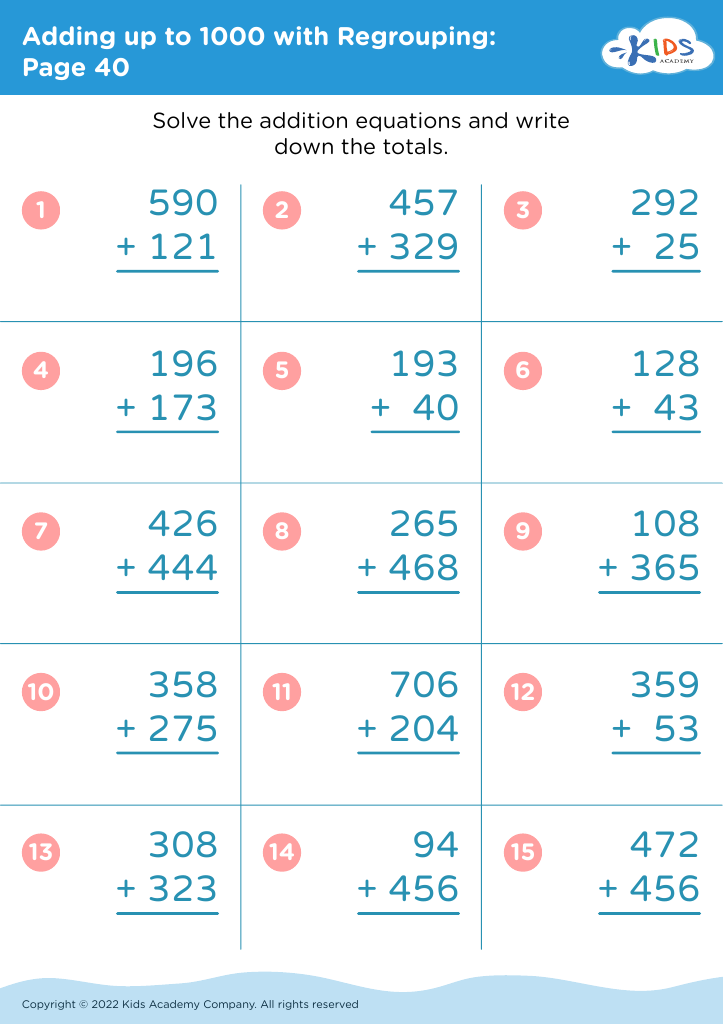
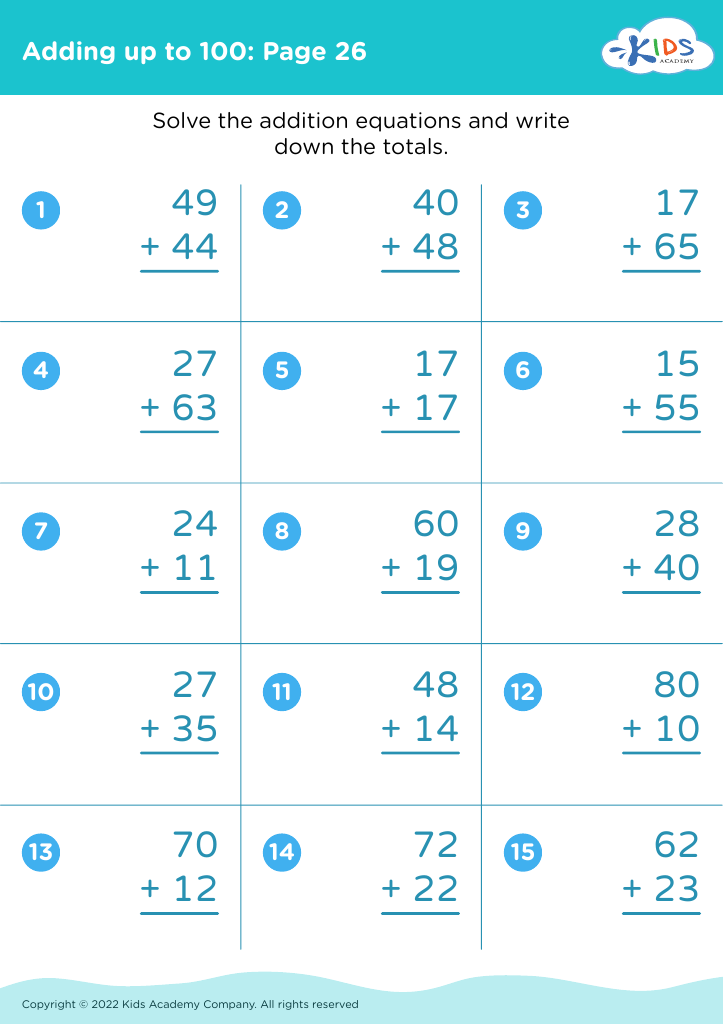
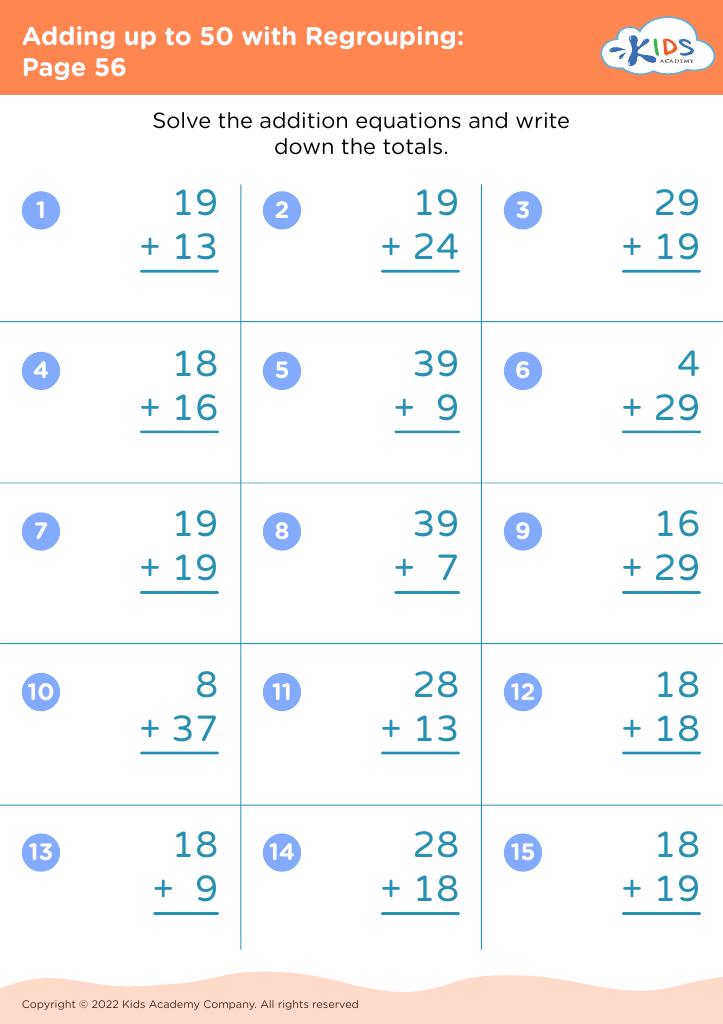
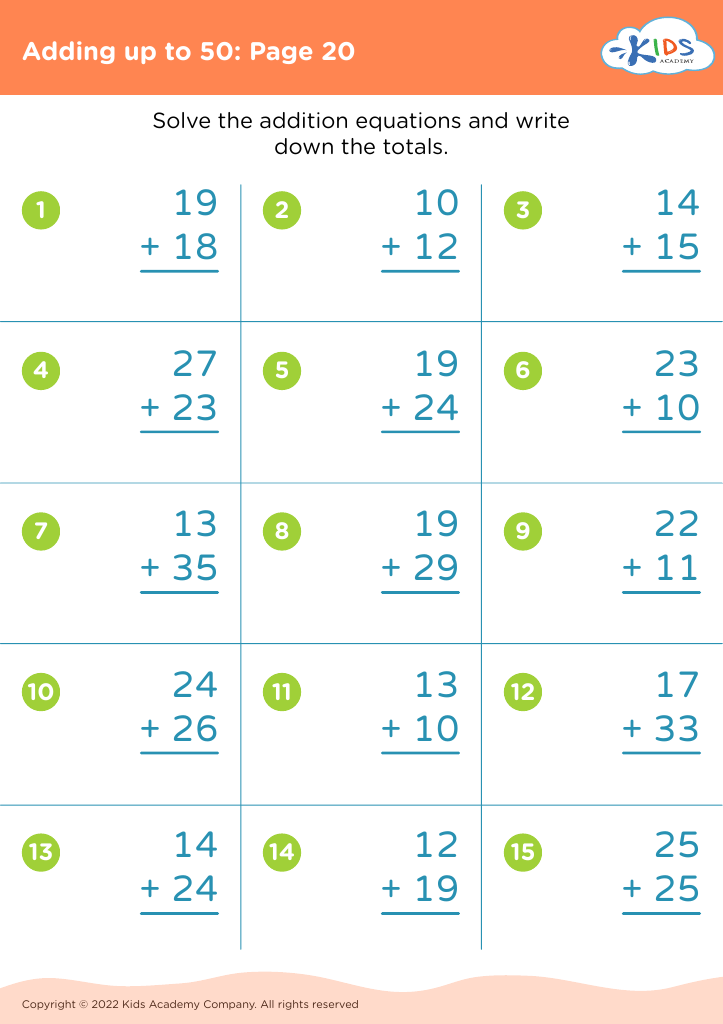
Our "Learn Subtraction Addition Worksheets for Ages 5-9" are designed to make math fun and accessible for young learners. Tailored to kids' unique developmental needs, our engaging worksheets simplify core concepts, from simple subtraction and addition to more complex problems. We use colorful illustrations, interactive exercises, and relatable examples to foster a love for math. Each worksheet is crafted by educational experts to align with school curricula, ensuring children build a strong mathematical foundation early on. Perfect for classroom or homeschool use, these tools support parents and teachers in guiding kids to maths proficiency. Boost confidence and enhance skills with our expert-designed resources!








Parents and teachers should care immensely about teaching subtraction and addition to children aged 5-9 because these skills form the fundamental building blocks for more advanced mathematical concepts. Early exposure to addition and subtraction lays the groundwork for problem-solving abilities, critical thinking, and logical reasoning. At this developmental stage, children's brains are especially receptive to learning new concepts, and mastering these fundamental math skills enhances their cognitive development.
Having a strong grasp of addition and subtraction can significantly boost a child's confidence in their academic abilities. These skills are not just for math classes; they are essential for real-life tasks such as telling time, handling money, and understanding sequences and patterns. Moreover, early math skills are strong predictors of later academic achievement, not just in math but also in science and other related disciplines.
Parents and teachers play a crucial role in presenting these concepts in an engaging, supportive, and fun manner. Using games, visual aids, and hands-on activities can make learning these critical skills enjoyable and effective. Consistent practice can help overcome initial challenges and can make children feel more prepared and enthusiastic about tackling more complex mathematical problems in the future. Investing this effort early on sets the stage for lifelong numeracy skills and fosters a positive attitude towards learning.








