Math problem-solving skills Addition Worksheets for Ages 5-9
3 filtered results
-
From - To
Boost your child's confidence and math performance with our Math Problem-Solving Skills Addition Worksheets, specially designed for ages 5-9. These engaging worksheets not only teach essential addition concepts but also enhance critical thinking through a variety of problem-solving tasks. Each activity encourages children to apply their math skills in real-world scenarios, promoting a deeper understanding of addition. Perfect for homeschooling or classroom use, our worksheets are tailored to keep young learners motivated and challenged. With colorful designs and interactive problems, your child will develop a solid foundation in math while having fun. Explore the world of addition problem-solving today!
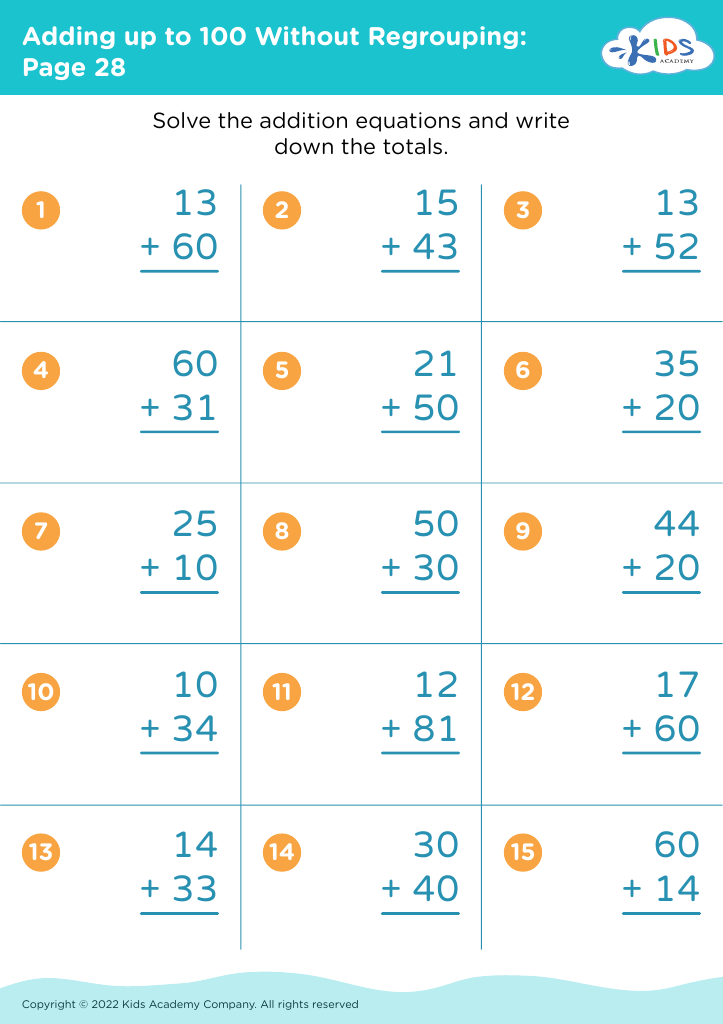
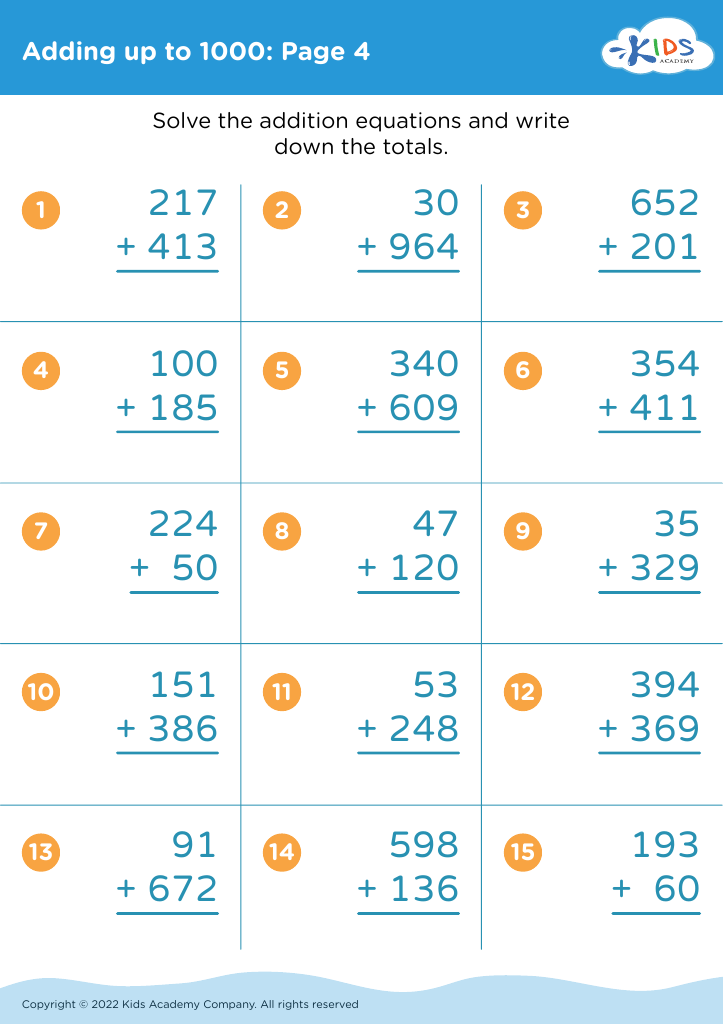
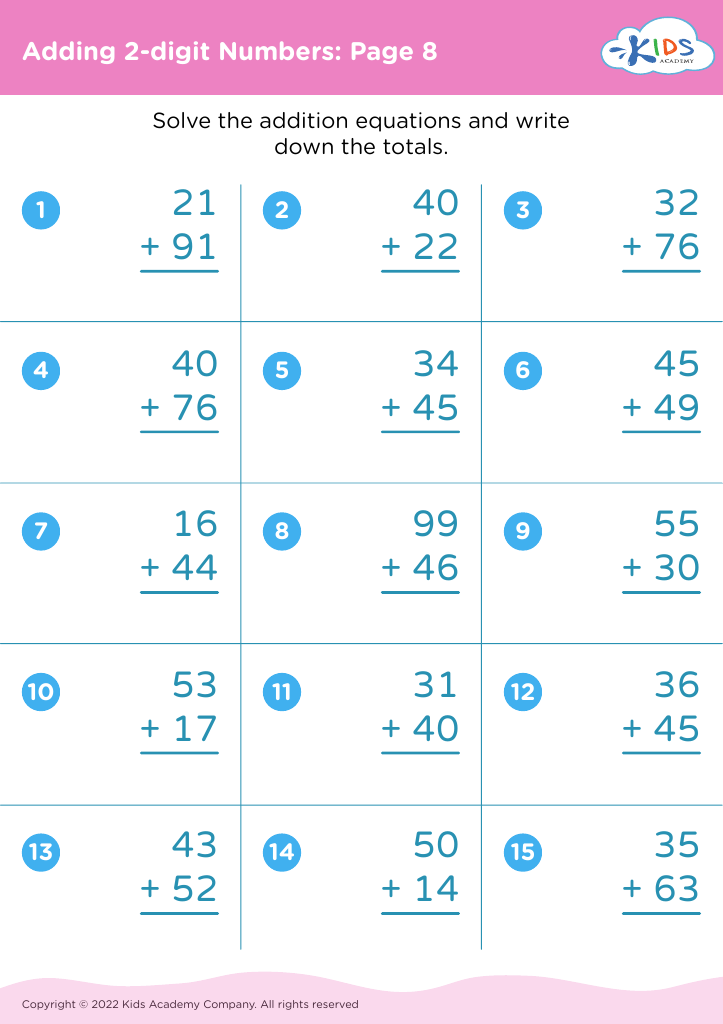








Math problem-solving skills, particularly in addition, are crucial for children aged 5-9 as they form the foundation for future mathematical understanding and cognitive development. During these formative years, children develop essential critical thinking and reasoning skills, enabling them to tackle more complex problems later on.
Parents and teachers should care about fostering these skills because strong addition abilities enhance overall numerical literacy, equipping children with the competence needed for everyday situations, such as shopping or cooking. Moreover, effective problem-solving cultivates perseverance, making children resilient learners willing to overcome challenges.
Additionally, mastering addition can boost a child's confidence in mathematics, alleviating anxiety and promoting a positive attitude toward this critical subject. Collaborative activities involving problem-solving promote social skills and communication, encouraging teamwork and discussion among peers.
In a broader context, early math skills correlate with future academic achievement, influencing career choices and opportunities. Therefore, engaging children in varied and enjoyable addition problem-solving activities not only prepares them for formal education but also lays the groundwork for lifelong learning, enabling them to flourish in a number-oriented world. Investing in these skills is vital for encouraging children's holistic development and shaping their future success.








