Math skills improvement Addition Worksheets for Ages 5-9
4 filtered results
-
From - To
Enhance your child's math skills with our engaging Addition Worksheets designed specifically for ages 5-9! These printable resources offer a fun and interactive way to practice addition, helping kids develop confidence and proficiency in basic math concepts. Our worksheets feature a variety of exercises, ranging from simple sums to more complex problems, ensuring a gradual and effective learning curve. With colorful visuals and captivating themes, your child will stay motivated and eager to learn. Perfect for classroom activities or at-home practice, these worksheets are an essential tool for young learners looking to improve their math skills effectively!
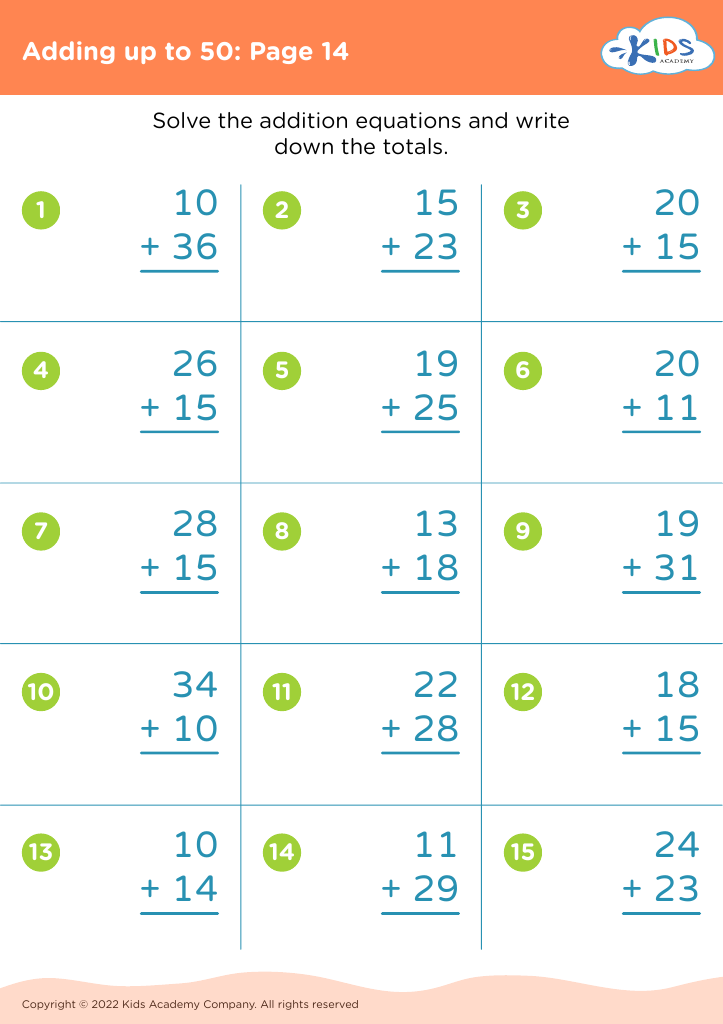
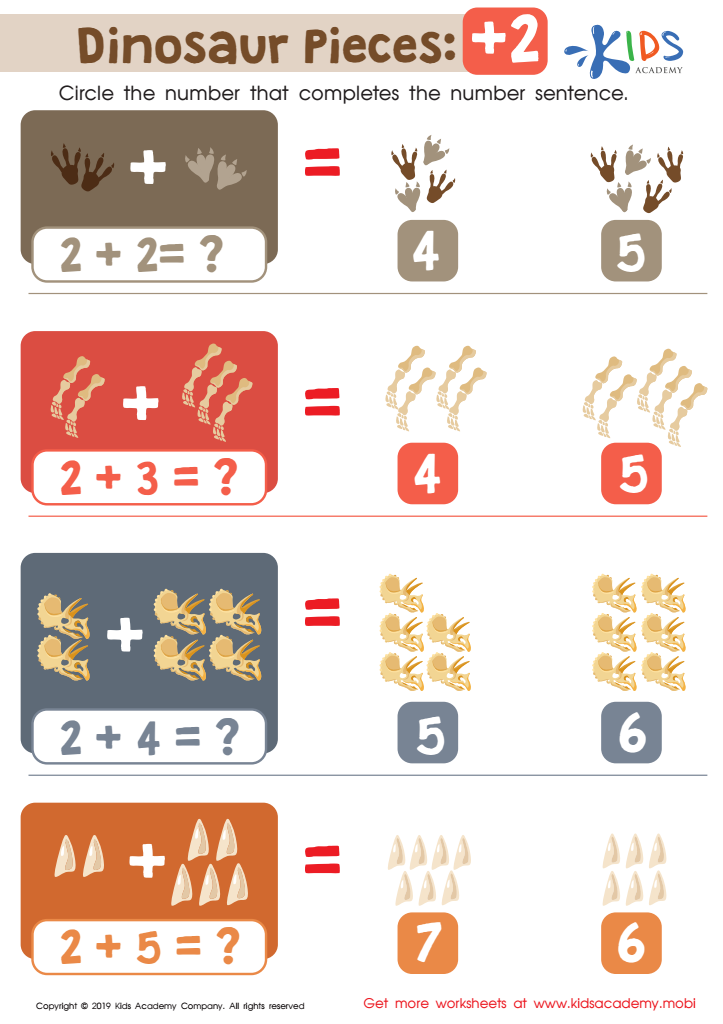
Dinosaur Pieces: +2 Worksheet
 Assign to My Students
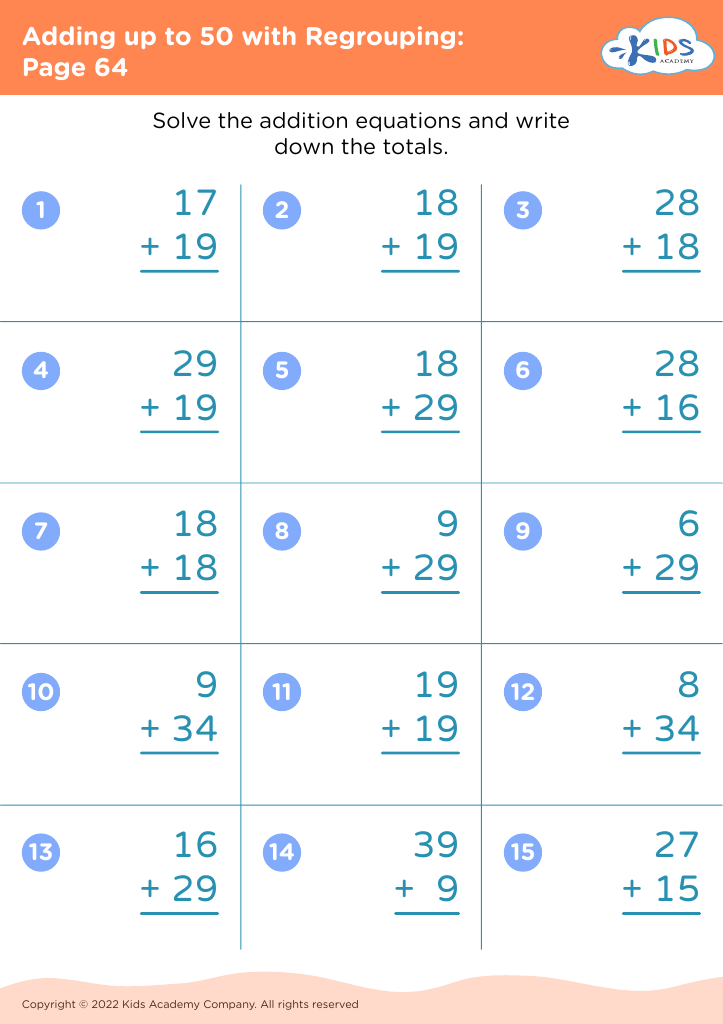
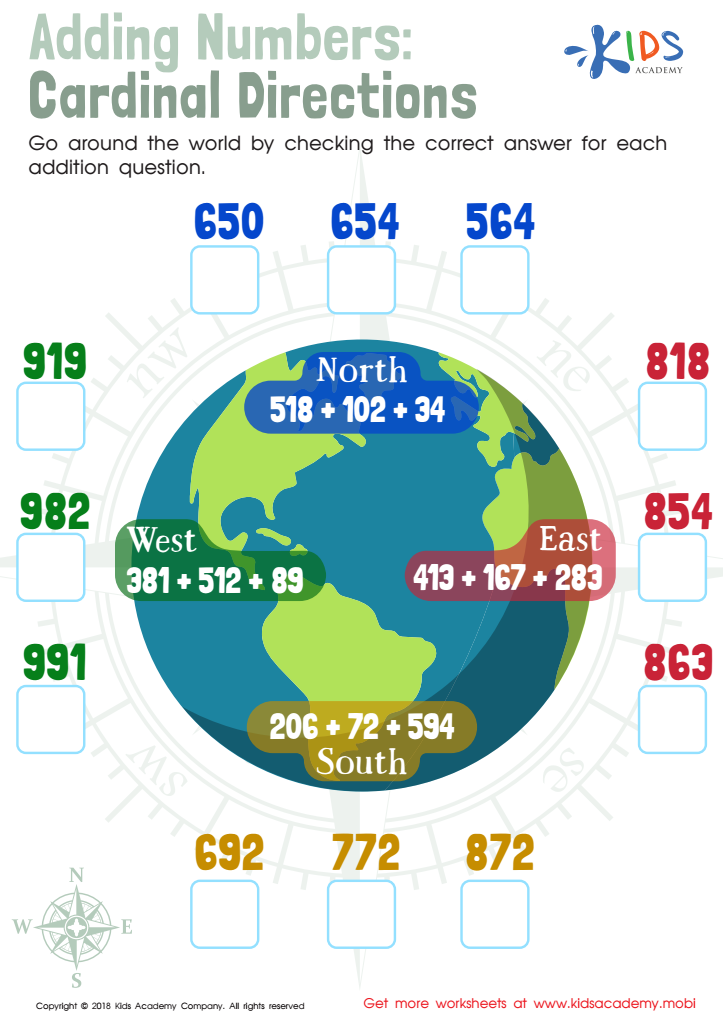
Adding Numbers: Cardinal Directions Worksheet








Improving math skills, particularly in addition, for children aged 5-9 is crucial for several reasons. First, early math proficiency lays a strong foundation for future academic success. Addition, being one of the building blocks of mathematics, is intrinsic to more complex mathematical concepts that children will encounter later, such as subtraction, multiplication, and even fractions.
Additionally, mastering addition enhances critical thinking and problem-solving skills. Children learn to manipulate numbers and understand relationships, fostering a mindset that's adaptable in real-world situations, from budgeting allowances to measuring ingredients in cooking. Furthermore, strong math skills boost confidence and self-esteem, encouraging a positive attitude toward learning.
Parents and teachers play a vital role in making math engaging through interactive games and practical applications. This involvement helps create a supportive learning environment where children feel safe to explore and make mistakes, leading to a deeper understanding of mathematical concepts.
Finally, math skills are not only essential in academic settings, but they also carry significant importance in everyday life. By investing in early math education, we prepare children for a future where numeracy is just as critical as literacy, empowering them to navigate various life situations successfully.








