Motor skills development Addition Worksheets for Ages 5-9
5 filtered results
-
From - To
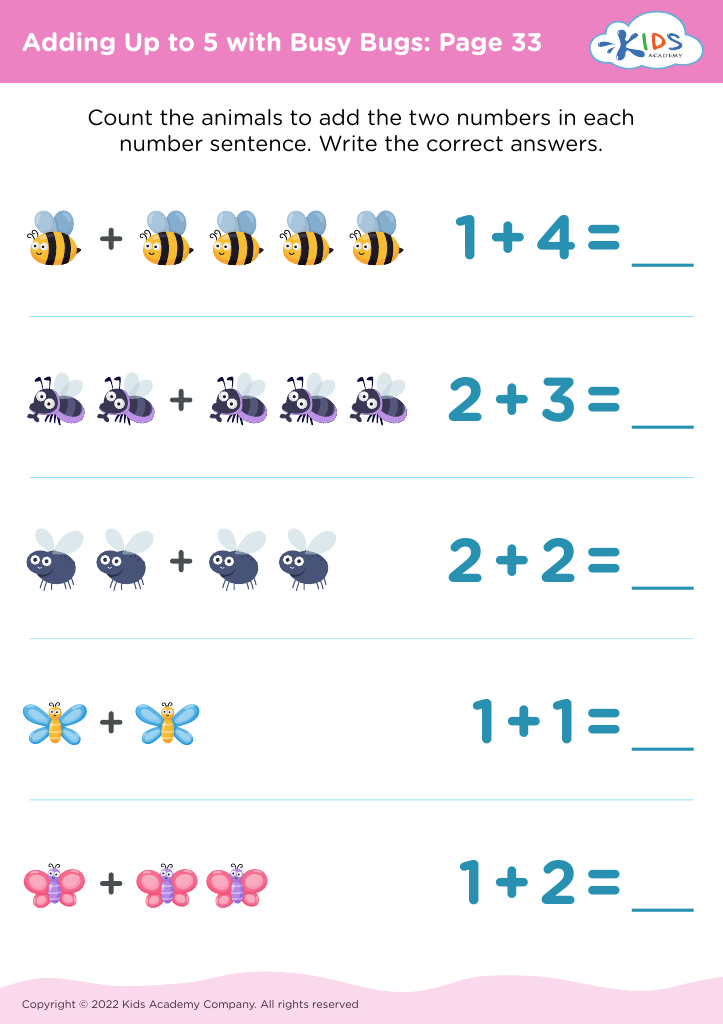
Enhance your child's motor skills while they master addition with our engaging worksheets designed for ages 5-9. These activities combine fun and learning by encouraging kids to practice writing numbers, drawing lines, and coloring while solving addition problems. Each worksheet is crafted to promote fine motor development alongside mathematical understanding, fostering coordination and confidence in young learners. Our resources are perfect for at-home learning or classroom use, supporting children's growth in a holistic manner. Unlock the joy of learning as your child develops essential skills that will benefit them academically and developmentally. Explore our collection now for a creative learning experience!












Motor skills development is crucial for children aged 5-9, as it lays the foundation for their overall physical, cognitive, and social development. During these formative years, children are refining both their fine motor skills, such as writing and manipulating objects, and gross motor skills, which include activities like running, jumping, and climbing.
Parents and teachers should care about this development for several reasons. Firstly, strong motor skills enable children to participate confidently in everyday activities and sports, fostering a sense of achievement and autonomy. This can enhance their self-esteem and encourage a lifelong appreciation for physical activity. Secondly, motor skills are closely linked to cognitive development; studies show that physical activity promotes brain function, improving concentration and problem-solving abilities.
Additionally, motor skills are integral to academic readiness. For example, developing fine motor skills correlates with writing abilities crucial for school success. Furthermore, group activities that focus on motor skills encourage teamwork and social interaction, building essential communication skills.
In conclusion, prioritizing motor skills development in children ages 5-9 is essential for their holistic growth, impacting not only their physical health but also cognitive abilities and social relationships.








