
Number identification Addition Worksheets for Ages 5-9
5 filtered results
Difficulty Level
Grade
Age
-
From - To
Subject
Activity
Standards
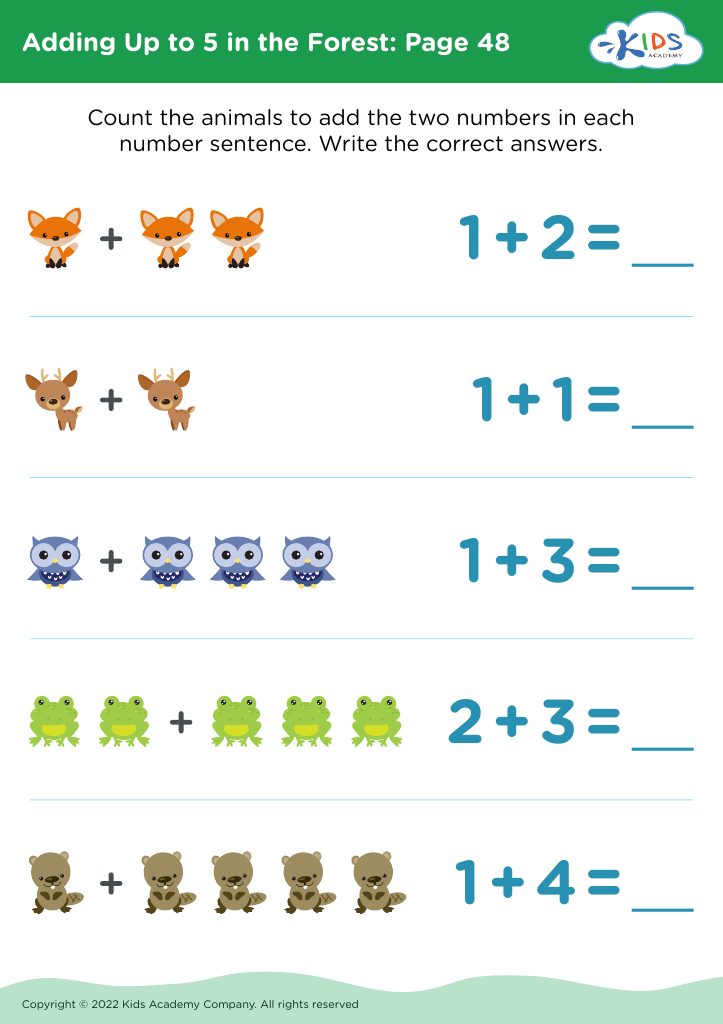
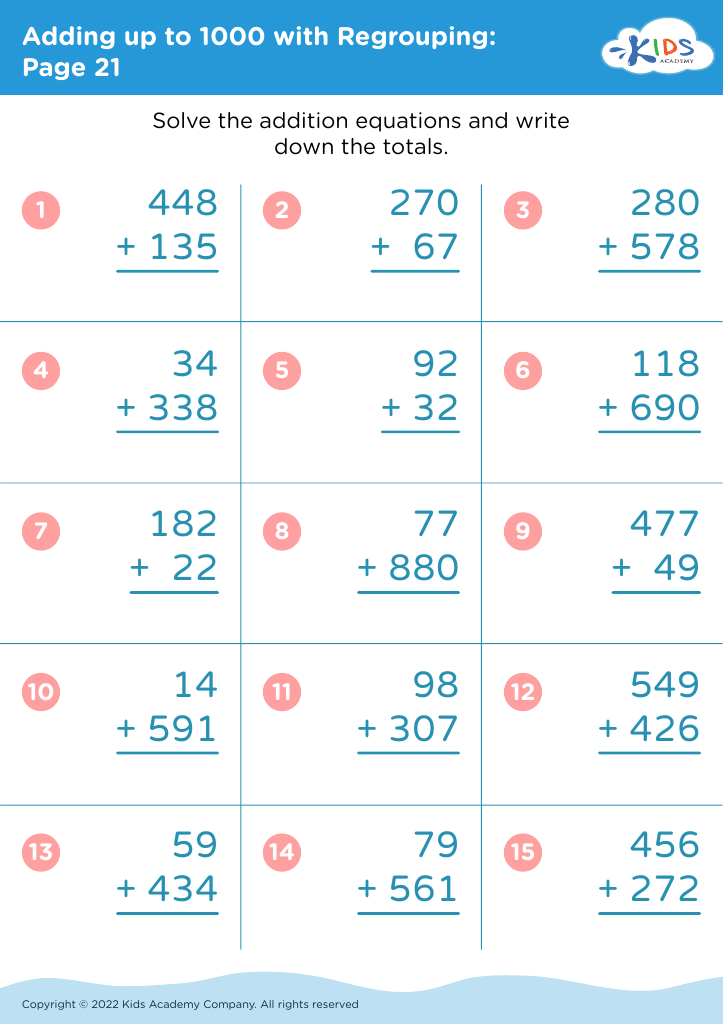
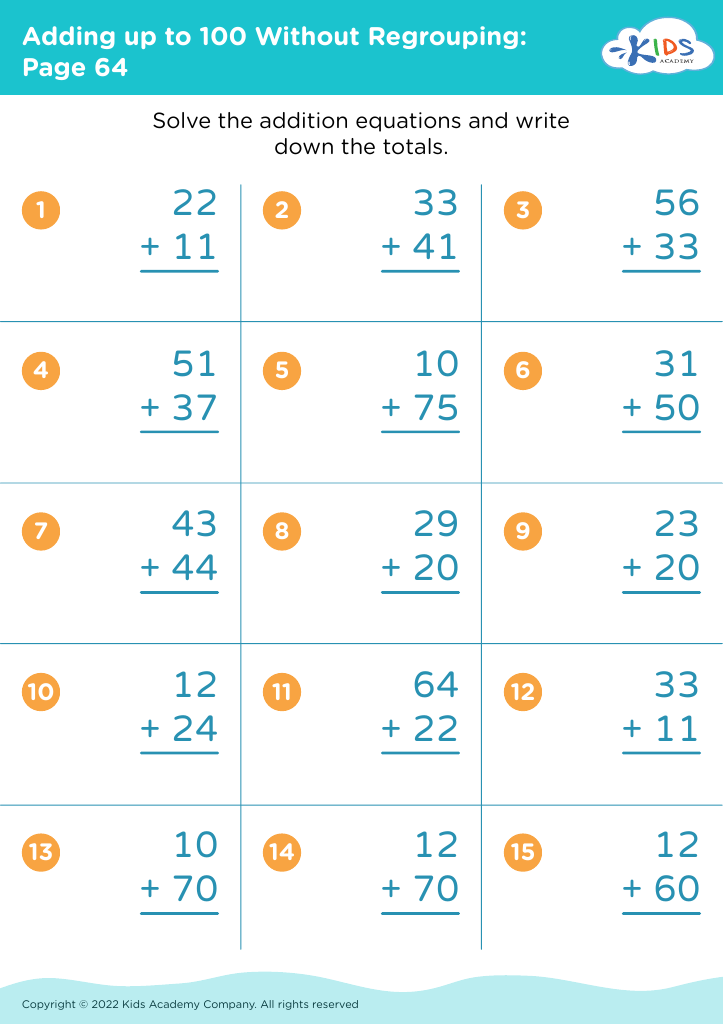
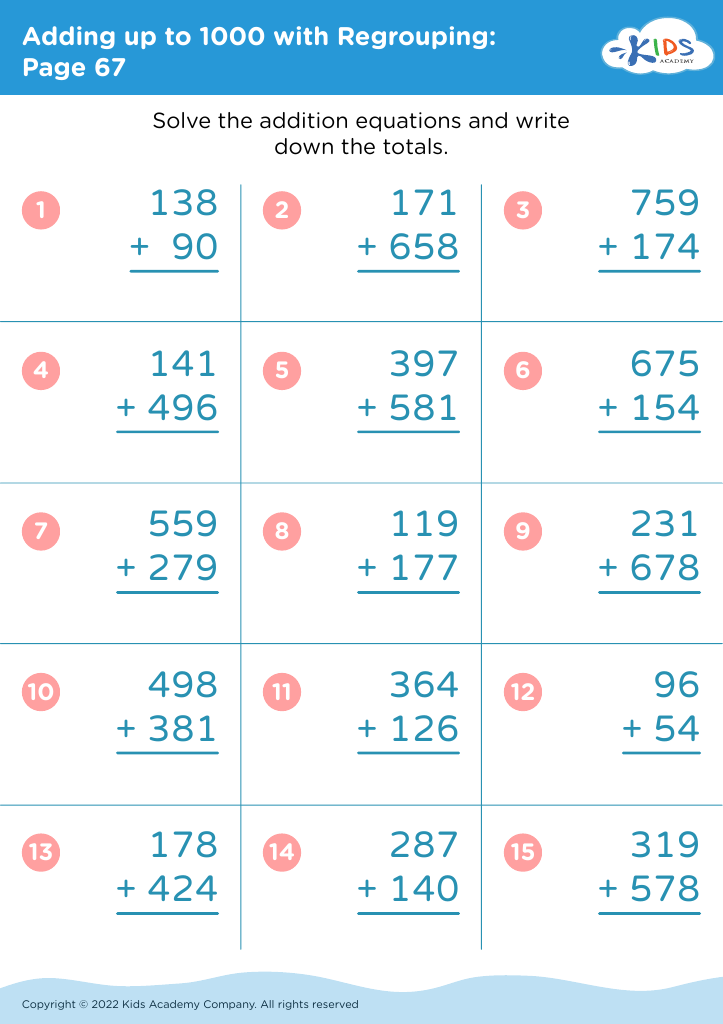
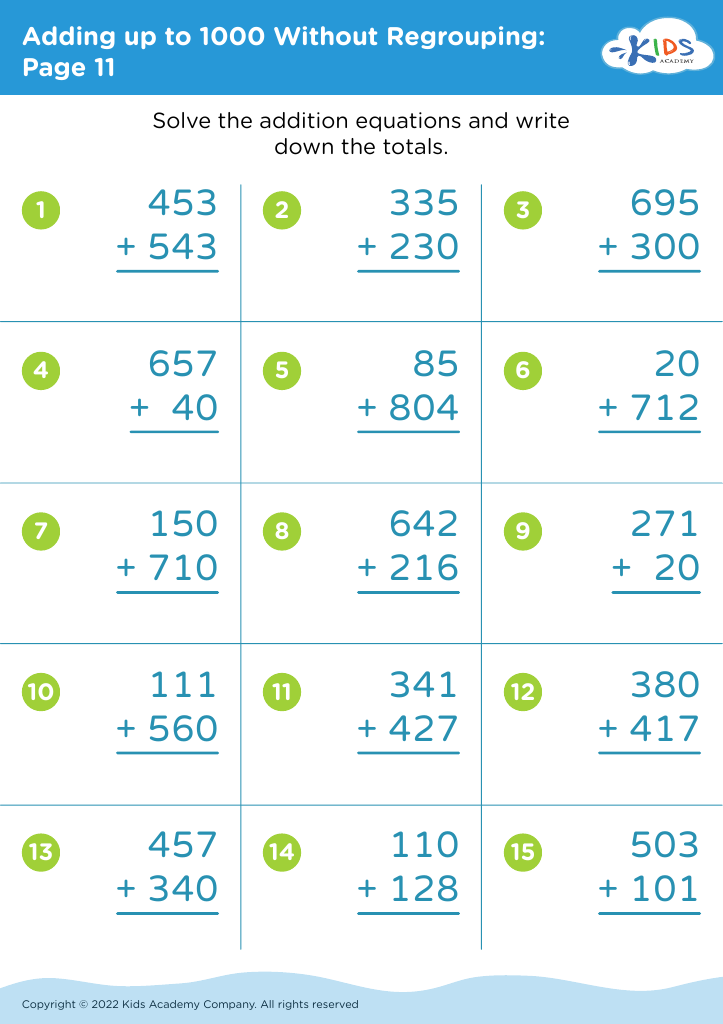
Discover our captivating Number Identification Addition Worksheets designed specifically for children aged 5-9! These engaging worksheets from Kids Academy combine the fundamentals of number recognition with the excitement of addition practice. Each printable sheet is thoughtfully crafted to build essential math skills while stimulating curiosity and confidence in young learners. Perfect for classroom or home use, our worksheets provide a fun, interactive way for kids to master basic arithmetic. Help your child develop a strong numerical foundation and foster a love for learning with our delightful, educational resources. Visit Kids Academy today and start the math adventure!
Favorites
With answer key
Interactive
Join Kids Academy for Free
Who is primarily going to use this learning content?




.jpg)



Parents and teachers should care about number identification and addition for children aged 5-9 because these skills are foundational for all future mathematics learning and everyday functioning. During these early years, children develop critical numerical cognition that enables them to recognize and understand numeric symbols, laying the groundwork for more complex arithmetic tasks.
Number identification helps children to recognize and name numbers, which is essential for understanding quantity and the concept of "how many." This skill is directly linked to counting, basic operations, and place value comprehension—a cornerstone of math literacy.
Addition serves as the first formal operation that builds the logic for subsequent mathematical concepts. Mastering basic addition helps children enhance their problem-solving skills, as well as improves memory and cognitive flexibility. It aids in other subject areas too, because strong math skills contribute to higher achievement in subjects like science and engineering.
Moreover, these skills promote practical life abilities, such as telling time, handling money, and even gaming strategies, boosting their overall confidence. Early mastery of number identification and addition also helps in early academic assessments, potentially identifying learning difficulties so that timely interventions can be provided. Therefore, prioritizing these foundational math skills sets children on a path toward academic success and practical competence in their daily lives.








