Practice division Addition Worksheets for Ages 5-9
3 filtered results
-
From - To
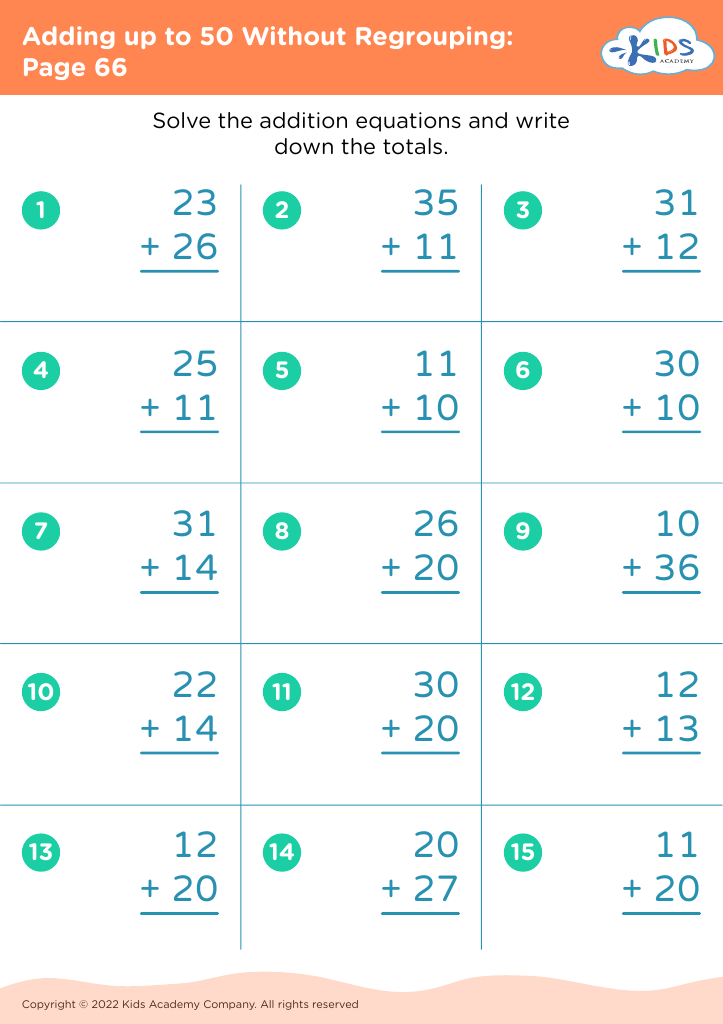
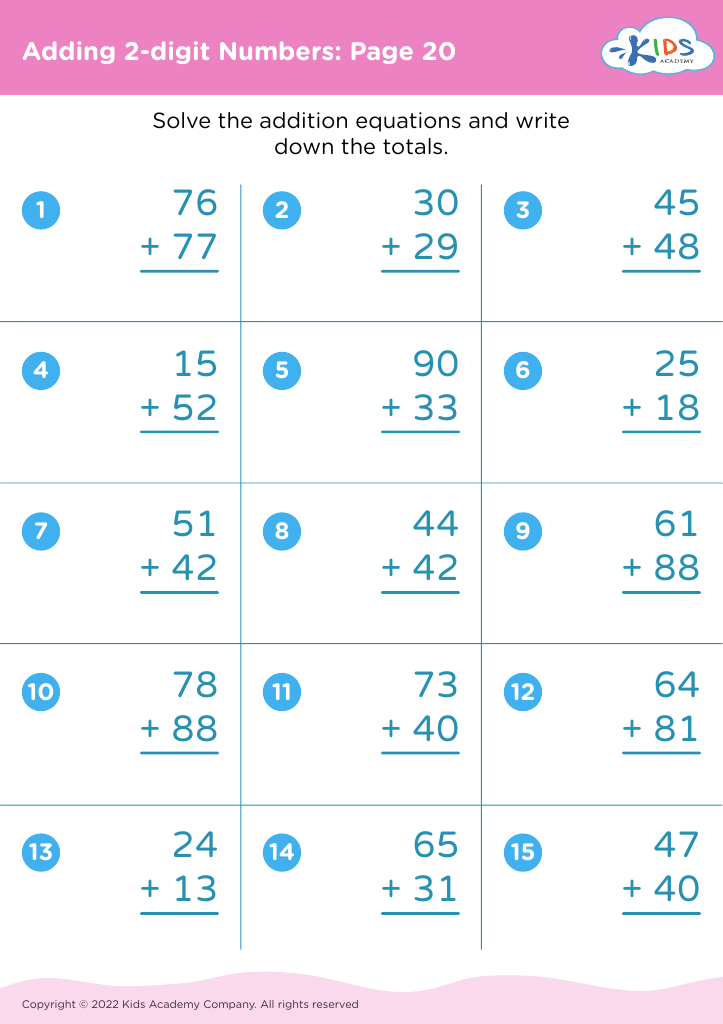
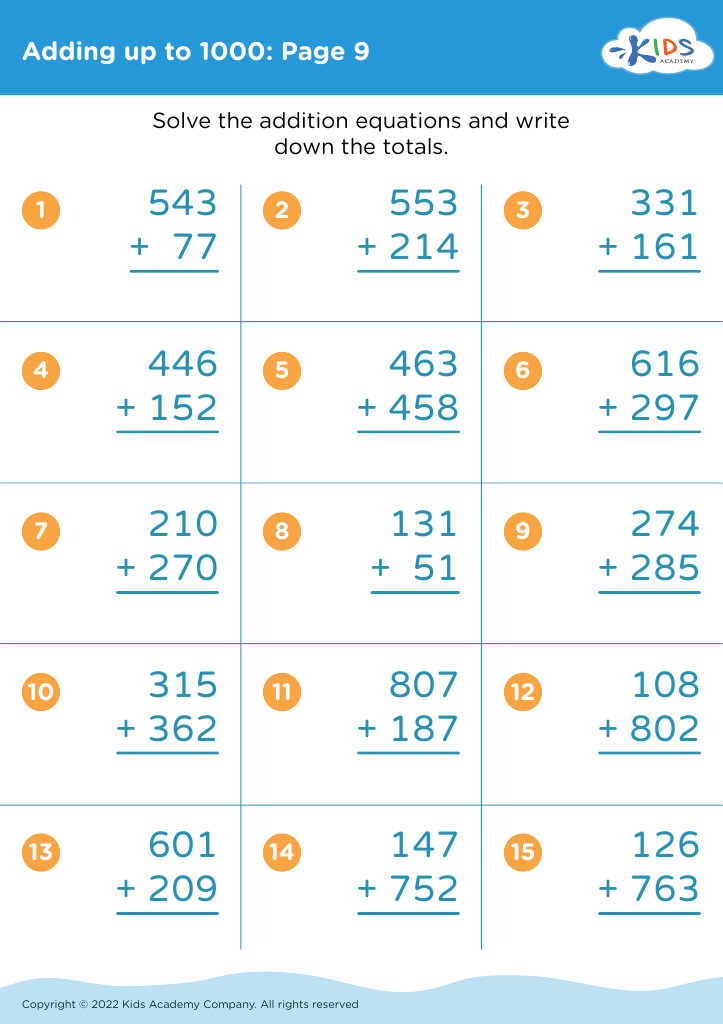
Enhance your child's math skills with our Practice Division Addition Worksheets, expertly designed for ages 5-9. Our fun and engaging worksheets blend basic addition practice with beginner level division concepts, ensuring a strong mathematical foundation. Perfect for early learners, these activities boost confidence and problem-solving abilities while making math enjoyable. With colorful visuals and step-by-step problems adjusted to their learning pace, kids not only improve their arithmetic skills but also develop critical thinking and analytical reasoning. Ideal for classroom or at-home learning, our worksheets support both parents and teachers in fostering a love for math in young learners.



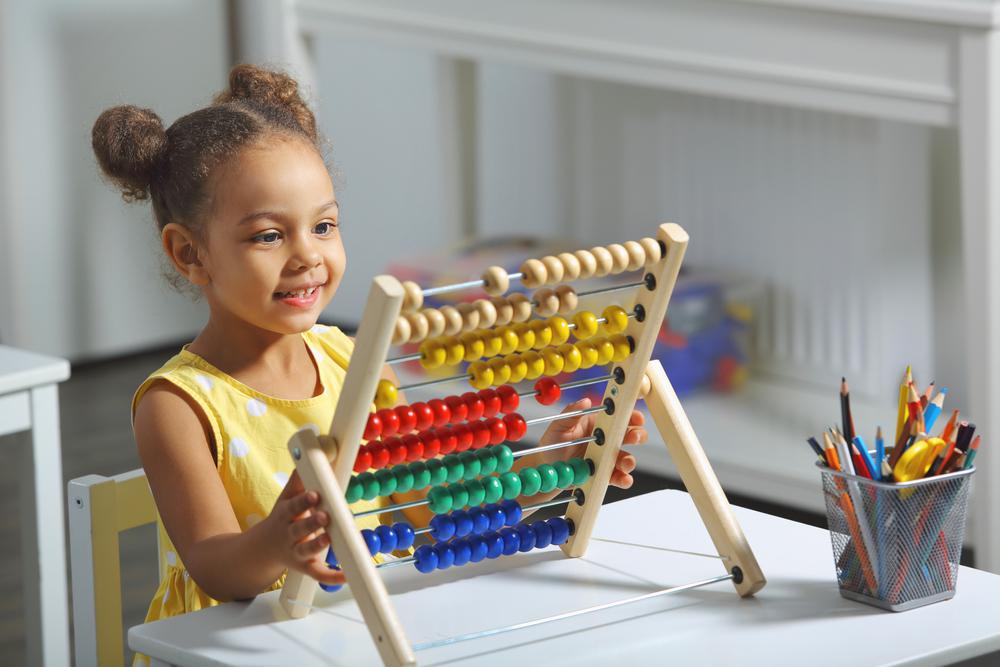




Parents and teachers should care about practicing division and addition for ages 5-9 because these foundational math skills are crucial for a child’s overall academic success and cognitive development. During these formative years, children's brains are highly receptive and capable of absorbing new concepts. Introducing fundamental math operations like addition and division helps establish a strong arithmetic base, promoting logical thinking and problem-solving abilities.
Practicing addition fosters numerical fluency and aids in understanding the concept of combining quantities. This foundational insight is necessary as kids progress to more complex mathematical topics. Similarly, early exposure to division lays the groundwork for grasping the idea of sharing and grouping, which is essential for future mathematical concepts like fractions and ratios.
Furthermore, mastering these skills builds confidence in young learners. A child comfortable with basic operations will likely feel more motivated and enthusiastic about tackling more challenging math subjects. It also bridges gaps, ensuring children don’t fall behind in later grades.
Equipping children with these essential skills aligns with educational standards, ensuring they meet or exceed grade-level expectations. Moreover, early proficiency in math contributes to everyday life skills, making children better equipped to understand money, time, and problem-solving scenarios, thus preparing them for real-world applications.








