Recognizing equivalent fractions Addition Worksheets for Ages 5-9
5 filtered results
-
From - To
Unlock the world of fractions for kids aged 5-9 with our "Recognizing Equivalent Fractions Addition Worksheets." These engaging and colorful worksheets are designed to make learning fractions fun and accessible. By identifying and adding equivalent fractions, children enhance their math skills at an early age, building a strong foundation for future learning. Perfect for classroom activities or at-home practice, our worksheets promote understanding through visual aids and interactive exercises. Empower young learners with the confidence to tackle fractions with ease. Download today and watch your child excel in math with Kids Academy's educational resources!
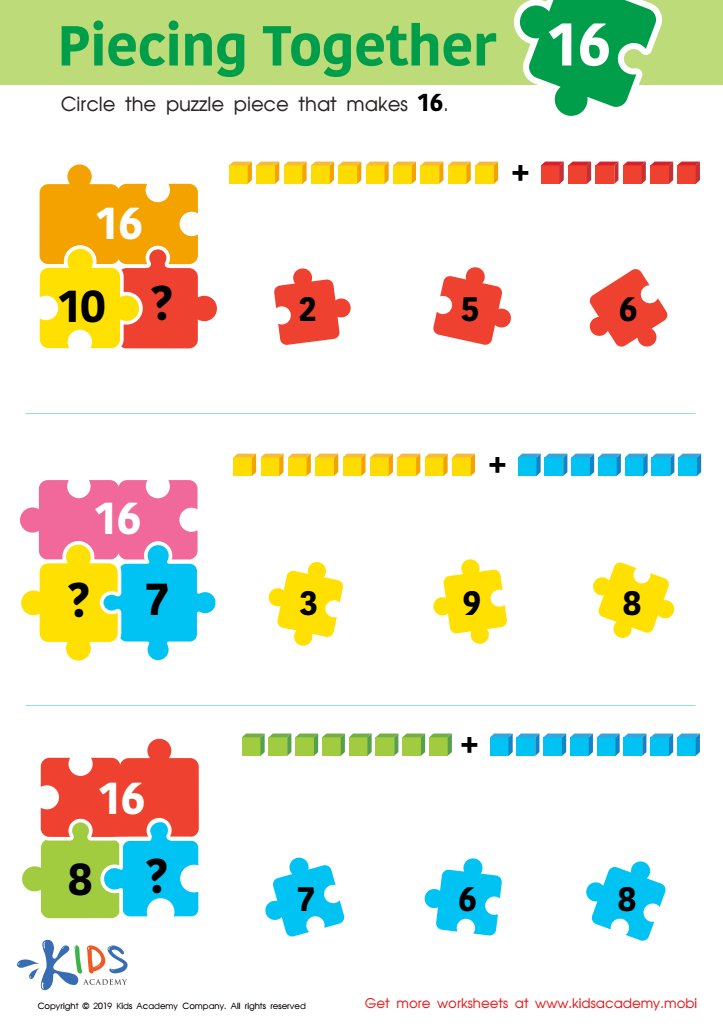
Piecing Together 16 Worksheet
 Assign to My Students
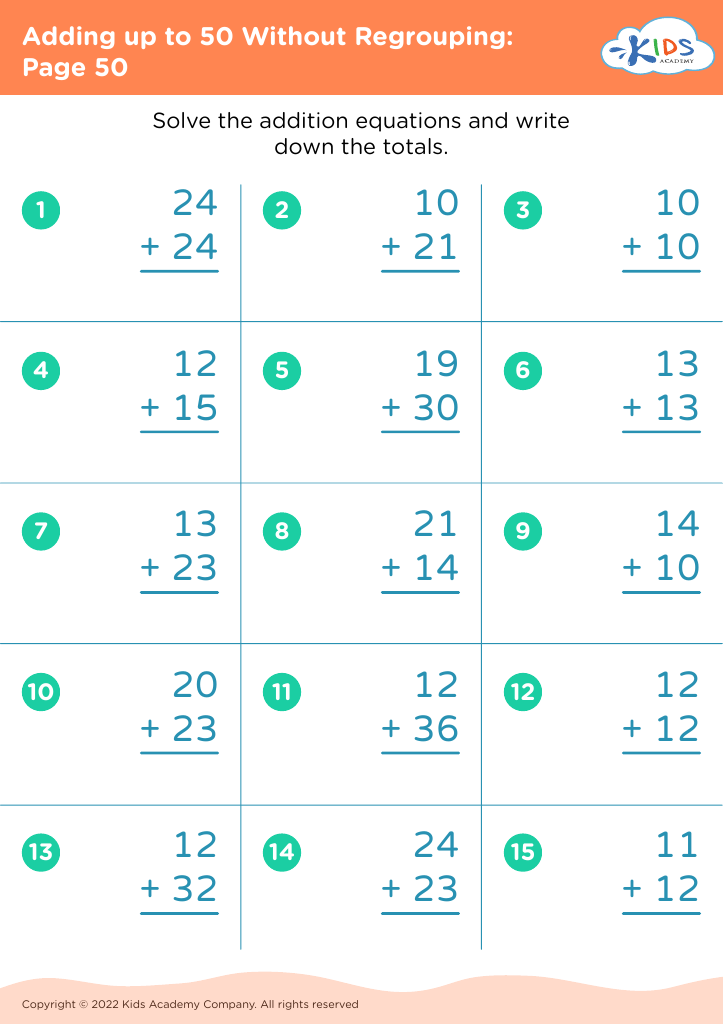








Recognizing equivalent fractions and understanding addition are essential building blocks in early mathematics education for children aged 5-9. When parents and teachers focus on these concepts, they unlock foundational skills crucial for academic success. Equivalent fractions highlight the idea that different fractions can represent the same part of a whole, which fosters a child's number sense and mathematical reasoning. This understanding can also make learning more accessible and relatable, because children often encounter fractions in real-world situations—like sharing and dividing objects.
Learning addition—and extending this to include fractions—enhances a child's problem-solving skills and logical thinking. Addition with fractions further deepens their mathematical comprehension, allowing them to handle more complex calculations later on. Recognizing equivalent fractions also sets the stage for learning about ratios, proportions, and even more advanced topics like algebra and geometry.
By prioritizing these concepts, teachers and parents can ensure that children build strong numerical literacy, which is vital not just academically but throughout life. Moreover, fostering a confident understanding of these mathematical fundamentals can encourage a positive attitude towards learning and curiosity, fostering resilience in facing more complex math challenges as they grow.








