Recognizing numbers Addition Worksheets for Ages 5-9
4 filtered results
-
From - To
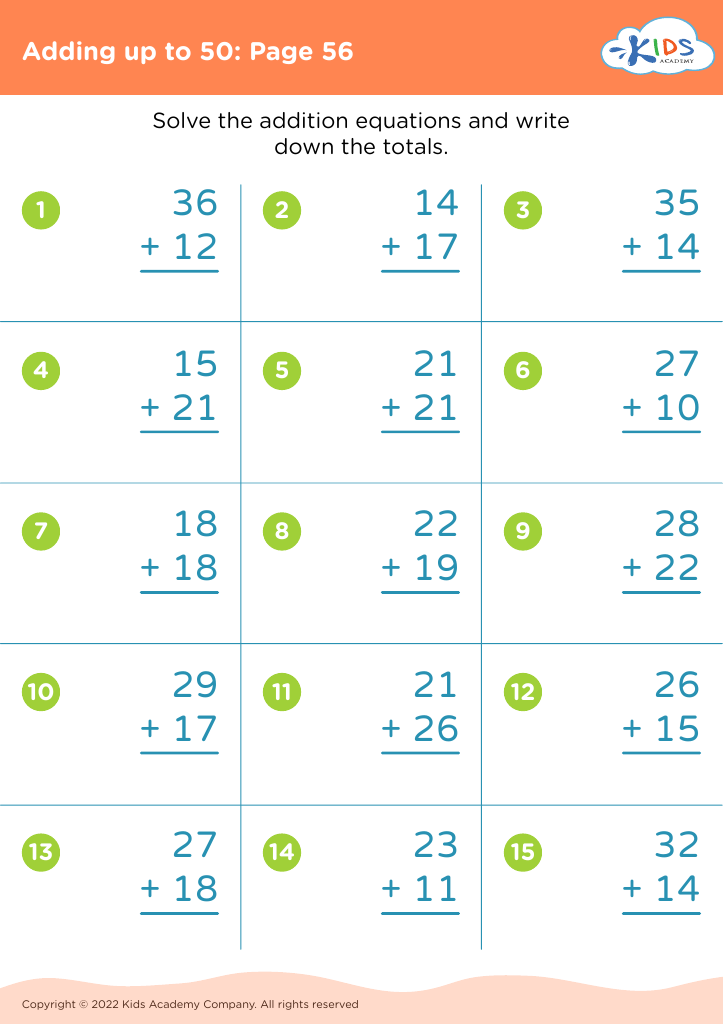
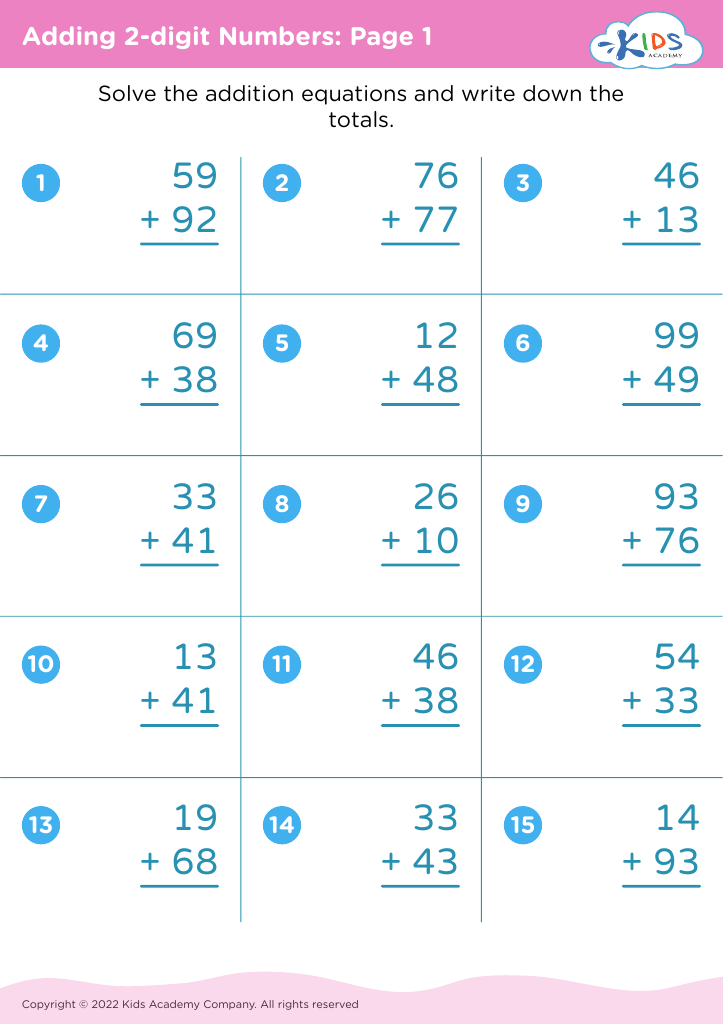
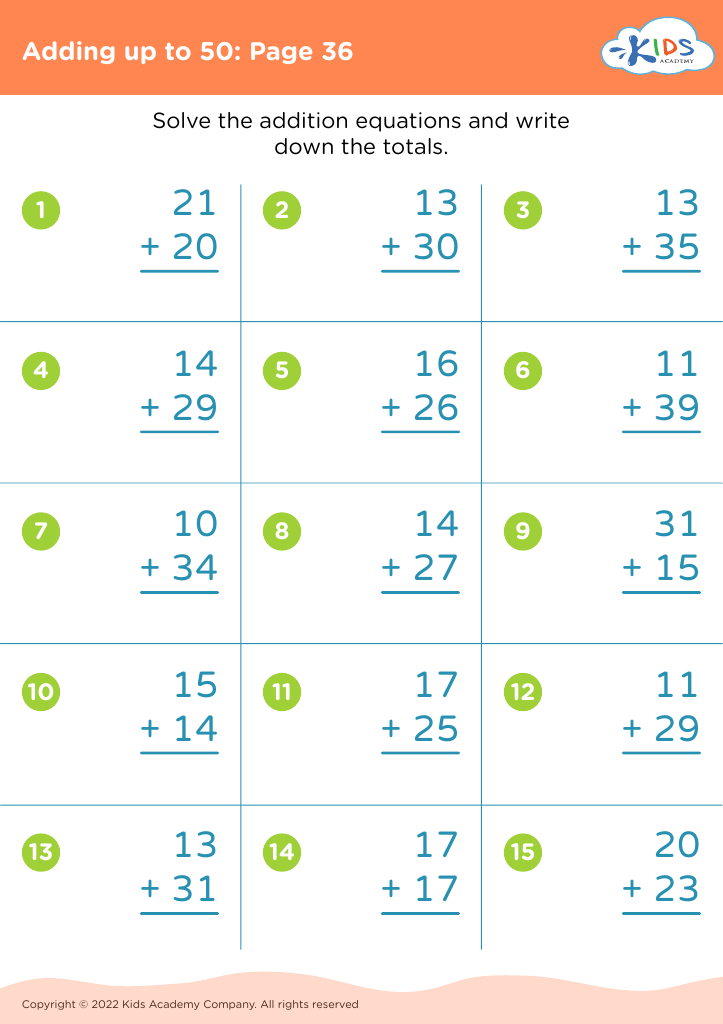
Introducing our "Recognizing Numbers Addition Worksheets for Ages 5-9" – the perfect resource to help young learners master basic math skills. Designed for kids aged 5-9, these worksheets offer engaging exercises to practice recognizing numbers and performing simple addition. Each worksheet combines fun illustrations with interactive problems to make learning enjoyable and effective. Whether your child is just starting with numbers or needs more practice, these exercises foster confidence and foundational math abilities. Encourage your child's math journey with our expertly crafted worksheets that turn learning into a delightful adventure!
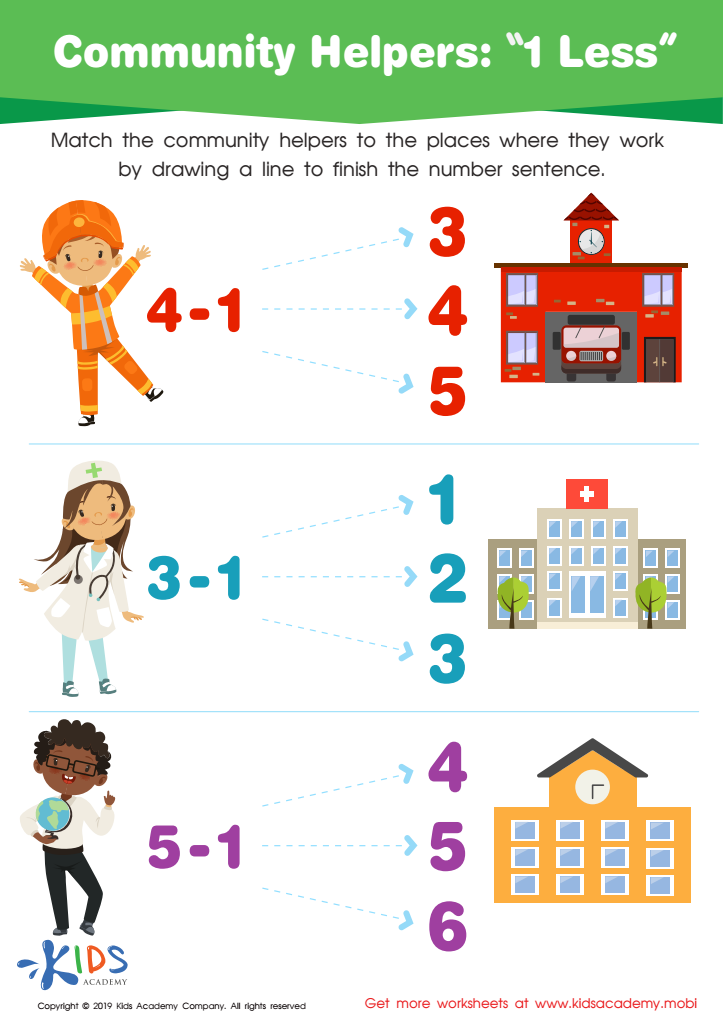
Community Helpers: 1 less Worksheet
 Assign to My Students








Fostering number recognition and addition skills in children aged 5-9 is foundation for their mathematical development and overall cognitive growth. At this early stage, understanding numbers and basic arithmetic forms the bedrock for more complex mathematical concepts they will encounter later. When parents and teachers prioritise these skills, children begin to develop critical thinking, problem-solving abilities, and logical reasoning.
Learning to recognize numbers and perform simple additions helps young children relate mathematical concepts to real-world scenarios, such as counting objects, understanding money, or telling time. These are everyday skills that enhance their independence and confidence. Furthermore, mathematical proficiency at an early age often correlates with higher academic performance across various subjects. It supports the development of spatial awareness and lay the groundwork for future fields of interest like science, technology, engineering, and mathematics (STEM).
A nurturing environment where numerical skills are emphasized encourages children to take intellectual risks and think analytically. Through games, activities, and interactive learning, parents and teachers can make math fun and engaging, fostering a lifelong interest in the subject. Therefore, giving adequate attention to number recognition and addition during early years is pivotal for a child's long-term educational and personal growth.








