Explore our Simplifying Fractions Addition Worksheets designed specifically for children aged 5-9. These engaging, colorful worksheets help young learners grasp the basics of adding fractions through simple, step-by-step exercises. Perfect for both classroom and home use, each worksheet aims to build a strong foundation in fraction addition, enhancing math skills and boosting confidence. Watch as your child transforms complex problems into easy solutions, thanks to our carefully crafted practice sheets. Ideal for parents and teachers seeking to enrich their children's mathematical journey, our worksheets make learning fun and efficient. Start adding fractions with ease today!
Check out this FREE Trial Lesson on Addition for age 5-9!

Z

Favorites
With answer key
Interactive
  • 5-9
  • Simplifying Fractions
  • Addition
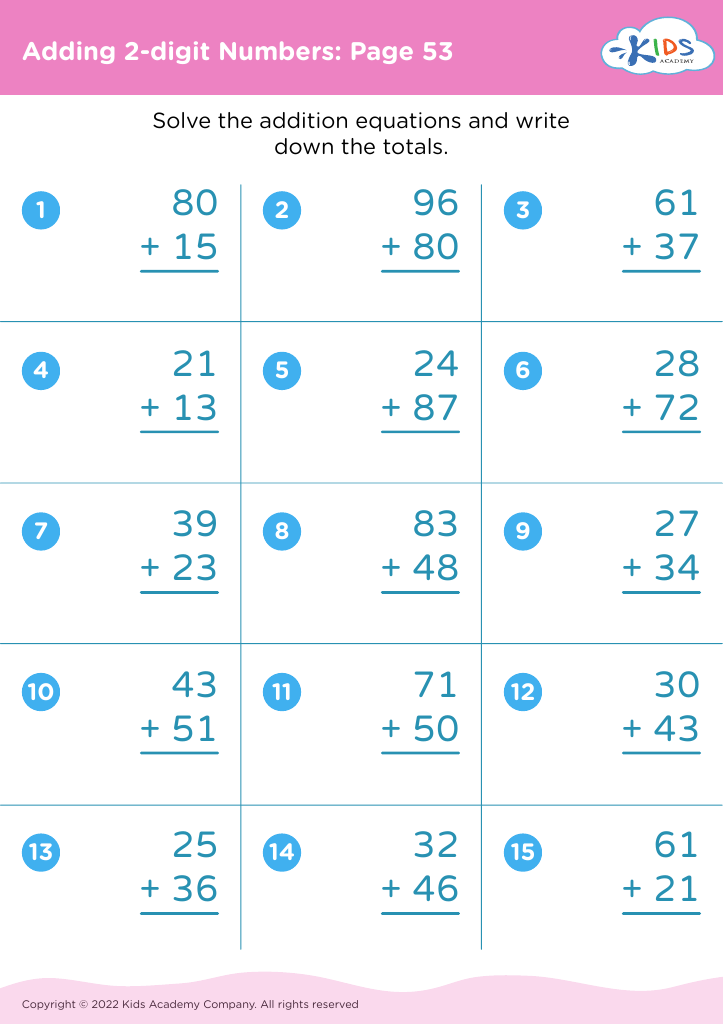
Adding 2-digit Numbers: Page 53

Adding 2-digit Numbers: Page 53

Adding 2-digit Numbers: Page 53
Worksheet
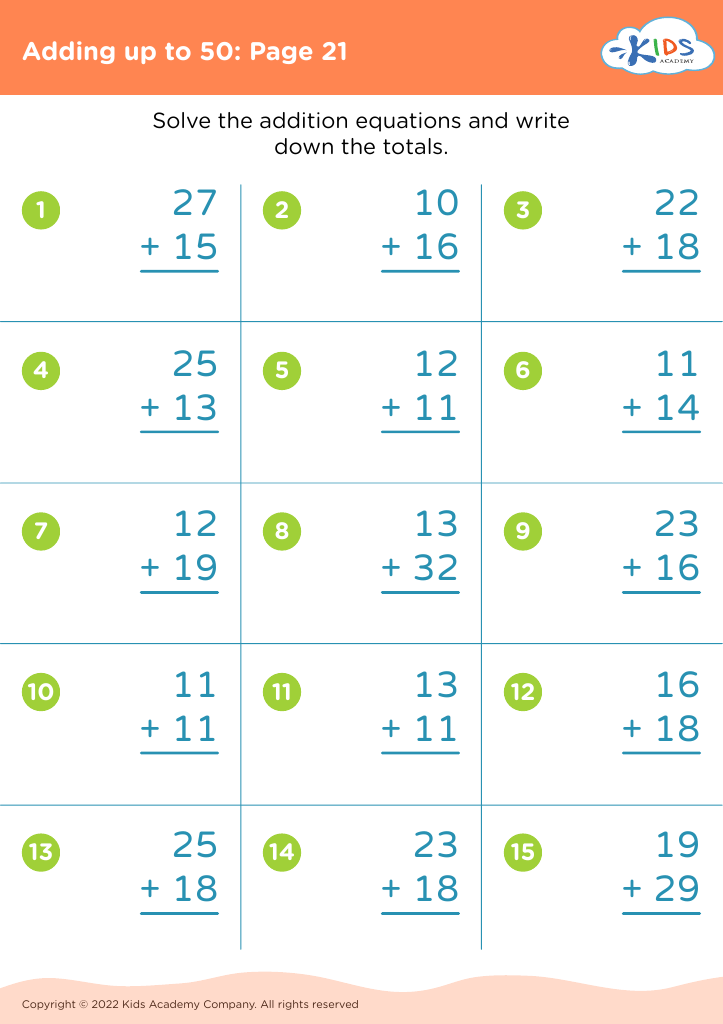
Adding up to 50: Page 21

Adding up to 50: Page 21

Adding up to 50: Page 21
Worksheet
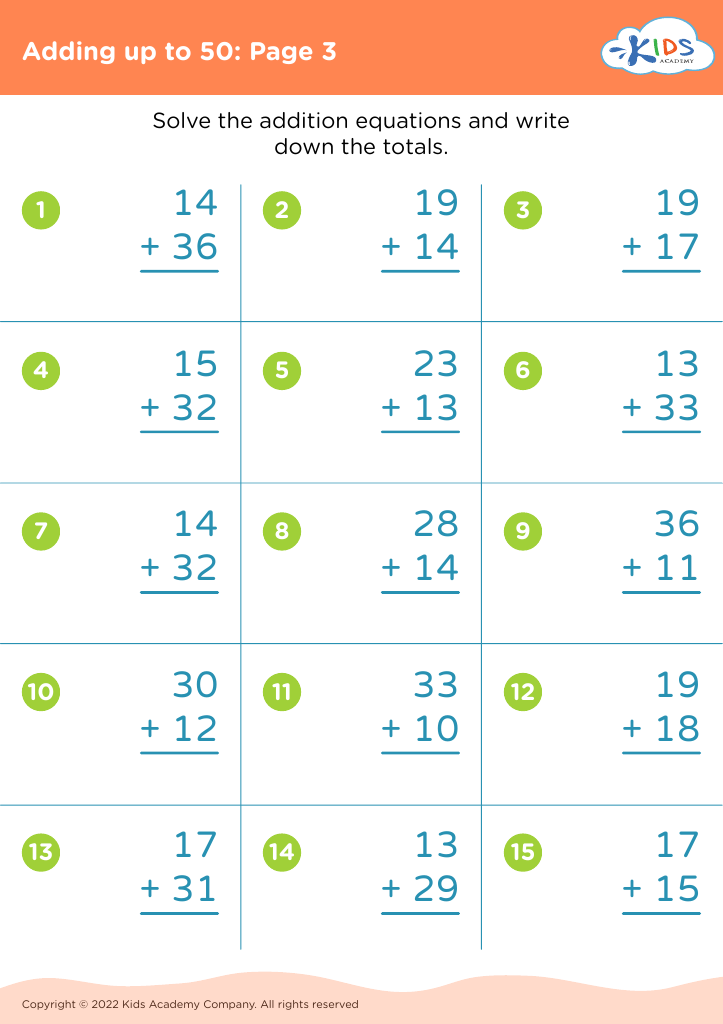
Adding up to 50: Page 3

Adding up to 50: Page 3

Adding up to 50: Page 3
Worksheet
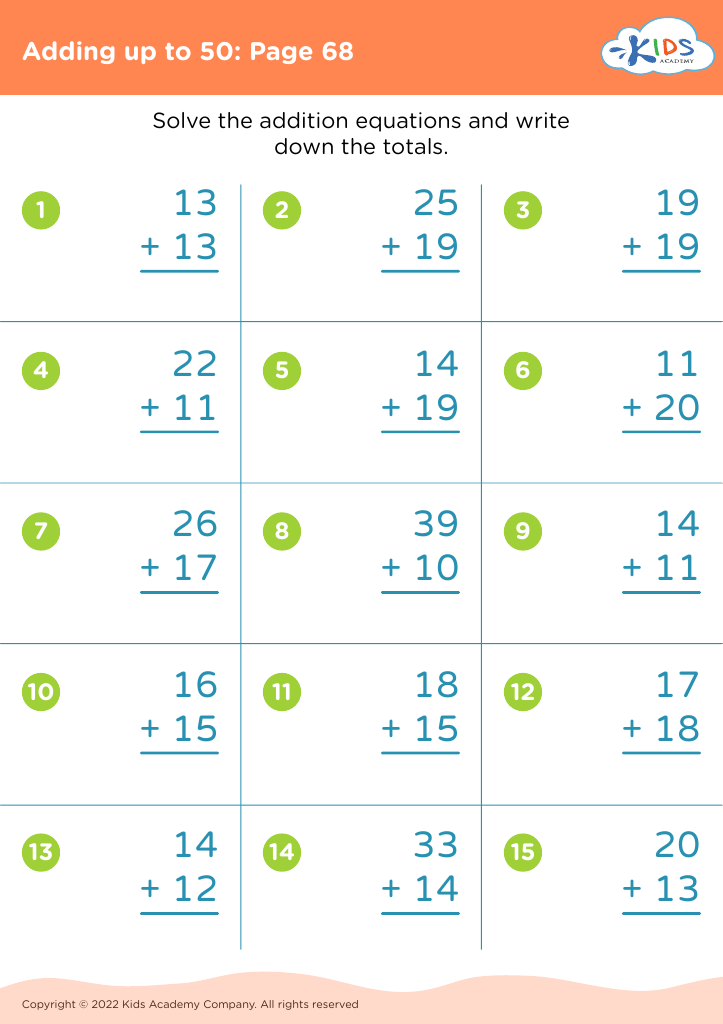
Adding up to 50: Page 68

Adding up to 50: Page 68

Adding up to 50: Page 68
Worksheet
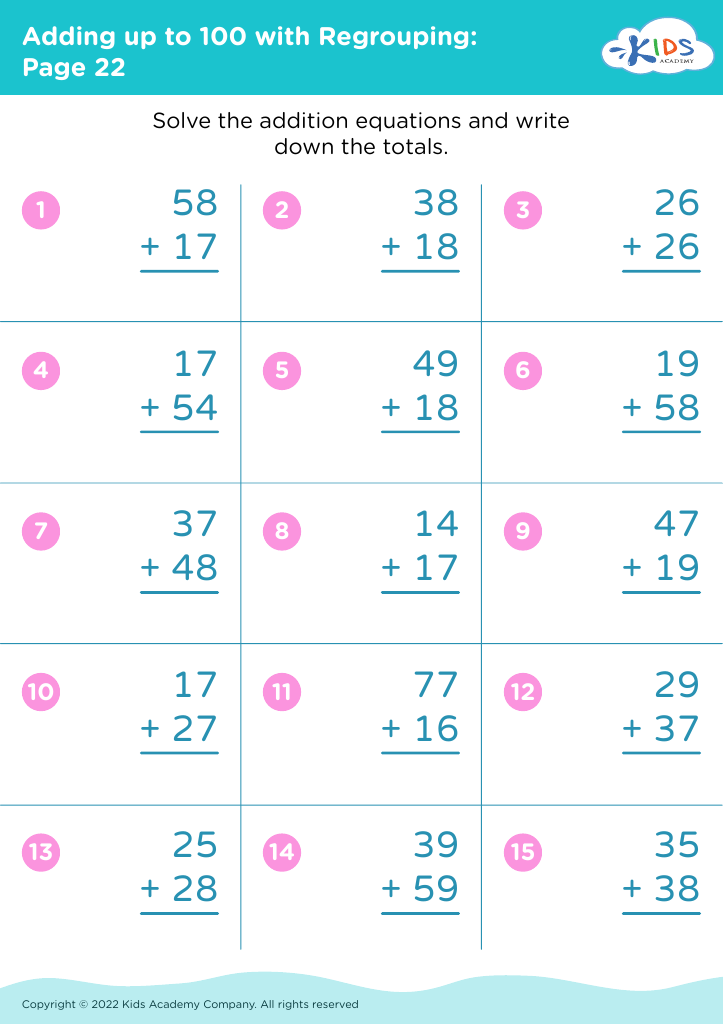
Adding up to 100 with Regrouping: Page 22
Worksheet
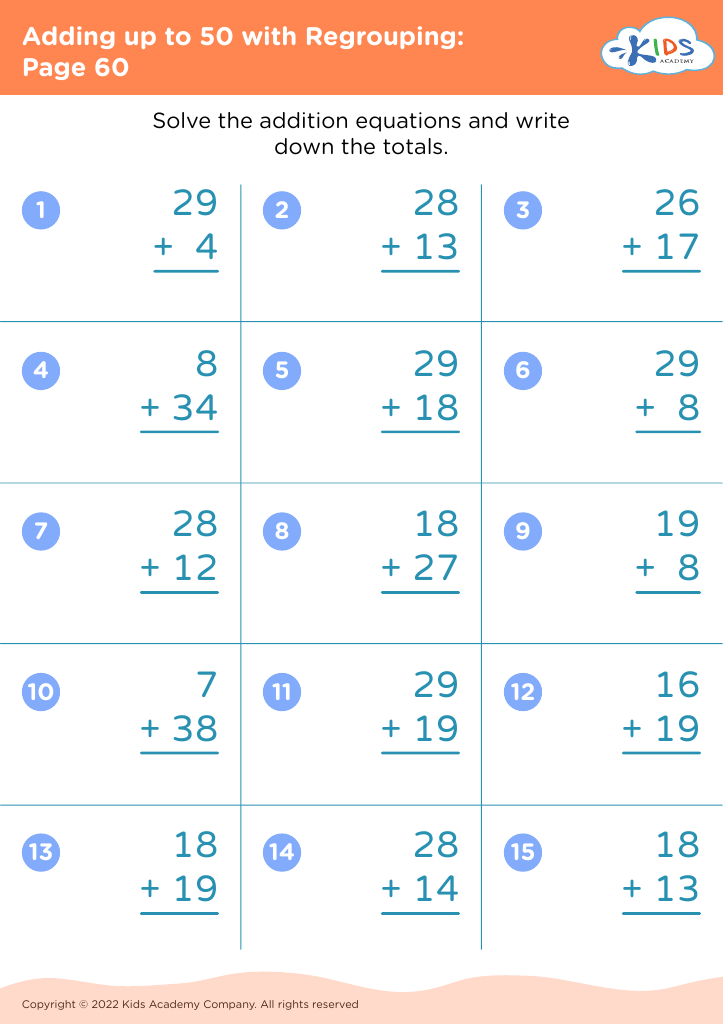
Adding up to 50 with Regrouping: Page 60
Worksheet
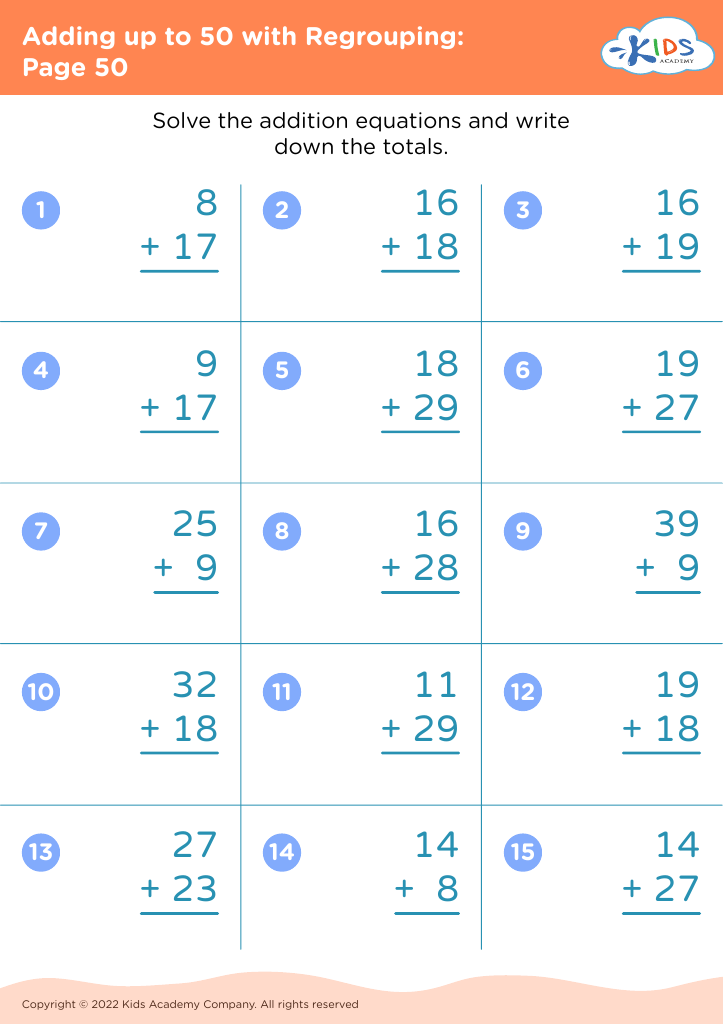
Adding up to 50 with Regrouping: Page 50
Worksheet
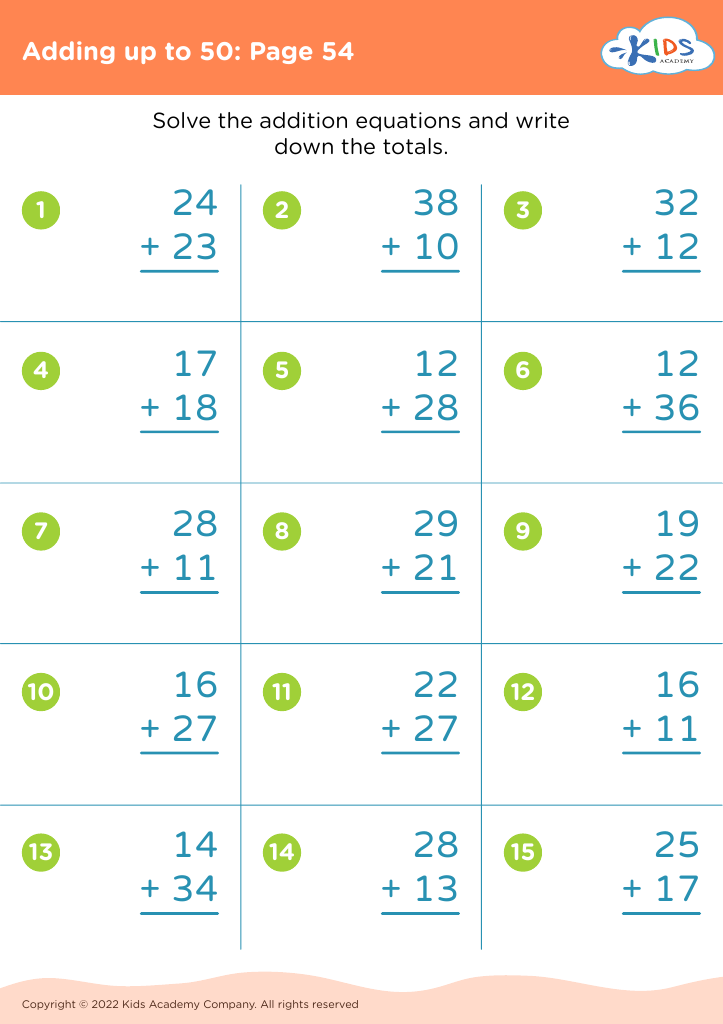
Adding up to 50: Page 54

Adding up to 50: Page 54

Adding up to 50: Page 54
Worksheet
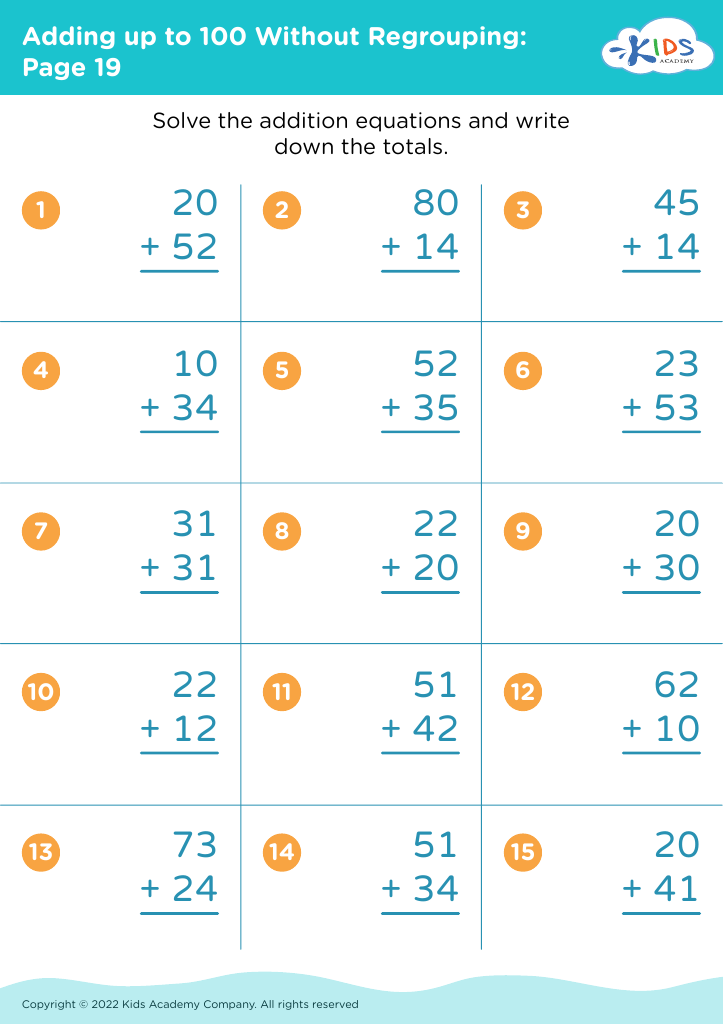
Adding up to 100 Without Regrouping: Page 19
Worksheet
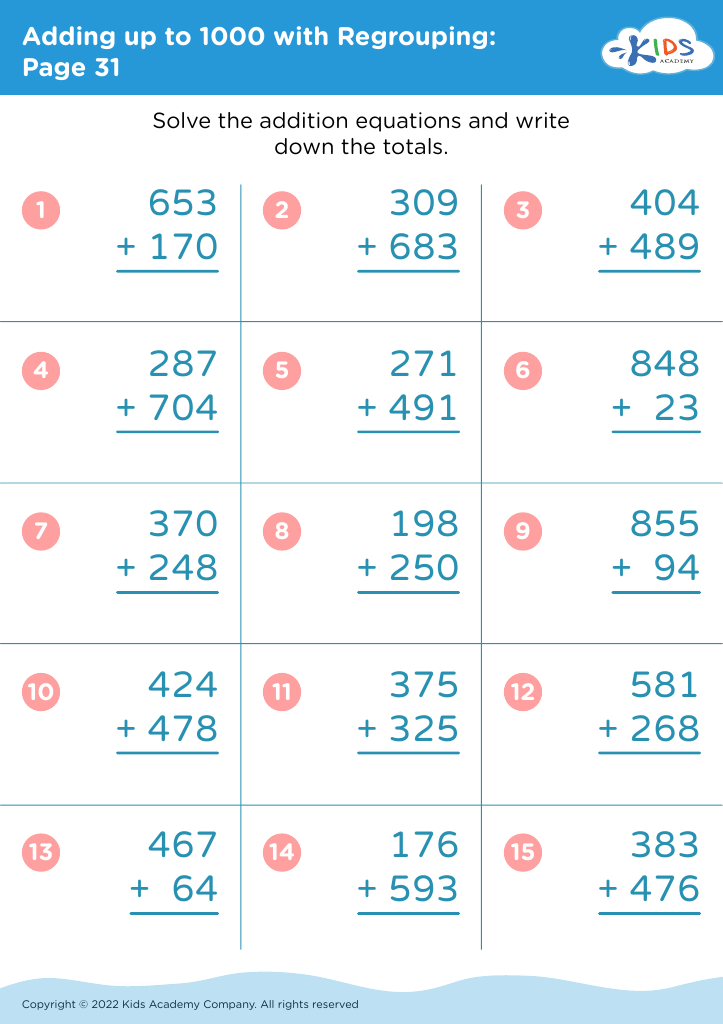
Adding up to 1000 with Regrouping: Page 31
Worksheet
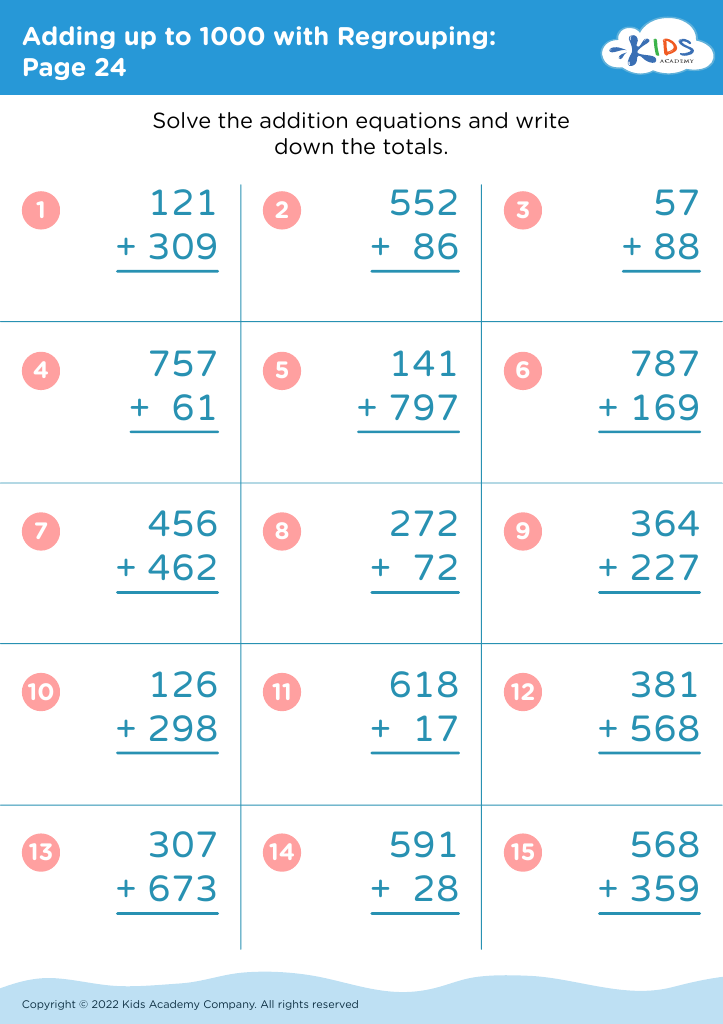
Adding up to 1000 with Regrouping: Page 24
Worksheet
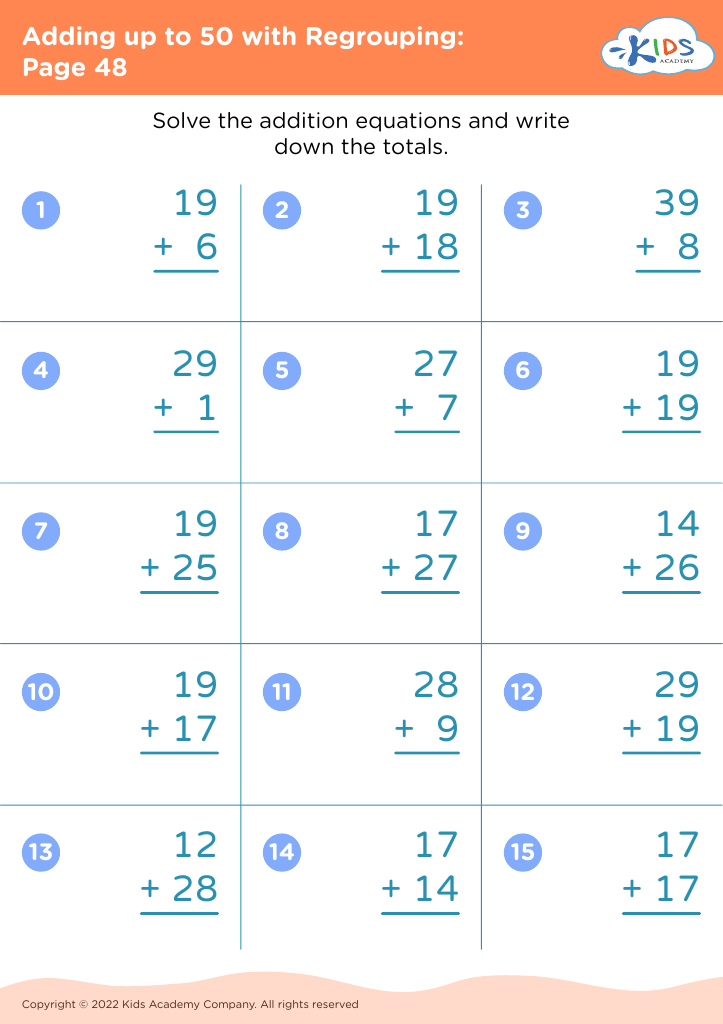
Adding up to 50 with Regrouping: Page 48
Worksheet
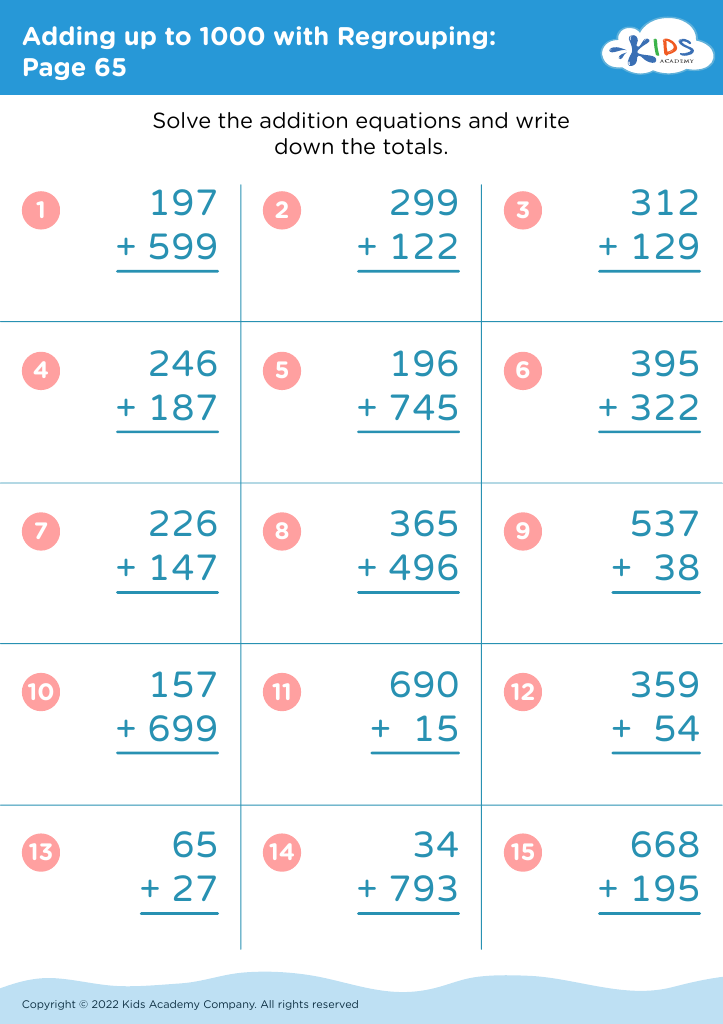
Adding up to 1000 with Regrouping: Page 65
Worksheet
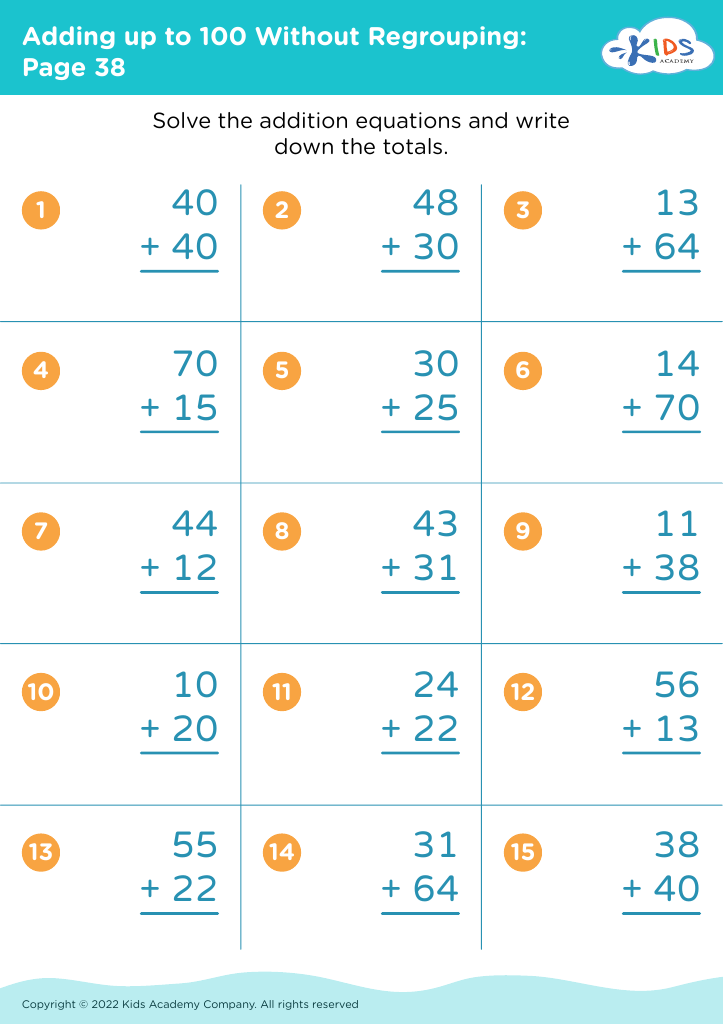
Adding up to 100 Without Regrouping: Page 38
Worksheet
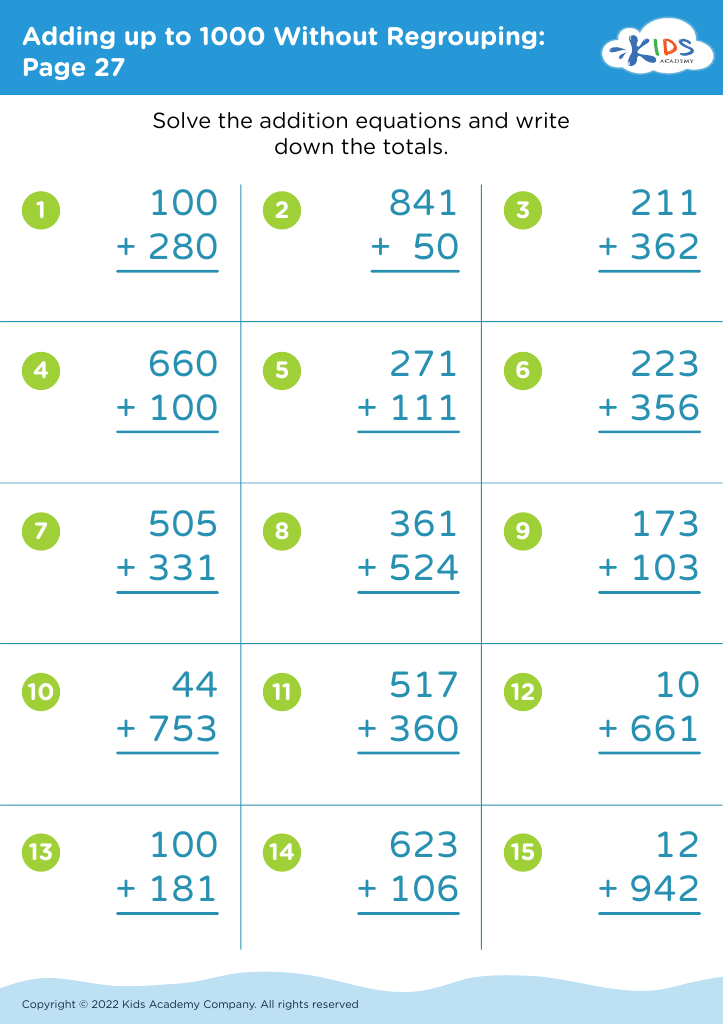
Adding up to 1000 Without Regrouping: Page 27
Worksheet
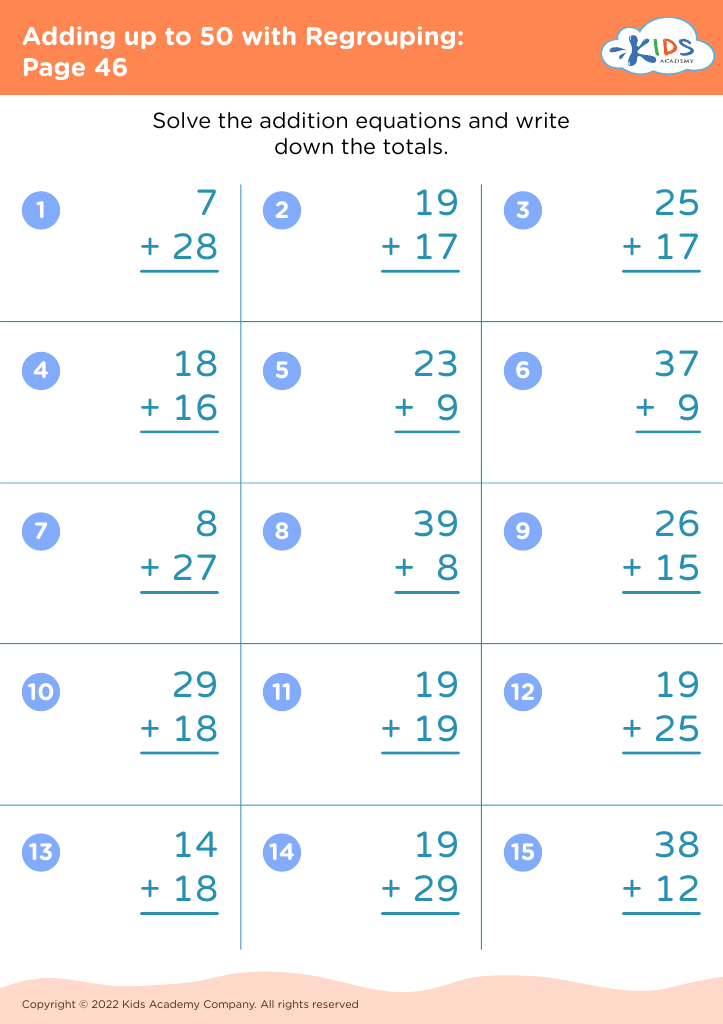
Adding up to 50 with Regrouping: Page 46
Worksheet
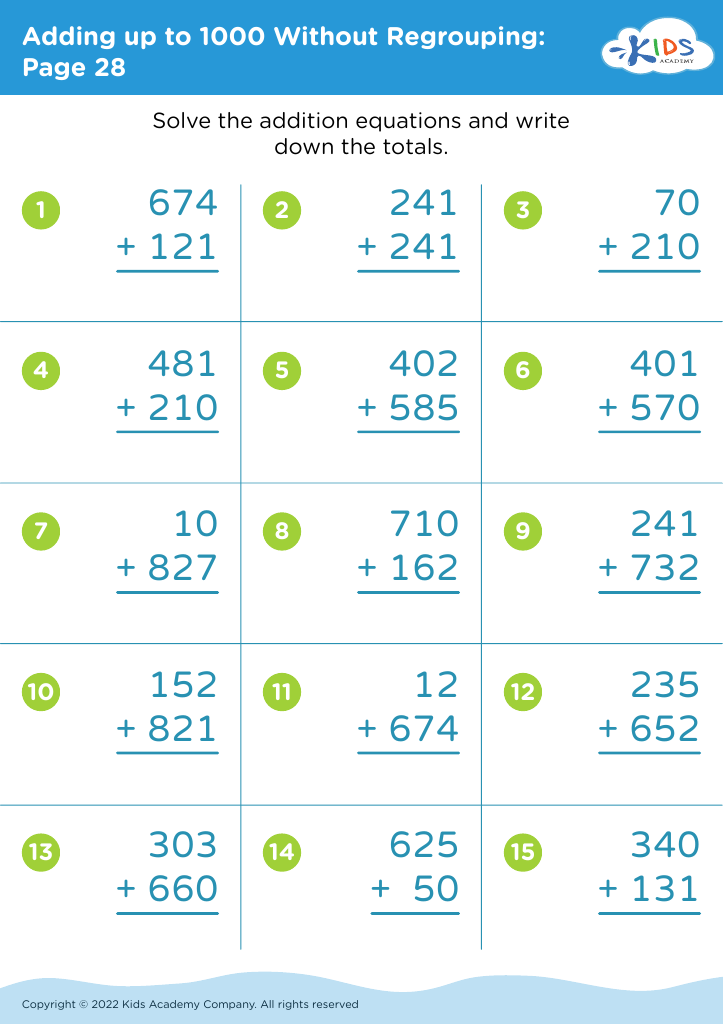
Adding up to 1000 Without Regrouping: Page 28
Worksheet
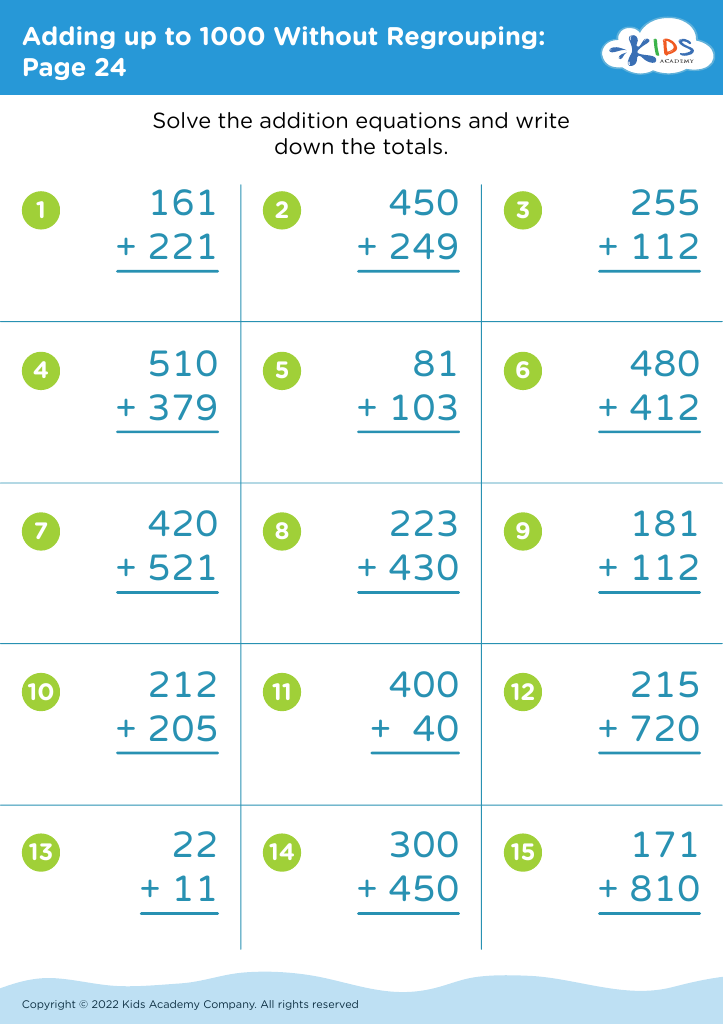
Adding up to 1000 Without Regrouping: Page 24
Worksheet


Simplifying fraction addition is a foundational skill that can significantly benefit children aged 5-9 in their mathematical journey. At this age, kids are just beginning to solidify basic numerical concepts, and introducing them to simplifying fractions alongside addition develops their critical thinking and problem-solving skills early on. Understanding fractions is essential, as they form the basis for more advanced mathematical topics such as ratios, percentages, and algebra, which children will encounter in later grades.

Moreover, simplifying fractions teaches children the importance of efficiency and precision. It encourages mental math and nurtures a deeper comprehensiveness of equivalent values and proportional reasoning. For example, recognizing that (\frac{2}{4}) simplifies to (\frac{1}{2}) fosters an understanding that different-looking fractions can represent the same quantity.

Furthermore, mastering this concept boosts children's confidence in handling numbers and arithmetic operations, making other areas of math seem less daunting. This confidence often extends beyond math, improving overall academic performance. Additionally, when parents and teachers engage children in learning such concepts, it sets a positive collaborative tone, promoting a lifelong interest and enthusiasm for mathematics. Supporting these foundational skills at an early age will pave the way for children’s success in education and practical problem-solving in everyday life.