Understanding numbers Addition Worksheets for Ages 5-9
4 filtered results
-
From - To
Discover an engaging collection of "Understanding Numbers Addition Worksheets" designed specifically for children aged 5-9. These worksheets aim to build foundational math skills, enhance number recognition, and promote confidence in addition. Each activity encourages young learners to visualize and understand numbers through fun, interactive exercises. Tailored to various learning levels, our worksheets feature colorful illustrations and practical scenarios that make math enjoyable. Whether in the classroom or at home, these resources support educators and parents in creating a dynamic learning environment. Help your child master addition and foster a positive attitude towards math with our comprehensive worksheets today!
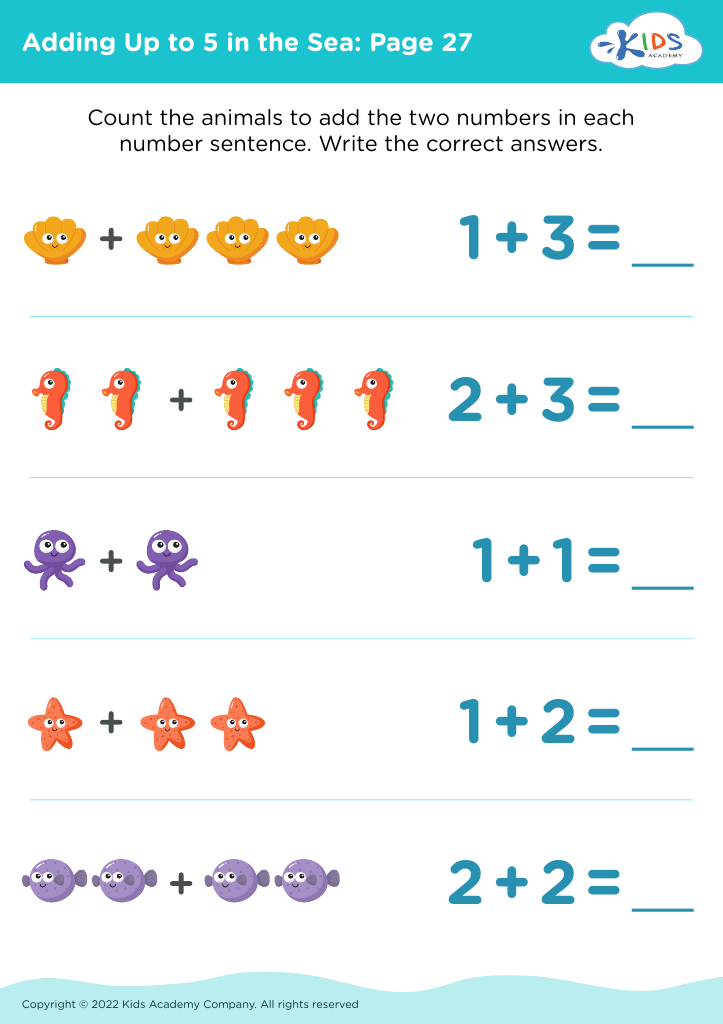
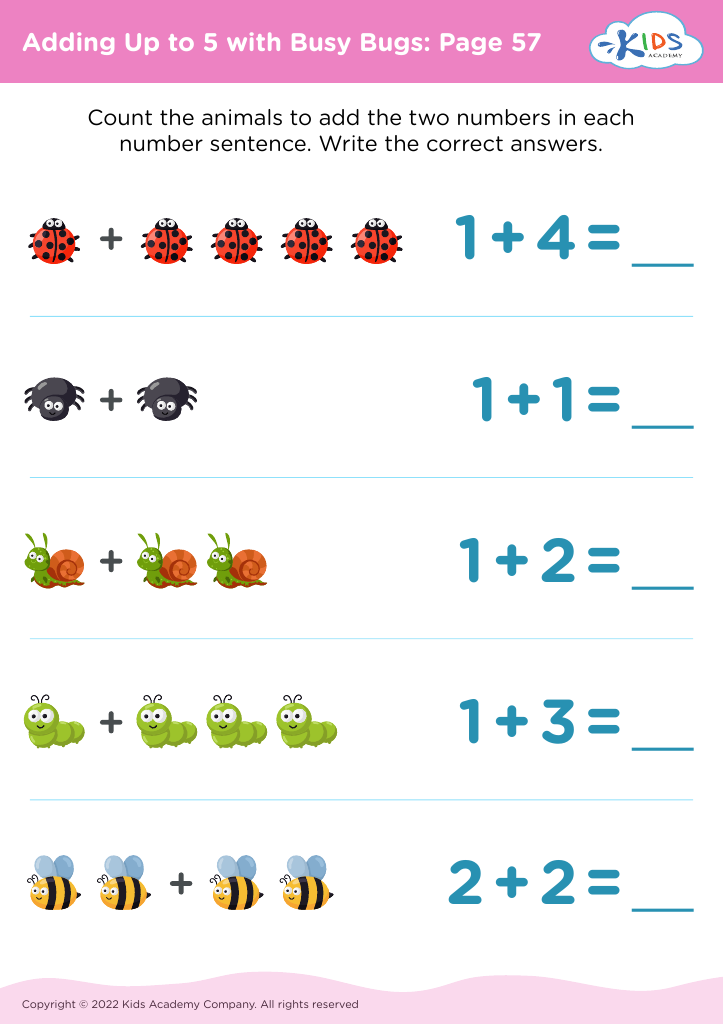
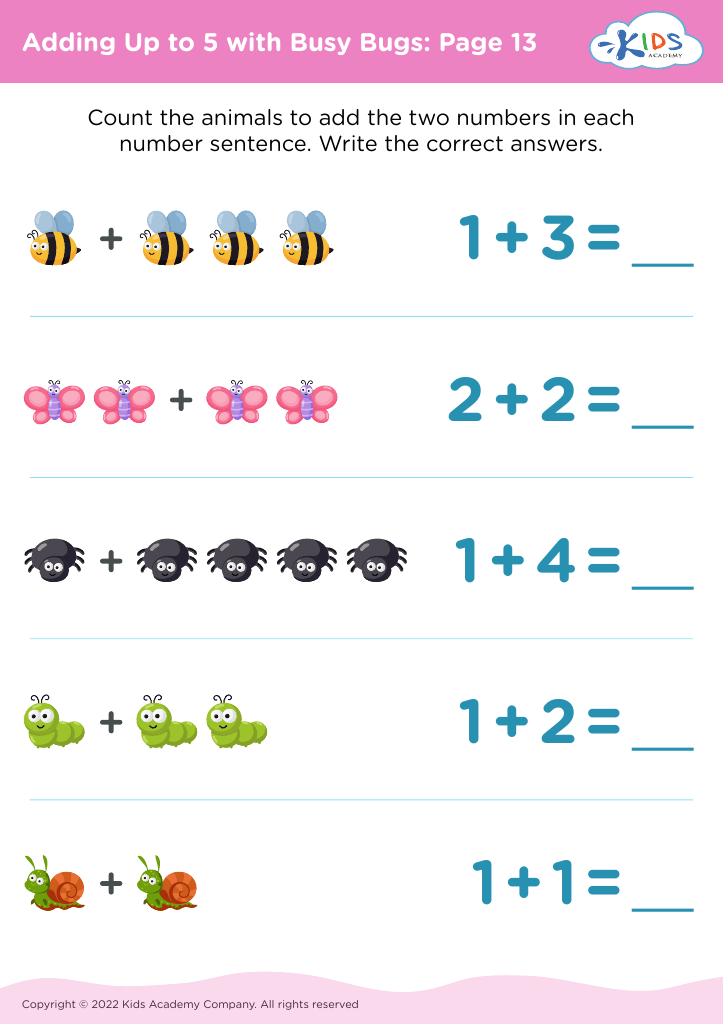
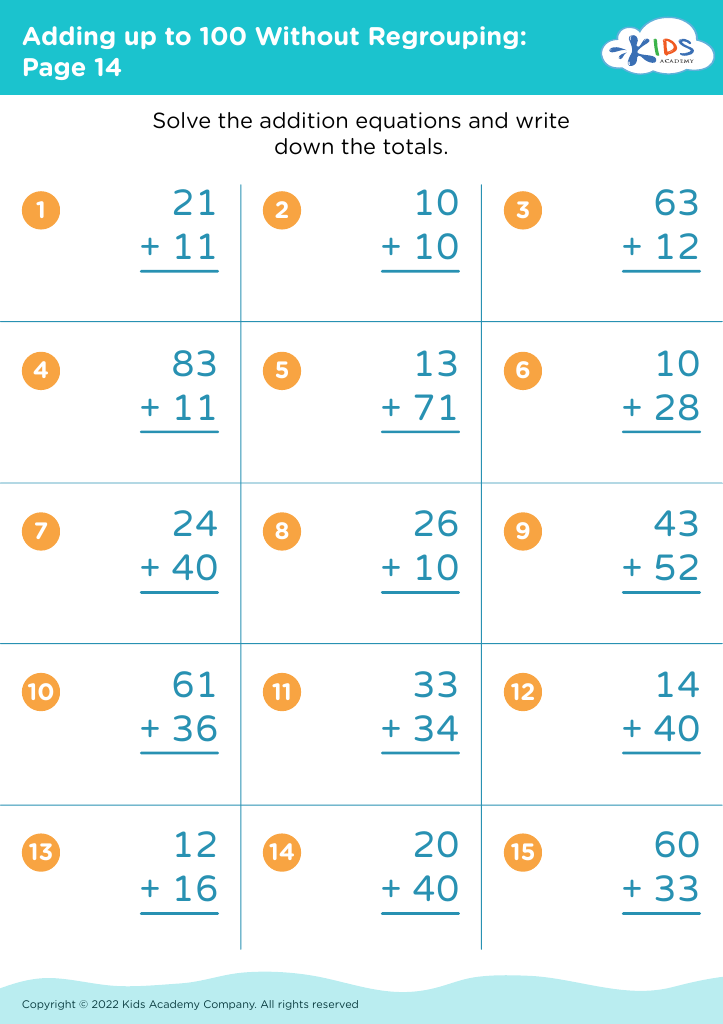








Understanding numbers and addition is crucial for children aged 5-9, as these skills form the foundation for their future mathematical learning. At this developmental stage, children are not only learning to recognize numbers but are also beginning to grasp the concept of quantity and relationships between numbers. Mastering addition helps them to develop logical thinking and problem-solving abilities.
For parents and teachers, fostering a strong understanding of addition can lead to increased confidence in a child's mathematical abilities. This is essential, as early positive experiences with math can shape a child’s attitude towards the subject for years to come. Engaging them in interactive activities that emphasize understanding over rote memorization—like using real-life scenarios, games, and manipulatives—makes learning addition fun and relatable.
Additionally, comprehension of numbers and addition lays the groundwork for more advanced mathematical concepts, such as subtraction, multiplication, and even basic algebra. Children who struggle with these foundational skills may face challenges in later grades, impacting their overall academic performance. Thus, it’s essential for parents and teachers to work together to nurture this understanding, ensuring a strong mathematical foundation for lifelong learning.








