Visual learning reinforcement Addition Worksheets for Ages 5-9
6 filtered results
-
From - To
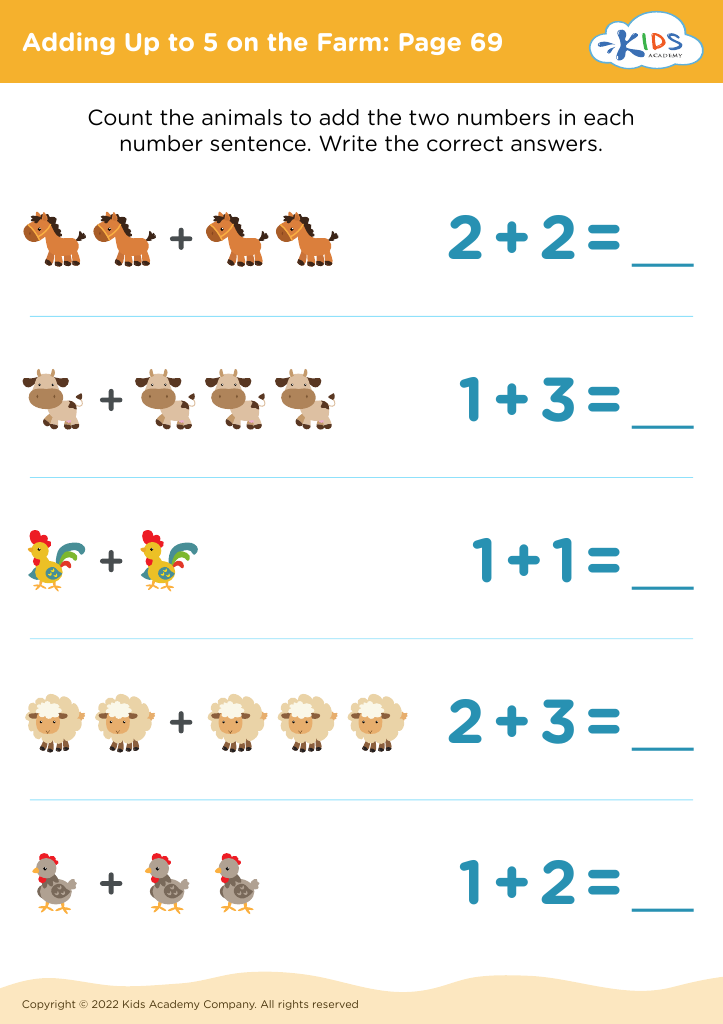
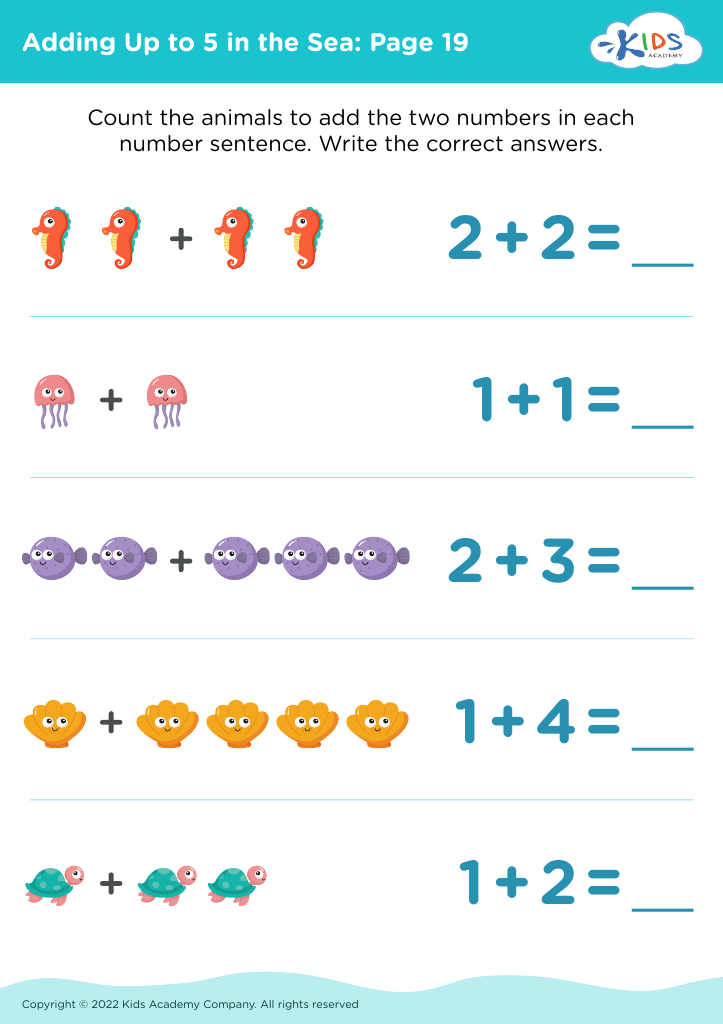
Introducing our engaging Visual Learning Reinforcement Addition Worksheets, designed for children aged 5-9. These age-appropriate worksheets use vibrant images and interactive visual aids to help young learners master addition concepts. Perfect for classroom or home use, they empower kids through fun activities that build strong foundational math skills. Catered to maintain interest and boost confidence, each worksheet offers varied exercises that challenge and inspire. Enhance your child’s arithmetic abilities with our effective, kid-friendly learning tools. Discover the benefits of visual learning and make addition enjoyable with Kids Academy's expertly crafted worksheets. Shop now for educational success!
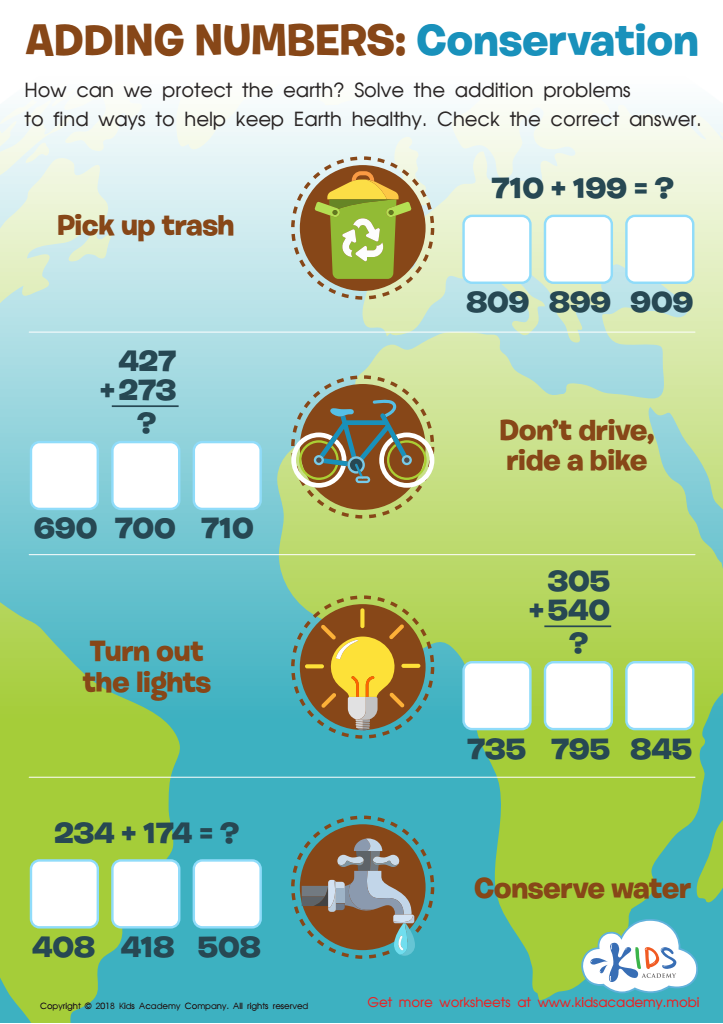
Adding Numbers: Conservation Worksheet
 Assign to My Students
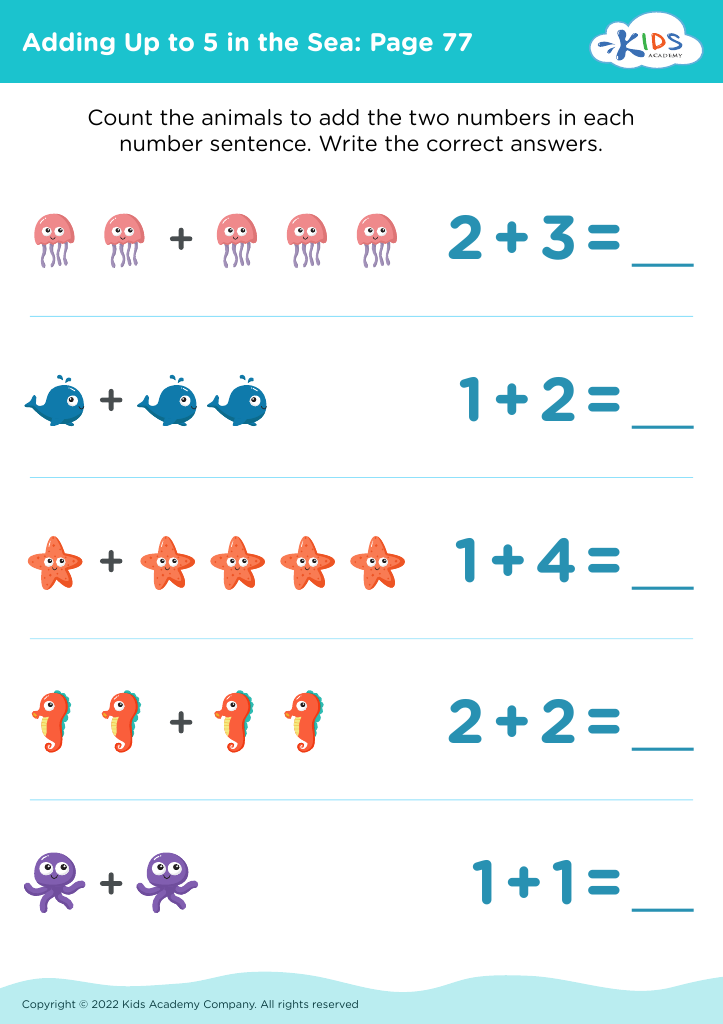
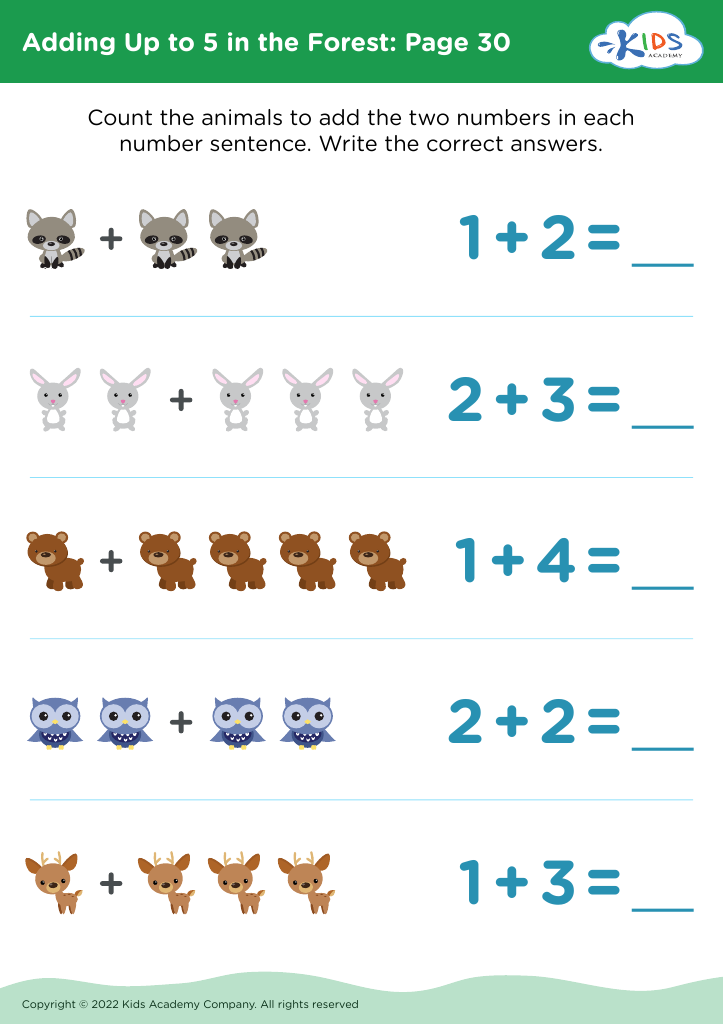
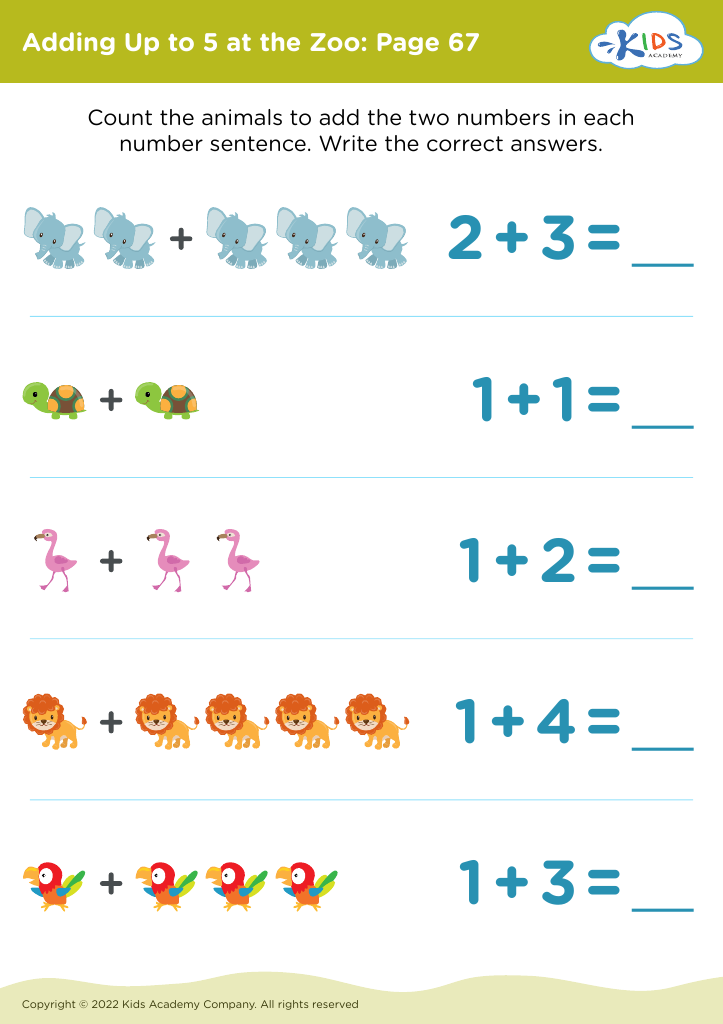








Visual learning reinforcement is crucial for teaching addition to children aged 5-9 for several compelling reasons. At this developmental stage, youngsters primarily learn through sensory experiences and visual stimuli. Visual reinforcements such as pictures, manipulatives, and interactive games can turn abstract mathematical concepts into concrete, understandable ideas. This hands-on approach caters to young learners' natural curiosity and helps demystify the concept of addition, making it more relatable and less intimidating.
Visual aids also cater to various learning styles prevalent among young children. Some kids may struggle with traditional rote memorization but thrive when they can see problems acted out visually. Engaging both their sight and touch enhances memory retention and understanding, providing a more comprehensive learning experience.
Further, incorporating visual learning in addition builds a strong foundation for future mathematical learning. Early mastery of these basic concepts fosters confidence in tackling more complex problems later on. It also nurtures an enthusiasm for math by presenting it in a fun and engaging manner.
Teachers and parents who prioritize visual learning reinforcement thus empower children, equipping them with the skills and confidence needed to pursue academic success, while making learning interactive and enjoyable. In essence, visual aids translate numbers into meaningful experiences, bridging the gap between play and learning.








