Visual-motor skills Addition Worksheets for Ages 5-9
4 filtered results
-
From - To
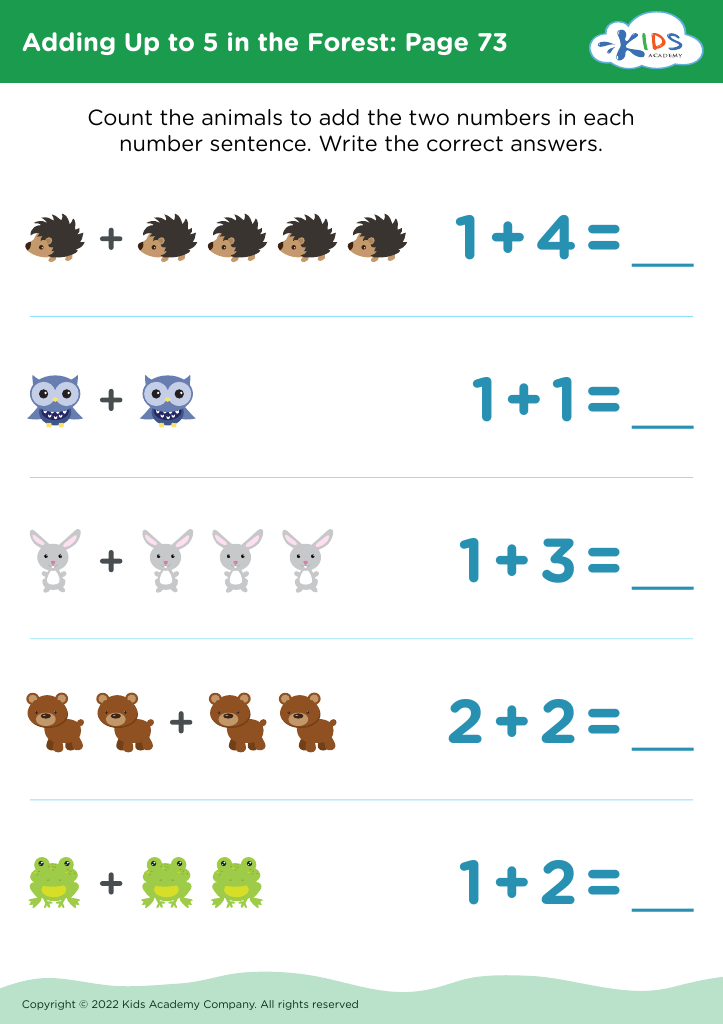
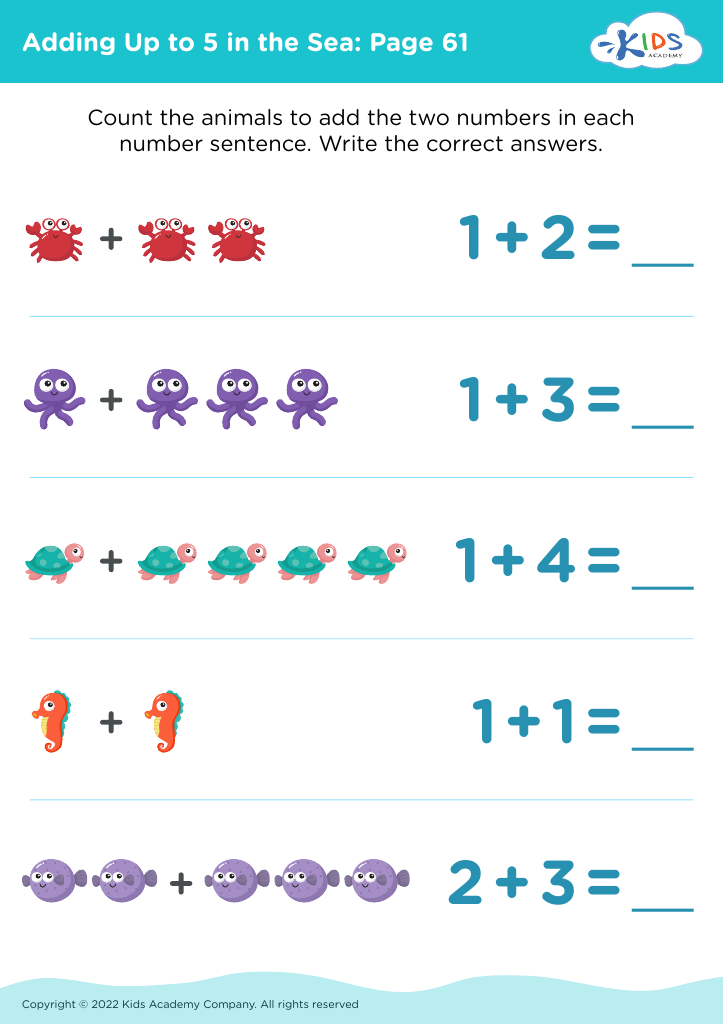
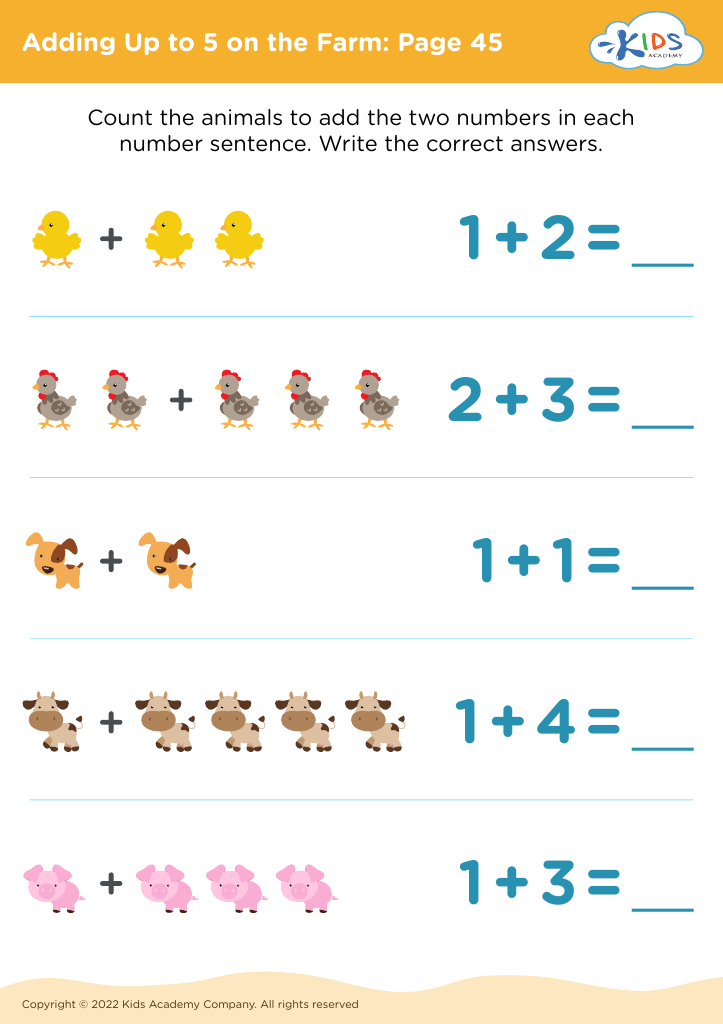
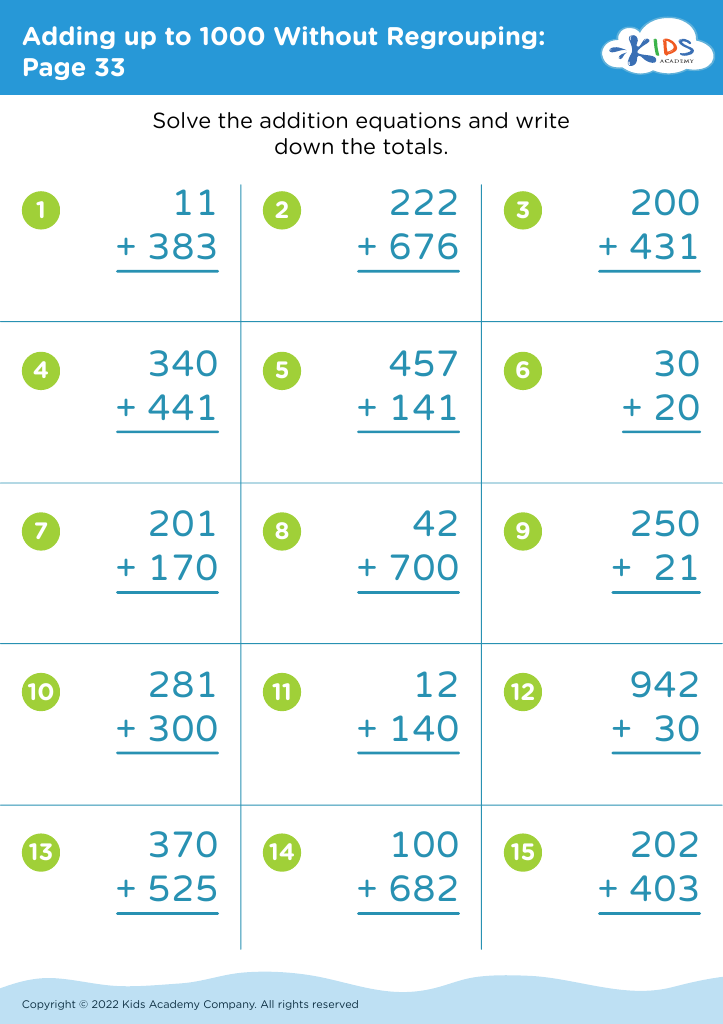
Welcome to our Visual-Motor Skills Addition Worksheets for Ages 5-9! Designed to enhance young learners' understanding of addition while developing their visual-motor coordination, these engaging worksheets offer a fun and interactive approach to mastering basic math concepts. Children will enjoy connecting dots, drawing lines, and completing creative tasks that reinforce their addition skills. Our printable resources cater to various learning styles, ensuring an enjoyable educational experience. With a focus on creativity and critical thinking, these worksheets help kids build confidence in their math abilities. Explore our collection today and watch your child's mathematical proficiency grow alongside their visual-motor skills!



.jpg)




Visual-motor skills are crucial for children aged 5-9, significantly impacting their development and learning. These skills encompass the coordination of visual processing (what children see) and fine motor skills (how they respond with their hands). Mastery of visual-motor skills lays the foundation for various essential activities, from writing to drawing, and even participating in sports.
Parents and teachers should care about developing these skills because they directly influence academic success and self-confidence. Children with strong visual-motor skills can effectively interpret visual information and execute fine motor tasks, which enhances their ability to grasp concepts in mathematics, reading, and science. For example, effective handwriting and paper organization rely heavily on good visual-motor coordination.
Moreover, children with underdeveloped visual-motor skills might struggle with tasks that seem simple to their peers, potentially resulting in frustration and decreased motivation. By fostering these skills through engaging activities like crafts, puzzles, and writing exercises, adults can help build a child's creativity, problem-solving abilities, and overall cognitive development. Prioritizing visual-motor skills during this critical growth period prepares children for future academic endeavors and encourages a lifetime of learning and exploration.








