Reading comprehension Arrays Worksheets for Ages 5-9
5 filtered results
-
From - To
Enhance your child's reading comprehension skills with our engaging arrays worksheets, specifically designed for ages 5-9. These interactive resources help young learners connect visual representations of mathematical arrays with textual information, fostering a deeper understanding of both reading and math concepts. Each worksheet features age-appropriate activities that challenge children to interpret information, answer questions, and develop critical thinking skills. Perfect for classroom instruction or at-home learning, our reading comprehension arrays worksheets motivate students to explore and comprehend texts effectively while reinforcing essential math skills. Start building a strong foundation in literacy and numeracy today with our thoughtfully crafted resources!
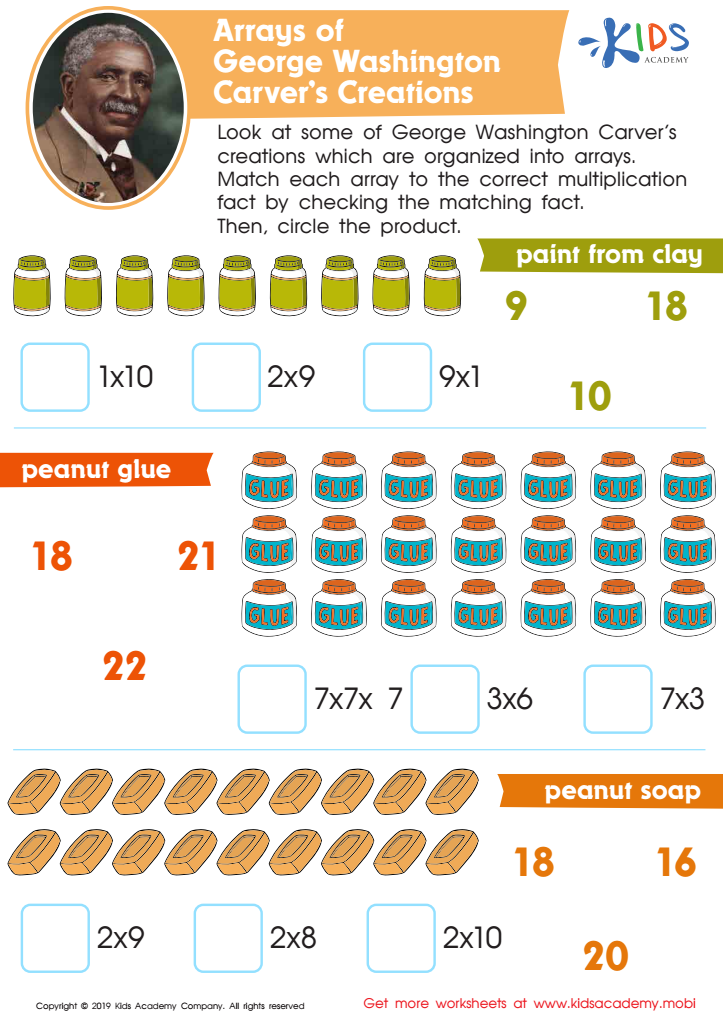
Arrays of George Washington Carver’s Creations Worksheet
 Assign to My Students
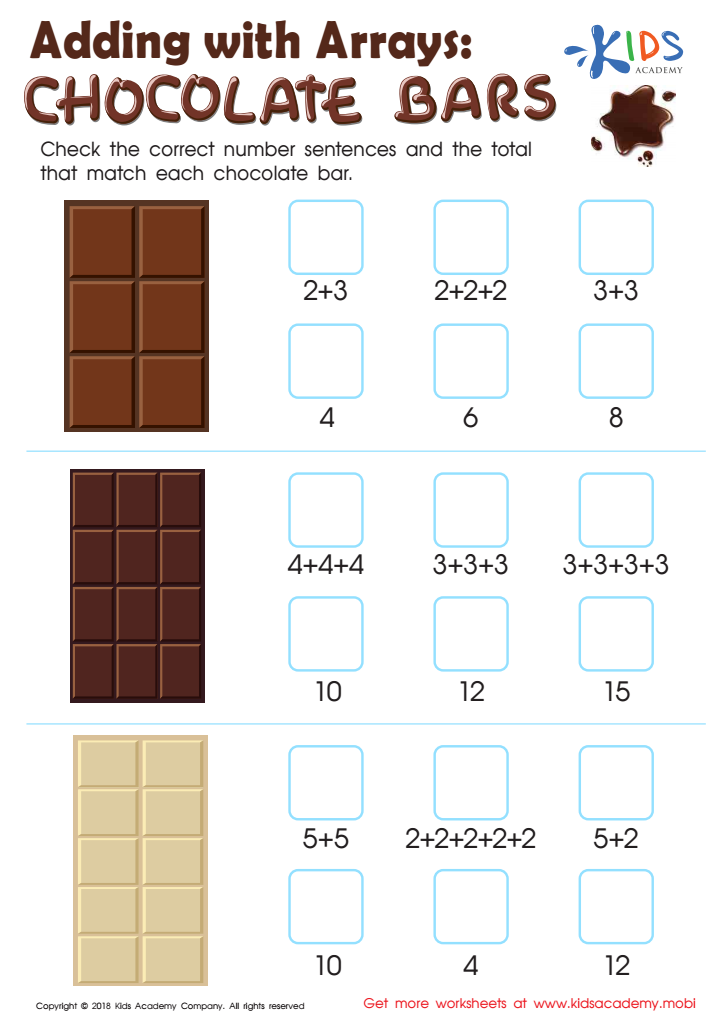
Adding with Arrays: Chocolate Bars Worksheet
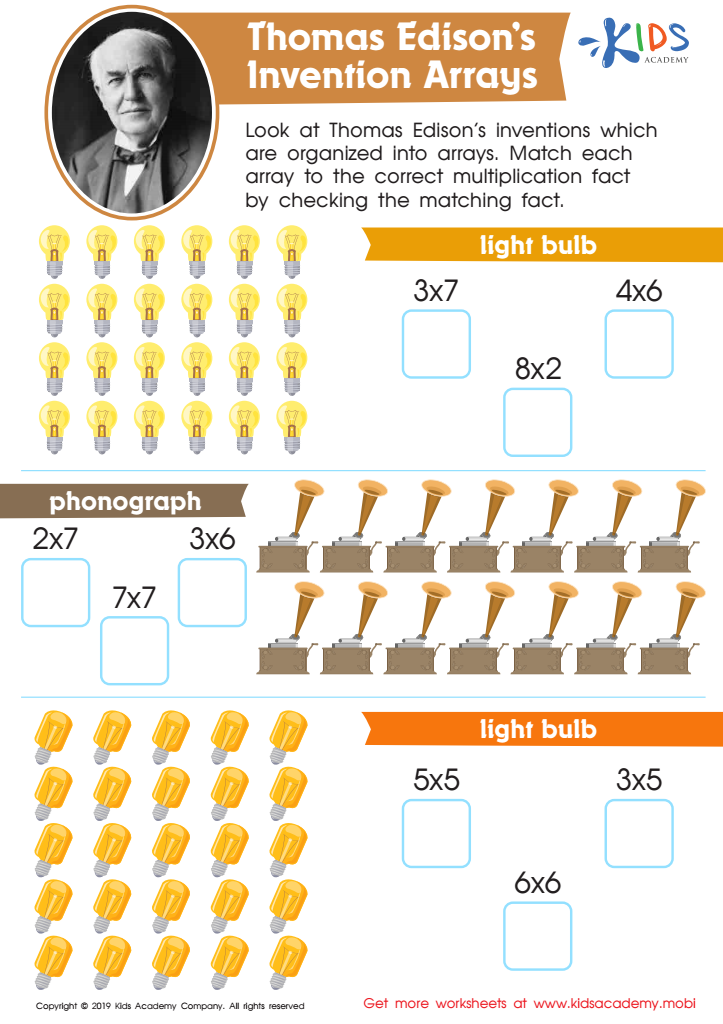
Thomas Edison’s Invention Arrays Worksheet
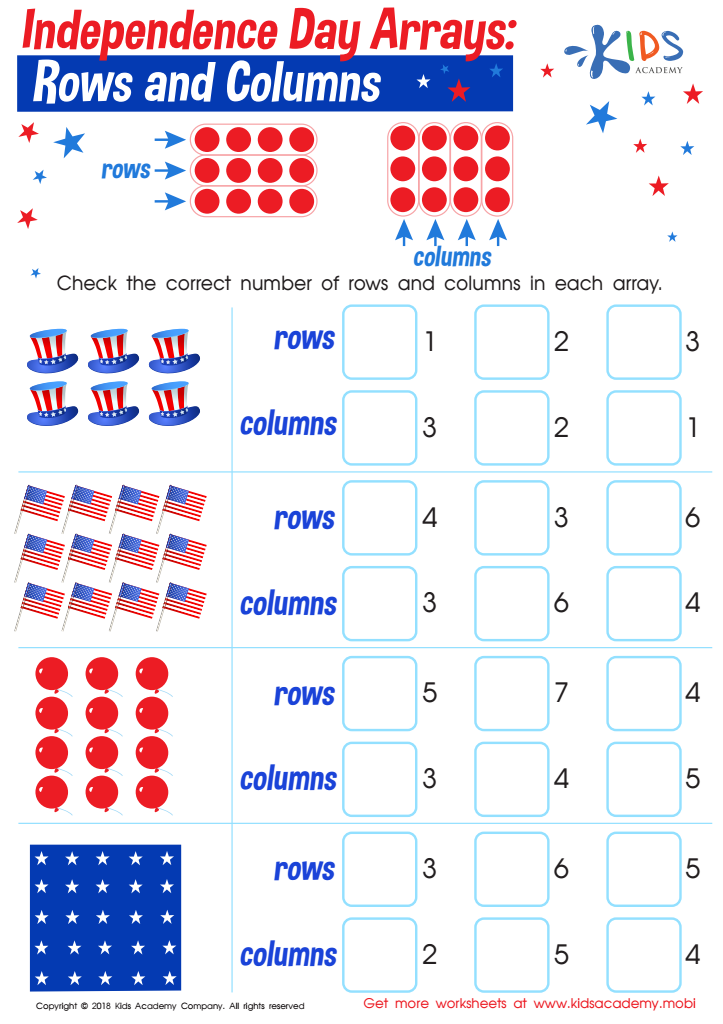
Independence Day Arrays: Rows and Columns Worksheet
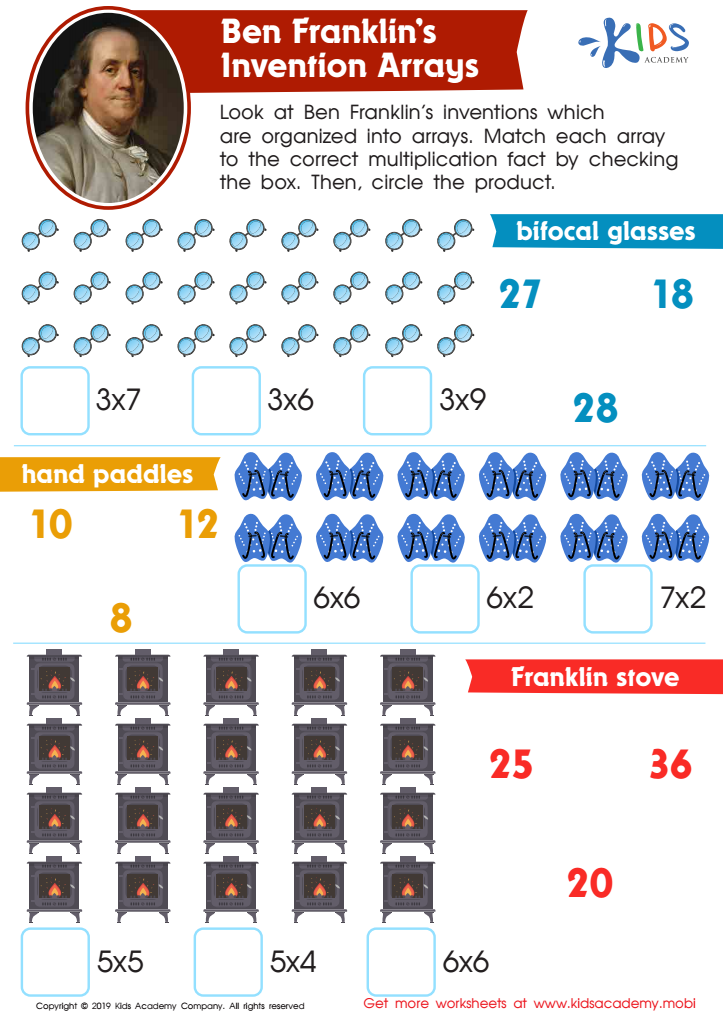
Ben Franklin’s Invention Arrays Worksheet








Reading comprehension arrays are crucial tools for enhancing the literacy skills of children aged 5-9. At this formative stage, children are developing essential reading strategies that form the foundation for their future learning. Comprehension arrays, which visually represent relationships between texts, characters, themes, and settings, encourage critical thinking and deeper understanding.
Parents and teachers should pay attention to these arrays because they facilitate active engagement with reading materials. They encourage children to analyze and synthesize information, which helps improve retention and the ability to convey ideas clearly. This interactive approach allows children to make connections between their reading and personal experiences, fostering a love for literature.
Moreover, reading comprehension skills directly impact overall academic performance. By integrating comprehension arrays into their teaching methodologies or storytelling practices at home, adults can help children cultivate effective tools for interpreting complex texts. This capability not only enhances reading proficiency but also boosts confidence, preparing children for later academic challenges.
Ultimately, prioritizing reading comprehension arrays allows parents and teachers to nurture curious and competent readers equipped with essential skills that will serve them throughout their educational journey and beyond.








