Filters

6 filtered results

Clear all filters
Favorites
With answer key
Interactive

6 filtered results

Difficulty Level

Grade


Enhance your child's mathematical journey with our Counting Skills Comparing Numbers Worksheets, specifically designed for ages 5-9. These engaging printable activities empower young learners to master the art of comparing numbers by developing their counting skills. Through a variety of fun exercises, children practice identifying greater than, less than, and equal to, all while building confidence in their mathematical abilities. Perfect for home or classroom use, these worksheets provide a comprehensive way to strengthen foundational math concepts and promote analytical thinking. Start your child's adventure in learning today and watch their number comparison skills soar!

Check out this FREE Trial Lesson on Comparing Numbers for age 5-9!

Comparing Numbers Word Problems

Favorites
With answer key
Interactive
  • 5-9
  • Counting skills
  • Comparing Numbers
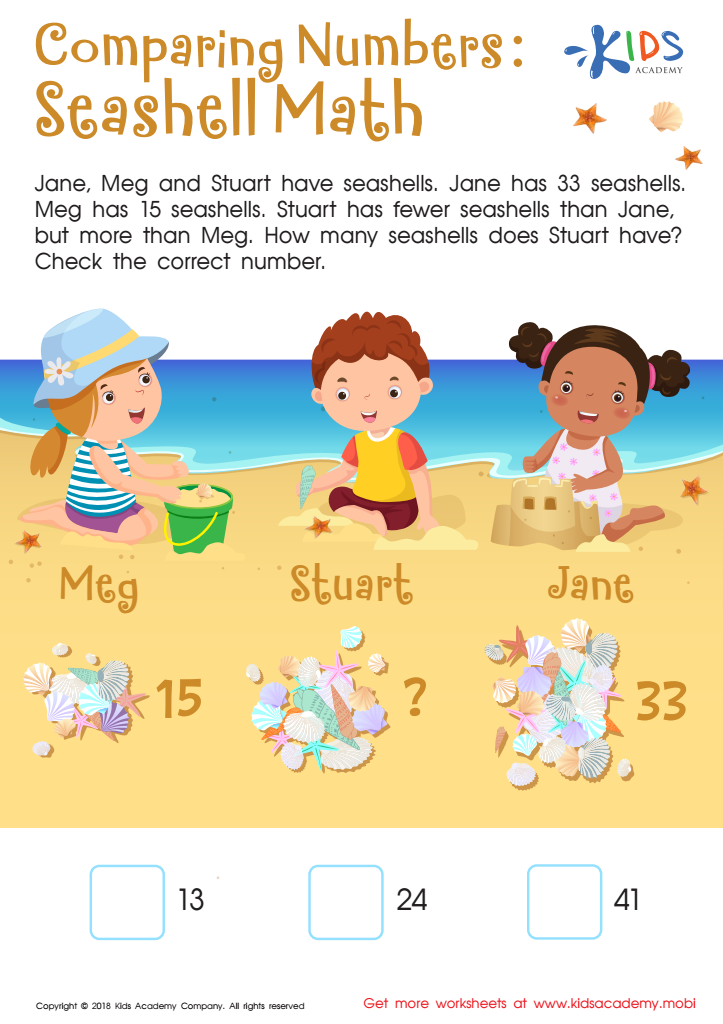
Seashell Collectors Worksheet

Seashell Collectors Worksheet

Bring beach fun into math with this printable worksheet! Carefully read the text with your child and figure out how many seashells Stuart has - more than Meg's, less than Jane's. Forget boring indoor math; your child won't want to miss out on this fun activity!
Seashell Collectors Worksheet
Worksheet
Place Value: Assessment 1 Worksheet

Place Value: Assessment 1 Worksheet

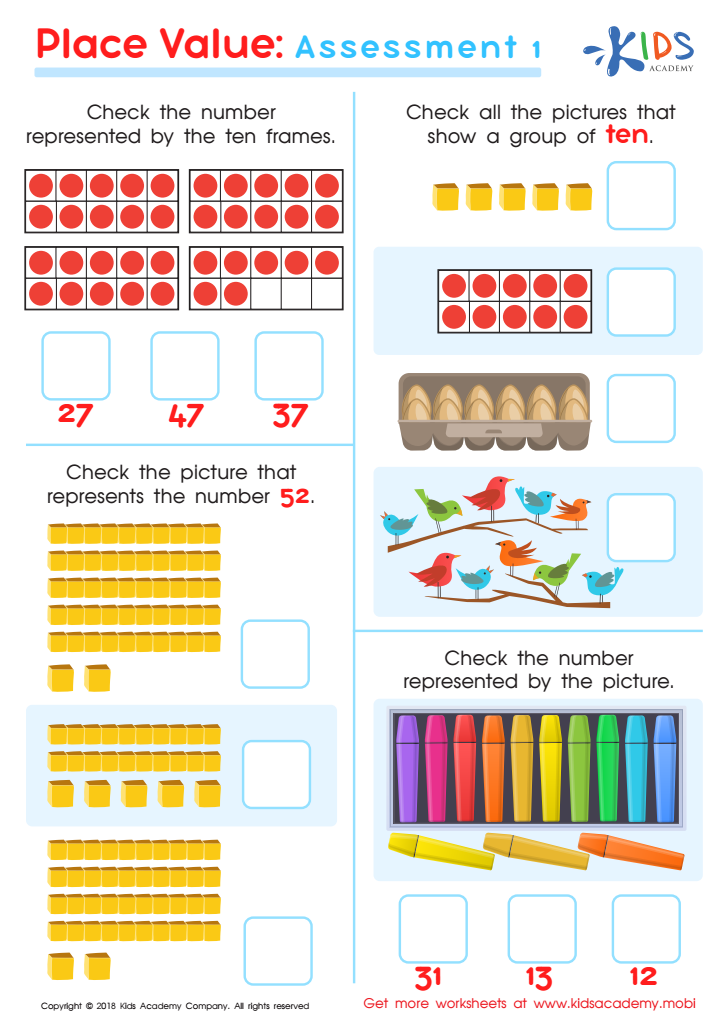
Assess your child's place value and number representation with this PDF worksheet. It lets them count and compare numbers and practice chiseling numbers into groups of ten. It's a great way to identify any concepts that need to be reinforced.
Place Value: Assessment 1 Worksheet
Worksheet
Place Value: Assessment 3 Worksheet

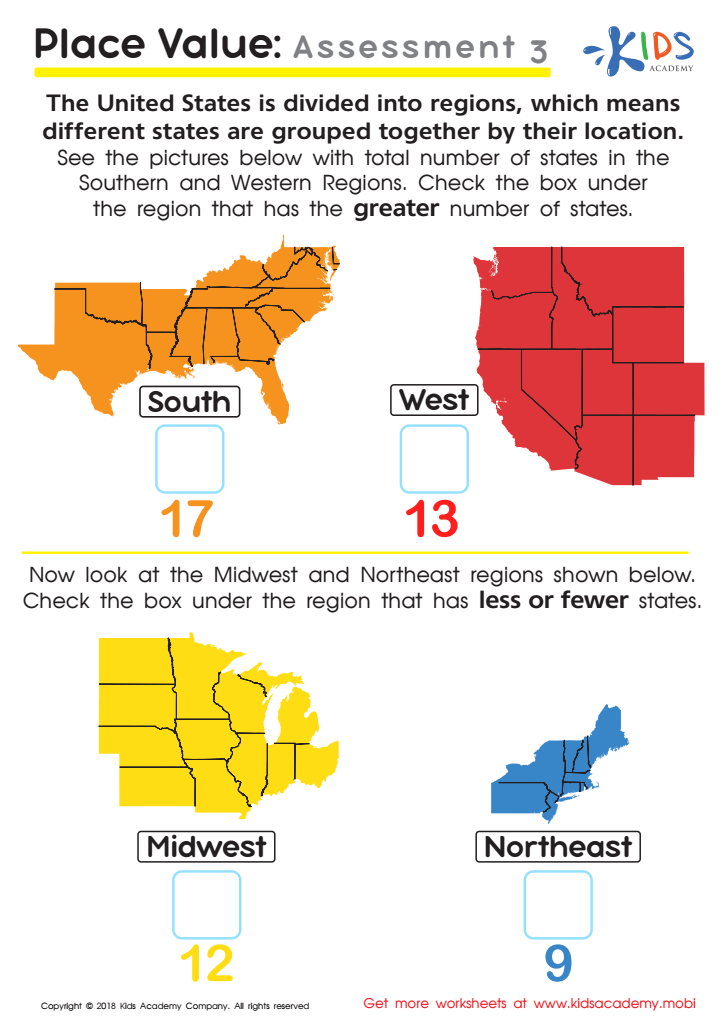
Place Value: Assessment 3 Worksheet

Test your child's math skills without them realizing it! This fun worksheet looks at the states and regions of the U.S. and your child can compare numbers greater or lesser than the other. It's the perfect way to assess your child's number sense without them knowing.
Place Value: Assessment 3 Worksheet
Worksheet
Number maze for kindergarten

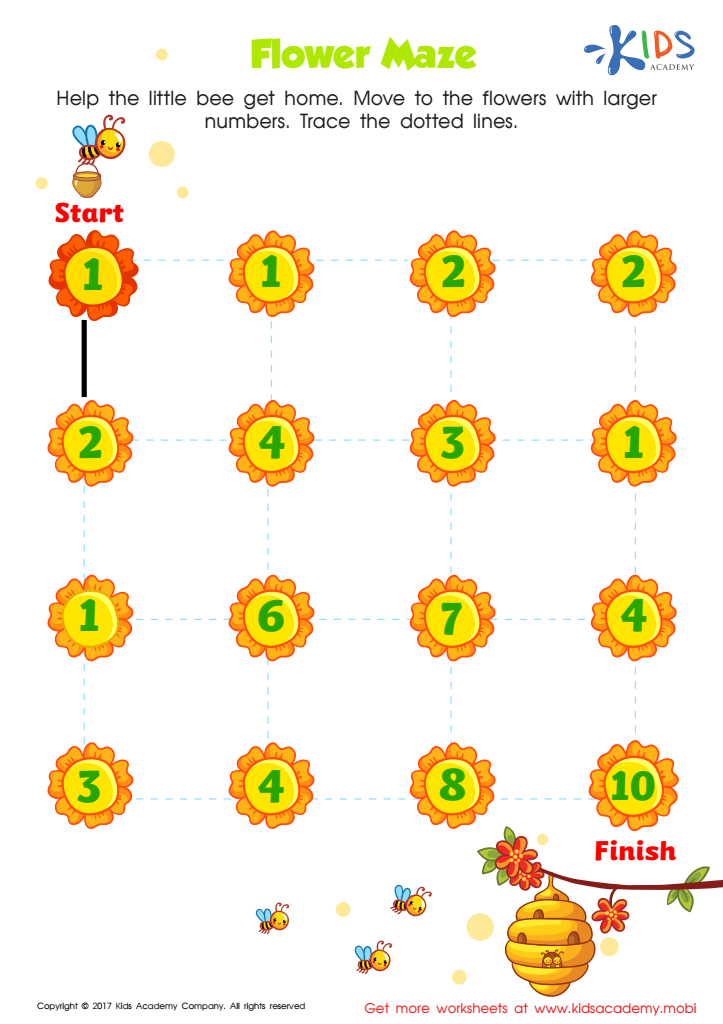
Number Maze For Kindergarten Printable
Help the bee get home to his hive by moving through a fun-filled, tricky maze! Compare numbers as you go and select the flower with the larger number. Great for motivating kindergarteners to develop their number sense - a bright number maze!
Number Maze For Kindergarten Printable
Worksheet
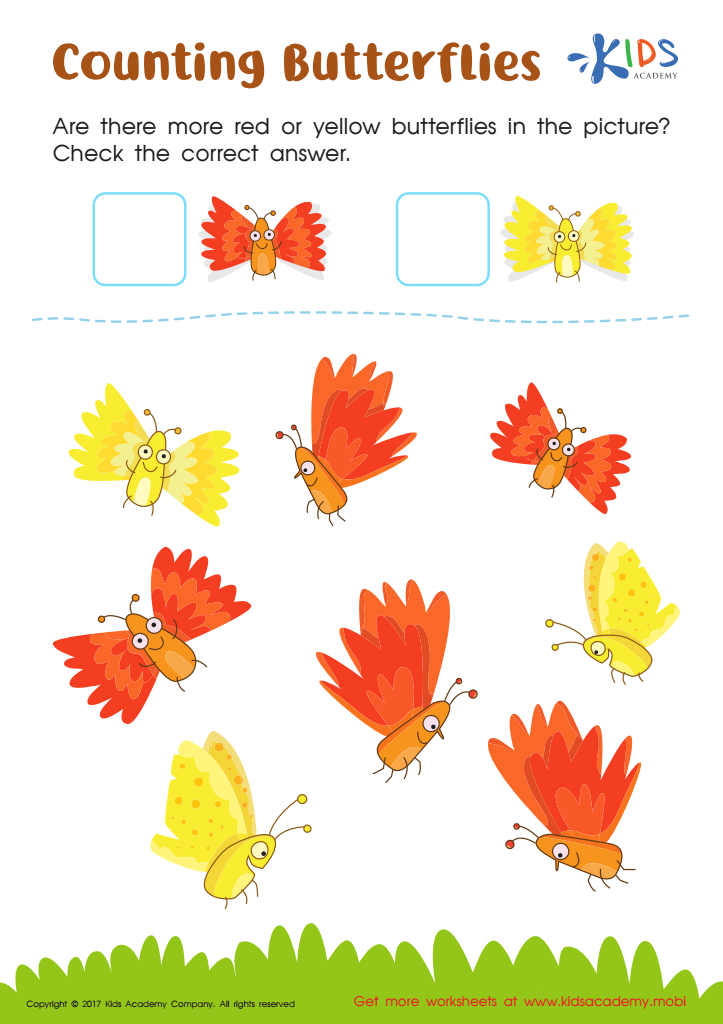
Counting Butterflies Worksheet

Counting Butterflies Worksheet

Count and compare the butterflies in the picture with your child. How many are red, and how many are yellow? Stimulate thinking and counting skills while having fun. Check the answers when you're done.
Counting Butterflies Worksheet
Worksheet
Free addition PDF worksheet for 3rd grade

Free Addition Worksheet

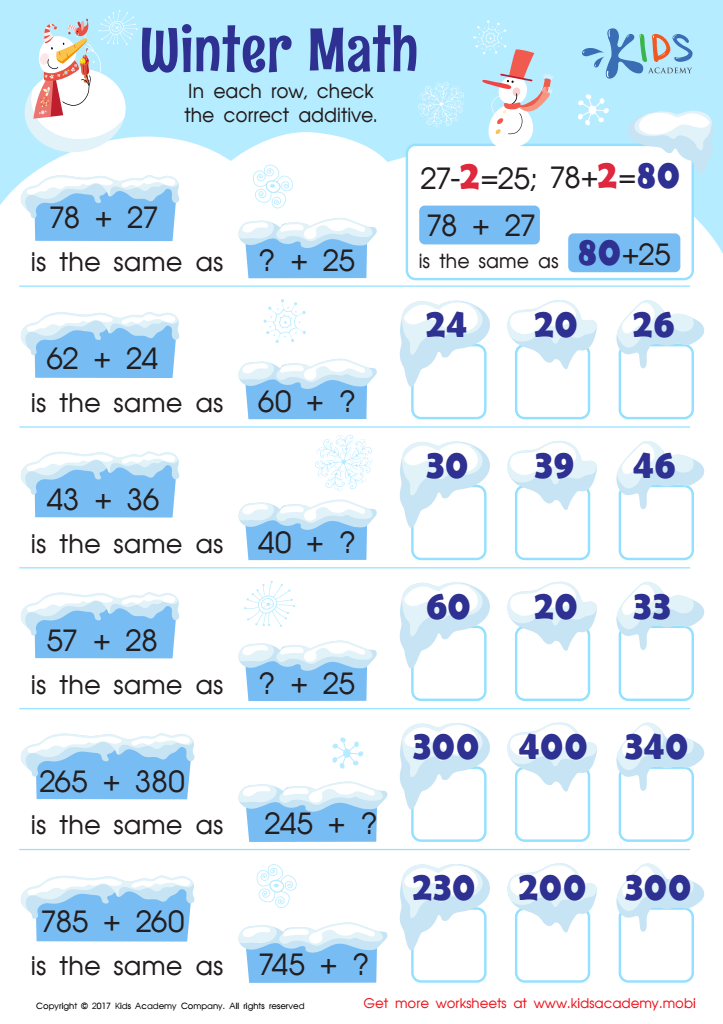
Perfect for a wintry day, challenge your 3rd grader to compare addition equations and fill in the missing numbers in the PDF. This winter-themed worksheet is sure to bring a smile while your 3rd grader practices their addition skills. Perfect for a blustery day, challenge your child to compare addition equations and complete the missing numbers in the PDF.
Free Addition Worksheet
Worksheet


Counting skills and comparing numbers are foundational mathematical concepts critical for children aged 5-9. These skills form the building blocks for more advanced math knowledge, which is essential for future academic success. When parents and teachers focus on these abilities, they lay the groundwork for children's problem-solving, analytical, and critical thinking skills.

Understanding how to count not only aids in early mathematics but also enhances children's understanding of their environment, helping them develop skills in organization, grouping, and even basic budgeting. Comparing numbers, on the other hand, fosters skills like reasoning and decision-making, allowing children to grasp concepts such as greater than, less than, and equal to, which are crucial for data interpretation.

Moreover, these skills build confidence and encourage a positive attitude toward learning. Engaging in counting and comparison activities can create interactive and enjoyable learning experiences, which are vital for keeping young learners motivated. As children apply these skills in everyday life—from arranging toys to sharing snacks—they not only enhance their cognitive development but also promote social skills. Thus, parental and teacher involvement in nurturing counting and comparing skills is essential for well-rounded early education.