Sorting skills Geometry Worksheets for Ages 5-9
5 filtered results
-
From - To
Enhance your child's geometry understanding with our "Sorting Skills Geometry Worksheets" designed for ages 5-9. These vibrant and engaging worksheets help young learners develop critical thinking and classification skills by organizing shapes, colors, and sizes. Ideal for early grade students, each printable is crafted to make learning fun while reinforcing fundamental math concepts. Through interactive exercises, children will improve their ability to sort and categorize, laying a solid foundation for advanced geometric studies. Get started today and watch your child's confidence and competence in geometry soar with Kids Academy’s expert-designed sorting skills worksheets!
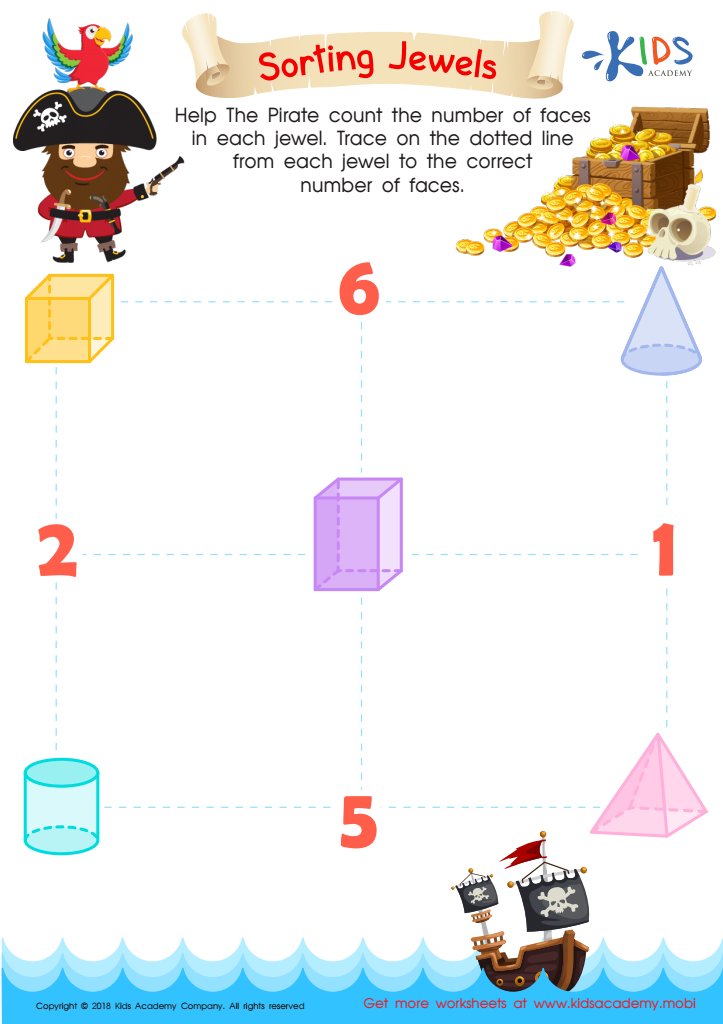
Sorting Jewels Worksheet
 Assign to My Students











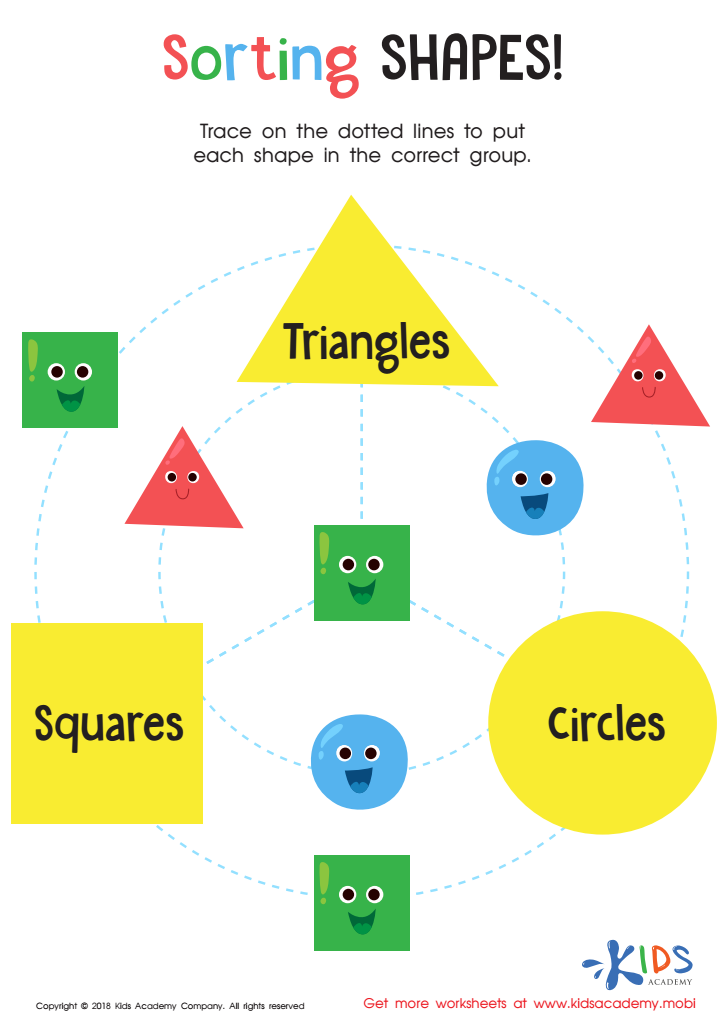
Sorting Shapes - Part 3 Worksheet
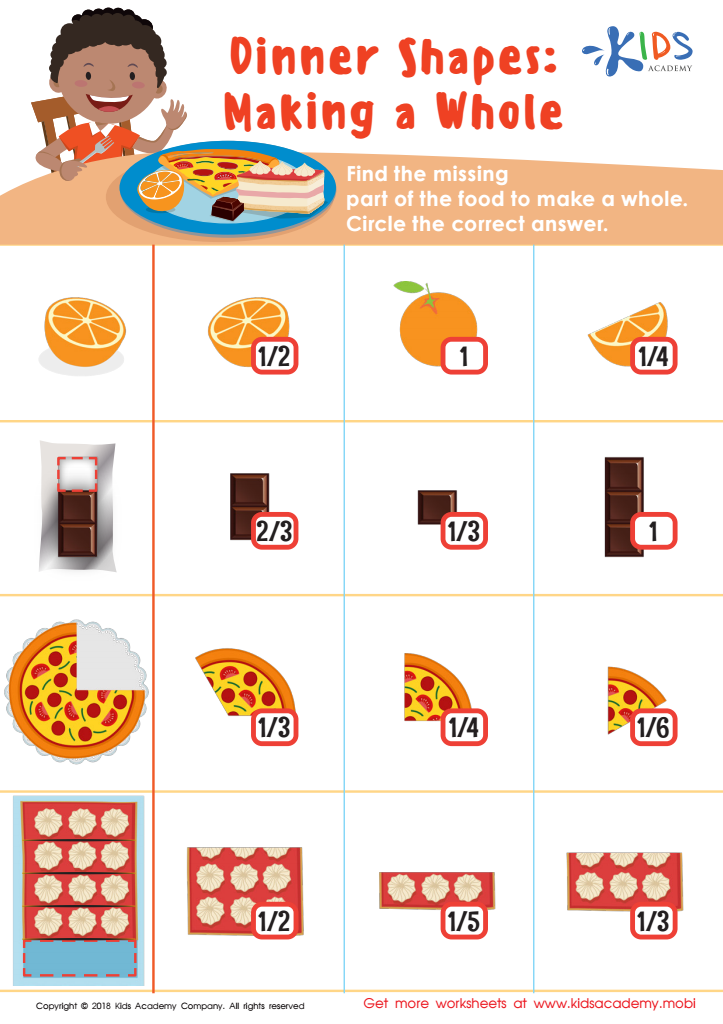
Dinner Shapes: Making a Whole Worksheet
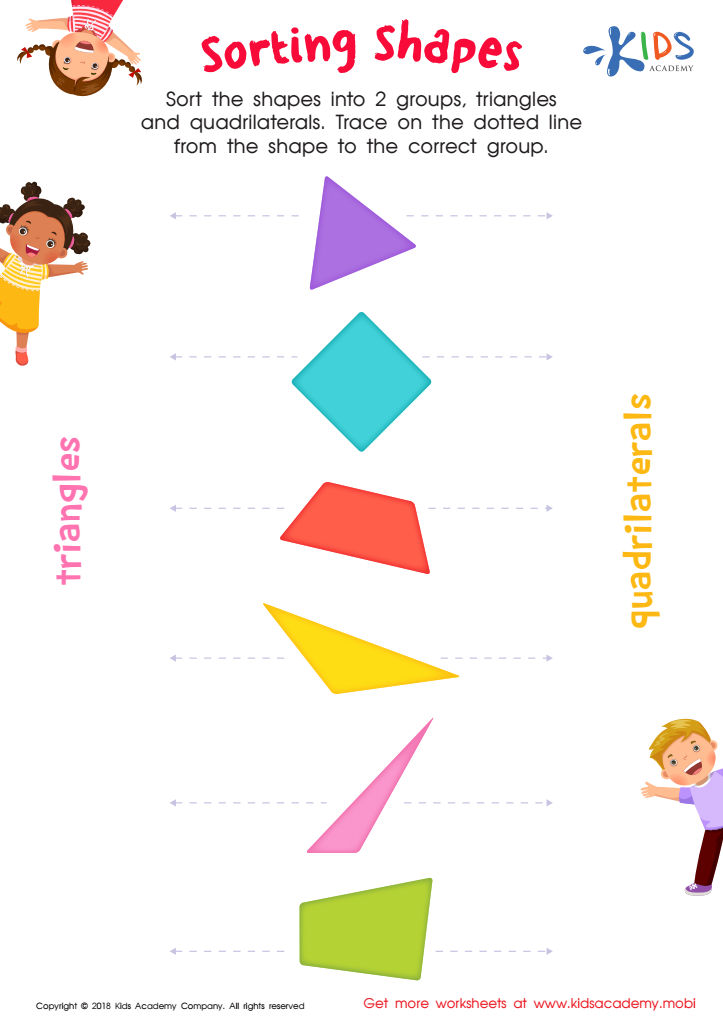
Sorting Shapes Worksheet
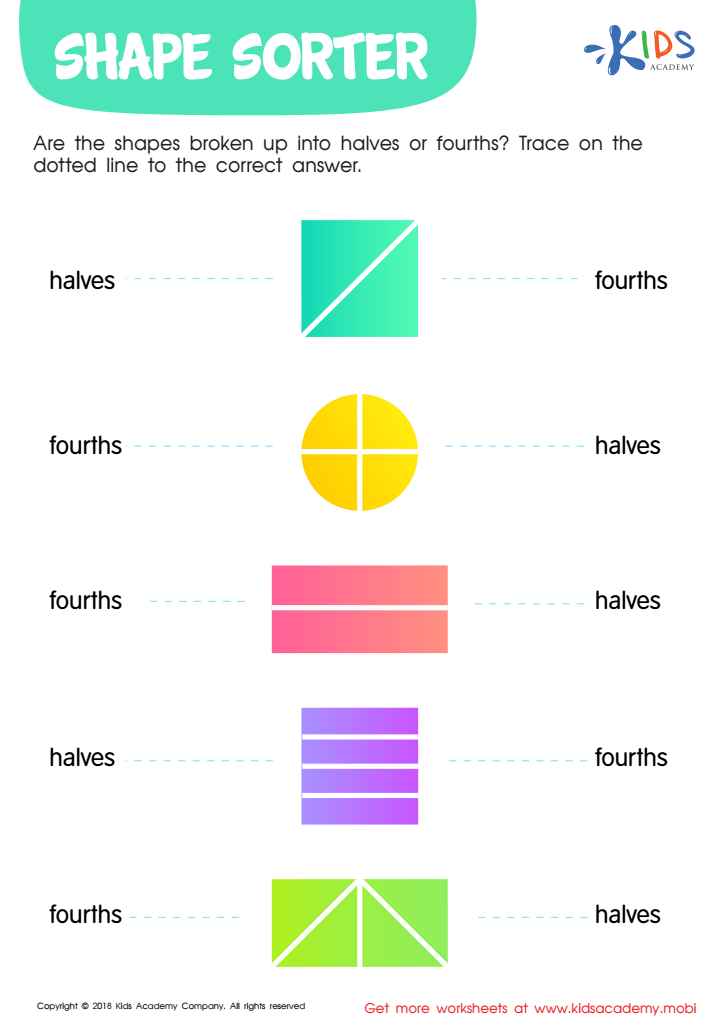
Shape Sorter Worksheet








Sorting skills and geometry are essential areas of early childhood education that parents and teachers should prioritize for children ages 5-9. Developing sorting skills enables young learners to categorize objects based on various attributes such as shape, size, color, and texture. This foundational skill enhances children’s ability to recognize patterns, make comparisons, and organize information, all of which are critical for cognitive development and problem-solving abilities.
Geometry, which involves understanding shapes, spatial relationships, and properties of space, contributes significantly to mathematical reasoning. For young children, grasping basic geometrical concepts such as recognizing and naming shapes, understanding symmetry, and comprehending the concepts of length, area, and volume builds a strong foundation for more advanced mathematical learning.
Integrating sorting and geometry into early education helps children develop critical thinking and analytical skills. These skills encourage curiosity and exploration, fostering a growth mindset. Additionally, early exposure to these concepts can enhance visual-spatial awareness, which is important for success in fields like science, technology, engineering, and mathematics (STEM).
By engaging children in activities that involve sorting and geometry, parents and teachers can support holistic development, nurturing both intellectual growth and enthusiasm for learning. This balanced approach ensures that children gain the skills necessary to navigate and understand the world around them in a more structured and meaningful way.








