
Real-life application Numbers Worksheets for Ages 5-9
3 filtered results
Difficulty Level
Grade
Age
-
From - To
Subject
Activity
Standards
Discover our engaging Real-life Application Numbers Worksheets for ages 5-9! These thoughtfully crafted sheets make math fun and relatable by connecting numbers to everyday situations. Designed to improve numerical skills, these worksheets cover counting, addition, subtraction, and more, all through real-world scenarios children understand and enjoy. Whether it's shopping, cooking, or planning trips, kids learn how numbers play crucial roles in their daily lives. Ideal for parents and teachers, these worksheets ensure practical math comprehension, boosting confidence and performance. Make math meaningful today with our innovative resources!
Favorites
With answer key
Interactive
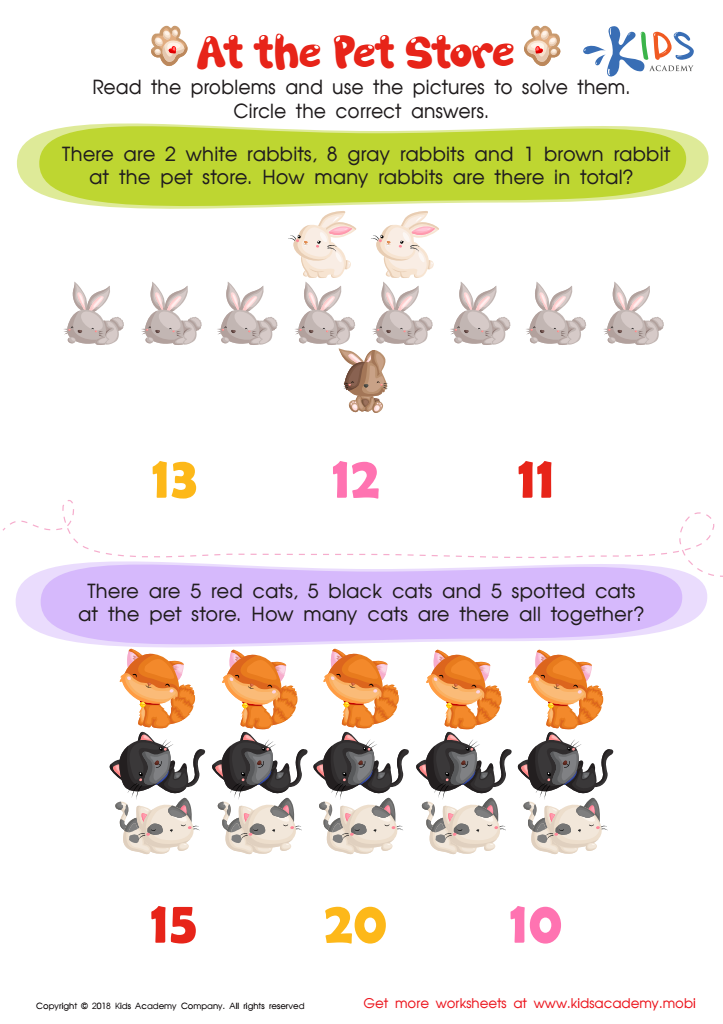
At the Pet Store Word Problems Worksheet
Kids love pet stores! This free, fun PDF worksheet engages little learners to solve word problems with counting and addition. With adorable animals to focus on, your child will practice arithmetic with three addends to find the sum! Help them gain success with word addition word problems.
 Assign to My Students
At the Pet Store Word Problems Worksheet
Worksheet
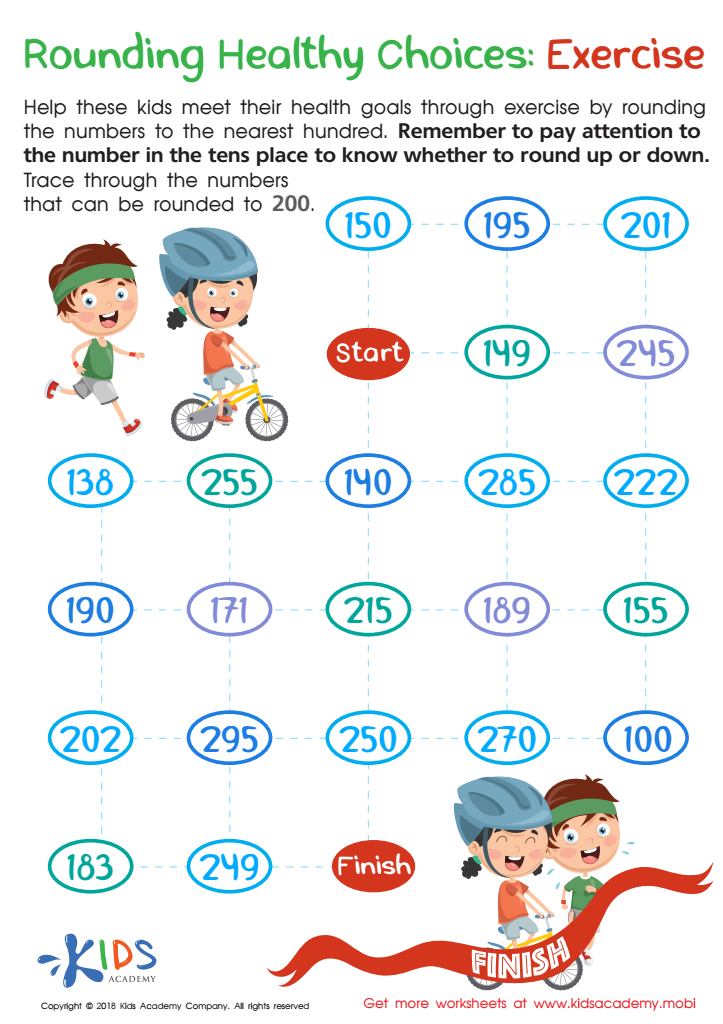
Rounding Healthy Choices Exercise Worksheet
Tired of boring math worksheets? Check out this fun rounding maze printout! Help the kids reach their goals by going from start to finish. To move through the maze, they must find numbers to round to 200. Teach them to pay close attention to the tens place to know whether to round up or down. Have fun and reach the finish line to complete the maze!
Rounding Healthy Choices Exercise Worksheet
Worksheet
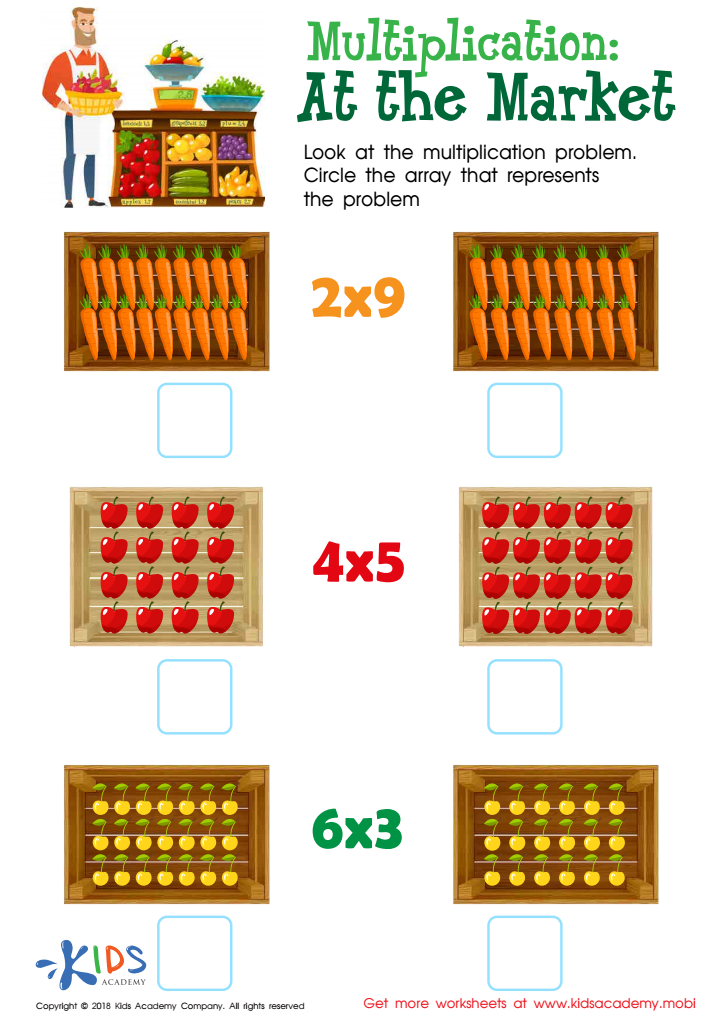
At the Market Worksheet
Head to At the Market! This attractive worksheet features arrays of delicious fruits and veggies that'll have 3rd graders working on their multiplication. Solve the problems, choose the correct answer, and learn while having fun!
At the Market Worksheet
Worksheet
Join Kids Academy for Free
Who is primarily going to use this learning content?








Parents and teachers should prioritize real-life application of numbers for children aged 5-9 because it fosters a strong foundational understanding of mathematics that enhances their learning experience and future competency. At this developmental stage, children are naturally curious and eager to explore the world around them. By integrating numbers into everyday activities, such as counting objects, measuring ingredients while cooking, or managing an allowance, adults help children see the relevance and necessity of math in daily life.
When math is presented in a practical context, it becomes less abstract and more engaging for young learners. This approach helps demystify numbers and enhances problem-solving skills as children learn to apply math concepts to real-world situations. Additionally, incorporating math into routine activities can boost children’s confidence in their abilities, build a positive attitude towards learning, and reduce math anxiety.
Moreover, the early development of numerical skills is linked to better academic performance in later years. By infusing numeracy into regular activities, parents and teachers equip children with critical thinking abilities that are essential not only in academics but also in daily decision-making processes. Ultimately, real-life application of numbers instills a lifelong comfort and proficiency with math, setting the stage for future success and a readiness to tackle more complex mathematical concepts.








