Spatial reasoning Numbers Worksheets for Ages 5-9
3 filtered results
-
From - To
Enhance your child's mathematical foundation with our "Spatial Reasoning Numbers Worksheets for Ages 5-9". Specially designed for young learners, these engaging printables help develop spatial awareness through fun, number-centric activities. These worksheets promote critical thinking, problem-solving skills, and a deep understanding of numerical concepts by visualizing numbers in different forms and contexts. Perfect for both classroom and at-home learning, each sheet encourages children to navigate numbers spatially, better preparing them for more advanced math challenges. Keep your child's interest piqued and their skills sharp with these entertaining and educational resources. Download now to start learning!
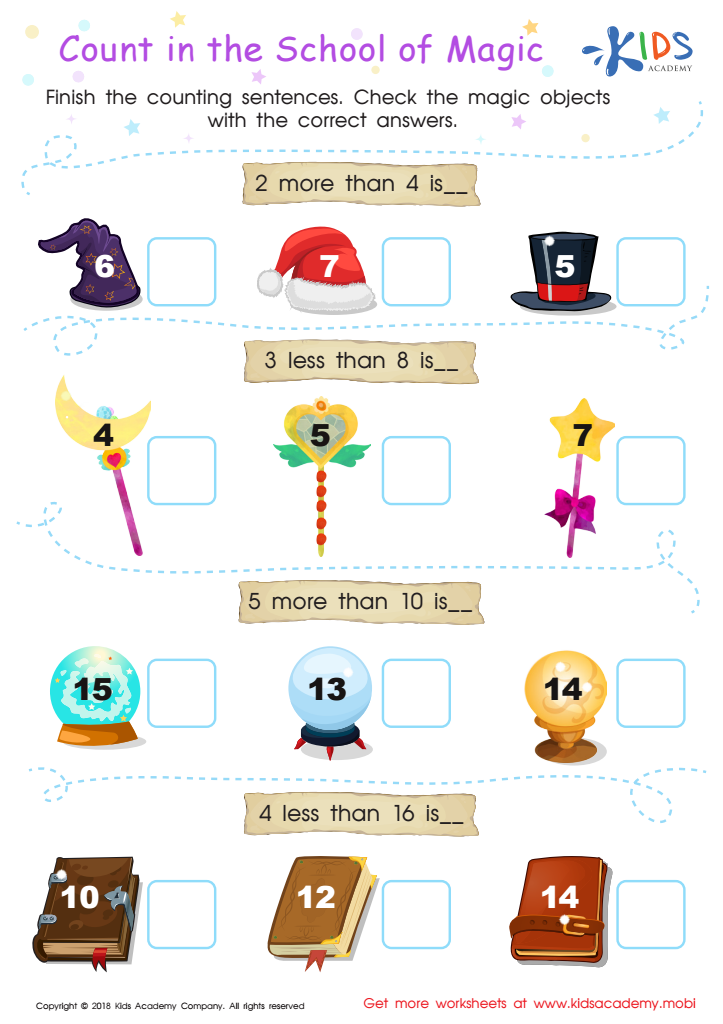
Count in the School of Magic Worksheet
 Assign to My Students
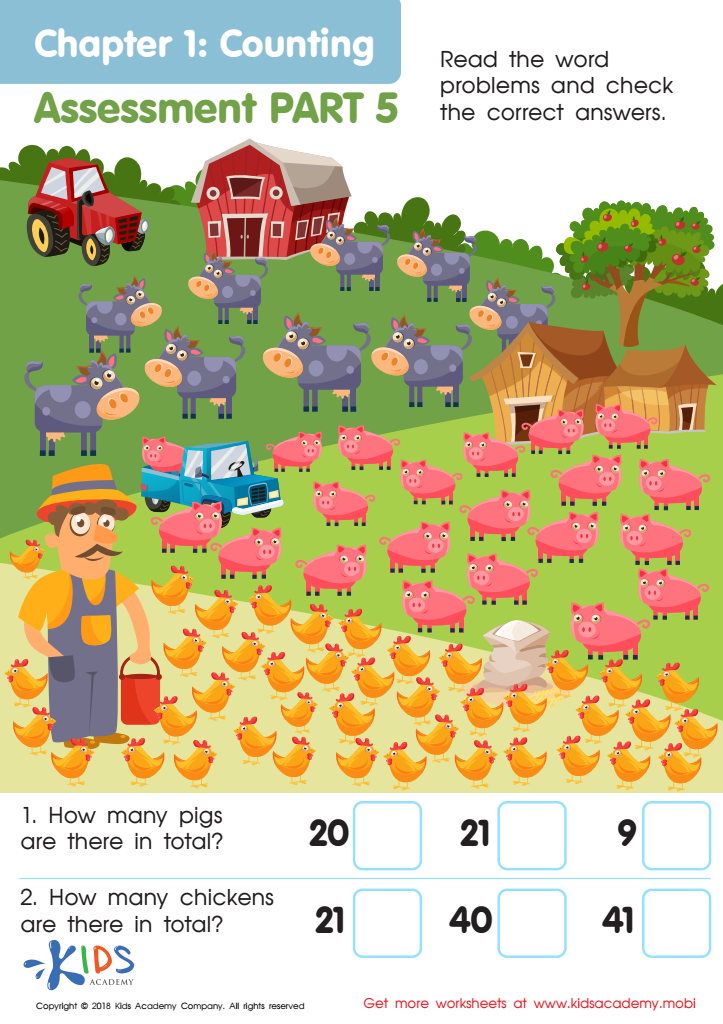
Counting: Assessment 5 Worksheet
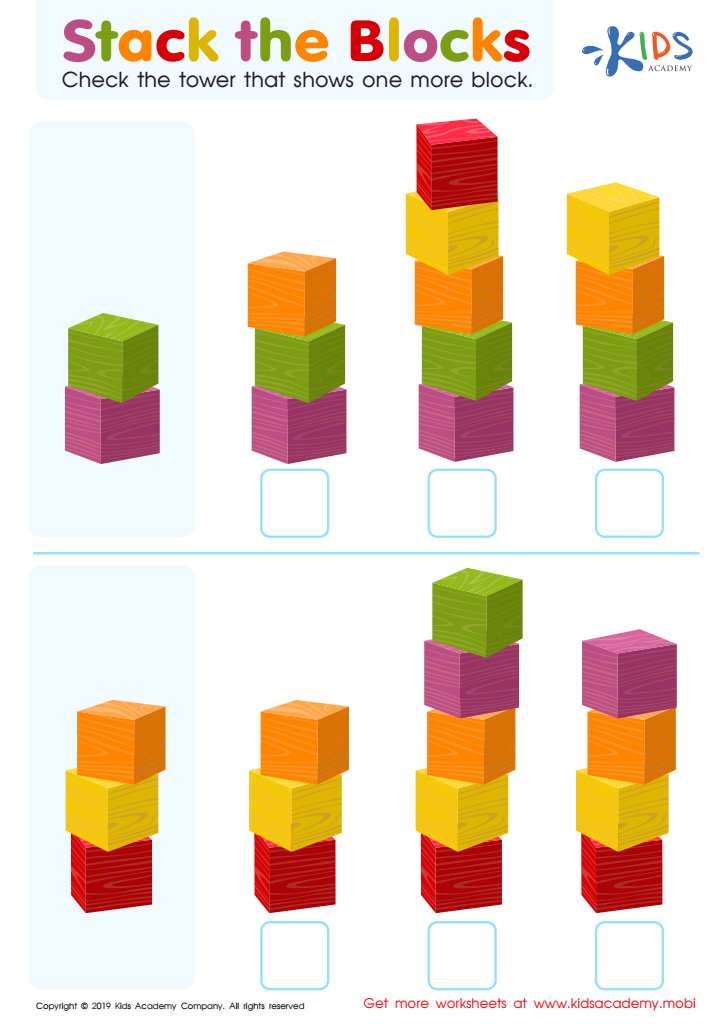
Stack the Blocks Worksheet








Spatial reasoning and numerical understanding are foundational skills that significantly impact a child's overall cognitive development. For children aged 5-9, nurturing these skills is especially critical as they are in the formative years of their academic journey.
Spatial reasoning, which involves the ability to recognize, manipulate, and visualize shapes and patterns, helps children understand and interact with the world around them. It plays a pivotal role in everyday tasks such as reading maps, packing objects efficiently, or even understanding graphs and charts in later years. Enhancing spatial reasoning fosters problem-solving abilities, critical thinking, and creativity.
Similarly, a strong number sense is crucial in building a solid mathematical foundation. Early numeracy skills, such as counting, basic arithmetic, and recognizing number patterns, are not just predictors of future success in mathematics but are also essential for managing daily tasks like telling time or handling money.
Parents and teachers who emphasize and integrate activities that develop spatial reasoning and numerical skills—such as puzzles, building blocks, and simple math games—set the stage for lasting academic achievement. More importantly, these activities make learning fun and engaging, promoting a positive attitude towards learning and boosting a child's confidence in their abilities. This foundational support ensures that children are better equipped to face more complex challenges as they progress through their education.








