Understanding comparisons Numbers Worksheets for Ages 5-9
3 filtered results
-
From - To
"Understanding Comparisons Numbers Worksheets for Ages 5-9" provide engaging and educational activities designed to help young learners master the concept of comparing numbers. These worksheets support children in grasping foundational math skills by using visual aids, fun exercises, and interactive problems. From comparing greater than and less than, to understanding equal numbers, each worksheet is tailored to enhance critical thinking and numerical understanding. Perfect for keeping kids interested while they learn, these resources are an excellent tool for parents and teachers aiming to reinforce math skills at home or in the classroom. Boost your child's confidence in math today!
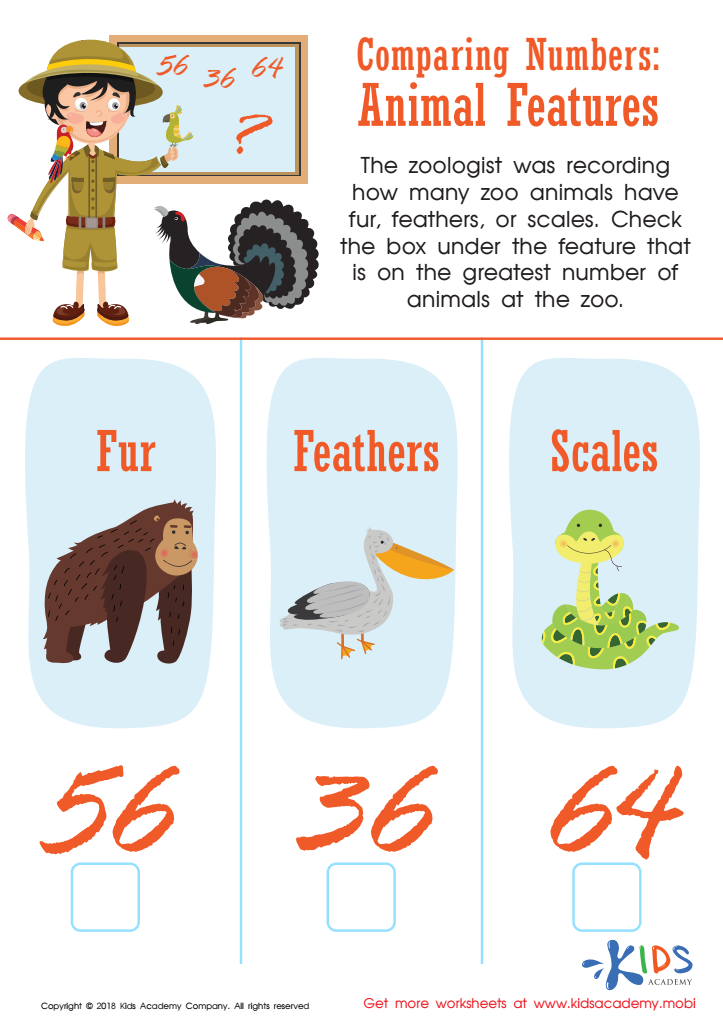
Animal Features Worksheet
 Assign to My Students
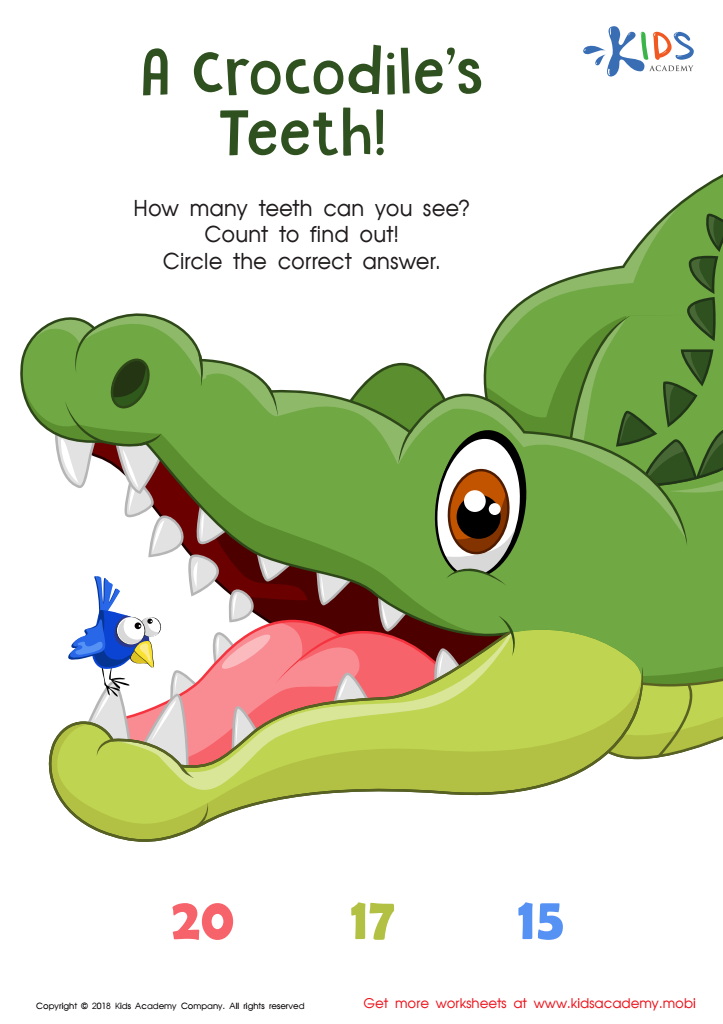
A Crocodile's Teeth Worksheet
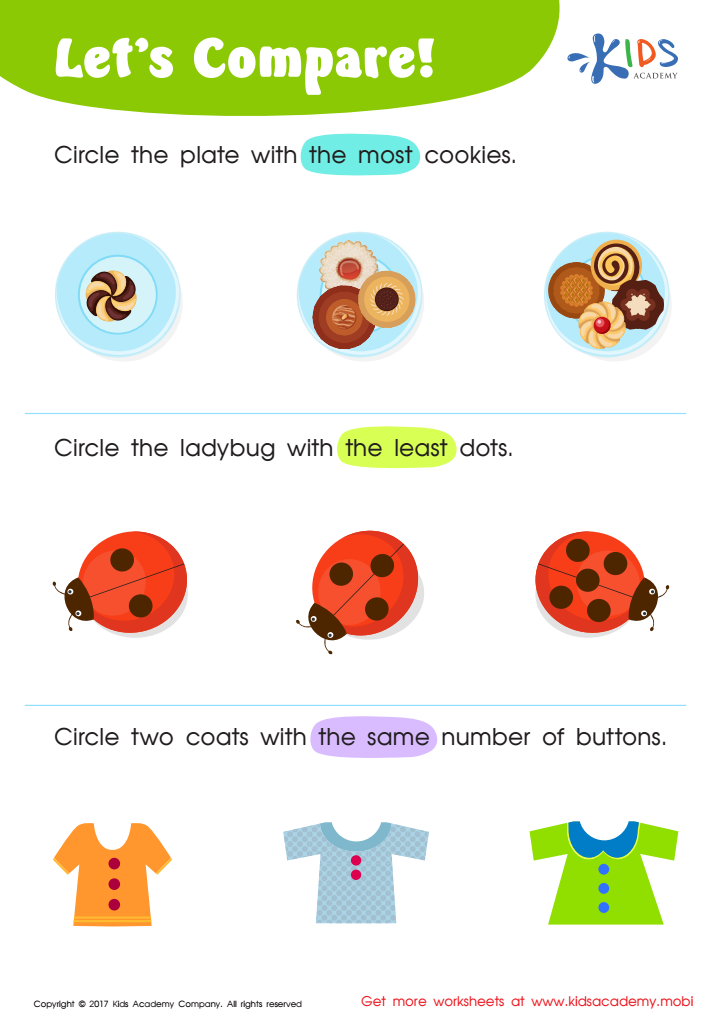
Matching: Classifying Toys by Size Worksheet








Understanding comparisons of numbers is a crucial foundational skill for children ages 5-9, and both parents and teachers should invest time and effort in nurturing this capability. During this formative period, kids start to develop number sense, which is the ability to understand and work with numbers. Comparisons help children grasp concepts like "greater than," "less than," and "equal to," which are essential for arithmetic operations such as addition, subtraction, multiplication, and division.
Proficiency in making numerical comparisons also lays the groundwork for more complex mathematical topics, including fractions, percentages, and mathematical reasoning. When children are comfortable with comparing numbers, they are better equipped to tackle word problems, understand scales and units, and perform estimations, all of which are vital skills both in academic settings and everyday life.
Furthermore, learning to compare numbers enhances logical thinking and problem-solving skills. Children learn to make judgments based on numeric data, fostering analytical skills that transcend mathematics and apply to various subjects and life situations. By emphasizing the importance of number comparisons, parents and teachers can cultivate a positive attitude towards math, boosting children's confidence and leading to future academic success. Ultimately, it's about building a solid mathematical foundation that supports children's educational journeys and life skills.








