Analog Clock Understanding Math Worksheets for Ages 5-9
3 filtered results
-
From - To
Discover our engaging Analog Clock Understanding Math Worksheets designed for children aged 5-9! These worksheets provide a fun and interactive way to help young learners grasp the essential skill of telling time. With colorful visuals and age-appropriate activities, kids will explore hour and minute hands, practice reading various clock faces, and complete hands-on exercises that reinforce their understanding of time concepts. Perfect for use at home or in the classroom, these worksheets support foundational math skills while making learning enjoyable. Encourage your child's math journey with our thoughtfully crafted resources that ignite curiosity and boost confidence in telling time!
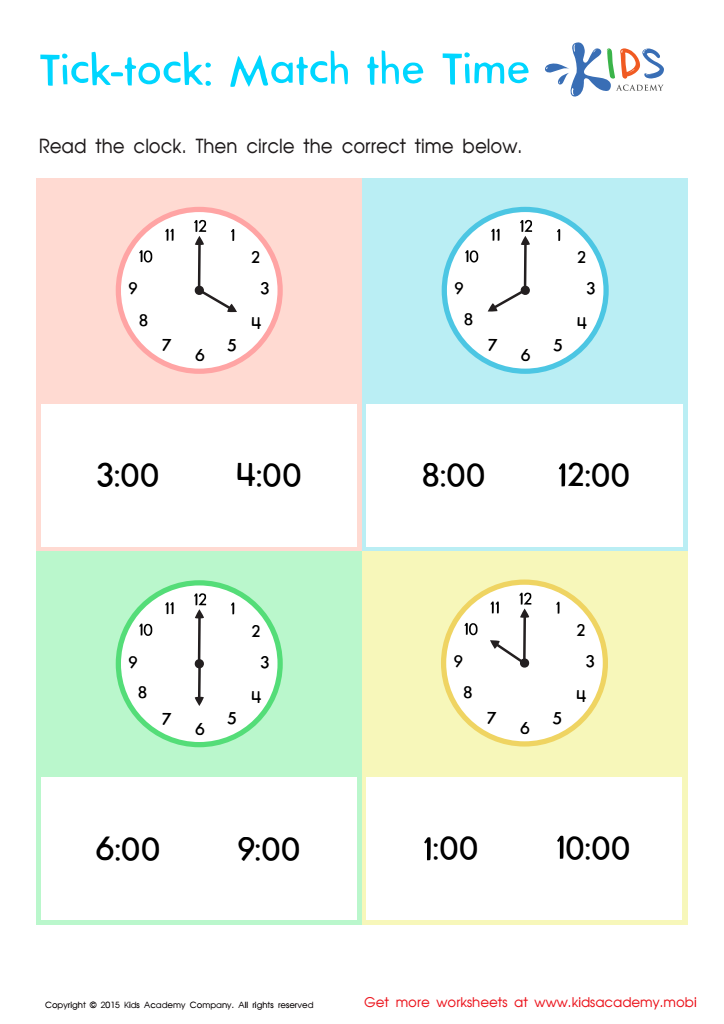
Telling The Time Worksheet: Part 4
 Assign to My Students
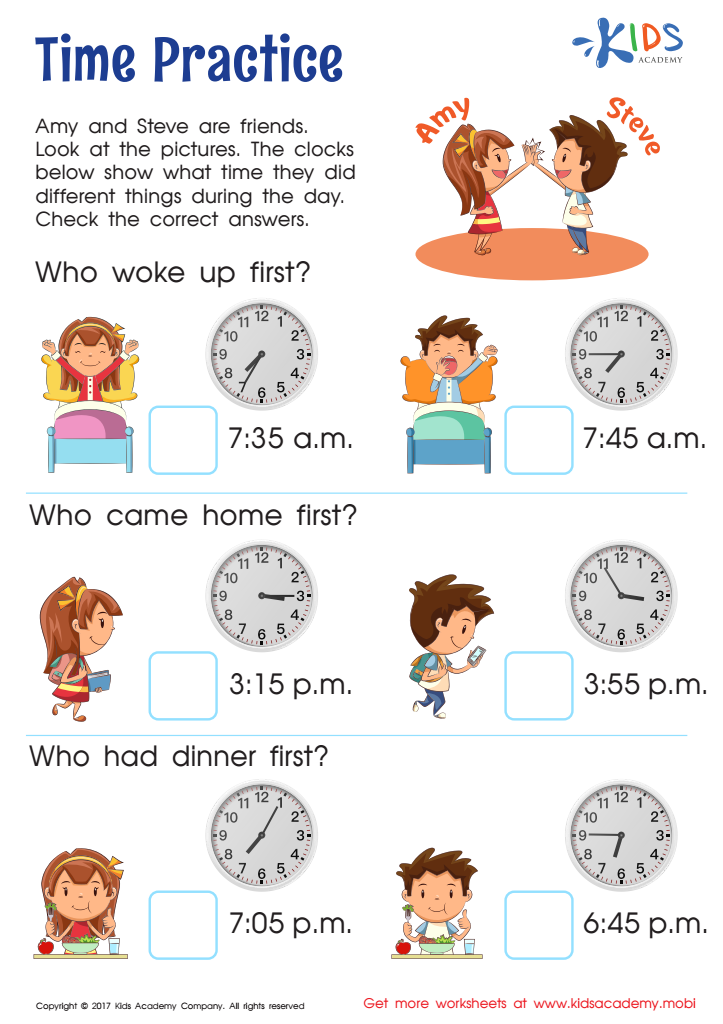
Time Practice Worksheet
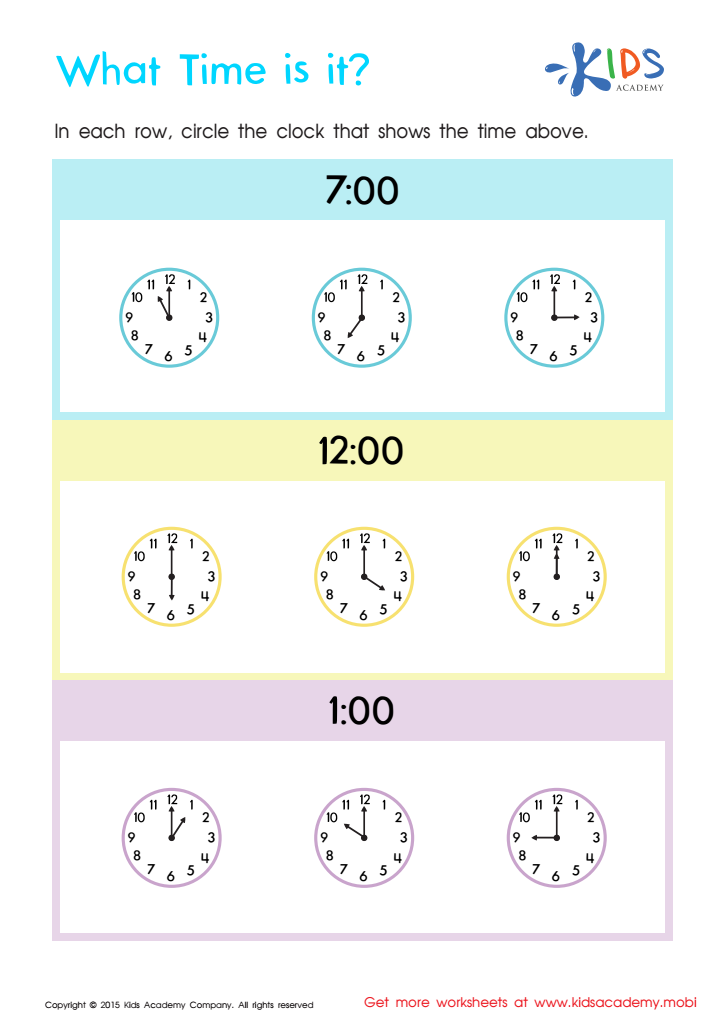
Telling The Time Worksheet: Part 3







Understanding how to read an analog clock is an essential life skill for children aged 5-9. This concept not only develops mathematical reasoning but also enhances critical cognitive abilities. Learning to tell time encourages children to grasp abstract numerical concepts, improving their number sense, which is foundational for more complex math skills. Analog clocks require the recognition of angles and understanding the passage of time, connections that help foster spatial awareness.
Moreover, analog clock skills promote independence. When children can tell time, they can manage their activities without constantly relying on adults for guidance, building confidence and responsibility. This autonomy is important for social and emotional development as it supports self-regulation and planning.
Additionally, discussing time through analog clocks can lead to engaging conversations between parents, teachers, and children, enhancing language and communication skills. This interaction enriches the learning experience, making it enjoyable and memorable.
In a screen-dominated environment, where digital clocks are prevalent, emphasizing analog clock skills can also instill a sense of tradition and cultural literacy. By caring about analog clock understanding, parents and teachers empower children with essential skills that impact their overall proficiency in math, time management, and independent living.








