Basic addition practice Math Worksheets for Ages 5-9 - Page 2
25 filtered results
-
From - To
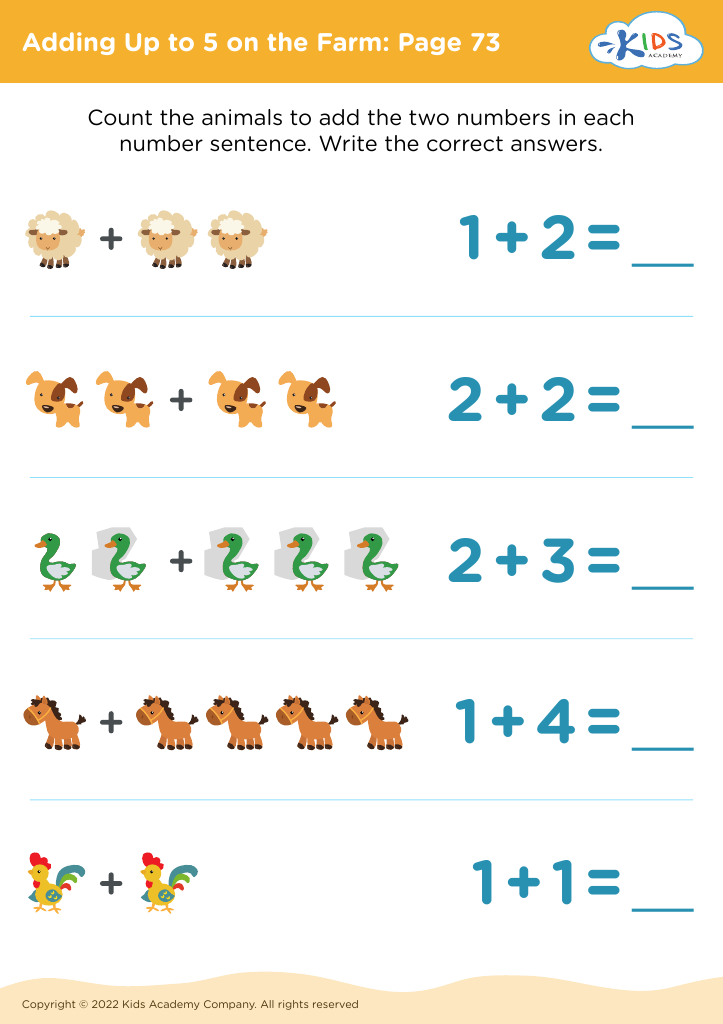








Parents and teachers should prioritize basic addition practice for children aged 5-9 because foundational math skills are critical for academic success and everyday life. At this developmental stage, kids’ brains are growing rapidly, making it the ideal time to introduce core arithmetic concepts. Mastering basic addition helps build confidence and lays the groundwork for more advanced topics like subtraction, multiplication, and division.
Daily practice in addition boosts cognitive abilities such as memory, problem-solving, and logical reasoning. It enables children to handle various tasks that involve calculation, from simple counting to more complex financial literacy as they grow older. Moreover, early competency in math often correlates with higher self-esteem and positive academic attitudes, which are crucial for long-term educational achievement.
In addition, math teaches perseverance and the concept of working toward a solution, essential life skills beyond the classroom. Effective math skills are indispensable in a technology-driven society where math and science play a critical role. Encouraging a strong math foundation from a young age sets children up for future academic achievements and a more confident, capable approach to the challenges they will face throughout their lives. Through games, interactive lessons, and consistent practice, parents and teachers can make math engaging and accessible, transforming it from a potential stumbling block into a stepping stone for broader learning.








