Basic math abilities Math Worksheets for Ages 5-9
3 filtered results
-
From - To
Empower young learners with our Basic Math Abilities Math Worksheets for Ages 5-9. Designed to develop foundational skills, these engaging worksheets cover essential topics such as counting, simple addition, subtraction, and basic problem-solving. Our expertly crafted activities stimulate critical thinking and build confidence in young mathematicians. Suitable for both classroom and home use, these resources provide a fun, interactive, and effective way to support children in their early mathematical journey. Enhance learning with colorful illustrations and age-appropriate exercises that captivate and inspire 5-9-year-olds to explore the world of numbers and arithmetic operations with enthusiasm.
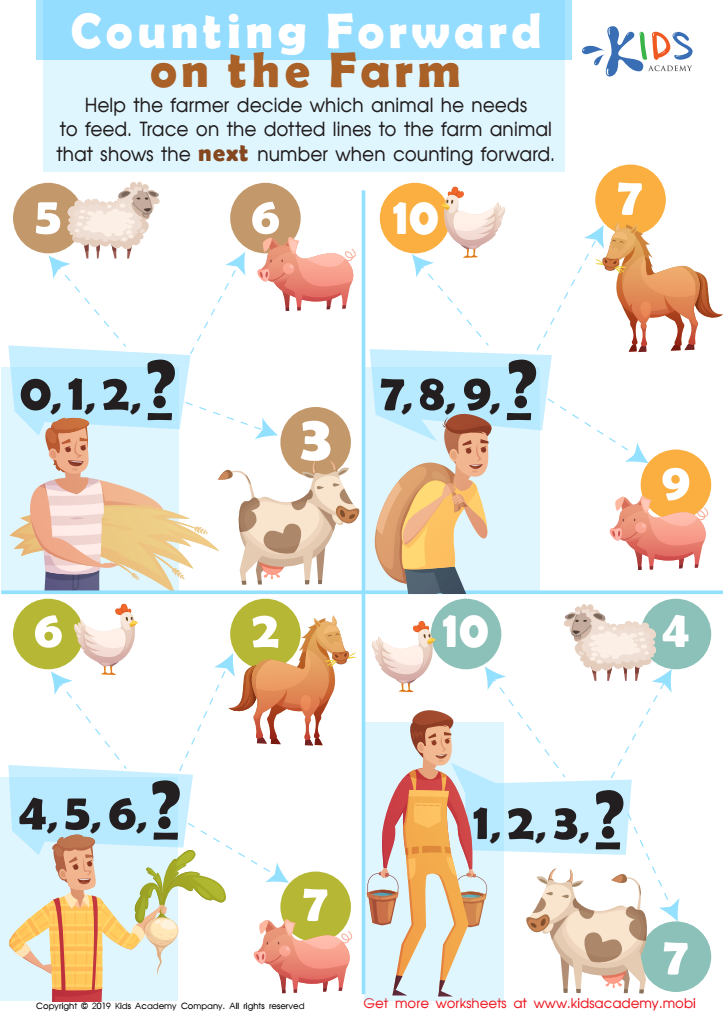
Counting Forward On the Farm Worksheet
 Assign to My Students
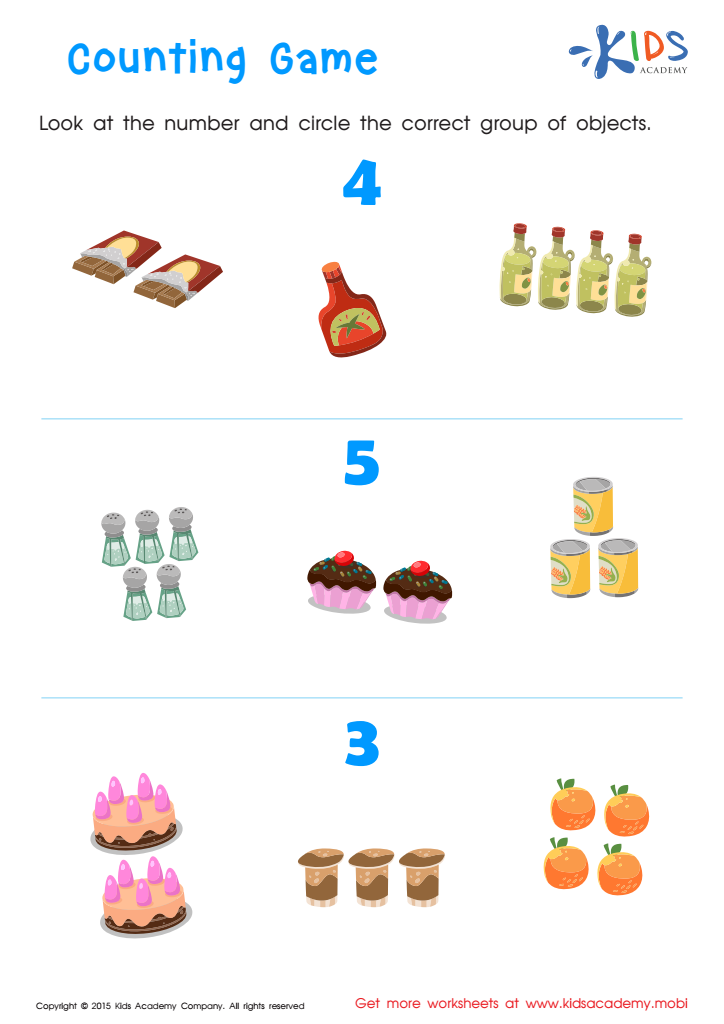
Counting Worksheet








Basic math abilities for children aged 5-9 lay the foundation for both academic success and everyday problem-solving skills. During these formative years, children's brains are particularly receptive to learning fundamental concepts such as counting, simple addition and subtraction, measurement, and recognizing shapes and patterns. Proficiency in these areas sets the stage for more complex mathematical thinking encountered later in their education.
For parents and teachers, investing effort into nurturing these abilities can lead to significant long-term benefits. Strong math skills help develop critical thinking, logical reasoning, and the ability to analyze and solve problems — competencies essential in virtually every field. Moreover, early math success is often linked to higher self-esteem and confidence, which can motivate students to tackle challenges in other subjects.
In our increasingly data-driven and technological world, basic math proficiency is more crucial than ever. Occupations in science, technology, engineering, and mathematics (STEM) fields require strong analytical skills. Even daily activities like budgeting, cooking, or not getting shortchanged at a store require basic math abilities.
By caring about their child’s or student’s early math skills, parents and teachers empower them with the tools necessary for lifelong learning and success. Engaging, fun, and hands-on activities can demystify math and foster a positive attitude towards learning that benefits children well into adulthood.








