Developing counting skills Math Worksheets for Ages 5-9
6 filtered results
-
From - To
Boost your child’s math proficiency with our Developing Counting Skills Math Worksheets, designed for ages 5-9. These engaging, colorful worksheets help young learners build a strong foundation in counting, number recognition, and sequencing through fun, interactive activities. Ideal for both classroom and at-home practice, our worksheets cover a range of counting skills, from basic number identification to more advanced patterns and skip counting. With a focus on reinforcing fundamental math concepts, they help students gain confidence and mastery in early math skills. Download now to give your child a head start in their math journey!
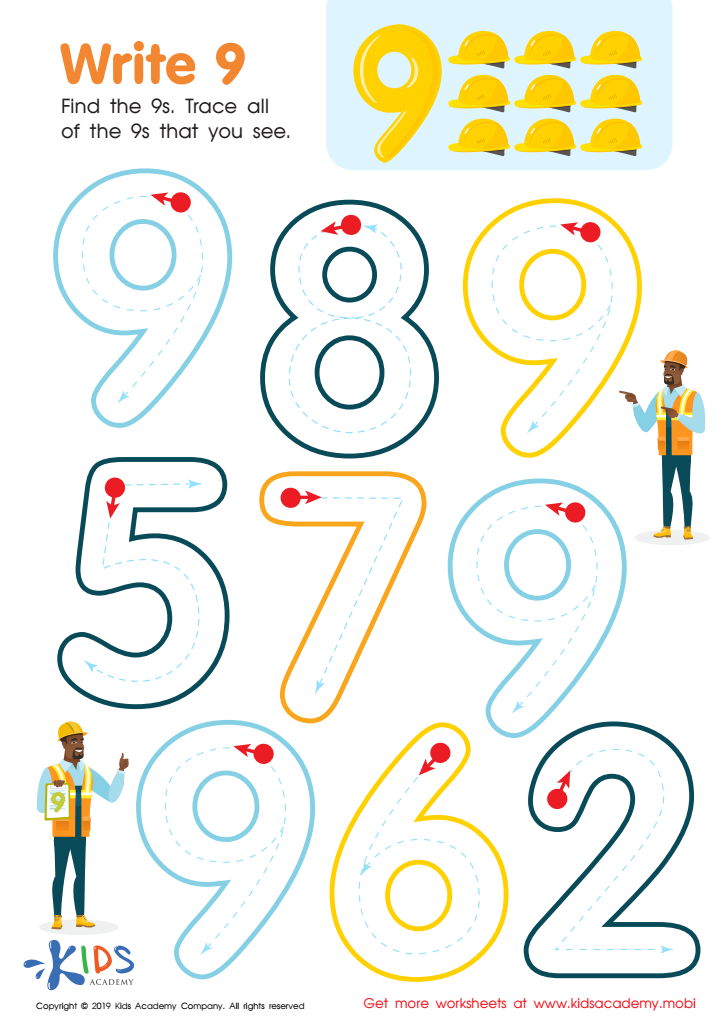
Write 9 Worksheet
 Assign to My Students
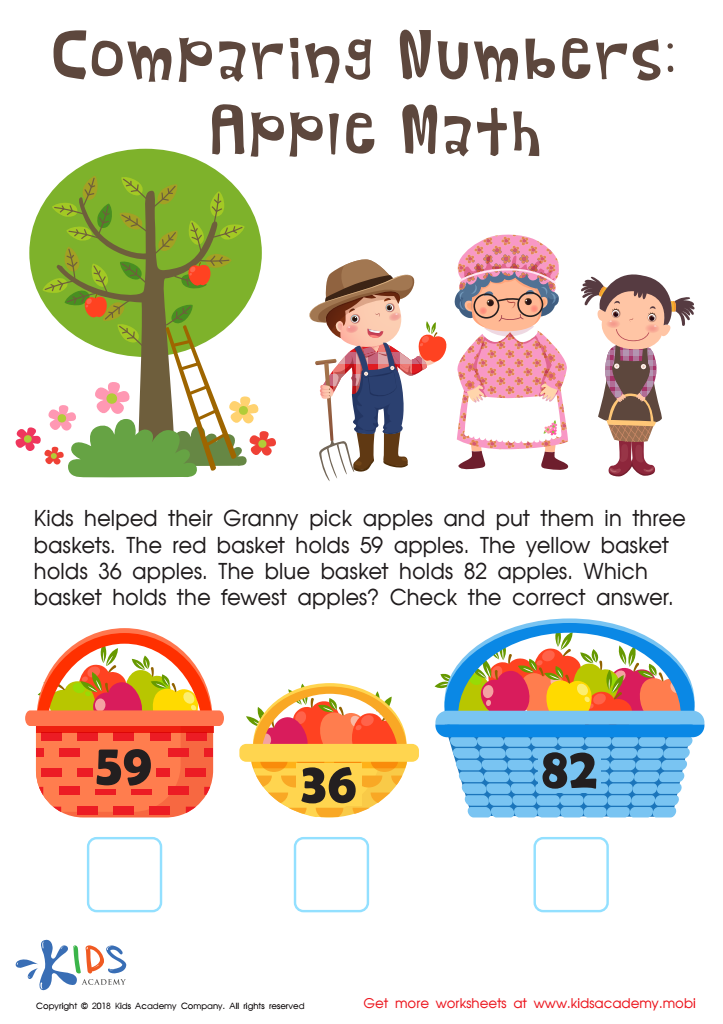
Apple Math Worksheet
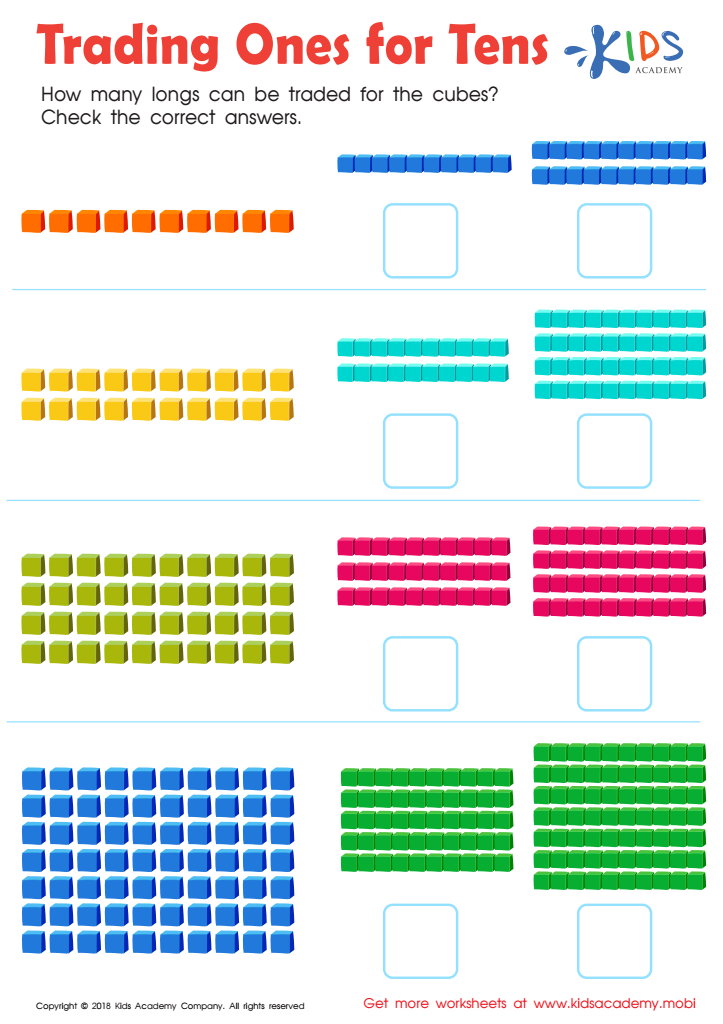
Trading Ones for Tens Worksheet: Part 2







Developing counting skills in children aged 5-9 is foundational to their overall mathematical understanding and future academic success. Counting is more than just reciting numbers; it lays the groundwork for comprehending complex mathematical concepts. When children master counting, they begin to understand number sequences, relationships, and basic arithmetic operations like addition and subtraction.
Counting helps children recognize patterns, improve problem-solving skills, and enhance logical thinking—an essential life skill. For instance, knowing that counting involves one-to-one correspondence aids in accurate measurement, be it objects or time. This skill can be applied in daily activities, such as setting tables or organizing toys, fostering a sense of order and responsibility.
Moreover, early proficiency in counting boosts children's confidence and contributes to a positive attitude toward math. This enthusiasm can lead to a lifelong interest in STEM (Science, Technology, Engineering, Mathematics) fields, opening up a plethora of future career opportunities. Parental and teacher involvement at this stage can make learning enjoyable and stress-free, employing games, songs, and hands-on activities to solidify concepts.
Neglecting counting skills at an early age can result in future academic difficulties, making it harder for children to grasp more advanced mathematical ideas. Thus, focusing on counting during these formative years can provide a strong educational foundation, making complex problems easier and more intuitive to solve as they grow.








