Developing observational skills Math Worksheets for Ages 5-9
4 filtered results
-
From - To
Enhance your child's observational skills with our engaging math worksheets designed for ages 5-9! These worksheets provide fun, interactive activities that encourage kids to observe, analyze, and draw connections between patterns and numbers. By fostering critical thinking and honing attention to detail, children develop essential skills needed for success in math and beyond. Our carefully crafted exercises are perfect for home or classroom use, making learning enjoyable and effective. With colorful visuals and age-appropriate challenges, your little learners will build confidence as they improve their observational skills in a supportive and stimulating environment. Start their math journey today!
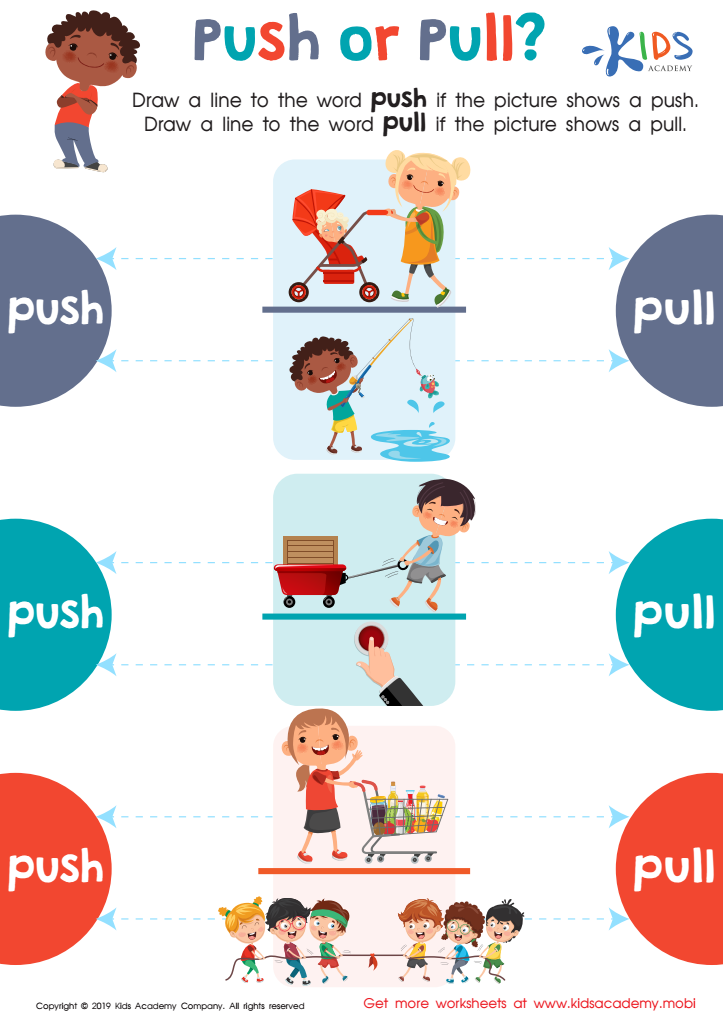
Push or Pull? Worksheet
 Assign to My Students
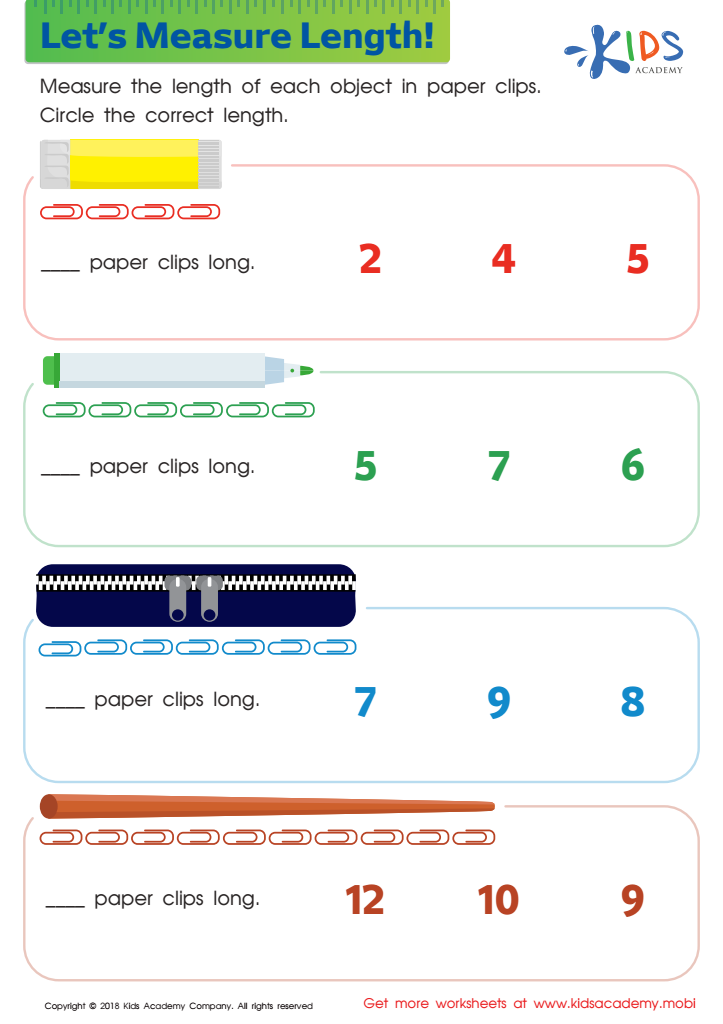
Lets Measure Length Worksheet
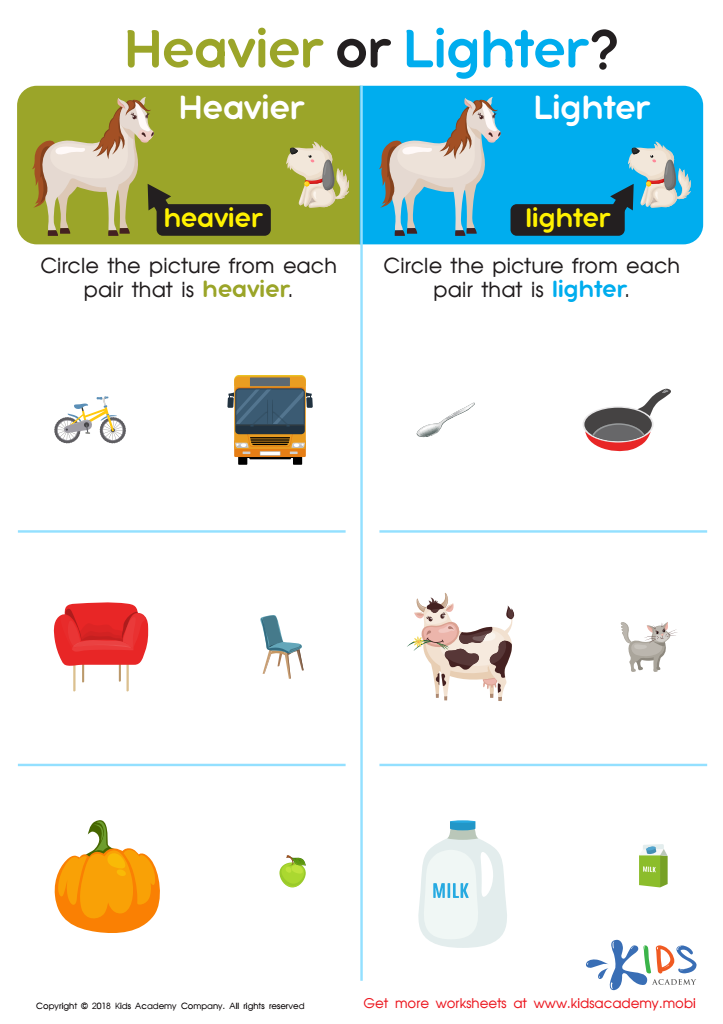
Heavier or Lighter? Worksheet





.jpg)


Developing observational skills in math for children ages 5-9 is crucial as it lays the foundation for deeper understanding and problem-solving abilities. At this age, children are naturally curious, and harnessing that curiosity through observation enriches their mathematical experience. Engaging in observational math helps children identify patterns, relationships, and spatial awareness, which are fundamental to concepts such as addition, subtraction, geometry, and measurement.
When parents and teachers encourage observation, they foster critical thinking and reasoning. Children learn to analyze their surroundings, make connections, and apply abstract concepts to real-life situations. For instance, observing shapes in their environment can lead to hands-on exploration of geometry, enhancing retention and comprehension.
Moreover, observational skills support STEM learning by promoting inquiry and exploration. As children notice and describe mathematical phenomena, they develop vocabulary and communication skills vital for articulating their thoughts and findings. This cognitive development nurtures a positive attitude towards learning, making math more enjoyable and reducing anxiety.
Ultimately, prioritizing observational skills connects math to daily life, encouraging lifelong learning habits, confidence, and resilience in problem-solving. It empowers parents and teachers to create an engaging, supportive environment, conducive to holistic development in young learners.








