Developing spatial awareness Math Worksheets for Ages 5-9
3 filtered results
-
From - To
Enhance your child's math skills with our engaging spatial awareness worksheets designed for ages 5-9! These printable resources foster essential understanding of space, shapes, and spatial relationships, crucial for young learners. Our worksheets feature fun activities that help students visualize and manipulate objects, laying the foundation for advanced math concepts. By encouraging problem-solving and critical thinking, your child will develop confidence and proficiency in geometry. Perfect for classroom use or at-home learning, our spatial awareness math worksheets promote hands-on learning while keeping children entertained. Dive into our collection today and watch your child's spatial reasoning skills soar!
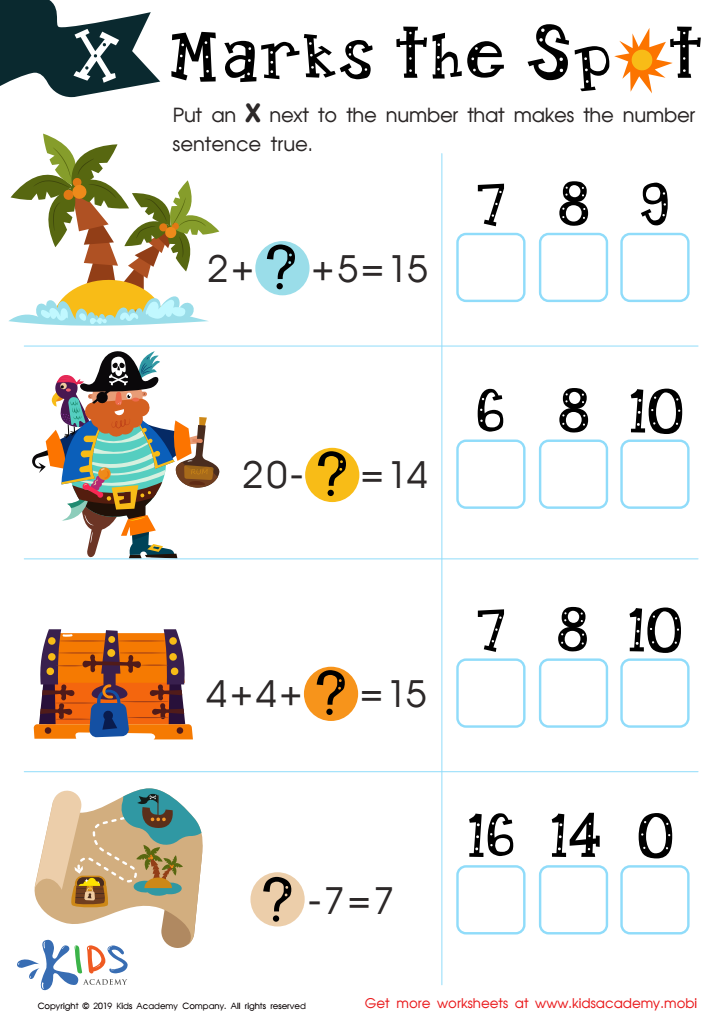
X Marks the Spot Worksheet
 Assign to My Students
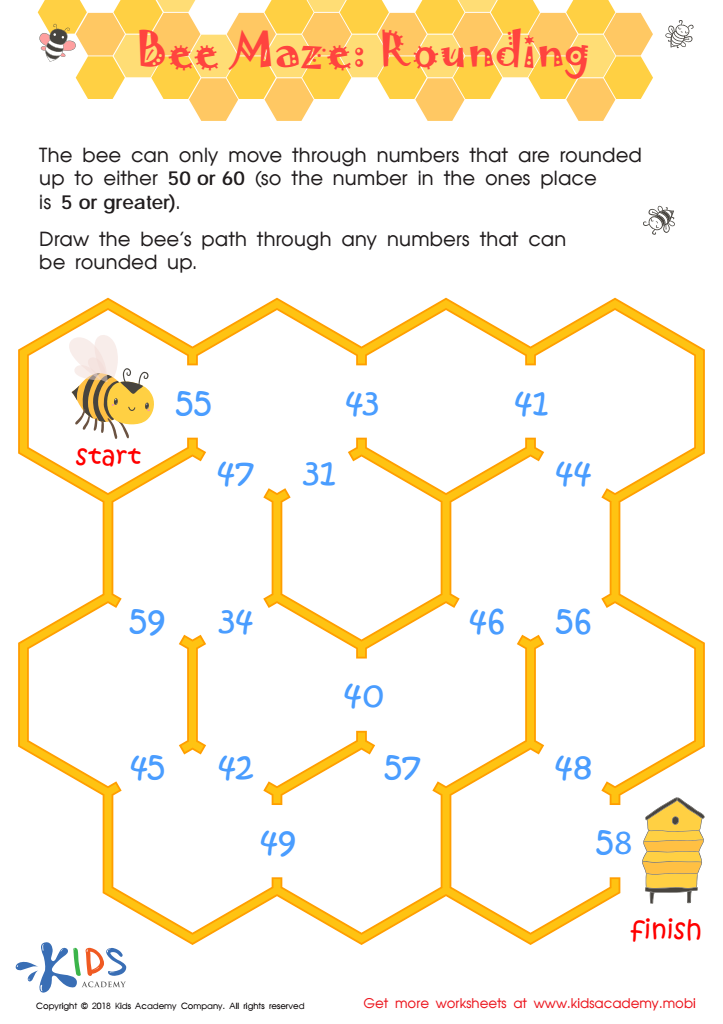
Bee Maze Rounding Worksheet
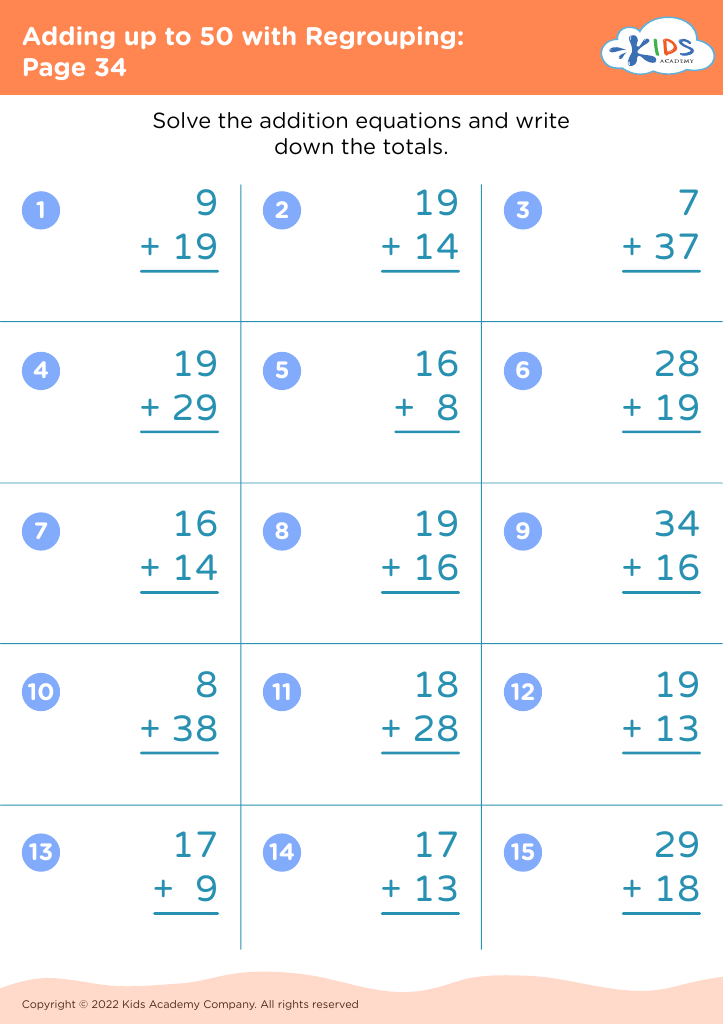




.jpg)



Developing spatial awareness in children aged 5-9 is crucial for several reasons. Firstly, spatial awareness forms the foundation for essential mathematical concepts such as geometry, measurement, and visual and problem-solving skills. Understanding spatial relationships helps children learn how to navigate space, compare objects, and recognize patterns—all key components of early math education.
Moreover, spatial awareness enhances critical thinking and cognitive development. Children with strong spatial skills tend to perform better in STEM (Science, Technology, Engineering, and Mathematics) subjects, as they can visualize and manipulate objects mentally. This is particularly important in today’s world, where careers in STEM fields are on the rise.
Additionally, fostering spatial awareness through engaging activities promotes creativity and innovation. Activities like building blocks, puzzles, and drawing can creatively stimulate spatial skills while keeping learning enjoyable.
Finally, by focusing on developing spatial awareness, parents and teachers help child create strong foundations that translate to better academic performance and everyday problem-solving skills. This not only boosts confidence when tackling complex subjects in the future but also prepares them to thrive in a dynamic and ever-evolving world. Encouraging spatial awareness now lays the groundwork for lifelong learning and success.








