
Environmental awareness Math Worksheets for Ages 5-9
7 filtered results
Difficulty Level
Grade
Age
-
From - To
Subject
Activity
Standards
Discover our engaging Environmental Awareness Math Worksheets designed specifically for children aged 5-9! These interactive worksheets unite fundamental math skills with important eco-conscious concepts, fostering a love for learning and nature simultaneously. From counting and addition to simple word problems, each activity encourages young learners to think critically about sustainability, recycling, and wildlife preservation. Perfect for at-home practice or classroom activities, our worksheets help instill environmental values while enhancing mathematical understanding. Inspire your child’s curiosity and responsibility toward the planet with our fun and educational resources today! Join us in nurturing the eco-warriors of tomorrow through math!
Favorites
With answer key
Interactive
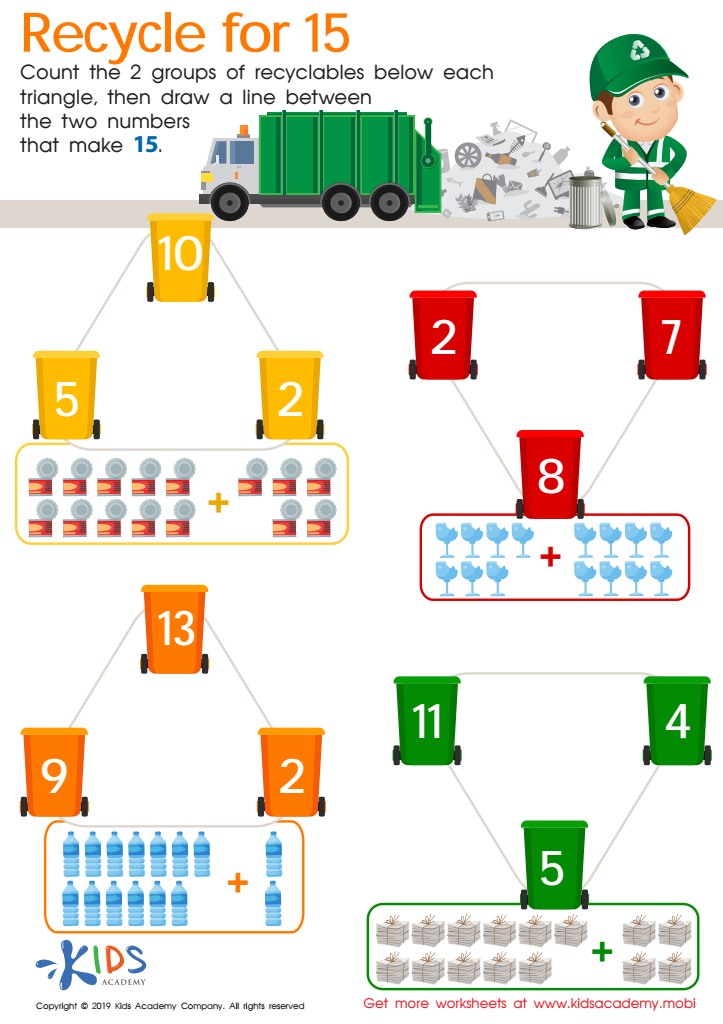
Recycle for 15 Worksheet
Recycle to help the planet! Have students count the recyclables and draw a line between the two numbers that make 15. This will help them understand the importance of recycling.
 Assign to My Students
Recycle for 15 Worksheet
Worksheet
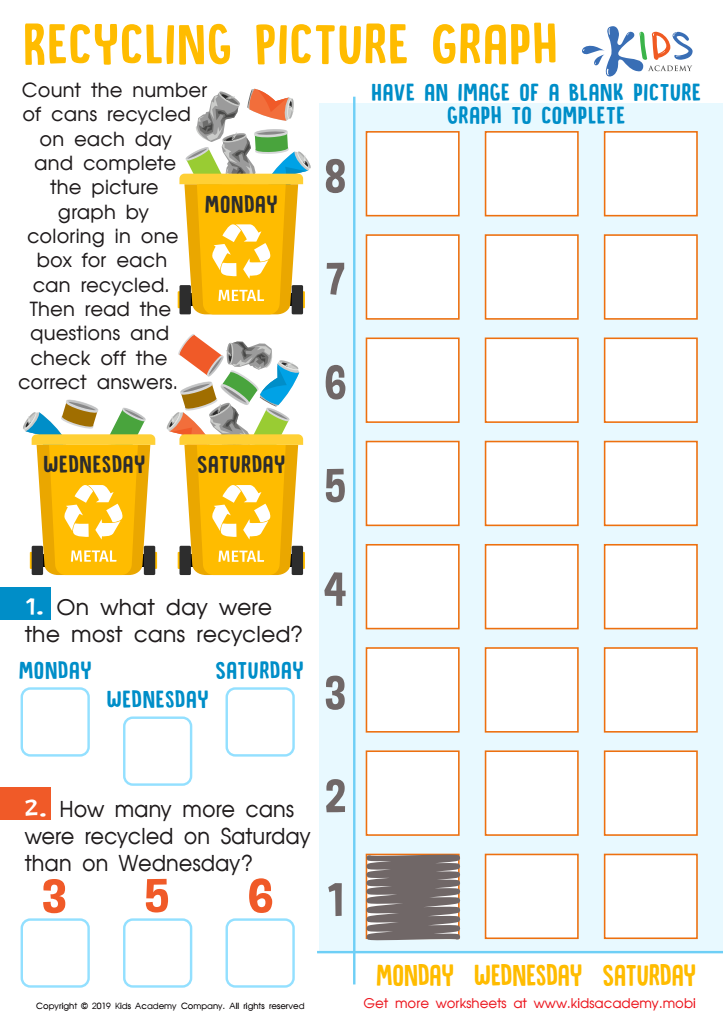
Recycling Picture Graph Worksheet
This worksheet can help kindergartners learn numbers and why recycling is important. After using items and materials, they can turn them into new materials instead of throwing them away. Guide your students to follow the instructions and answer the questions at the end. Help them understand how recycling benefits our environment.
Recycling Picture Graph Worksheet
Worksheet
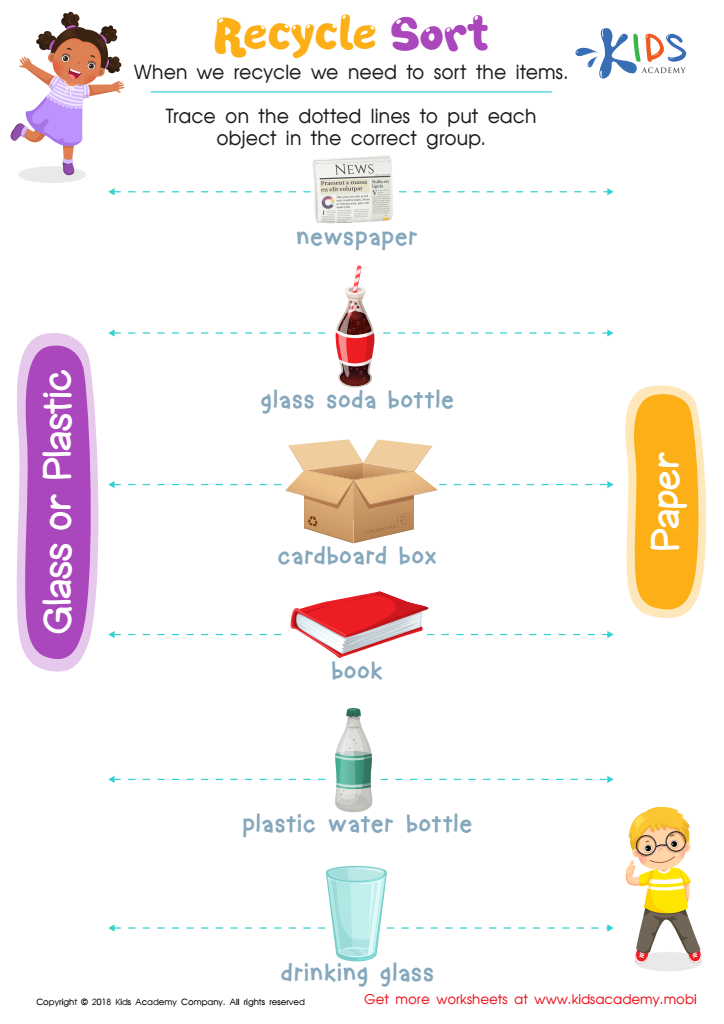
Recycle Sort Worksheet
Help your children become eco-warriors while they develop critical thinking and fine motor skills with this free downloadable worksheet! Engaging pictures and matching words, plus fun and bright colors, will have kids analyzing and sorting recyclables into paper or glass/plastic groups using traceable lines.
Recycle Sort Worksheet
Worksheet
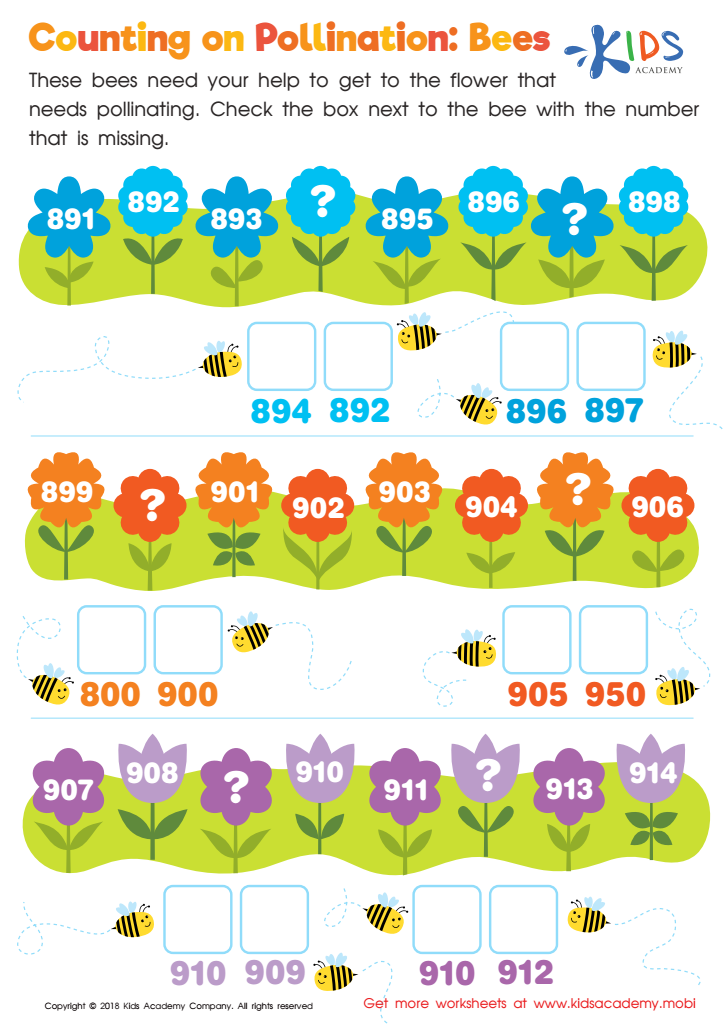
Counting on Pollination: Bees Worksheet
This downloadable worksheet helps kids improve their math skills while having fun - they'll help the bees pollinate the flowers by finding the missing number. It's an entertaining way to practice number patterns, sequences and number line skills, aiding in fast and efficient math computations.
Counting on Pollination: Bees Worksheet
Worksheet
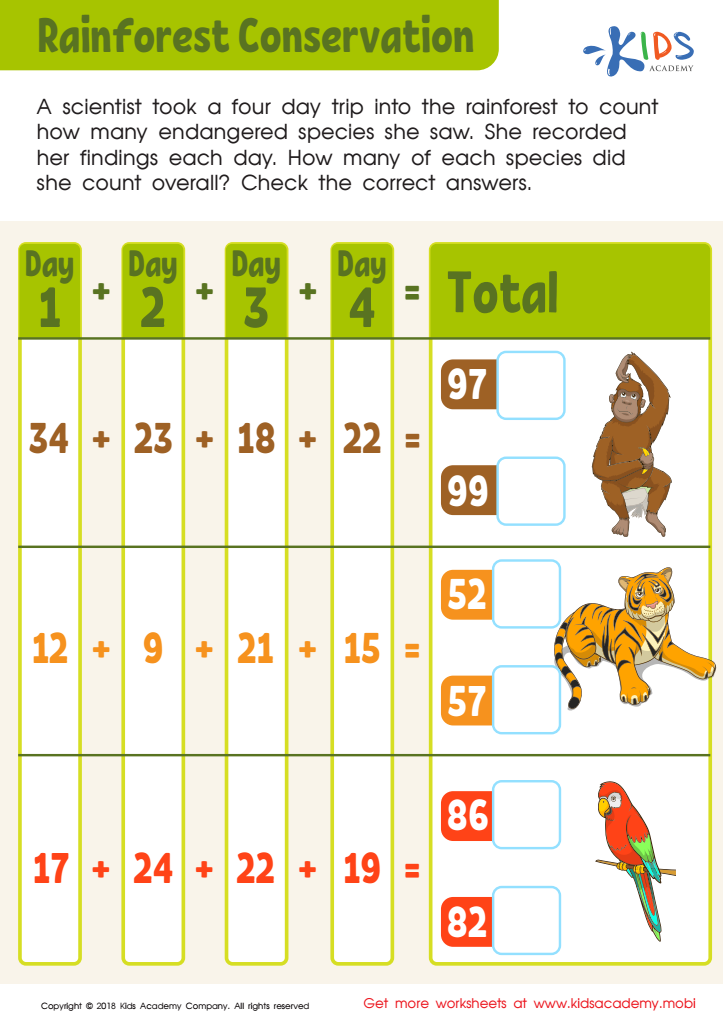
Rainforest Conservation Worksheet
Explain to your child what a rainforest is and why it's important. A scientist took a four-day trip to count endangered species. Let your child count how many of each species were seen in total. Check the answers and help them understand.
Rainforest Conservation Worksheet
Worksheet
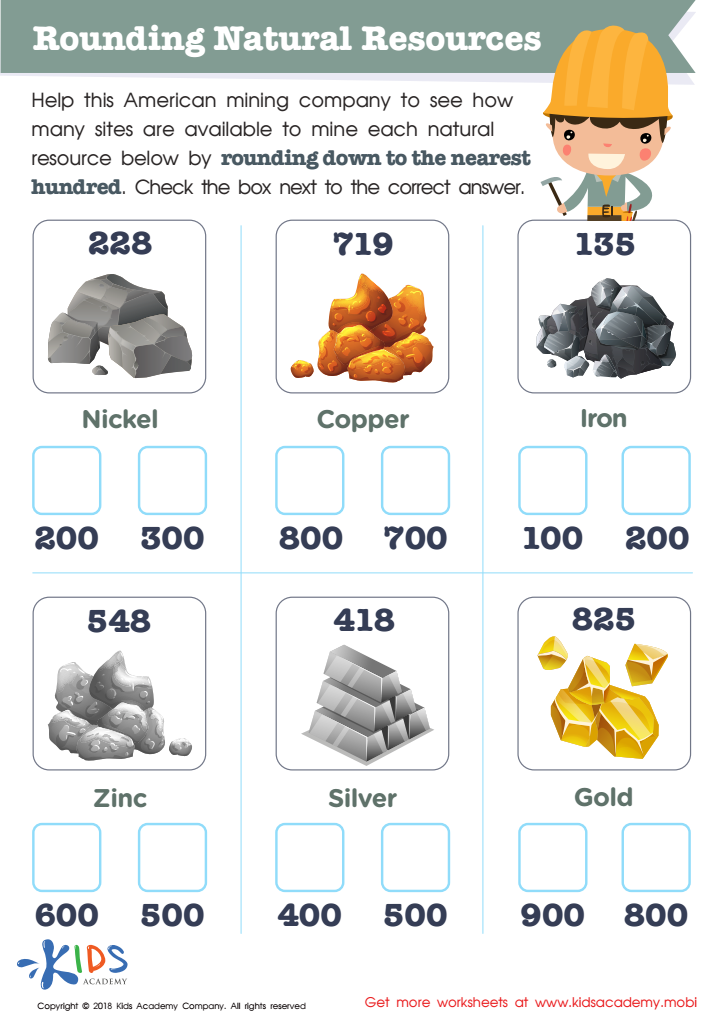
Rounding Natural Resources Worksheet
This worksheet from Kids Academy helps review rounding skills while reviewing natural resources. Learners view pictures of natural resources and round down to the nearest hundred. Use it to jumpstart a science discussion about the various resources found on the planet. A great way to make math relevant to real life!
Rounding Natural Resources Worksheet
Worksheet
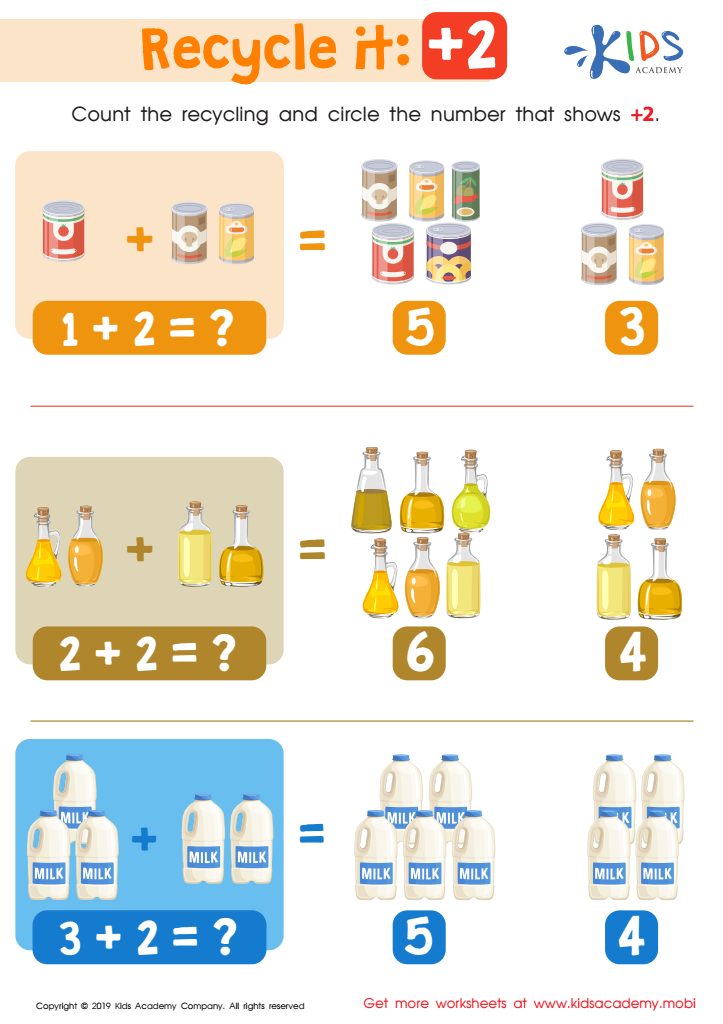
Recycle It: +2 Worksheet
Your kindergartners likely count everything they see, which is great for practice. Give them simple exercises such as in this worksheet to stimulate their minds. Ask them to count the recycling cans and then circle the number that shows +2.
Recycle It: +2 Worksheet
Worksheet
Join Kids Academy for Free
Who is primarily going to use this learning content?






Environmental awareness in math for children ages 5-9 is crucial for several reasons. First, it cultivates a sense of responsibility towards the planet at an early age. By integrating environmental themes into math lessons, educators and parents can help children understand concepts such as recycling, conservation, and the importance of natural resources. For example, teachers can use counting activities with recycled materials or engage children in simple data collection about plants or animals. This hands-on approach not only makes math relatable but also emphasizes its relevance to real-world issues.
Additionally, teaching math through an environmental lens encourages critical thinking. As children engage with data about energy consumption or water usage, they learn to analyze information and make informed decisions. These skills will serve them throughout their lives as they navigate increasingly complex global challenges.
Furthermore, instilling a strong environmental ethic during formative years fosters empathy and a collective mindset. Children develop care for their community and the earth, leading to future adults who prioritize sustainability. Ultimately, parents and teachers play a pivotal role in shaping environmentally conscious individuals by intertwining math education with lessons on caring for the planet. This holistic approach ensures kids grow into informed, responsible citizens.








