Identifying Animals Math Worksheets for Ages 5-9
5 filtered results
-
From - To
Discover our engaging Identifying Animals Math Worksheets designed specifically for children ages 5-9! These interactive resources blend math skills with exciting animal themes, making learning fun and captivating. Each worksheet encourages young learners to enhance their counting, sorting, and comparison abilities while exploring various animals. Tailored to support early grade education, our materials promote critical thinking and problem-solving skills in a playful context. Perfect for classroom use, homeschooling, or additional practice at home, these worksheets will ignite your child’s curiosity about wildlife while reinforcing essential math concepts. Dive into a world of learning that makes math as thrilling as a safari adventure!
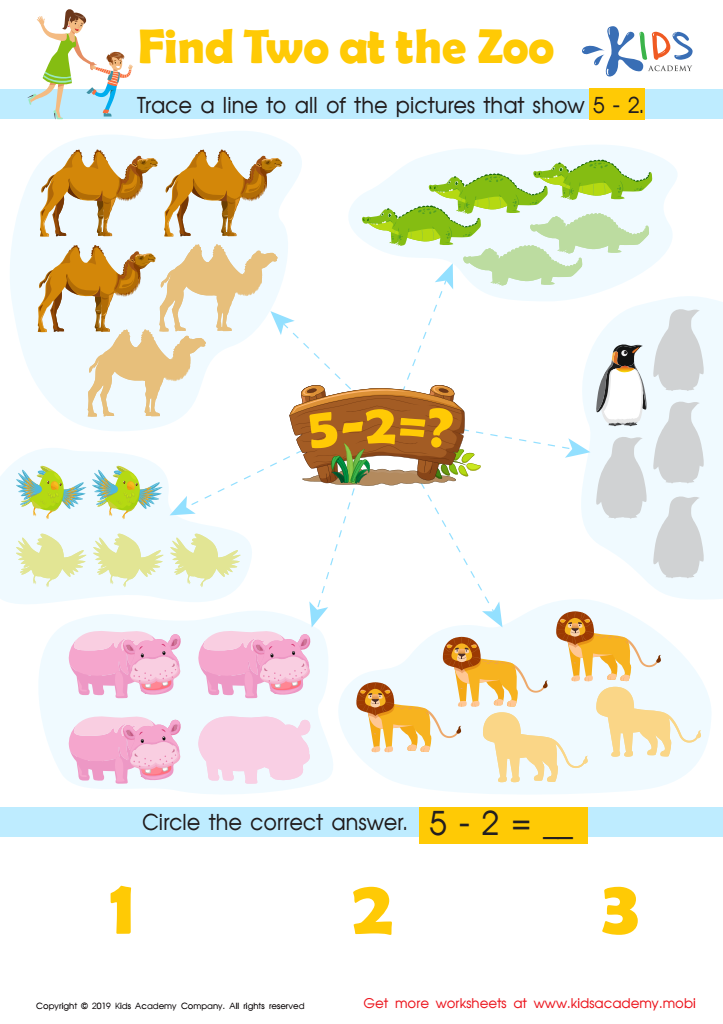
Find Two at the Zoo Worksheet
 Assign to My Students
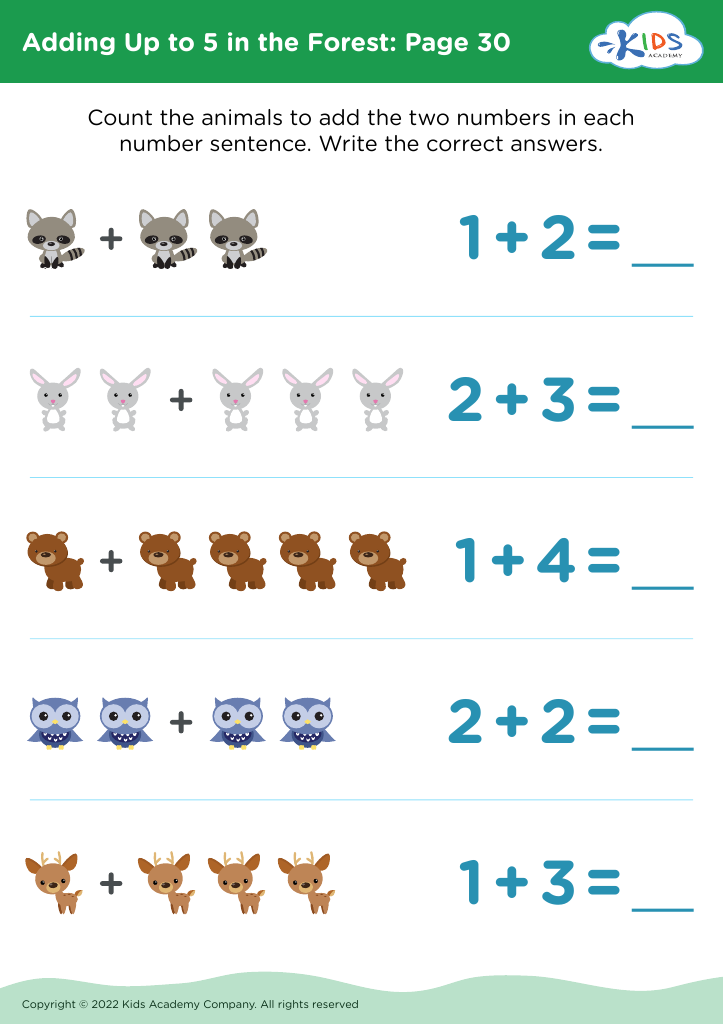







Identifying animals through math activities is a vital component of learning for children ages 5-9. Engaging in such activities promotes essential cognitive skills like critical thinking, problem-solving, and logical reasoning. Young learners develop their numeracy skills while exploring data—such as counting animal populations, categorizing species, or measuring their growth patterns. These quantitative exercises foster a child's knowledge of biodiversity and environmental awareness.
Moreover, integrating math with animal identification crosses curricular boundaries, reinforcing both mathematical practices and science education. This multifaceted approach not only keeps students engaged but also enhances memory retention by linking abstract concepts with concrete, relatable subjects.
Parents and teachers should value these learning experiences because they cultivate curiosity and promote a lifelong interest in nature and science. Additionally, these activities contribute to the development of social skills when children work together in groups or discuss their findings.
By embracing identifying animals math activities, adults can lay the groundwork for essential skills that contribute to students' overall academic success, enable them to understand their world better, and nurture responsible future citizens who appreciate and protect their environment.








