Identifying fractions Math Worksheets for Ages 5-9
5 filtered results
-
From - To
Discover the engaging world of fractions with our "Identifying Fractions Math Worksheets for Ages 5-9". Designed to build foundational math skills, these worksheets help young learners understand and identify halves, thirds, and quarters through colorful visuals and interactive activities. Ideal for both classroom and at-home learning, our expertly crafted worksheets make fractions fun and accessible. Boost your child's confidence and proficiency in math with step-by-step exercises that encourage critical thinking and problem solving. Explore our diverse collection and watch your child master fractions with ease. Join Kids Academy and support your child's educational journey today!
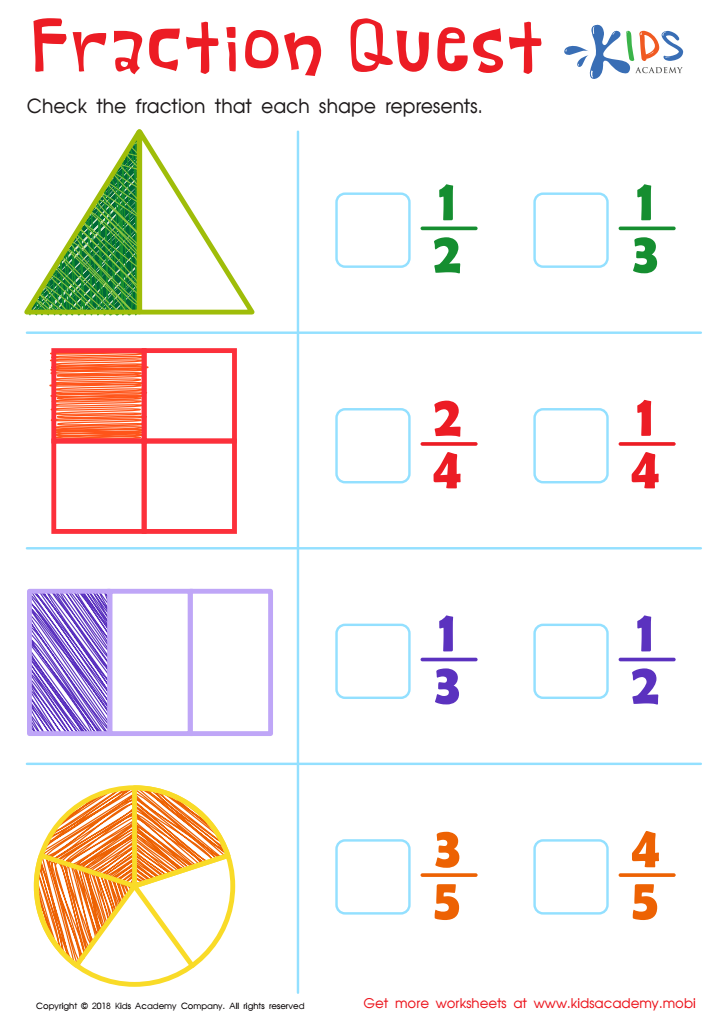
Fraction Quest Worksheet
 Assign to My Students
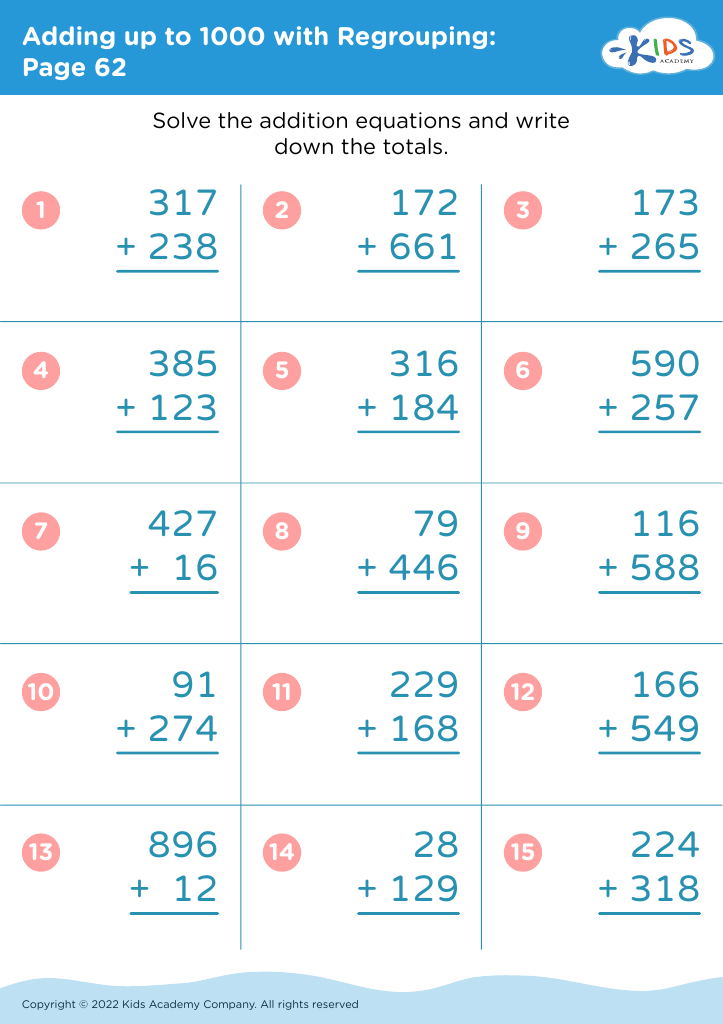
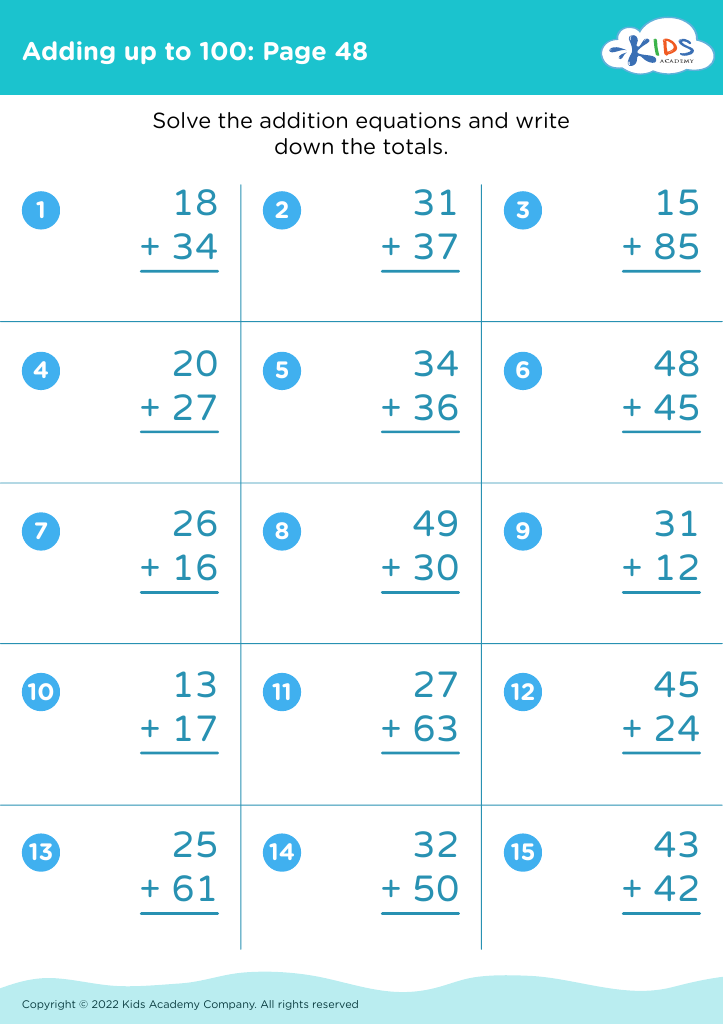
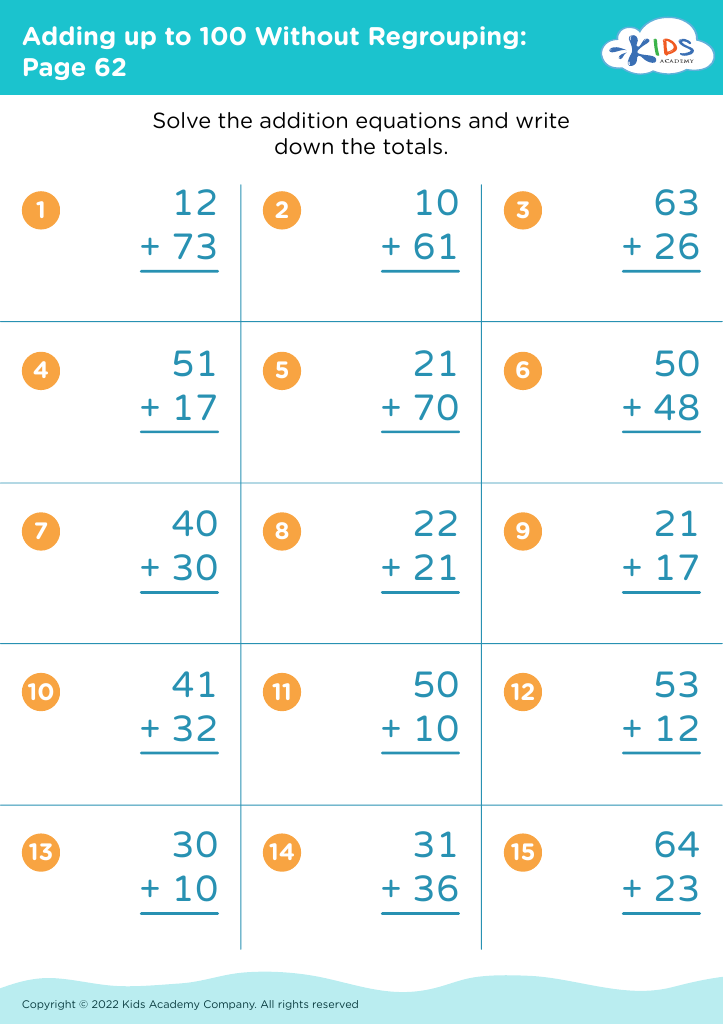








Identifying fractions in early childhood is crucial because it builds a foundational understanding of mathematics, which is vital for later academic success. For children aged 5-9, who are in their formative learning years, grasping the concept of fractions helps develop critical thinking skills, enhances problem-solving abilities, and lays the groundwork for future math topics such as division, ratios, and percentages.
Early exposure to fractions allows children to understand the world mathematically, enhancing their ability to interpret daily activities, such as sharing equally, cooking, or even telling time. By learning fractions, they start to understand that numbers can represent parts of a whole, which makes learning more relatable and practical.
Moreover, proficiency in fractions fosters self-confidence in mathematics, making children more eager to learn and less likely to develop math anxiety. This confidence often leads to better academic performance not just in math, but in other related subjects like science and engineering.
Parents and teachers play a critical role in this learning journey. By offering support, encouragement, and practical examples, they can make fractions comprehensible and fun. This early emphasis on fractions ultimately equips children with crucial skills for academic success and everyday life, making it essential for both teachers and parents to prioritize this early in a child's education.








