
Improve reading comprehension Math Worksheets for Ages 5-9
12 filtered results
Difficulty Level
Grade
Age
-
From - To
Subject
Activity
Standards
Enhance your child’s reading comprehension skills with our engaging math worksheets tailored for ages 5-9! Our resources combine fundamental math concepts with reading exercises, making learning both interactive and enjoyable. Designed to spark curiosity, each worksheet encourages young learners to understand problem-solving through reading. By integrating essential literacy skills with mathematics, children will develop their critical thinking and comprehension abilities effectively. Perfect for homeschooling or supplementary practice, these worksheets cater to various learning styles. Explore our collection of fun and educational activities to help your child improve their reading comprehension while mastering math. Visit us today and embark on a learning adventure!
Favorites
With answer key
Interactive
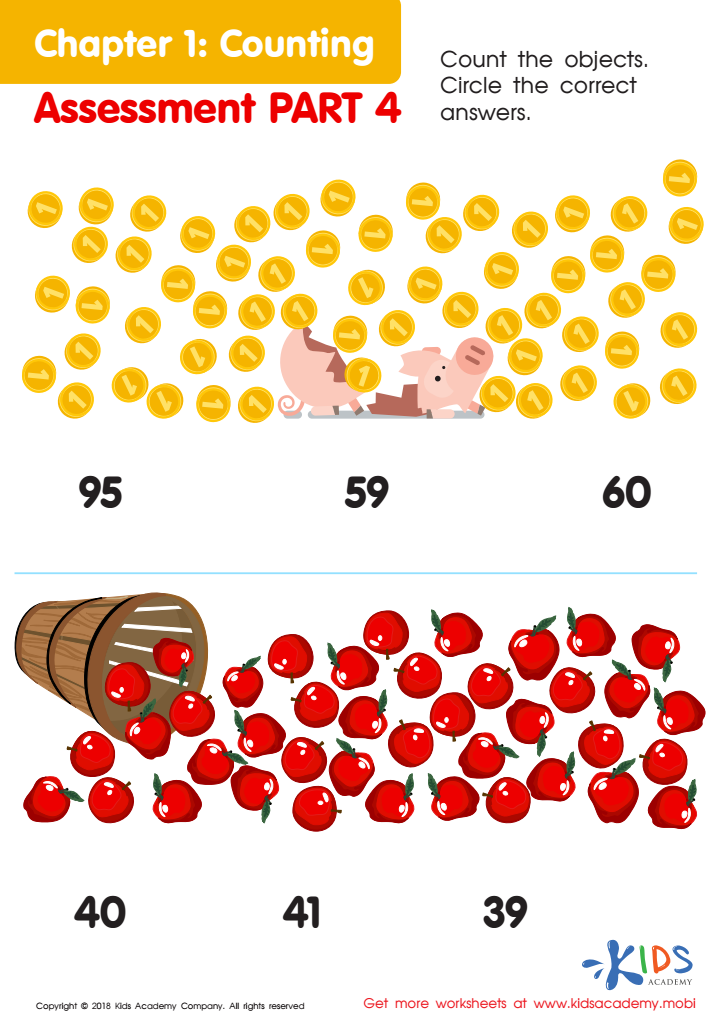
Counting: Assessment 4 Worksheet
Encourage your students to count objects in this colorful worksheet. Ask them to circle the correct answers from the options given. See how much their counting skills have improved with your guidance. Have fun!
 Assign to My Students
Counting: Assessment 4 Worksheet
Worksheet
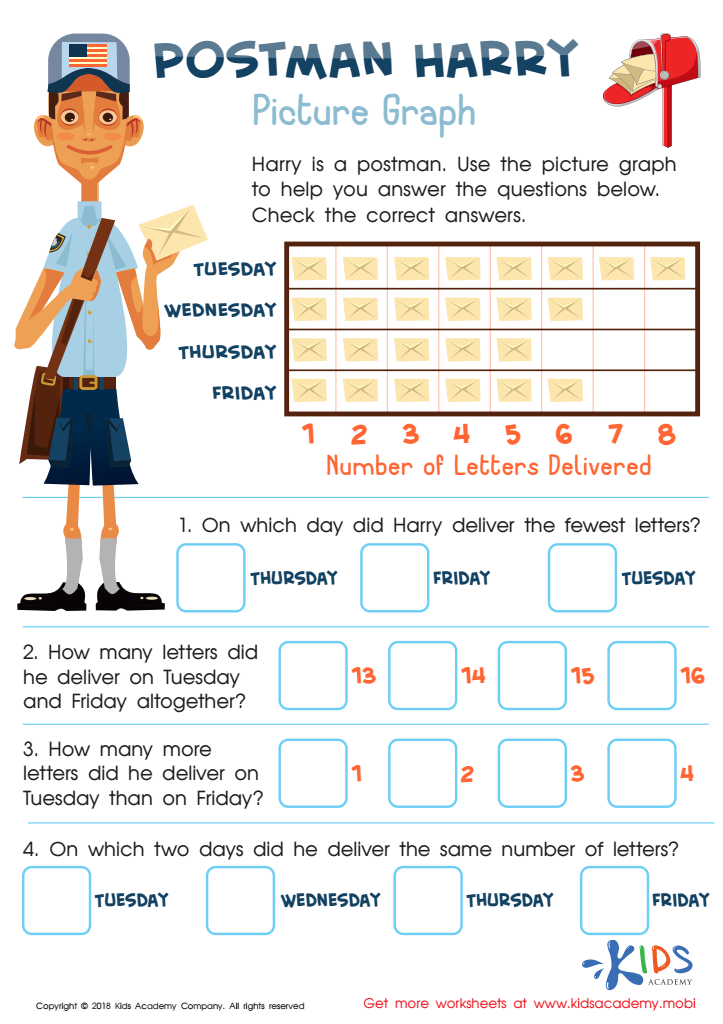
Postman Harry: Picture Graph Worksheet
Show your kids a picture of Harry the Postman and ask if they can identify his profession. Then, with this simple picture graph worksheet, help Harry out by having your kids answer the questions below the picture graph. It shows the number of letters he delivered, and on what day. Get your kids to use the picture graph to solve it.
Postman Harry: Picture Graph Worksheet
Worksheet
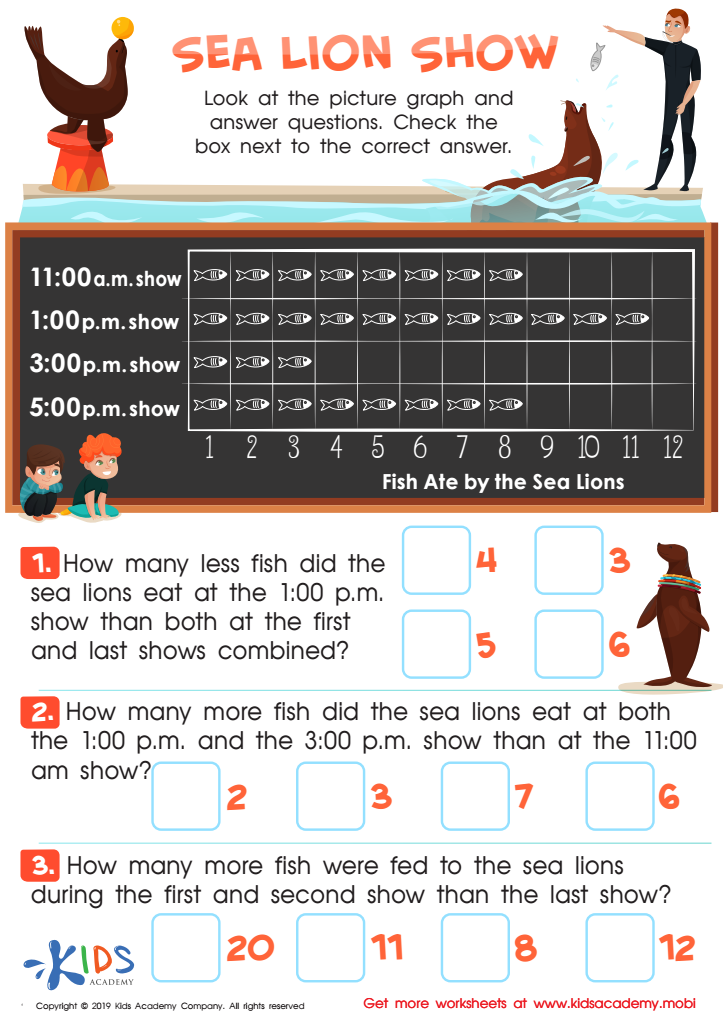
Sea Lion Show Worksheet
Help your kids understand and enjoy bar graphs better with this worksheet. Read and follow the simple instructions with your kids, and guide them through some exercises which will help them practice. As they learn maths in school, each day brings a new topic which might prove more difficult than the last. This worksheet will give your kids the best learning experience.
Sea Lion Show Worksheet
Worksheet
Join Kids Academy for Free
Who is primarily going to use this learning content?





%20(1).jpg)

Improving reading comprehension and math skills for children aged 5-9 is crucial for their overall development and future success. During these formative years, children build essential cognitive skills that will serve as the foundation for their learning journey.
Reading comprehension is vital as it not only helps children understand texts better but also enhances their ability to make connections and think critically. These skills are not only applicable in literacy but are also transferable to other subjects, including math, where problem-solving and comprehension go hand in hand.
Moreover, early math comprehension is equally important; a strong grasp of basic mathematical concepts allows children to navigate everyday situations confidently, from budgeting their pocket money to understanding measurements in cooking recipes.
Parents and teachers should nurture these skills through engaging activities and discussions, such as reading together or incorporating math games into daily routines. By focusing on improving these areas, they can foster a love for learning that extends beyond the classroom. Investing in these skills early on sets a solid groundwork for future academic achievements, equipping children to face increasingly complex material as they grow. Ultimately, promoting a balanced focus on literacy and numeracy supports overall cognitive and emotional wellbeing.








