Numerical recognition Math Worksheets for Ages 5-9
3 filtered results
-
From - To
Discover engaging Numerical Recognition Math Worksheets designed specifically for children ages 5-9! Our carefully crafted resources help young learners develop essential number identification and counting skills through fun and interactive activities. With a variety of worksheets that cater to different learning styles, children can explore concepts like number patterns, greater and lesser values, and basic addition and subtraction. These resources not only enhance math skills but also foster confidence and curiosity in young minds. Perfect for classroom use or at-home practice, our worksheets make learning numbers enjoyable and impactful. Begin your child's math journey with our engaging materials today!
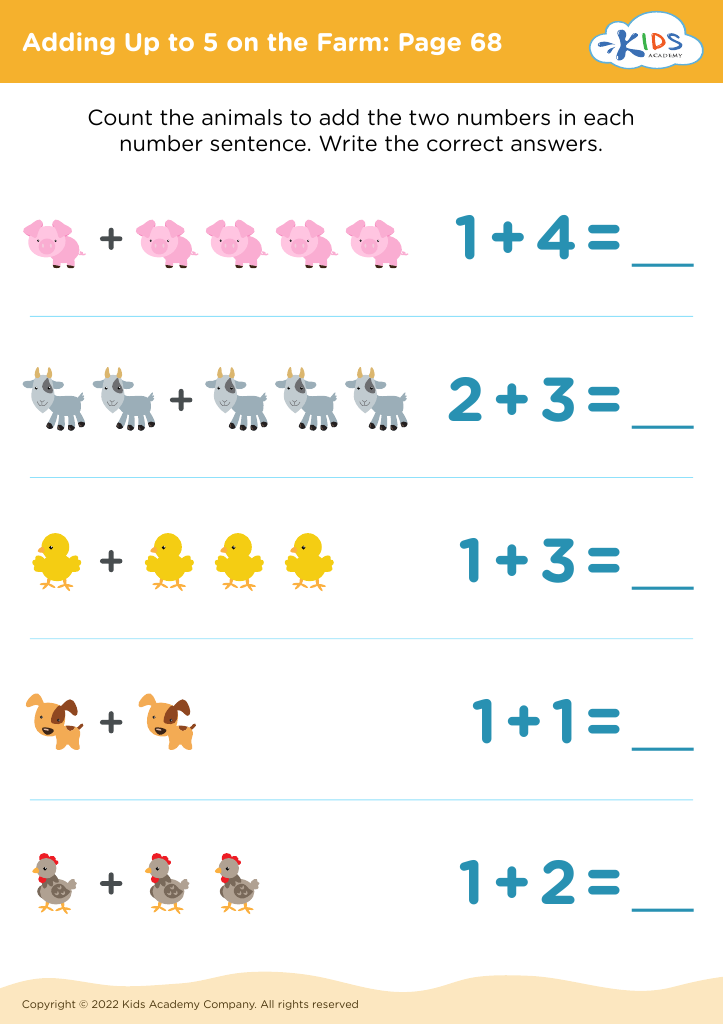
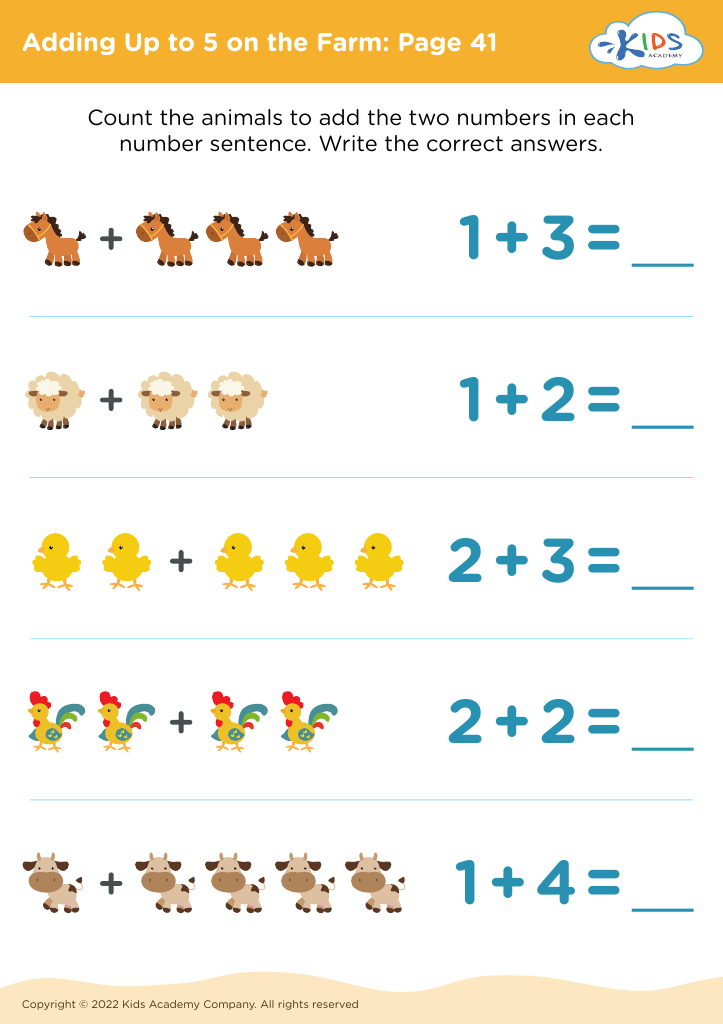
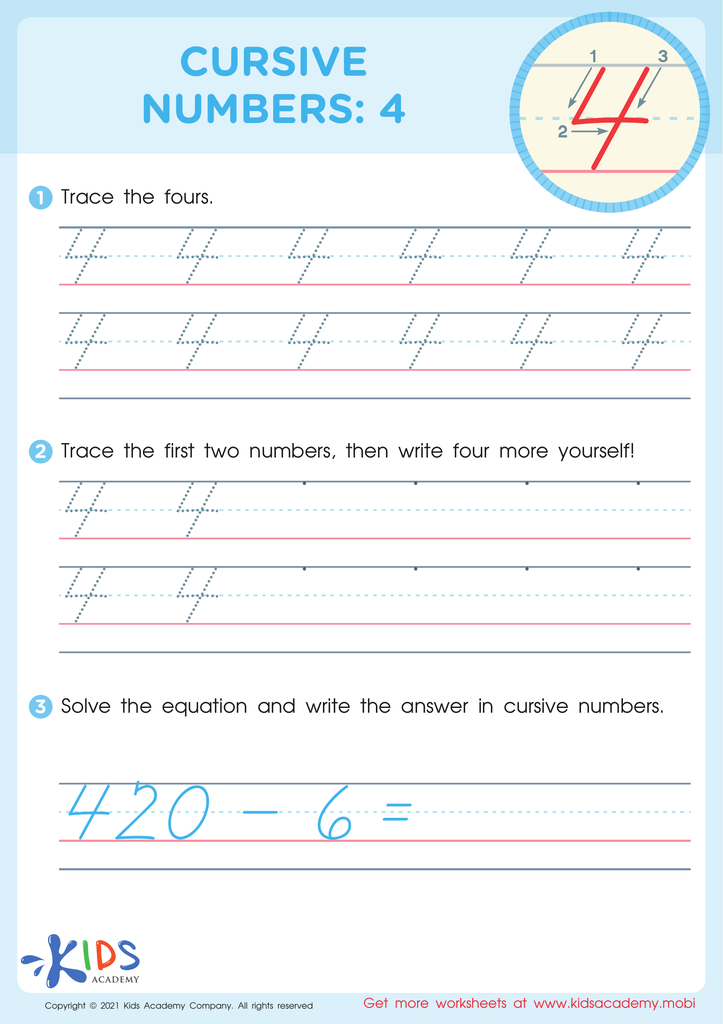
Cursive Numbers: 4 Worksheet





Numerical recognition is a foundational skill that significantly impacts a child’s mathematical development, particularly for ages 5-9. At this stage, children are forming their initial understanding of numbers and basic math concepts. Mastery of numerical recognition allows them to identify, compare, and manipulate numbers confidently, laying the groundwork for more complex mathematical operations.
For parents and teachers, fostering numerical recognition is crucial because it enhances cognitive skills and boosts overall academic performance. Children who struggle with number recognition may find themselves lagging in math-related subjects, leading to frustration and a lack of confidence. Early intervention can make a substantial difference, helping children develop a positive attitude toward math, which can persist throughout their education.
Additionally, strong numerical skills pave the way for problem-solving abilities and critical thinking, essential for real-life applications. Activities that encourage this skill—like number games, counting activities, and interactive learning—engage children and make learning enjoyable. By prioritizing numerical recognition, parents and teachers contribute not only to academic success but also to fostering a lifelong appreciation and understanding of mathematics, equipping children with the skills they'll need in the future.








