Practicing addition Math Worksheets for Ages 5-9
7 filtered results
-
From - To
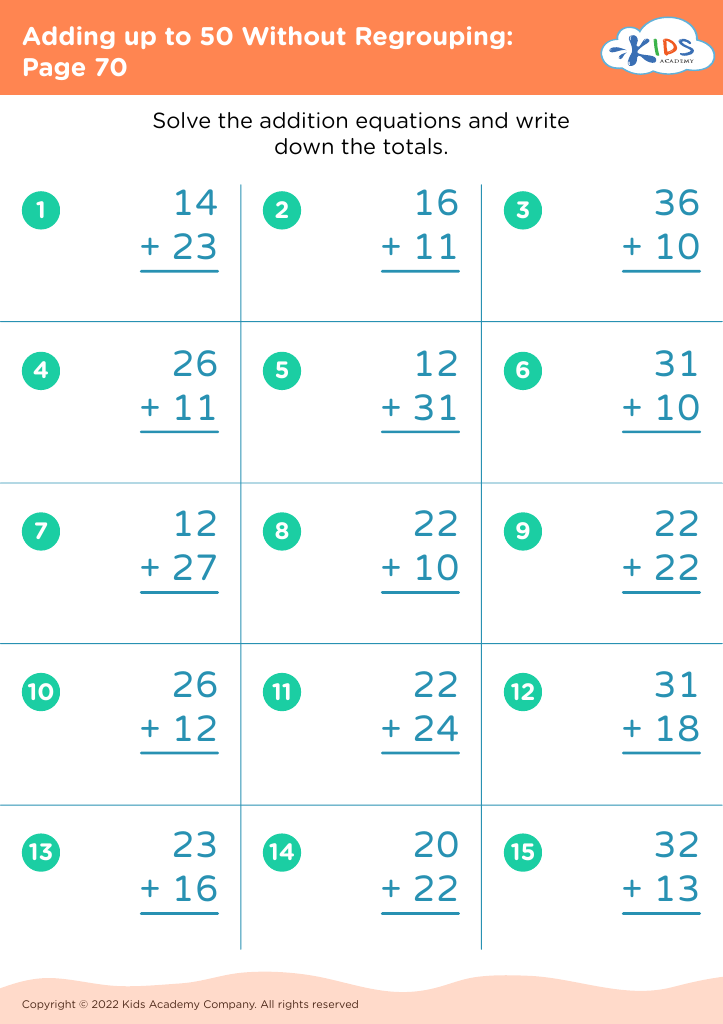
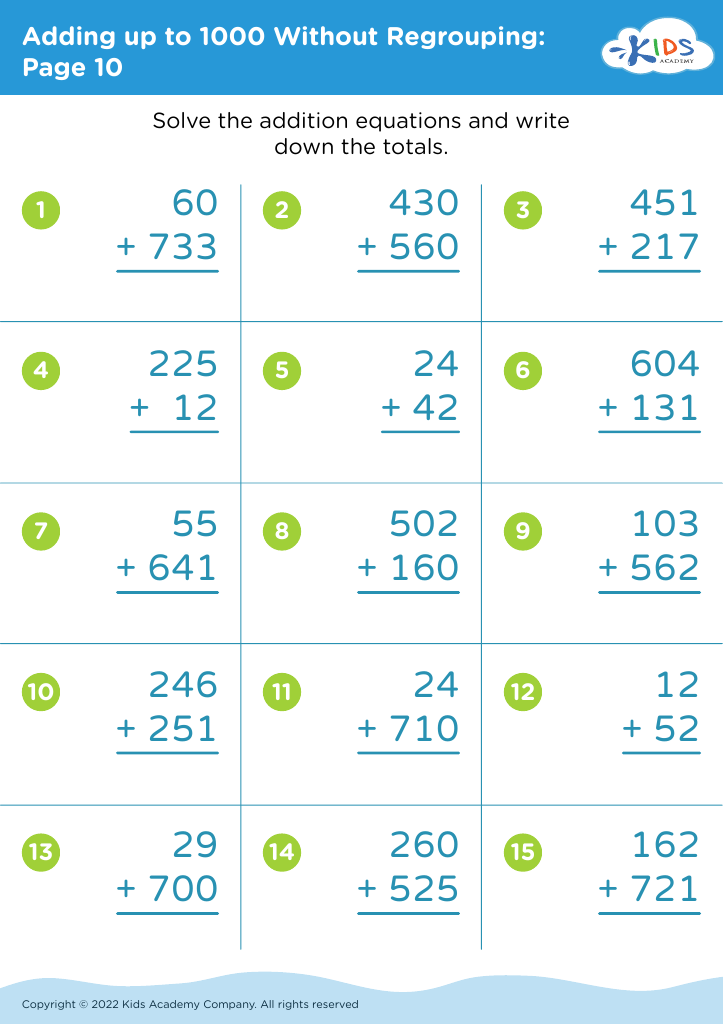
Explore our engaging collection of "Practicing Addition" math worksheets designed specifically for children ages 5-9. These worksheets reinforce foundational addition skills through fun exercises and colorful illustrations. Each printable resource encourages young learners to master addition concepts with a variety of activities, including number games, visual aids, and simple problems tailored to their developmental stage. Ideal for both classroom settings and home practice, our worksheets help build confidence and enhance mathematical understanding. Empower your child’s learning journey today! Access a world of addition practice to support their growth and academic success. Start nurturing their math skills in a fun, interactive way!
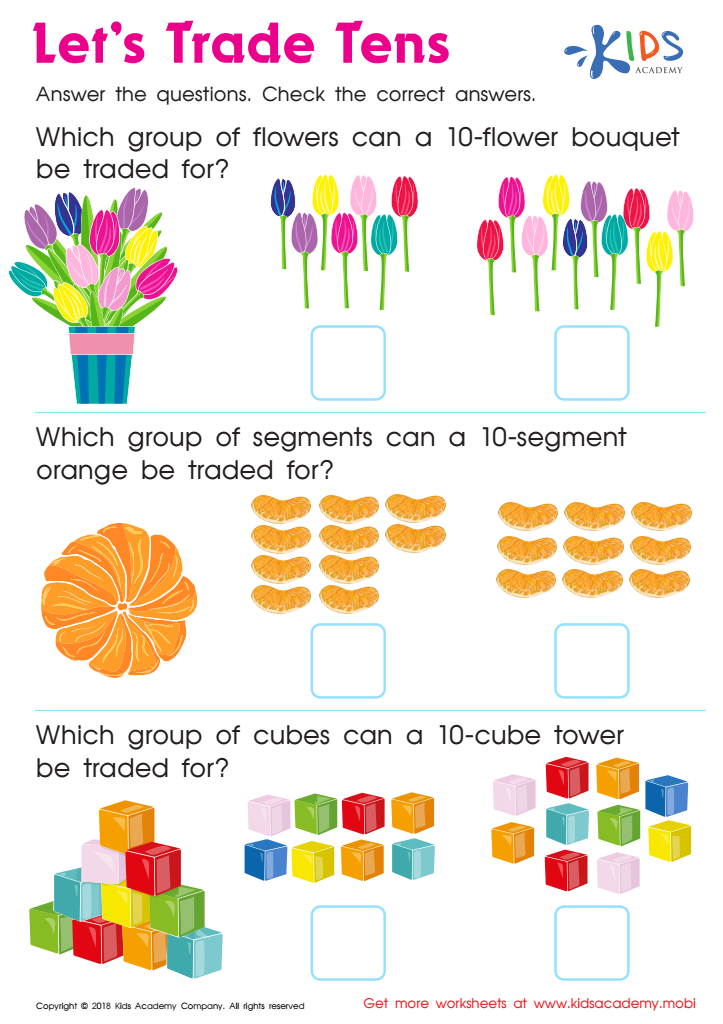
Lets Trade Tens Worksheet
 Assign to My Students
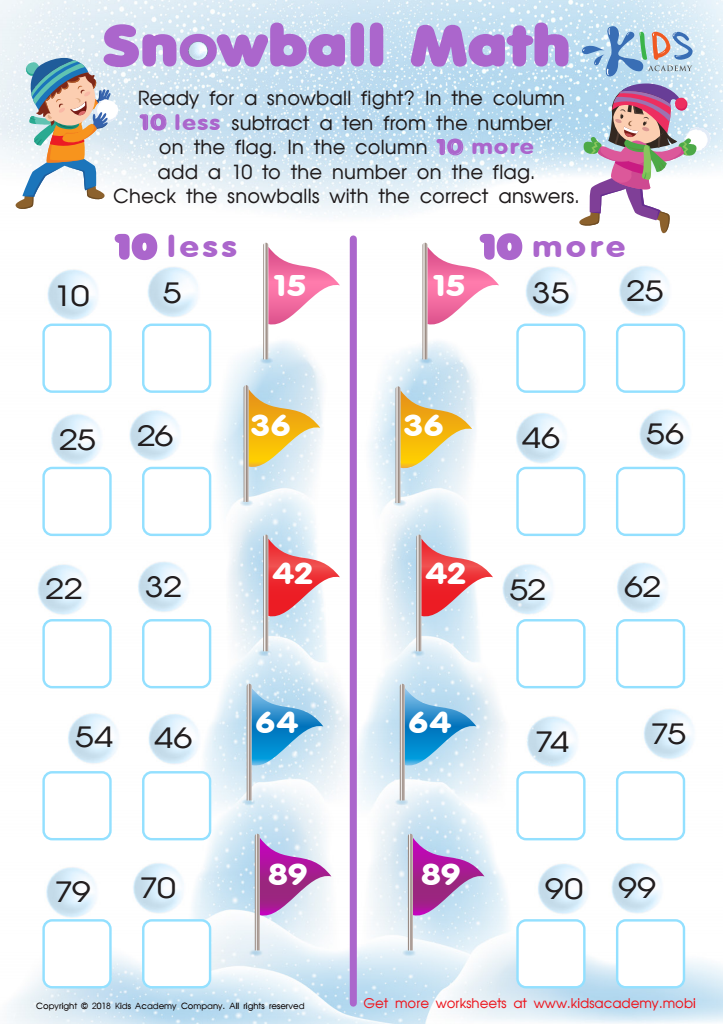
Snowball Math Worksheet
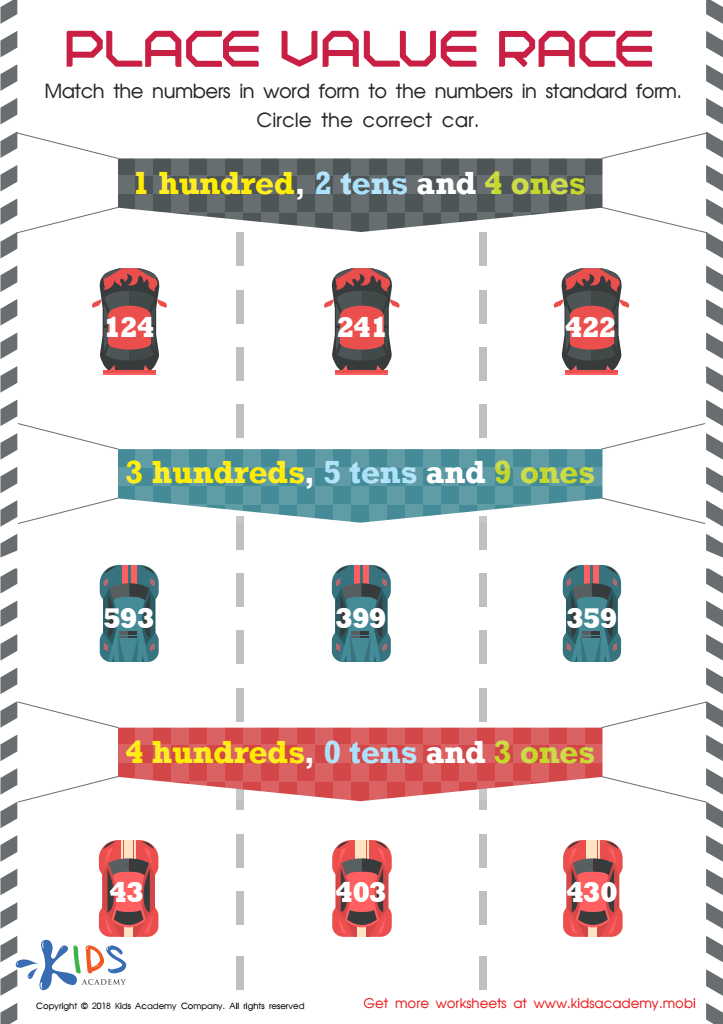
Place Value Race Worksheet
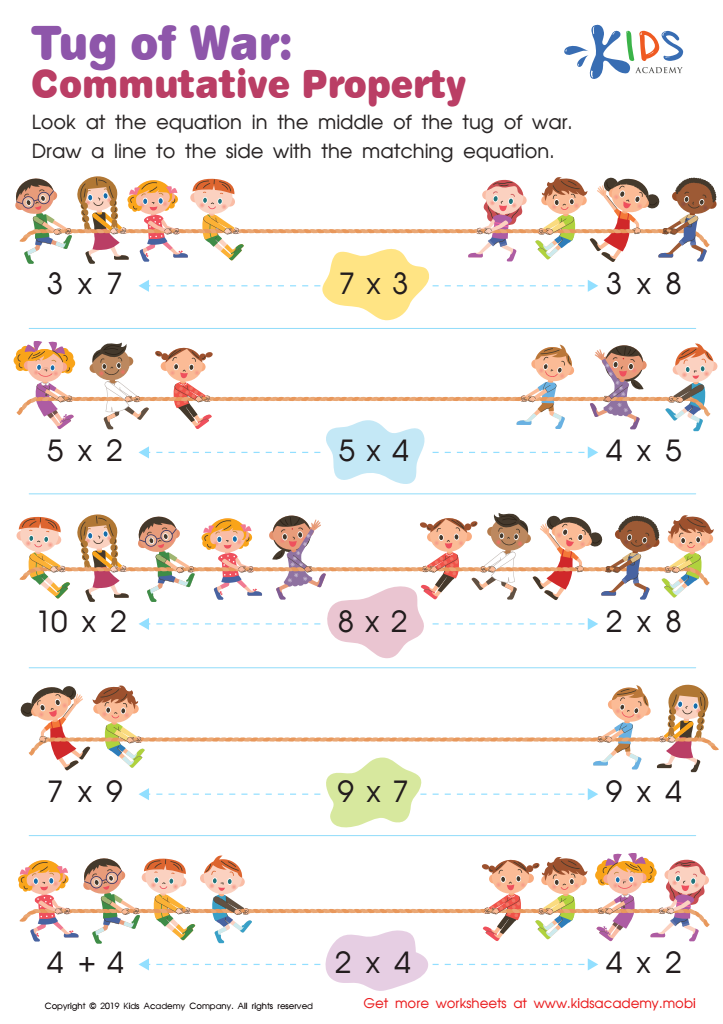
Tug of War: Commutative Property Worksheet
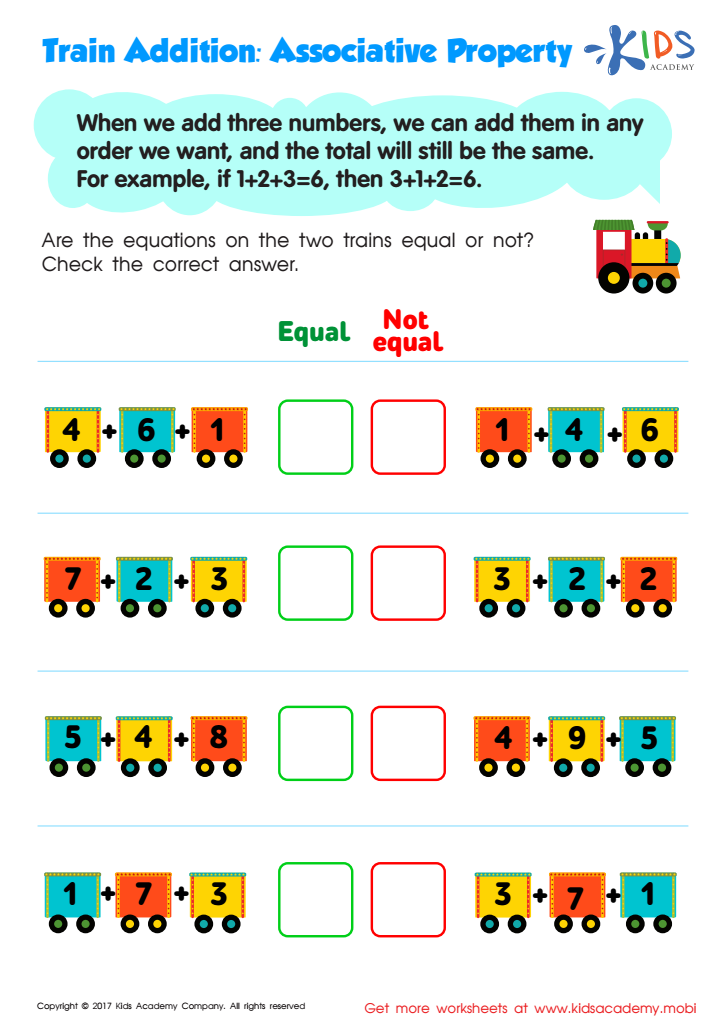
Train Addition: Associative Property Worksheet







Practicing addition math for children ages 5-9 is crucial for several reasons. At this stage, children are developing foundational skills that will support their future academic success. Mastery of addition not only enhances their numeracy skills but also fosters critical thinking and problem-solving abilities. As they learn to manipulate numbers, children strengthen their cognitive development, building neural pathways that support complex mathematical concepts later on.
Additionally, consistent practice in addition contributes to a child’s confidence. As they successfully solve problems, their self-esteem grows, encouraging a positive attitude towards learning math. This self-assurance can carry over into other subjects, promoting a broader love for education.
For parents and teachers, guiding children through the addition process offers opportunities for engagement and bonding. Games, activities, and everyday scenarios can make learning fun, facilitating a supportive environment where exploration and curiosity thrive.
Moreover, mastering addition lays the groundwork for other mathematical operations, such as subtraction, multiplication, and division. Understanding basic addition is vital for teaching more advanced concepts in the future. Ultimately, investing time in practicing addition during these formative years cultivates essential life skills that go beyond the classroom, helping children become competent, confident learners.








