Problem-solving ability Math Worksheets for Ages 5-9
4 filtered results
-
From - To
Our Problem-Solving Ability Math Worksheets for ages 5-9 are designed to build foundational math skills through engaging and fun activities. These worksheets aim to enhance children's critical thinking and analytical skills, making math both enjoyable and educational. By integrating puzzles, word problems, and interactive exercises, kids develop their ability to tackle various mathematical challenges. Each worksheet is tailored to suit different learning stages, ensuring a solid grasp of problem-solving techniques across addition, subtraction, multiplication, and more. Establish a strong mathematical mindset in your child, and watch them excel confidently in their learning journey with our expertly crafted worksheets.
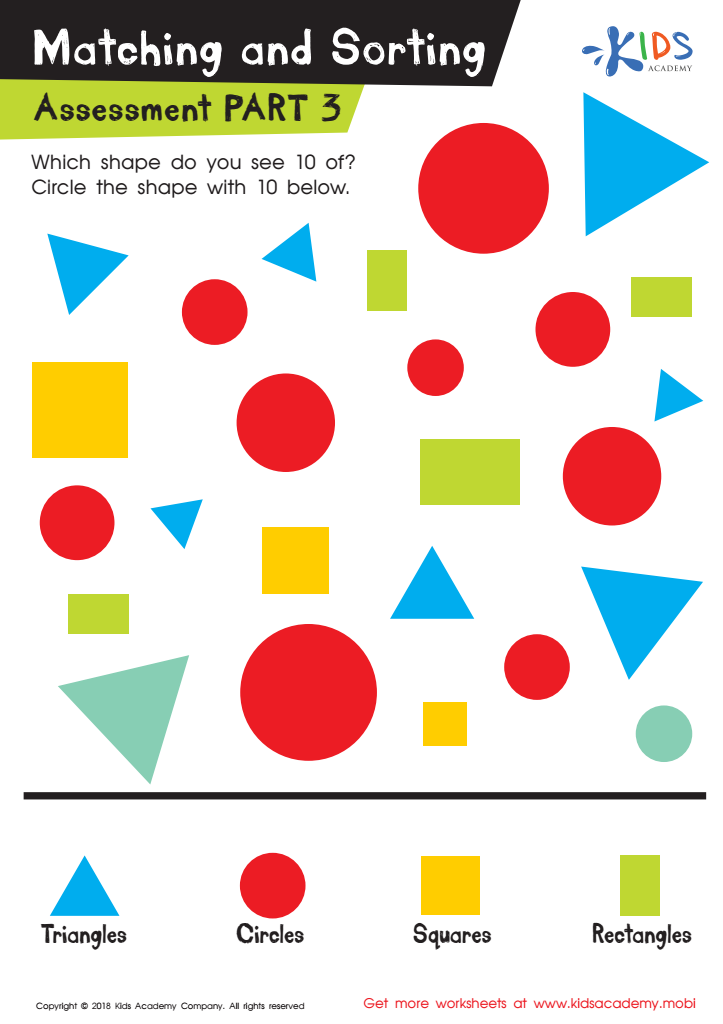
Matching and Sorting for Kindergarten: Assessment 3 Worksheet
 Assign to My Students
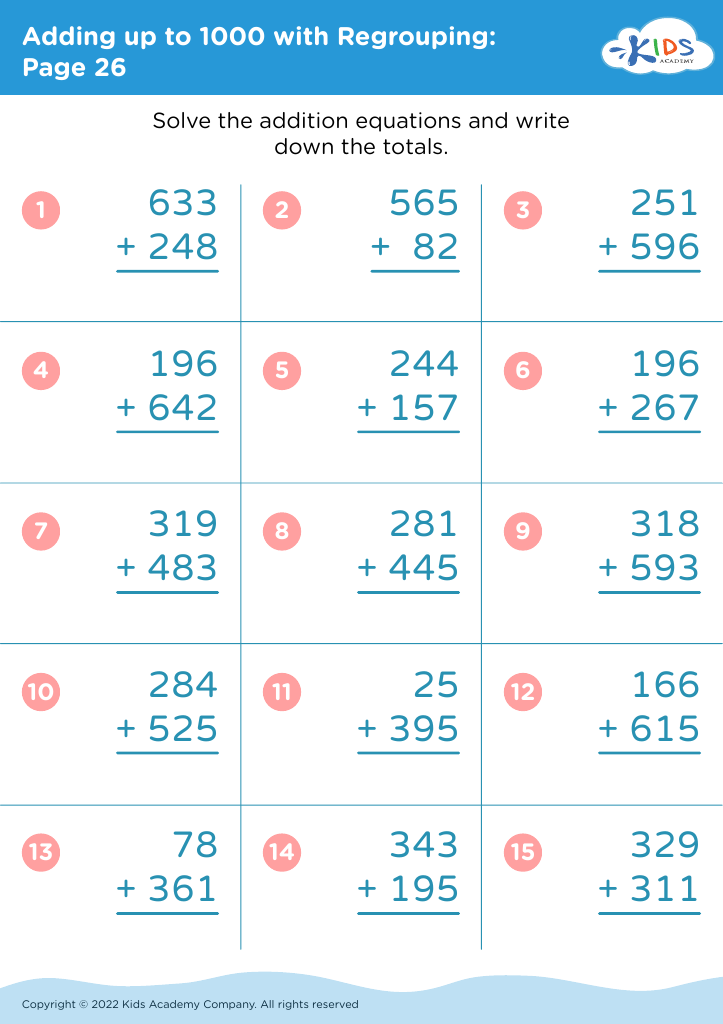
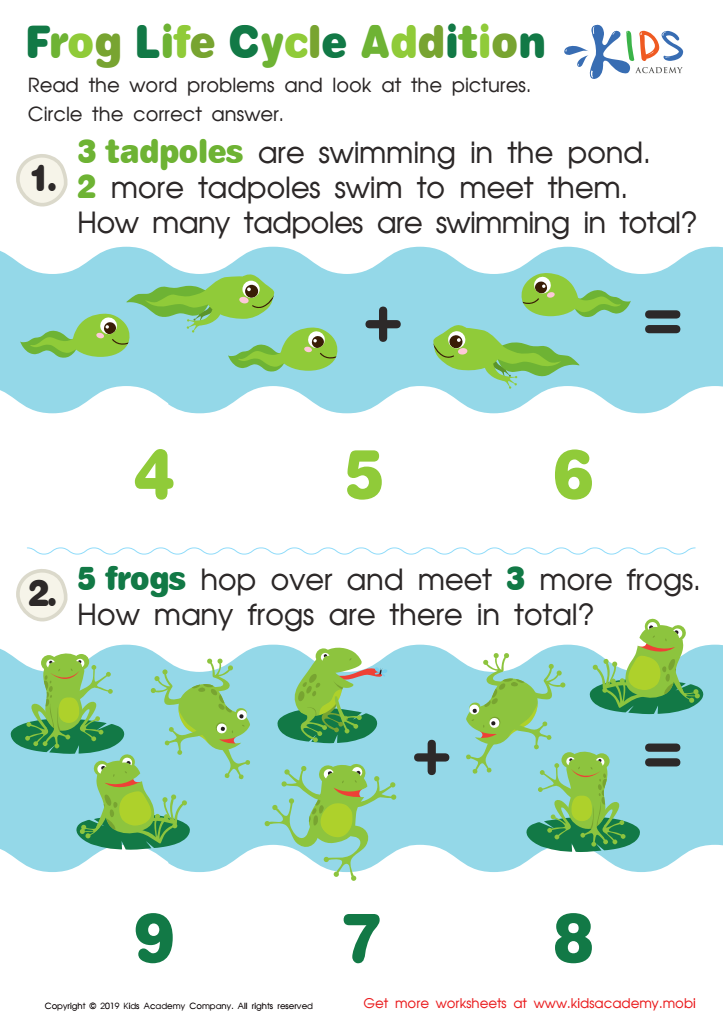
Frog Life Cycle Addition Worksheet
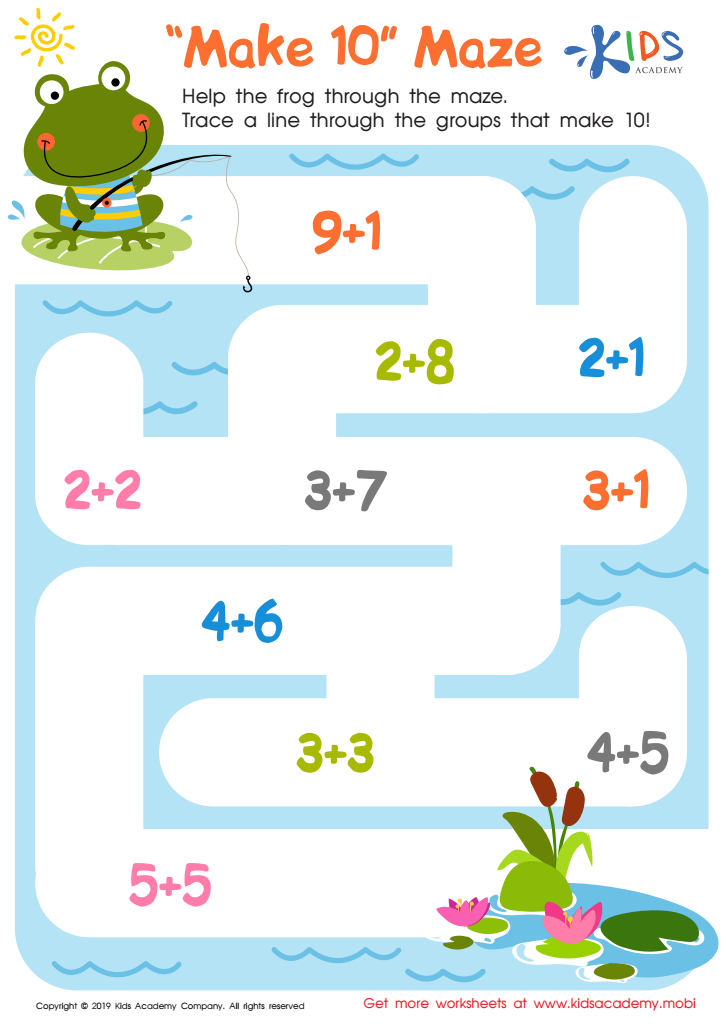
Make 10 Maze Worksheet








Problem-solving abilities in math for children aged 5-9 are foundational for their overall cognitive and academic development. At this age, developing problem-solving skills in math helps kids build critical thinking and logical reasoning skills, which are essential for tackling a wide range of challenges in academic settings and in life. By practicing math problem-solving, children learn how to evaluate situations, identify patterns, and hone their decision-making processes.
Supporting children in developing these skills at an early age sets the stage for future success. For instance, by engaging in problem-solving, they learn persistence and resilience as they navigate difficult tasks. These skills naturally translate into other subject areas; a child who can approach a math problem persistently is more likely to carry that attitude over to reading, writing, or science.
Additionally, early mathematical problem-solving fosters a positive disposition towards math, reducing anxiety and creating a more confident learner. This foundation is critical, as children who feel comfortable and capable in math are more likely to pursue advanced studies in STEM (Science, Technology, Engineering, and Math) later on.
Parents and teachers play a crucial role in nurturing these abilities by providing supportive environments, engaging activities, and encouragement. Investing in a child’s problem-solving skills in math during these formative years is an investment in their lifelong learning and success.








