Reading clocks Math Worksheets for Ages 5-9
7 filtered results
-
From - To
Discover our engaging Reading Clocks Math Worksheets designed for children aged 5-9! These interactive activities help young learners grasp the concept of telling time with ease and confidence. Our worksheets feature colorful graphics, fun exercises, and a variety of problems that cater to various learning styles. From identifying clock numbers to drawing hands at specific times, these worksheets make learning enjoyable while reinforcing essential math skills. Perfect for classroom use or at-home practice, our resources create a solid foundation for understanding time. Start building your child's time-telling skills today with our comprehensive collection of reading clocks worksheets!
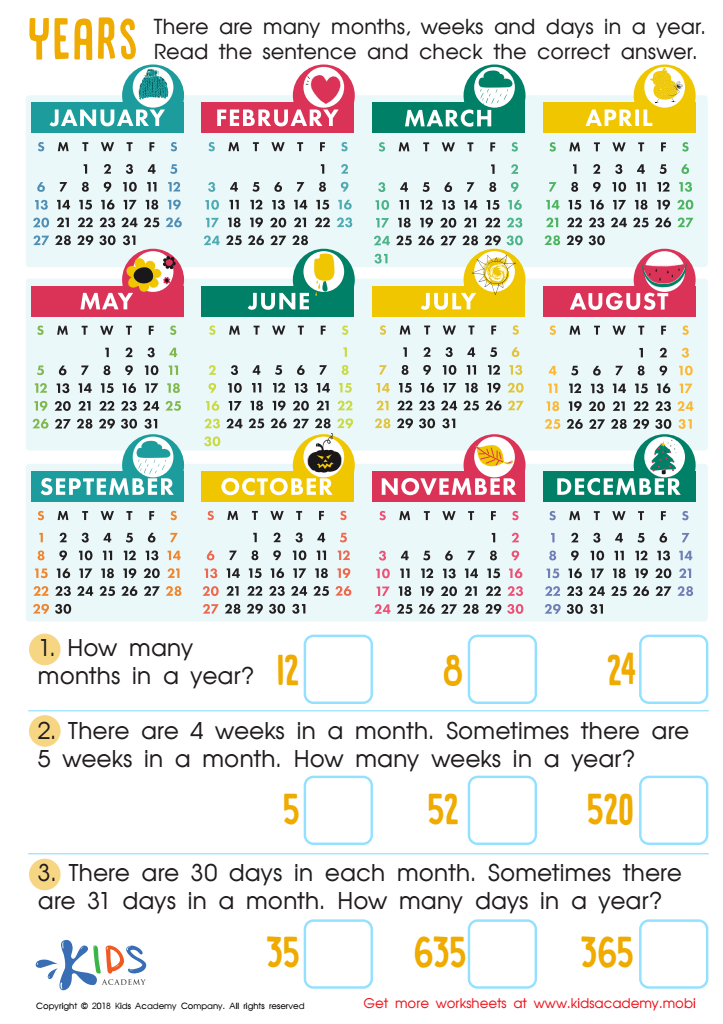
Years Worksheet
 Assign to My Students
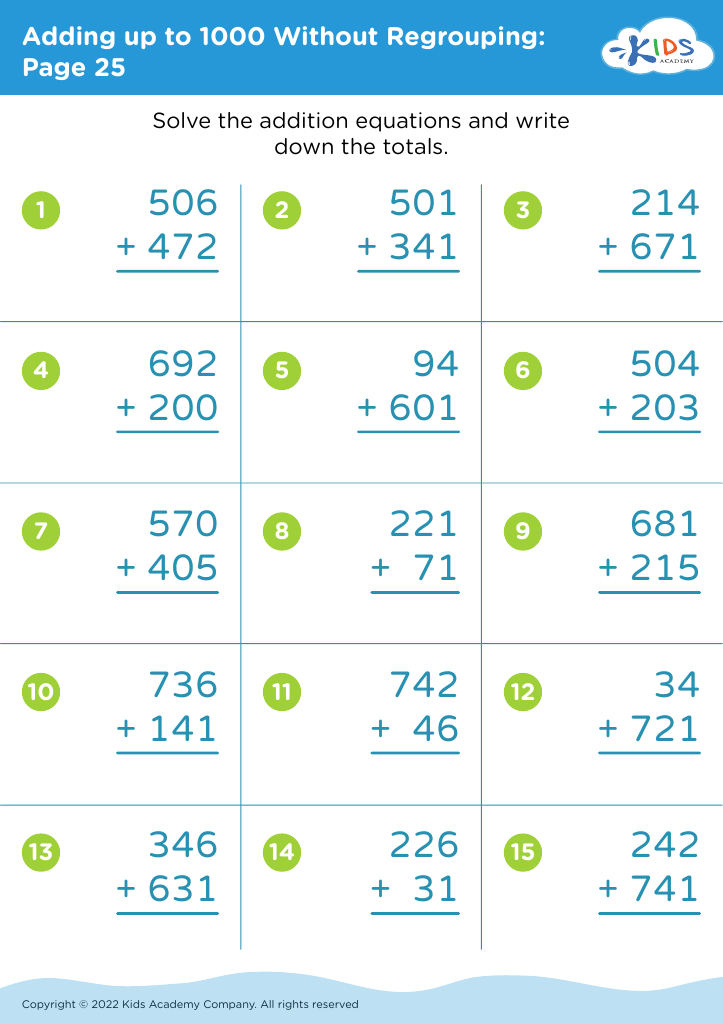
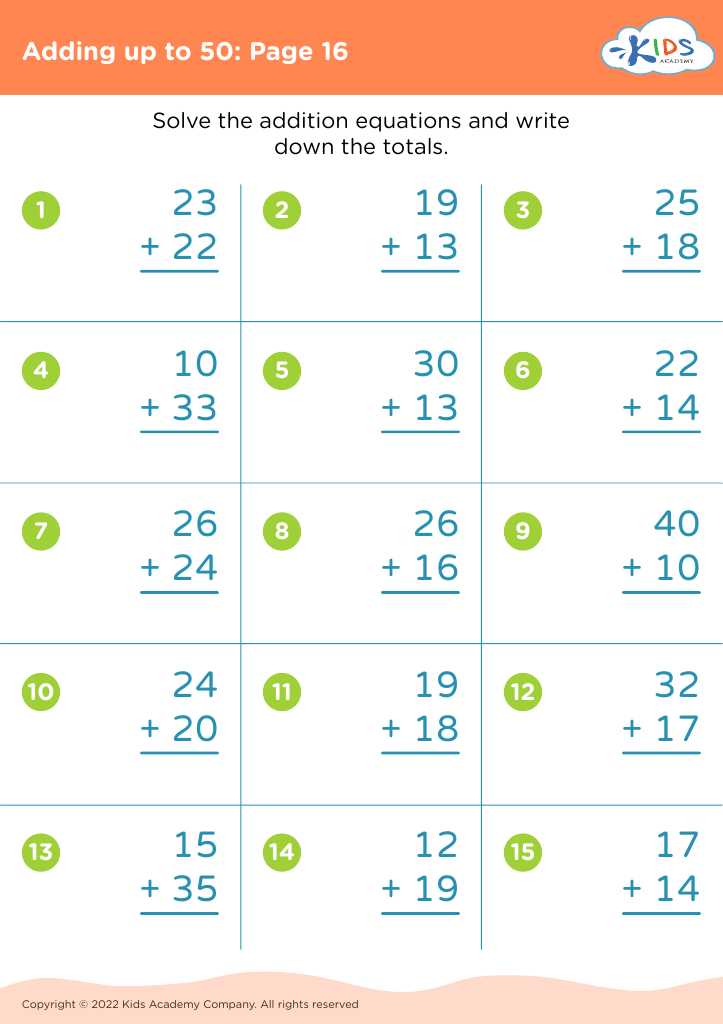
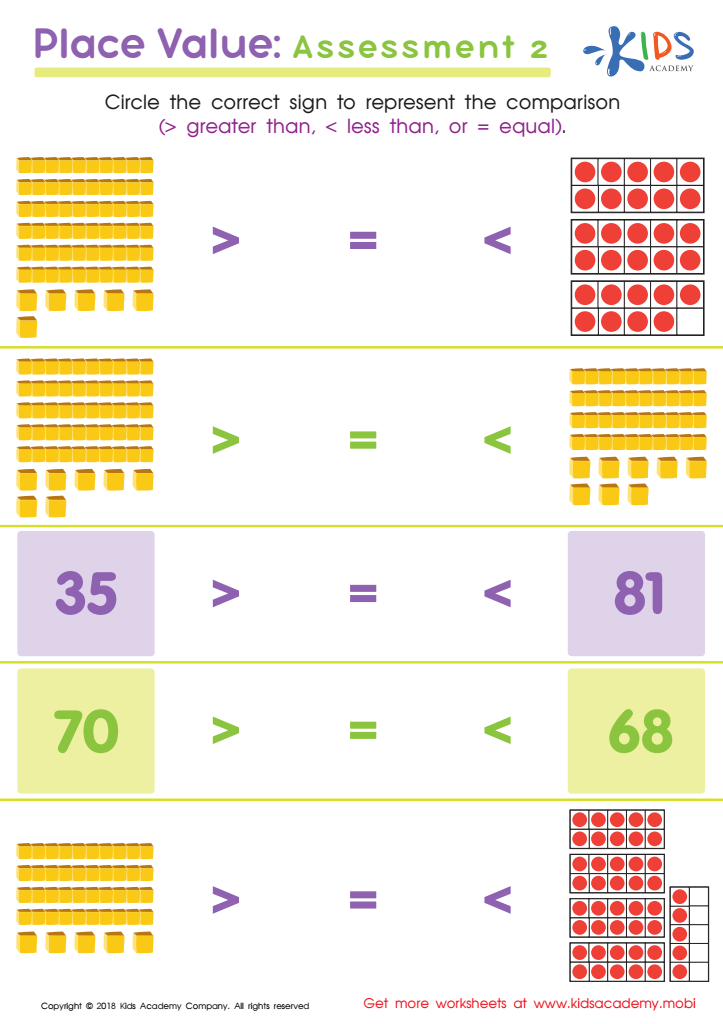
Place Value: Assessment 2 Worksheet
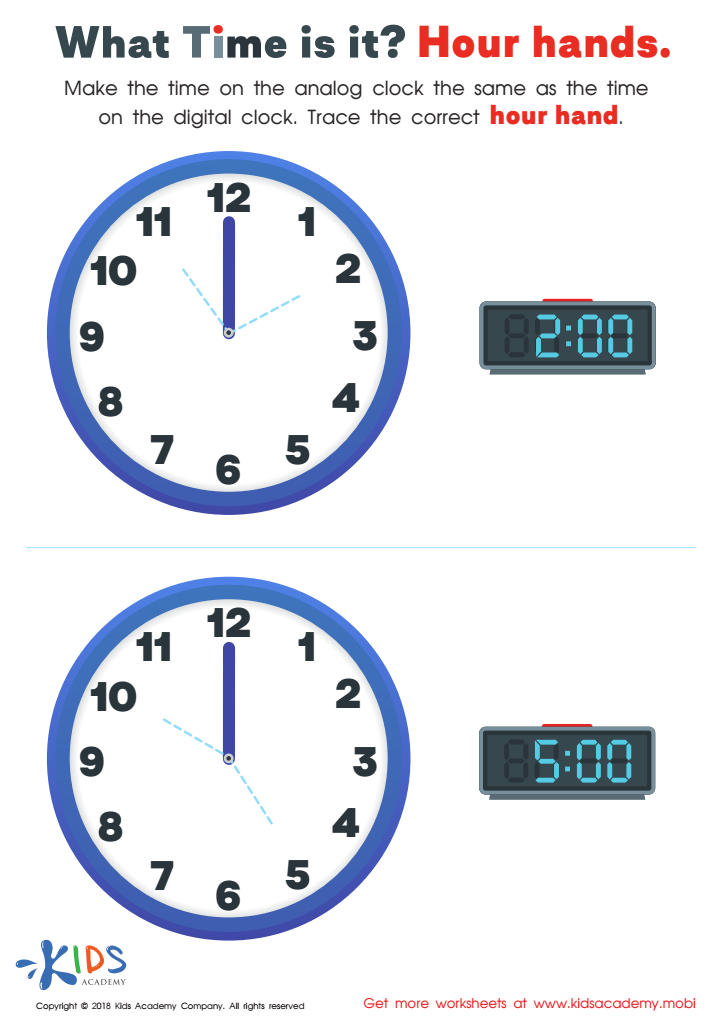
What Time Is it? Hour Hands Worksheet
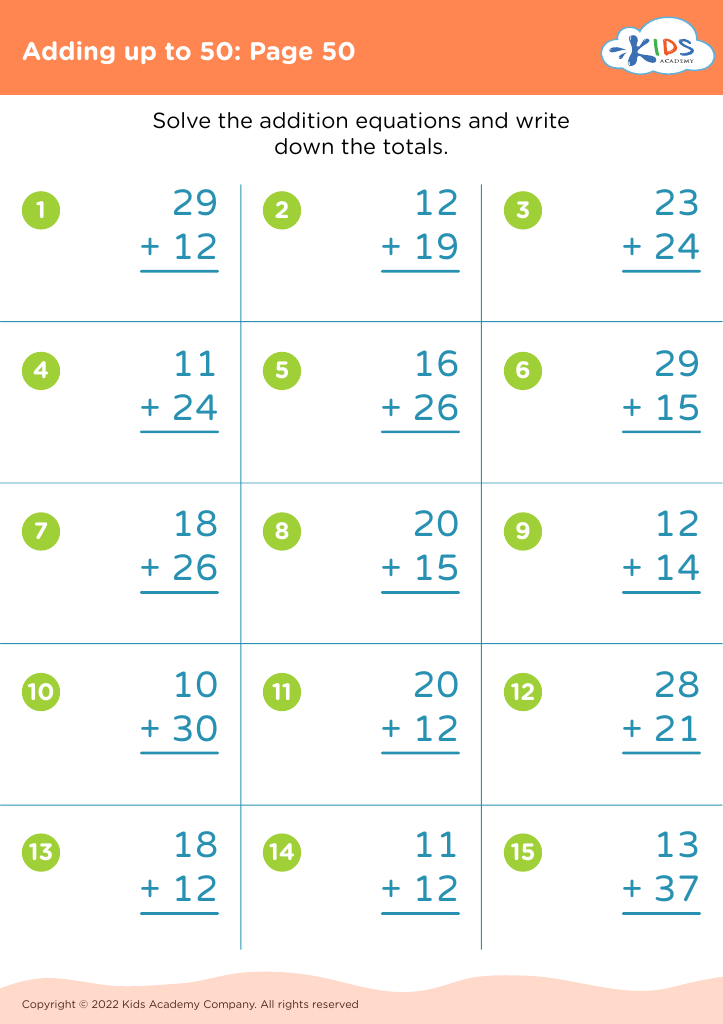
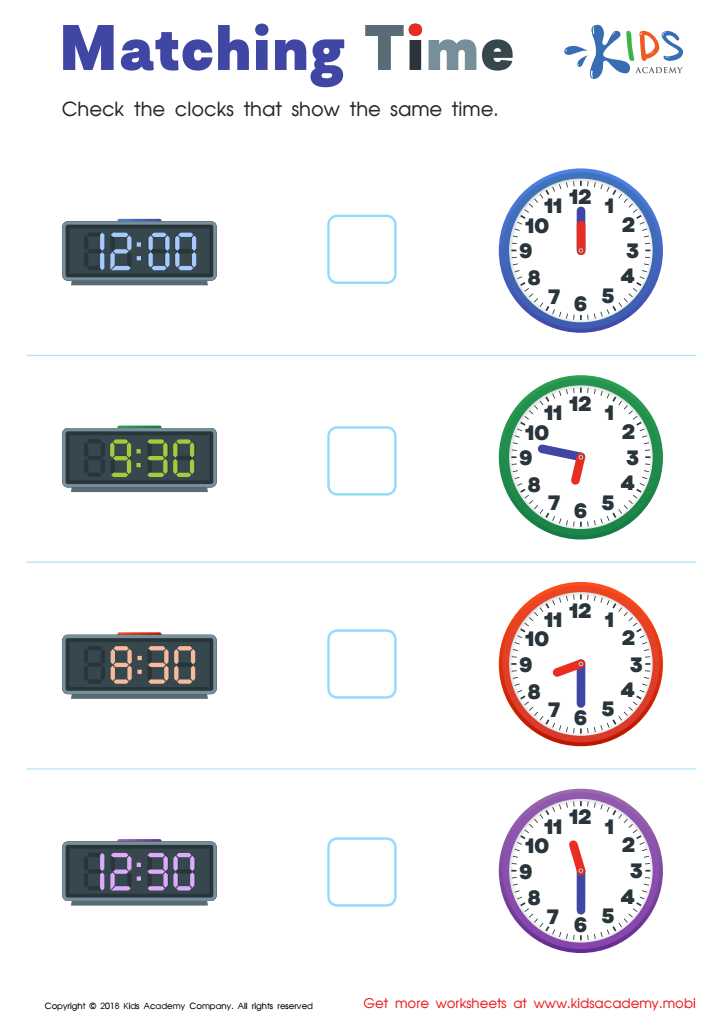
Matching Time Worksheet


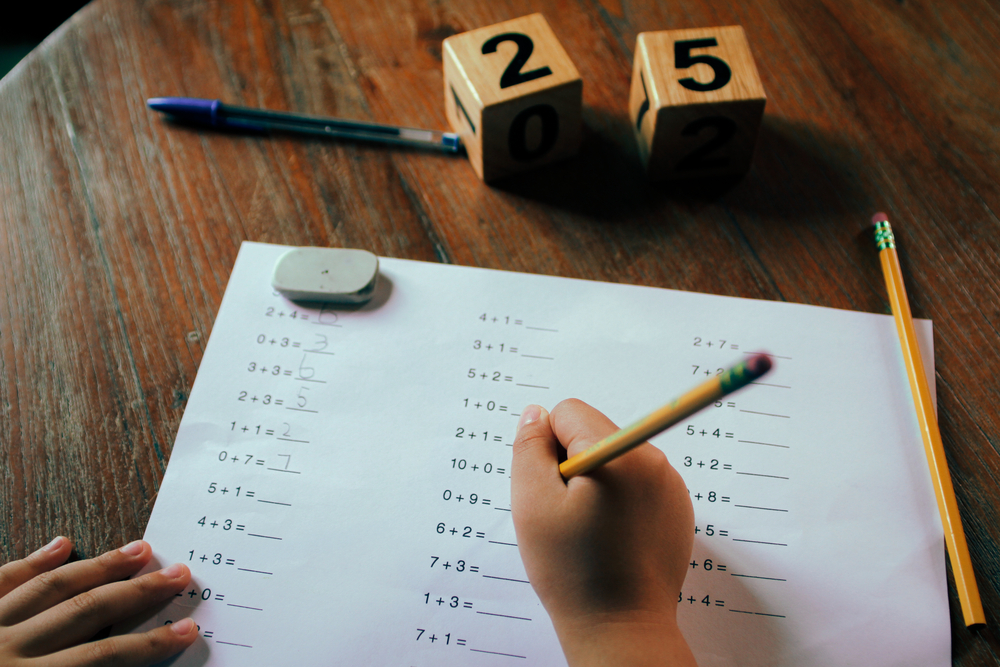




Reading clocks and understanding time is a vital skill for children ages 5-9, as it lays the foundation for both mathematical reasoning and everyday functionality. Learning to read clocks integrates several important mathematical concepts such as counting, addition, and spatial awareness. It encourages critical thinking, as children must analyze and interpret information in a practical context.
Moreover, time management is an essential life skill that shapes children's daily activities, helping them develop a sense of responsibility and independence. Proficiency in this area enhances their confidence in navigating schedules, whether it’s getting to school, managing homework, or participating in extracurricular activities.
Parents and teachers should care because teaching children to read clocks not only provides them with mathematical knowledge but also empowers them to make informed choices and decisions throughout their day. Establishing this skill early on encourages a positive attitude towards learning challenges, fosters curiosity, and prepares them for future lessons in both math and time management.
Ultimately, mastering time concepts can significantly enhance children’s capabilities, ensuring they are better equipped to thrive academically and socially. Thus, reinforcing clock reading skills reinforces broader competencies vital for holistic development during these formative years.








