Telling time Math Worksheets for Ages 5-9
4 filtered results
-
From - To
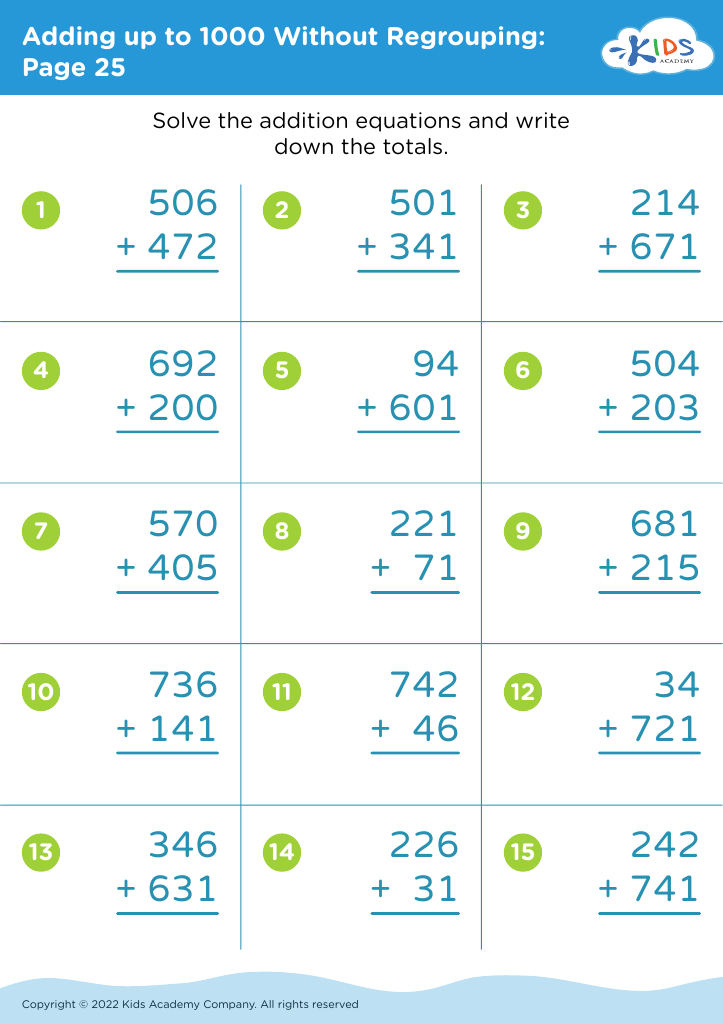
Discover our engaging Telling Time Math Worksheets designed specifically for children aged 5-9! Our interactive worksheets help young learners develop essential time-telling skills using fun activities that make learning enjoyable. With a range of exercises, including clock reading, matching digital and analog times, and solving time-related problems, these worksheets support skill development and boost confidence. Ideal for home practice or classroom use, they cater to various learning styles and abilities. Foster your child's mathematical skills and enable them to understand the concept of time with ease. Explore our collection today and make telling time a delightful learning experience!
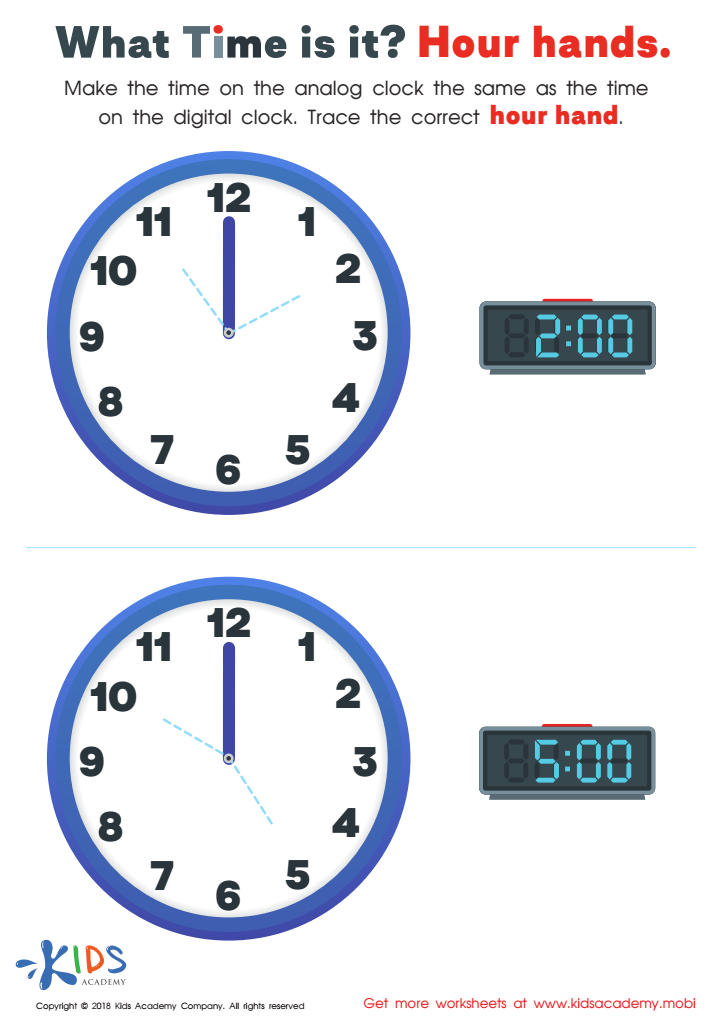
What Time Is it? Hour Hands Worksheet
 Assign to My Students







Teaching kids to tell time is a vital skill that develops not only their math abilities but also their overall cognitive and life skills. For children aged 5-9, understanding how to read a clock fosters a sense of autonomy and responsibility. It helps them manage their schedules and routines, bringing structure to their daily activities. Learning to tell time enhances their problem-solving skills, as they practice conversion between minutes and hours and engage with fractions through understanding the division of the clock.
Moreover, teaching time within this age group supports social skills—kids learn to coordinate playdates and express punctuality, contributing to teamwork and cooperation. Time-telling education can be seamlessly integrated into engaging activities, such as games or storytelling, making learning fun and interactive.
Parents and teachers should care about this aspect of math because it builds a foundation for future mathematical concepts and provides practical skills applicable in real-life situations. Additionally, mastering time-telling can boost a child's confidence, empowering them with the knowledge that supports their independence as they grow. Ultimately, fostering time understanding is an essential building block for responsible and capable individuals.








