
Times table reinforcement Math Worksheets for Ages 5-9
4 filtered results
Difficulty Level
Grade
Age
-
From - To
Subject
Activity
Standards
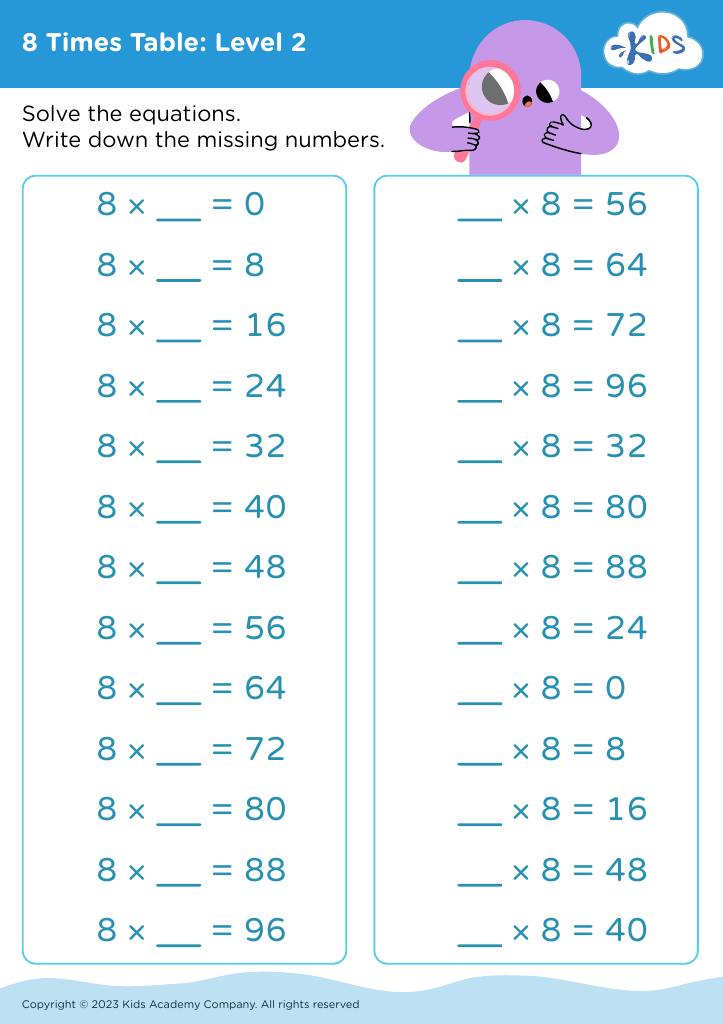
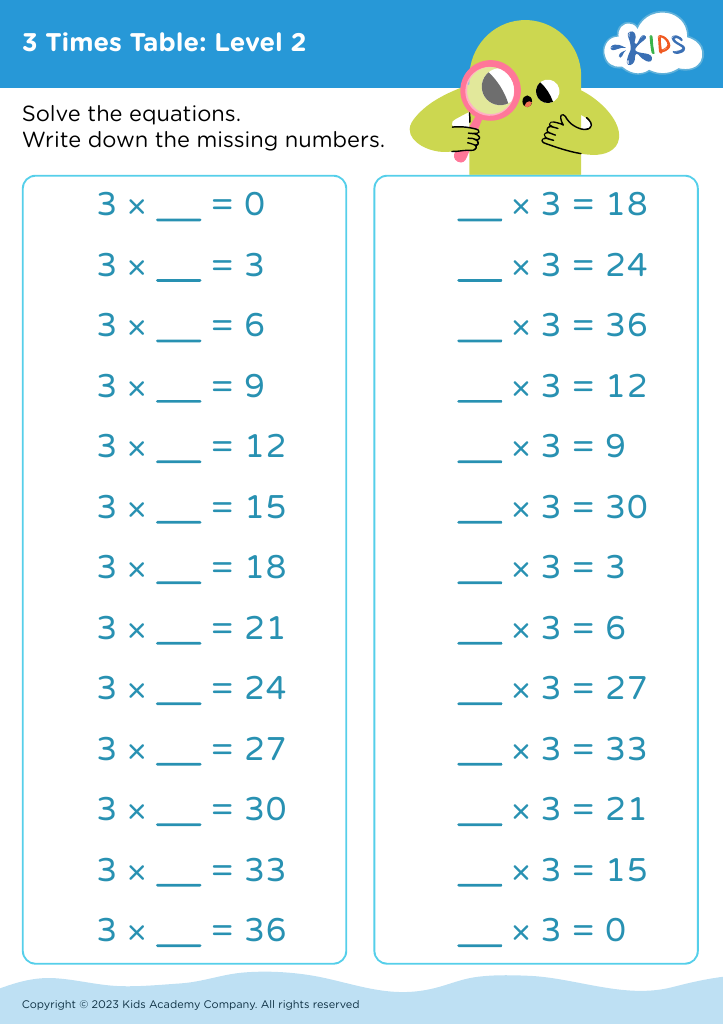
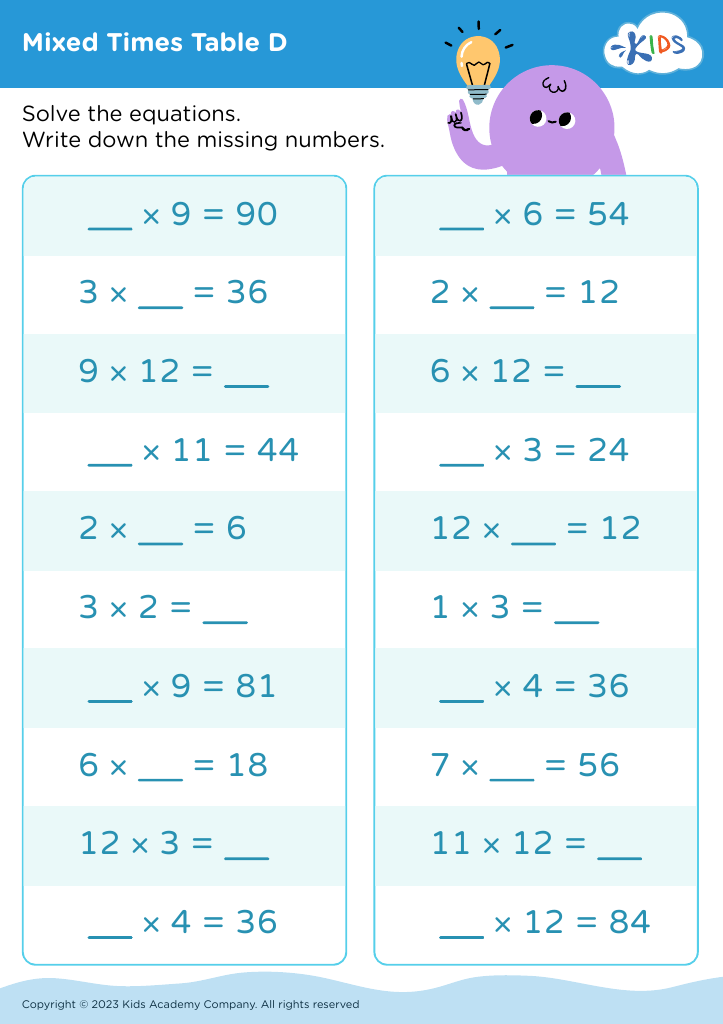
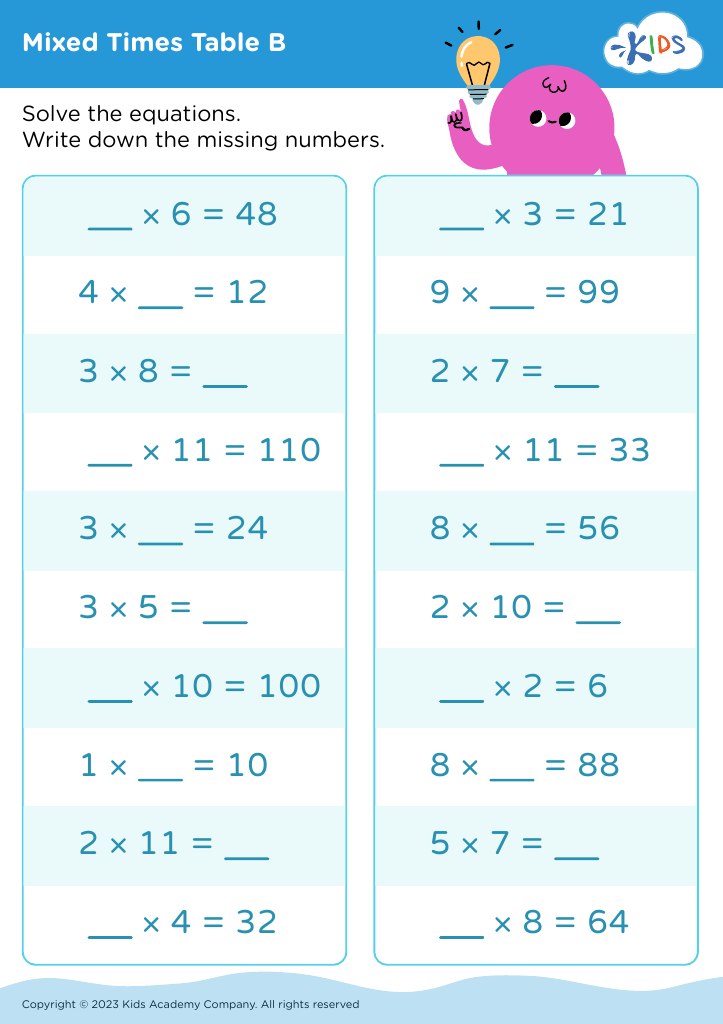
Enhance your child's math skills with our Times Table Reinforcement Worksheets designed specifically for ages 5-9! These engaging, printable worksheets provide fun and interactive exercises that make learning multiplication enjoyable. Each worksheet is tailored to strengthen understanding and recall of multiplication facts, helping young learners build a strong mathematical foundation. With colorful illustrations and varied activities, children can practice at their own pace while developing confidence in their math abilities. Perfect for use at home or in the classroom, these resources ensure that mastering times tables becomes an enjoyable adventure. Start your child's journey to math success today!
Favorites
With answer key
Interactive
Join Kids Academy for Free
Who is primarily going to use this learning content?








Reinforcing times tables for children aged 5-9 is crucial for their foundational math skills and overall academic success. During these formative years, children develop essential cognitive abilities, and mastering times tables can significantly enhance their understanding of arithmetic. For parents and teachers, this knowledge serves as a building block for future mathematical concepts, including division, fractions, and algebra.
By committing to times table reinforcement, adults help children gain fluency, enabling them to perform calculations swiftly and accurately. This fluency not only increases confidence but also allows students to focus on problem-solving strategies and critical thinking rather than getting bogged down by basic computation.
Furthermore, early mastery of times tables contributes to better performance in standardized testing and everyday math tasks, setting the stage for ongoing learning. Engaging methods such as games, songs, and visual aids can make the process enjoyable, reinforcing positive attitudes towards math.
Lastly, by jointly prioritizing times table reinforcement, parents and teachers build a cooperative environment that emphasizes the importance of persistence and growth in learning. This collective effort cultivates a strong mathematical foundation that will serve children throughout their educational journeys and beyond.








