Understanding adjectives Math Worksheets for Ages 5-9
6 filtered results
-
From - To
Discover engaging "Understanding Adjectives Math Worksheets" designed specifically for children ages 5-9! These interactive resources build essential language skills while integrating fun math concepts. Your young learners will explore adjectives through vibrant imagery, relatable examples, and captivating activities that enhance their descriptive language abilities. Our worksheets not only promote creativity and critical thinking but also strengthen children’s comprehension of how adjectives enhance sentences. Whether at home or in the classroom, these worksheets provide a playful approach to learning adjectives, equipping kids with the skills they need for academic success. Start transforming learning into an exciting adventure today!
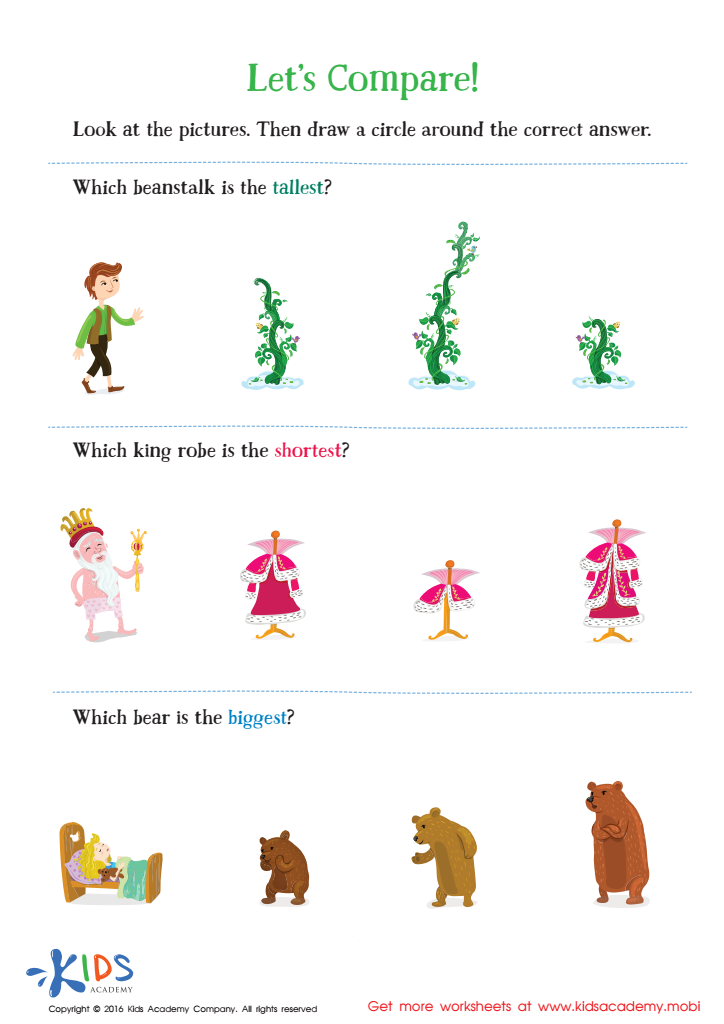
Fairy Tale Worksheet: Let's Compare
 Assign to My Students






Understanding adjectives is crucial for children aged 5-9 as it enhances their language skills and cognitive development. Adjectives enrich communication, allowing children to describe their thoughts, feelings, and surroundings more vividly, which fosters creativity and self-expression. In the realm of mathematics, the comprehension of terminology, including adjectives, can significantly impact a young learner’s ability to understand concepts and solve problems. For instance, words like “long,” “short,” “more,” and “fewer” are used in measurements and comparisons, essential skills in early math education.
When parents and teachers focus on teaching adjectives, they provide children with tools to articulate their understanding of math concepts, ultimately leading to improved problem-solving skills. By connecting language and math, educators lay a solid foundation for literacy and numeracy, promoting a holistic approach to learning. Furthermore, using descriptive words in math encourages engaging conversations, making learning interactive and enjoyable.
When parents and teachers prioritize understanding adjectives, they help children build confidence in their abilities to express mathematical ideas, setting the stage for academic success in both language and math in the years to come, thus fostering lifelong connections between the two essential domains of learning.








