Understanding division Math Worksheets for Ages 5-9
8 filtered results
-
From - To
"Understanding Division Math Worksheets for Ages 5-9" are designed to introduce young learners to the core concepts of division in a fun and engaging way. These printable worksheets help children grasp the basics of dividing objects into equal groups and understanding division vocabulary. Featuring colorful illustrations and age-appropriate problems, these resources make learning both enjoyable and effective. Each worksheet is crafted to build confidence and foundational skills, ensuring that children develop a strong understanding of division. Ideal for homeschooling or classroom use, these worksheets support critical thinking and problem-solving for kids in early grade levels.
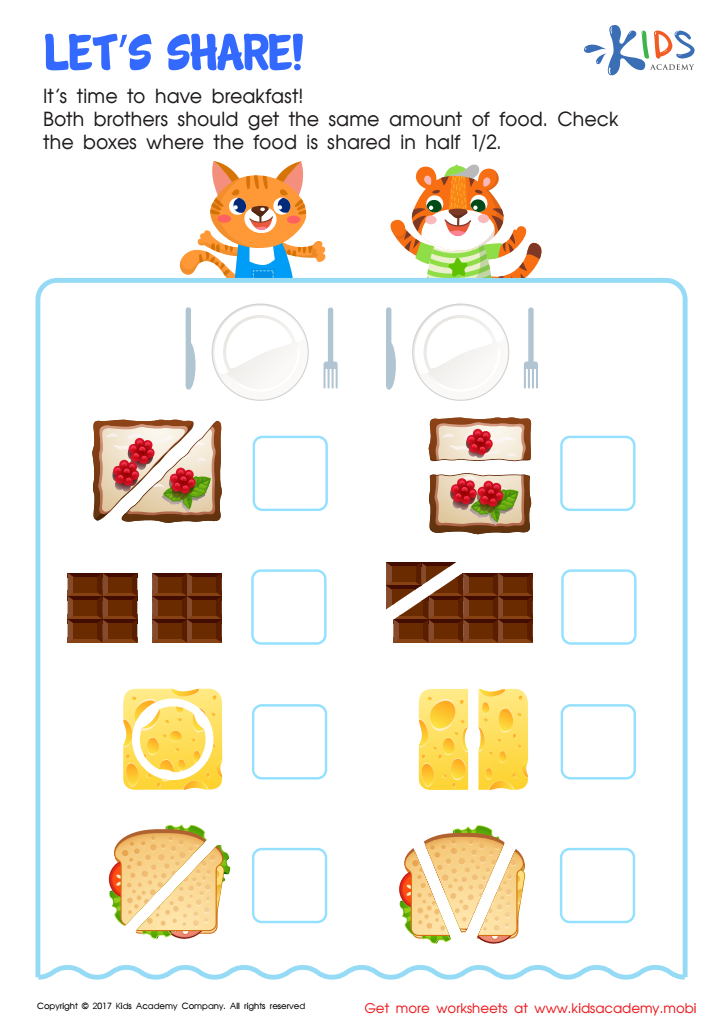
Let's Share Worksheet
 Assign to My Students
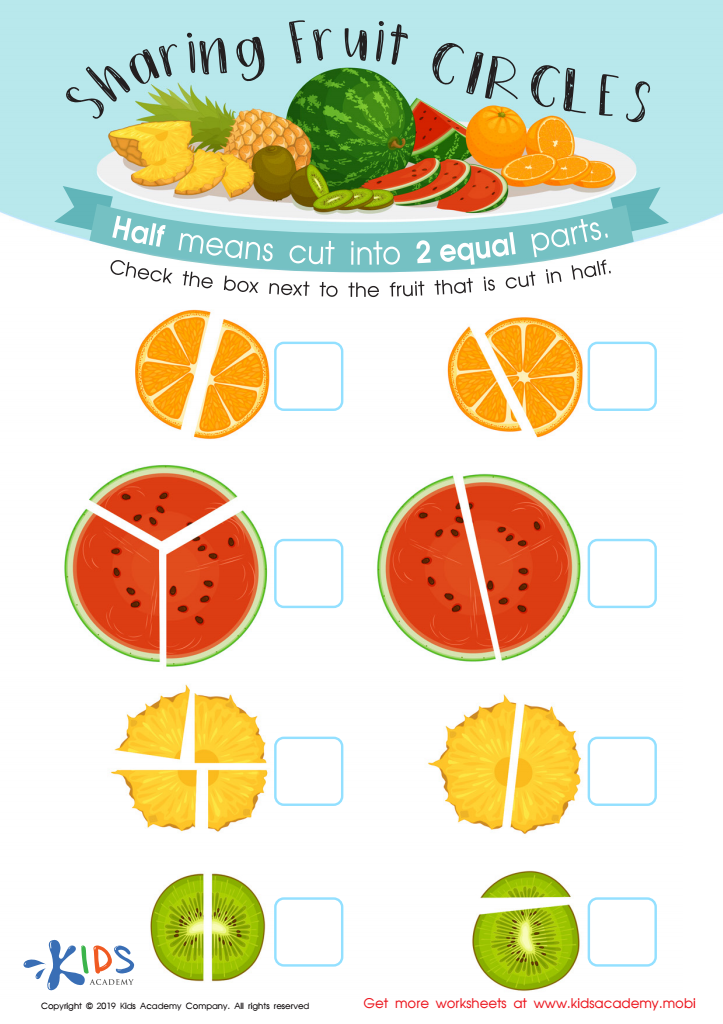
Sharing Fruit Circles Worksheet
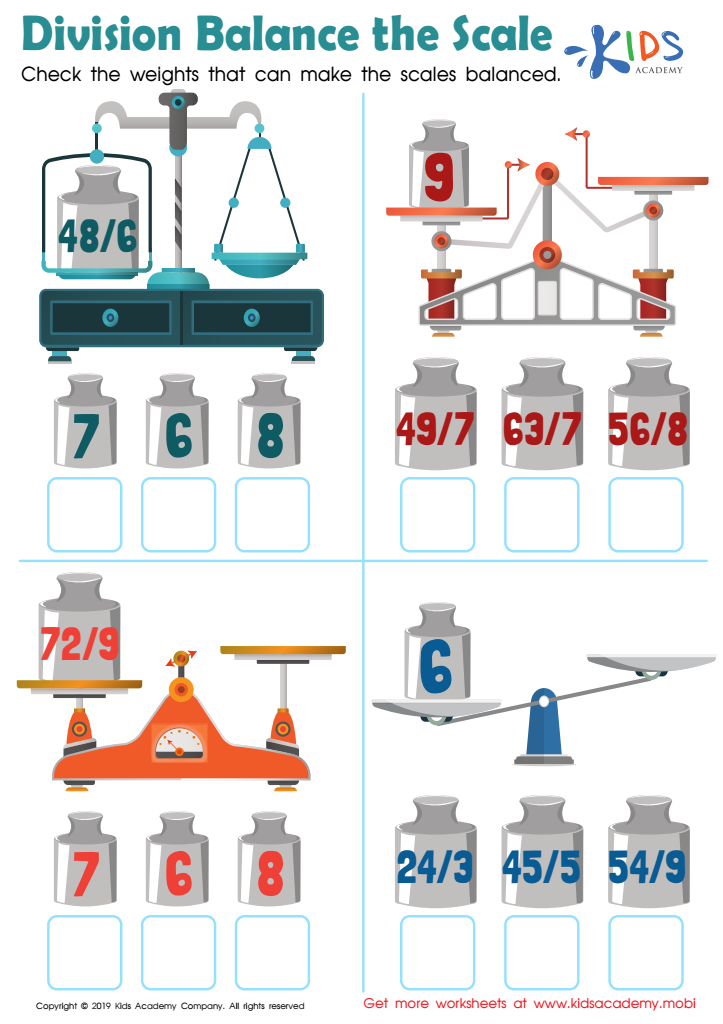
Division Balance the Scale Worksheet







Understanding division at an early age (5-9 years) is crucial for developing strong mathematical foundations in children. This fundamental concept is more than just splitting objects into equal parts; it's a gateway to problem-solving skills and logical thinking. When children grasp division early on, they build confidence and resilience in tackling more complex mathematical problems in the future.
For parents and teachers, emphasizing division helps children recognize patterns and relationships between numbers, enhancing numerical fluency. It's also interconnected with other key math concepts such as multiplication, addition, and subtraction, ensuring that children have a well-rounded mathematical education.
The comprehension of division lays the groundwork for real-life applications. Whether it's sharing toys, distributing snacks, or understanding time management, division teaches fairness, equality, and practical arithmetic skills.
Moreover, cultivating an early interest in mathematics opens educational and career opportunities in fields that require analytical thinking. As educators and caregivers, instilling a strong foundation in division not only nurtures a child's immediate academic success but also supports their long-term intellectual growth, problem-solving capabilities, and self-esteem in their ability to handle mathematical challenges. In short, fostering an early understanding and appreciation of division benefits a child's overall learning trajectory.








