Understanding number sequence Math Worksheets for Ages 5-9
7 filtered results
-
From - To
Discover engaging Math Worksheets focused on understanding number sequences, perfect for ages 5-9. Our expertly crafted worksheets help young learners develop critical math skills, including counting, recognizing patterns, and sequencing numbers. These printable resources feature fun activities that make learning enjoyable and effective. Kids will enhance their mathematical foundations through exercises tailored to their age and skill levels. Build confidence and boost numeracy skills with our comprehensive collection designed to support interactive learning. Ideal for parents and teachers seeking to inspire mathematical curiosity in children, helping them grasp essential concepts in a playful, hands-on manner.
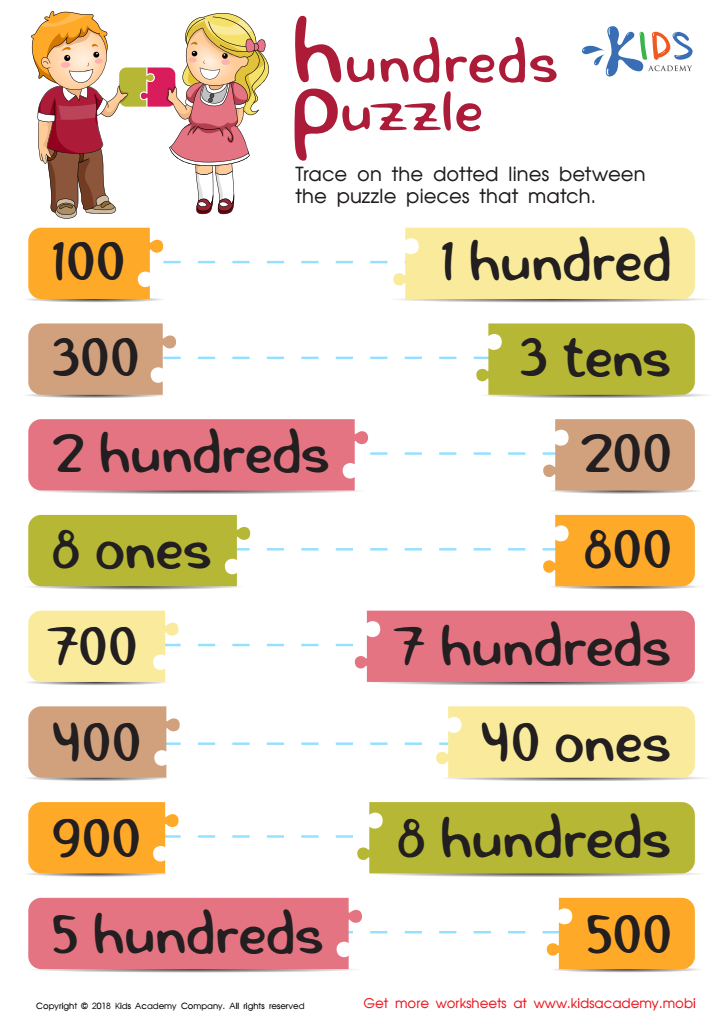
Hundreds Puzzle Worksheet
 Assign to My Students
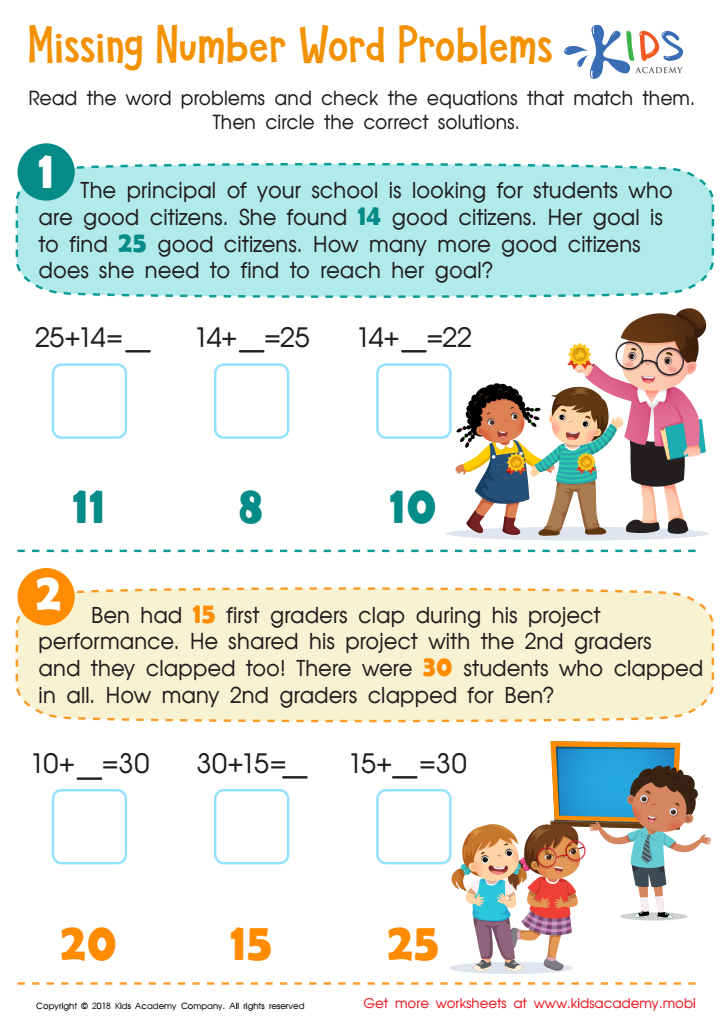
Missing Number Word Problems Worksheet
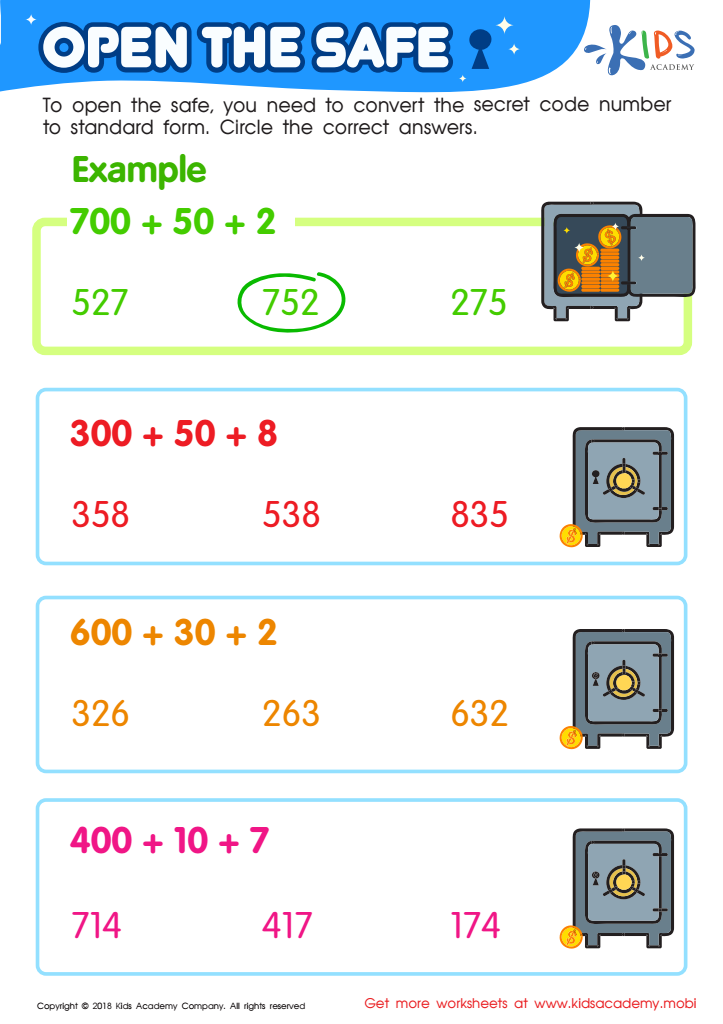
Open the Safe Worksheet
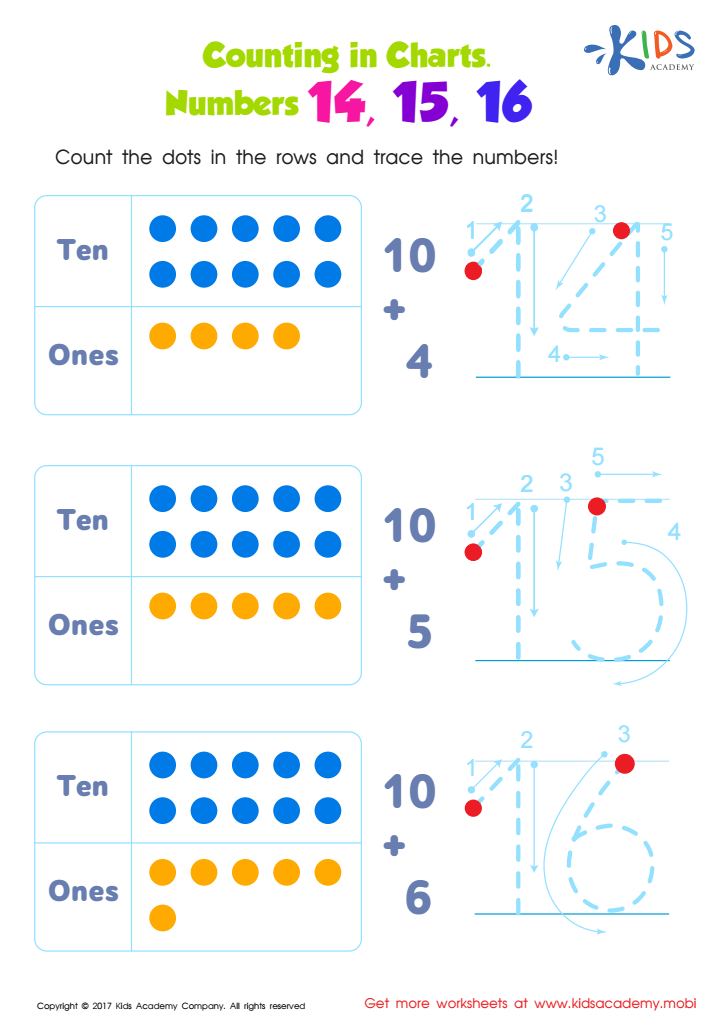
Number Tracing Worksheet





.jpg)


Understanding number sequences is a foundational skill that plays a crucial role in the cognitive development of children aged 5-9. This skill forms the bedrock for more advanced mathematical concepts that students will encounter as they progress in their education.
For parents and teachers, emphasizing number sequences instills a sense of order and pattern recognition in young learners. This grasp of basic sequences not only improves their counting abilities but also enhances their understanding of more complex operations such as addition, subtraction, multiplication, and division. Recognizing patterns and sequences helps in developing logical thinking and problem-solving skills, which are essential for success in various academic subjects and everyday activities.
Furthermore, early proficiency in number sequences contributes to a positive self-image in mathematics. When children understand and can predict numerical patterns, they gain confidence in their mathematical abilities, which encourages a positive attitude towards learning. This mindset is crucial for long-term academic success.
Moreover, number sequences are intertwined with various practical life activities, such as telling time, understanding calendars, and managing money. By nurturing an early interest and competence in this area, parents and teachers equip children with essential life skills that they will use throughout their lives.
By investing in young children's understanding of number sequences, we set them on a path towards academic achievement, logical reasoning, and practical competence.








