Comparing numbers Measurement Worksheets for Ages 5-9
3 filtered results
-
From - To
Discover our engaging "Comparing Numbers Measurement Worksheets" designed specifically for children aged 5-9! These worksheets provide a fun and interactive way for young learners to enhance their math skills by comparing numbers. Through a variety of activities, kids will develop their understanding of greater than, less than, and equal to concepts, all while enjoying the process of measurement. Each worksheet is thoughtfully crafted to encourage critical thinking and foster a love for learning. Perfect for classroom use or at-home practice, these resources help children build a strong foundation in math. Explore our collection and watch your child's confidence soar!
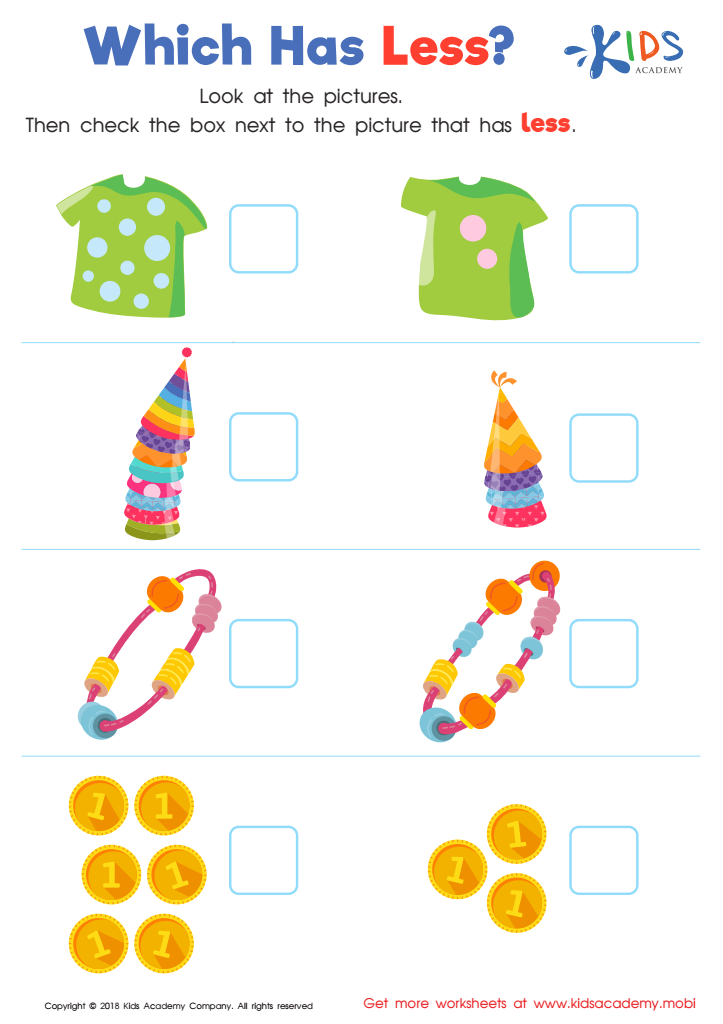
Which Has Less? Worksheet
 Assign to My Students
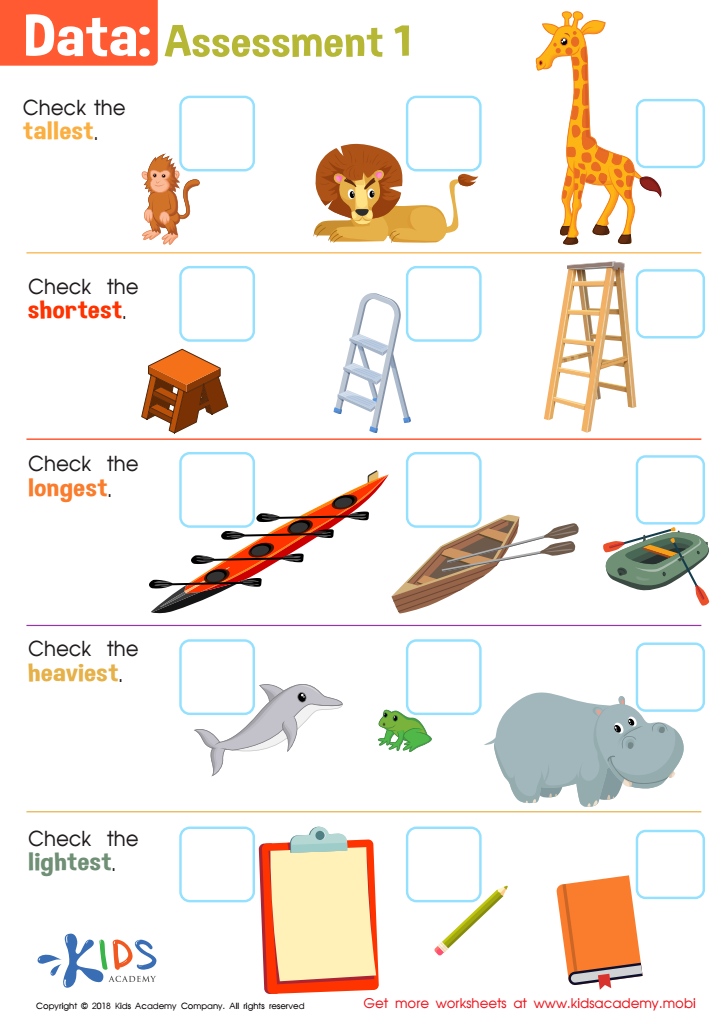
Data: Assessment 1 Worksheet
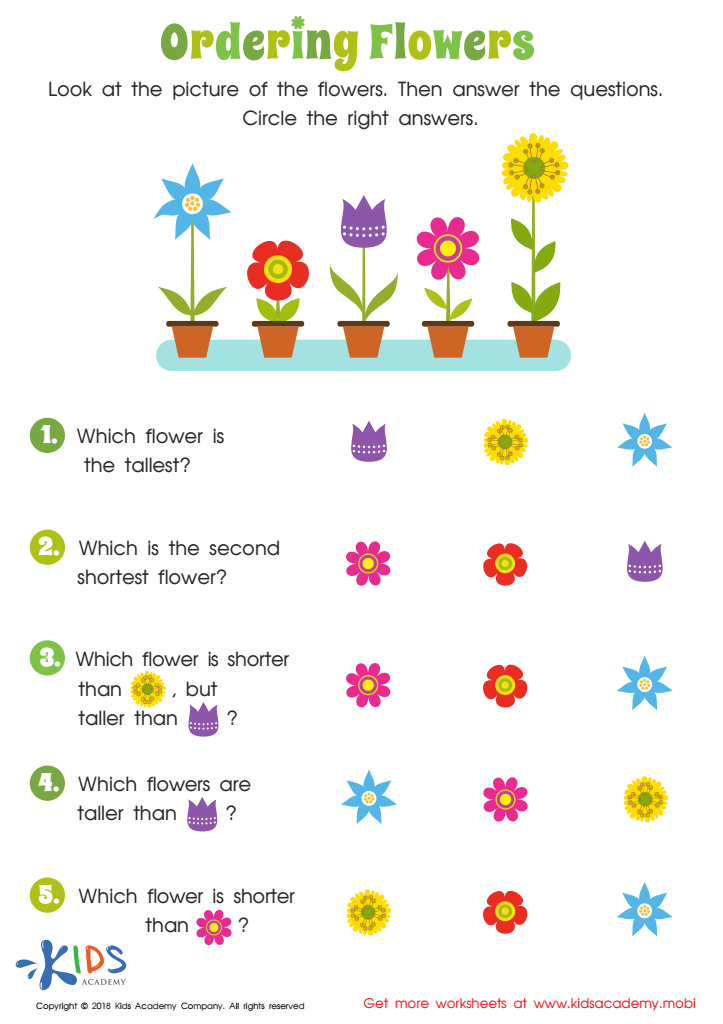
Ordering Flowers Worksheet






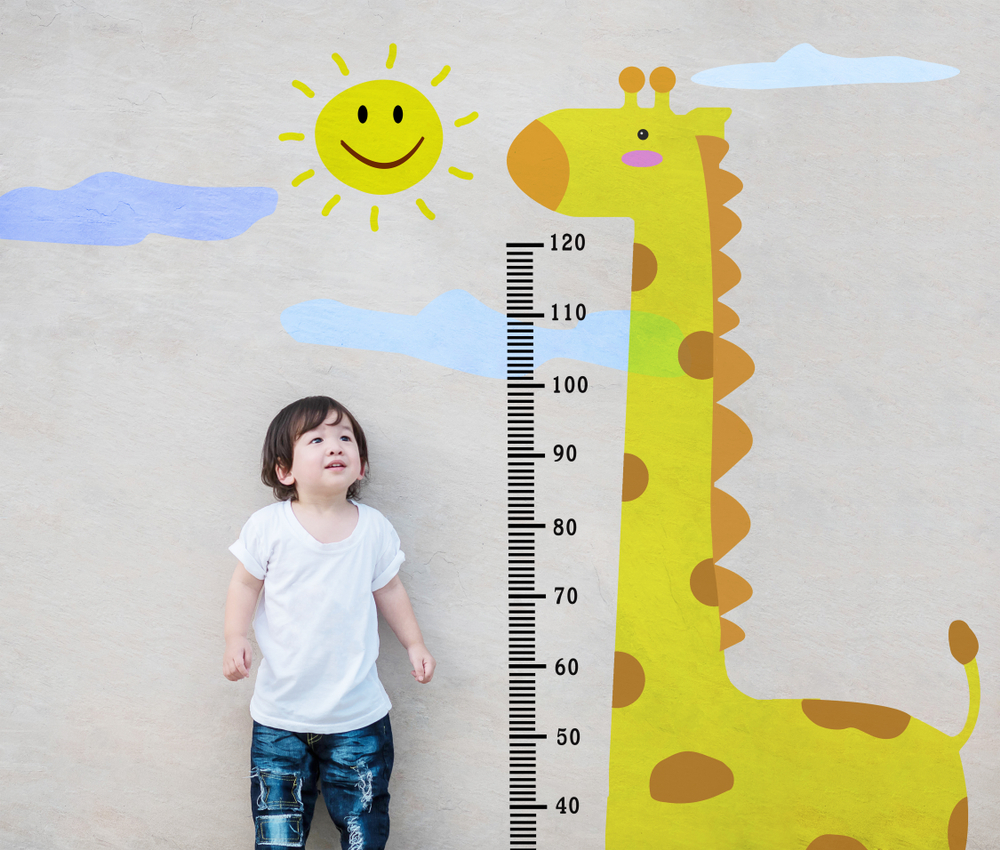

Parents and teachers play a crucial role in a child's early mathematical development, and concepts such as comparing numbers and measurement are foundational for critical thinking and problem-solving skills. For children aged 5-9, understanding these concepts fosters cognitive growth and lays the groundwork for more complex math skills in the future.
Comparing numbers helps children develop a sense of quantities, which is vital for their overall numerical fluency. It aids them in recognizing patterns, identifying greater or lesser values, and understanding concepts like more, less, and equal. These skills not only improve mathematical understanding but also enhance logical reasoning in everyday situations.
Measurement, on the other hand, introduces children to the idea of dimensions such as length, weight, and volume. Learning to measure fosters curiosity and encourages exploration, allowing children to directly interact with the world around them. It creates a practical context for applying math skills, as children learn to compare sizes, assess distances, and quantify objects.
By prioritizing these concepts, adults are not merely teaching math; they are equipping children with essential life skills, encouraging their independence, confidence, and ability to think critically about the world around them. As such, comparing numbers and understanding measurement should be integral parts of early education.








