Spatial awareness Measurement Worksheets for Ages 5-9
3 filtered results
-
From - To
Enhance your child's spatial awareness skills with our engaging Spatial Awareness Measurement Worksheets, specifically designed for ages 5-9. These worksheets encourage young learners to explore concepts of positioning, distance, and movement through fun and interactive activities. By incorporating hands-on exercises, children develop critical thinking and problem-solving skills while gaining confidence in their spatial reasoning. Ideal for home or classroom use, our worksheets are perfect for teachers and parents looking to supplement their child's learning experience. Dive into our collection and watch your child thrive as they make connections between shapes, sizes, and space in a playful, educational way!
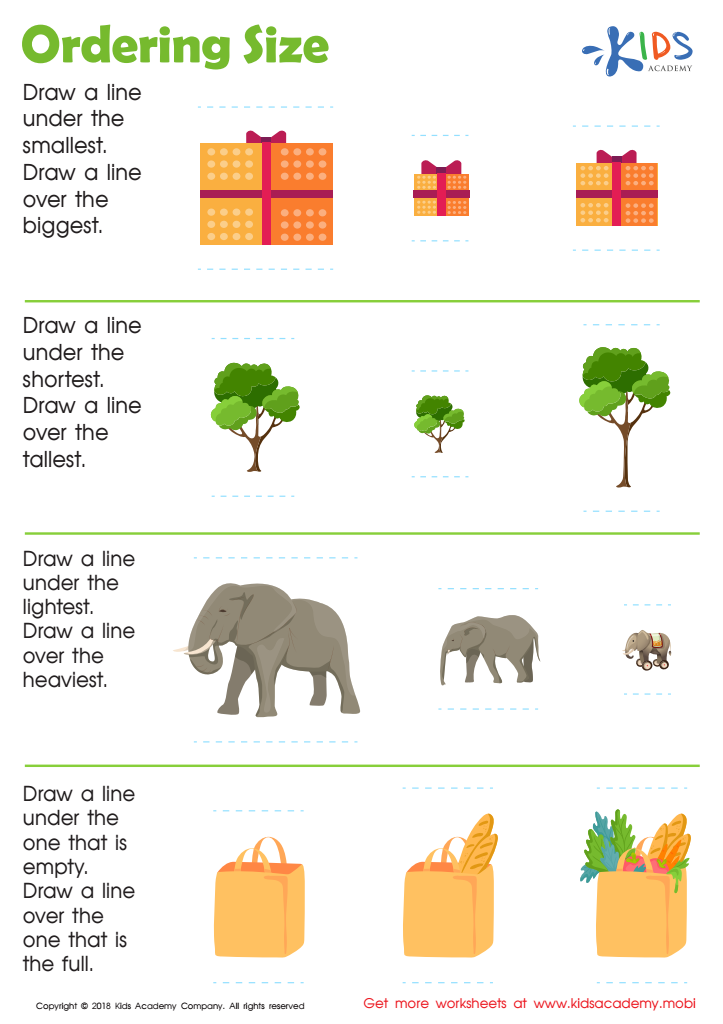
Ordering Size Worksheet
 Assign to My Students
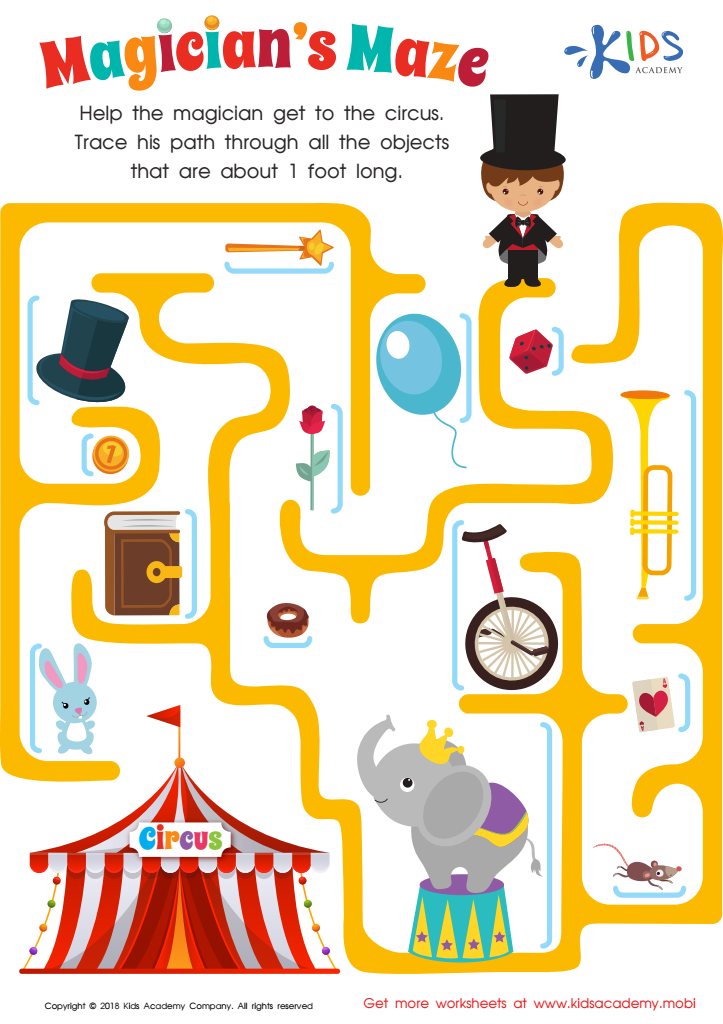
Estimating Length: Magician's Maze Worksheet
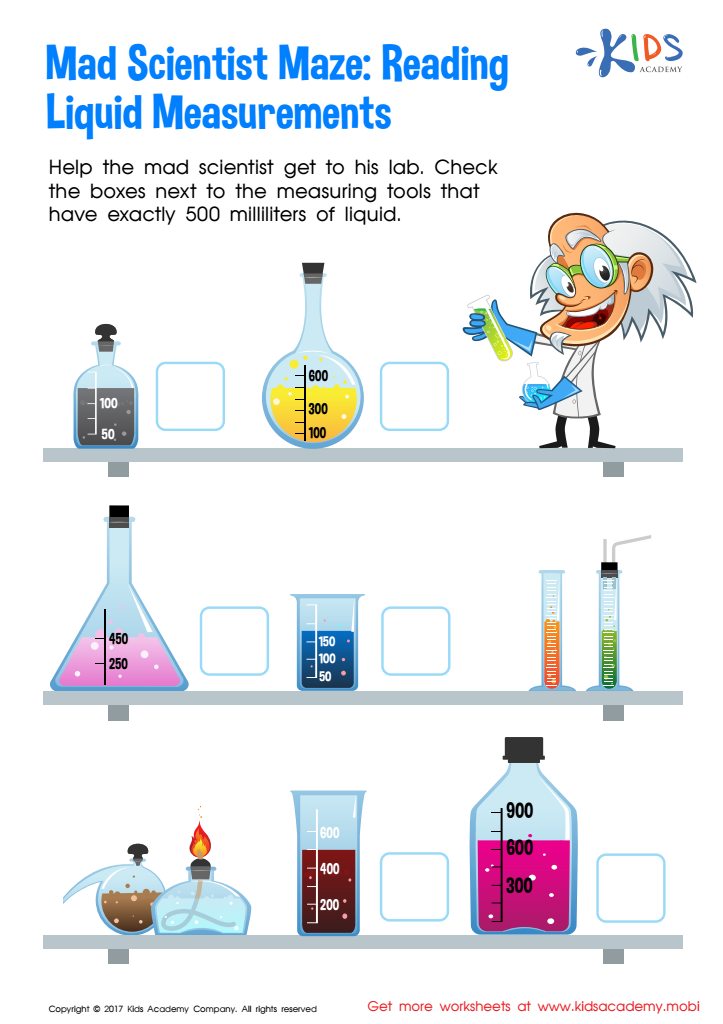
Reading Liquid Measurement Worksheet








Spatial awareness is a crucial developmental milestone for children aged 5-9, influencing their ability to understand and interact with the world around them. Parents and teachers should prioritize spatial awareness measurement because it significantly impacts a child’s academic success and everyday skills. This capability involves understanding shapes, sizes, distances, and relationships between objects, which is foundational for subjects like math, science, and geography.
By assessing spatial awareness, adults can identify areas where a child may need additional support or enrichment. It helps identify learning styles and potential gaps early on, ensuring that children receive targeted interventions that promote cognitive development. Enhanced spatial awareness also fosters critical thinking, problem-solving, and creativity as children learn to visualize and manipulate objects mentally.
Moreover, spatial skills are linked to future opportunities, as they are predictors of success in STEM fields. Ignoring this aspect may hinder a child’s ability to navigate their environment effectively or excel in required skills later in life. By understanding their child’s spatial abilities, parents and teachers can guide them toward experiences that bolster these skills, ultimately nurturing well-rounded individuals prepared for future academic learning and everyday life's spatial demands. Thus, attention to spatial awareness measurement is essential.








