
Critical Thinking Multiplication Worksheets for Ages 5-9
5 filtered results
Difficulty Level
Grade
Age
-
From - To
Subject
Activity
Standards
Enhance your child's mathematical prowess with our "Critical Thinking Multiplication Worksheets for Ages 5-9". These engaging and interactive printables are designed to develop critical thinking and problem-solving skills. Tailored for young learners, they combine multiplication practice with fun challenges and puzzles, ensuring a solid grasp of multiplication concepts. Perfect for both classroom and home use, these worksheets are an excellent resource to boost confidence and motivate young minds. Ignite your child's love for math and watch as they excel through creative and critical thinking activities. Transform learning into an adventure today!
Favorites
With answer key
Interactive
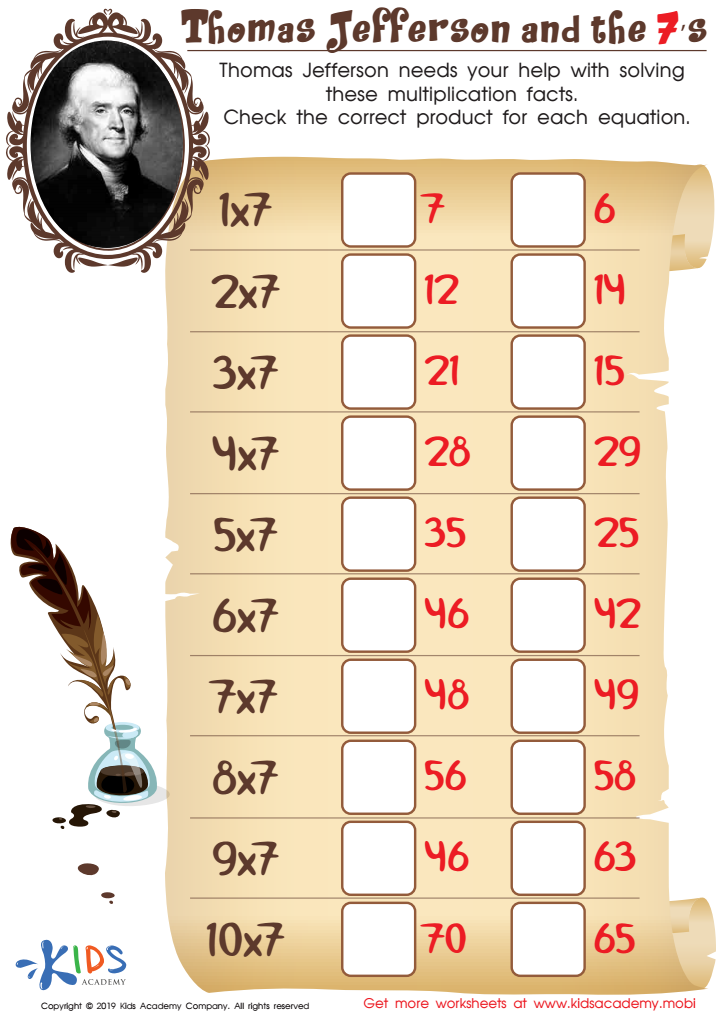
Thomas Jefferson and the 7’s Worksheet
Thomas Jefferson championed education and wants kids to know their times tables. Help your child with this worksheet focusing on 7's. Check the box for the correct answer for each multiplication problem. Make sure your child gets the facts right!
 Assign to My Students
Thomas Jefferson and the 7’s Worksheet
Worksheet
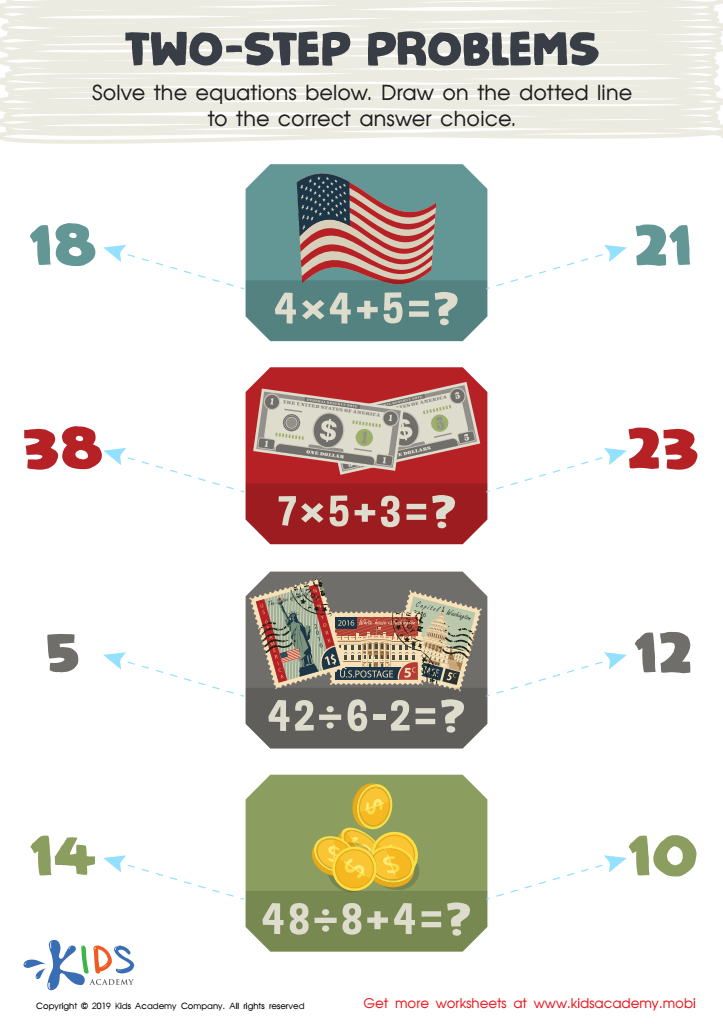
Two-Step Problems Worksheet
Help your child practice their math problem-solving skills with this worksheet. It covers the basics of subtractions, additions, multiplications, and divisions. With four simple equations, your kids can solve them and draw the correct answer on the dotted line. Reduce their strain and give them the help they need.
Two-Step Problems Worksheet
Worksheet
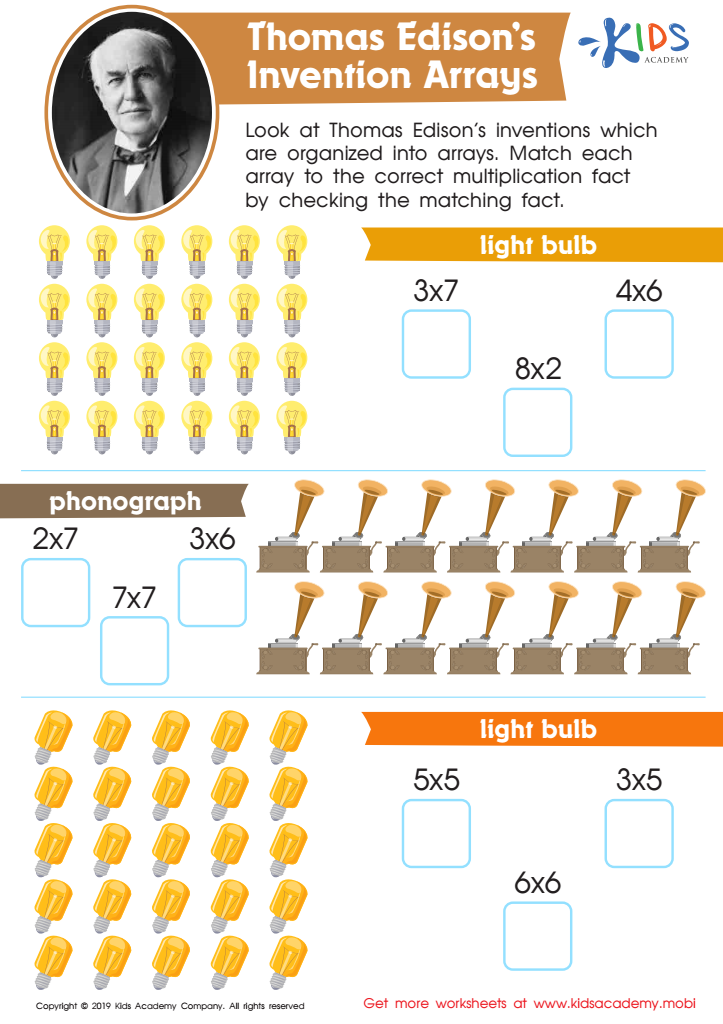
Thomas Edison’s Invention Arrays Worksheet
Test your students' knowledge on history by asking them what Thomas Edison invented. If they get the right answer, provide more information on other inventors. Check out this printout of Edison's light bulb inventions laid out in arrays. Get them to match each array to the correct multiplication fact.
Thomas Edison’s Invention Arrays Worksheet
Worksheet
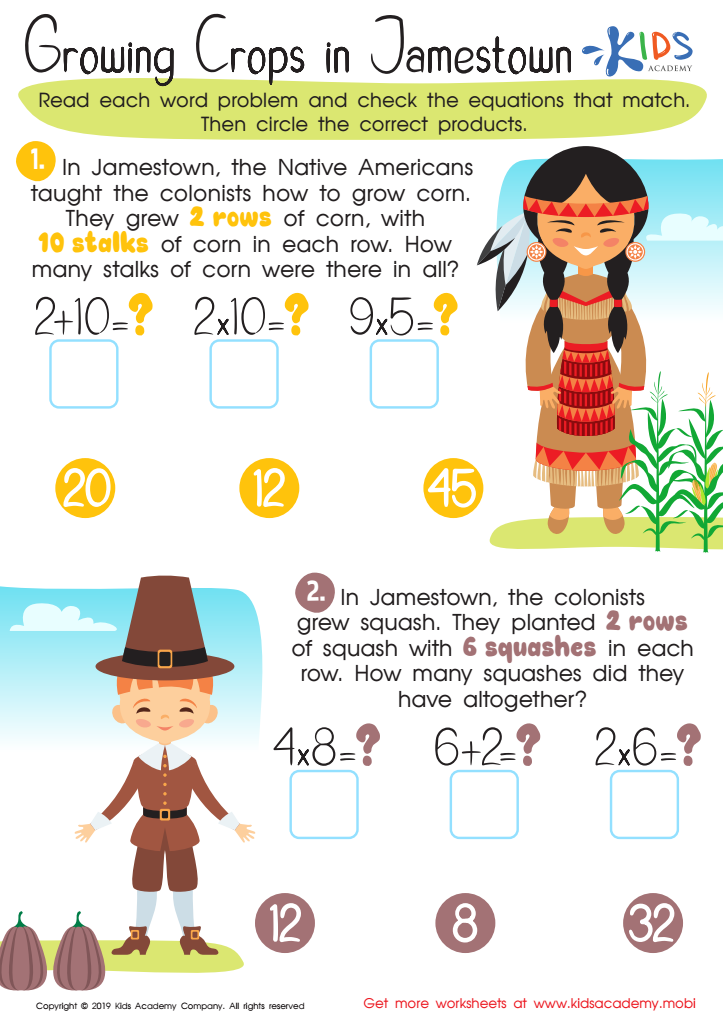
Growing Jamestown Worksheet
This exciting multiplication worksheet from Kids Academy uses American history facts as its theme. Kids learn about Native Americans helping early Americans at Jamestown, then read the word problems, match the equations and solve for the product. Finally, circle the correct answer!
Growing Jamestown Worksheet
Worksheet
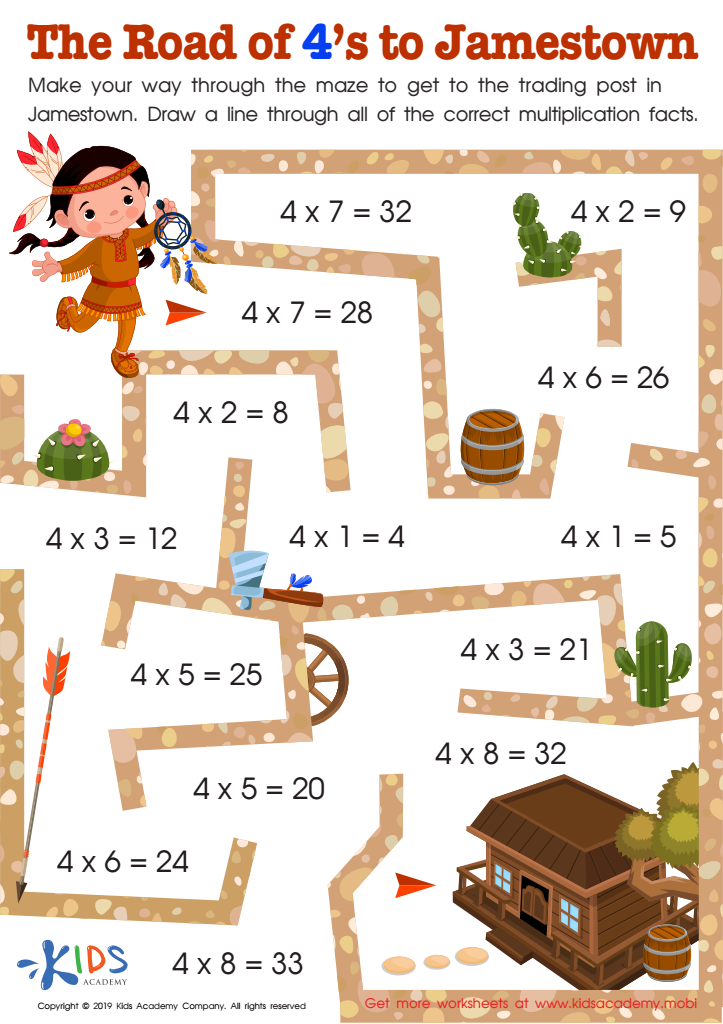
The Road of 4’s to Jamestown Worksheet
Does your child enjoy trips? Help them remember the best ones with this fun worksheet maze! Get your kid to look at the picture and draw a line through all the right multiplication facts to get to Jamestown's trading post. This worksheet is a great way to stimulate their problem-solving skills.
The Road of 4’s to Jamestown Worksheet
Worksheet
Join Kids Academy for Free
Who is primarily going to use this learning content?







Parents and teachers should prioritize critical thinking multiplication for children aged 5-9 because it lays the foundation for essential math skills and cognitive development. At this age, students are highly receptive to learning new concepts, and developing their multiplication skills through critical thinking exercises encourages them to go beyond rote memorization. By engaging in critical thinking activities, children learn to understand the 'why' and 'how' behind mathematical processes rather than just the end result. This deep comprehension fosters a more robust grasp of mathematical concepts, preparing them for more complex problem-solving tasks in the future.
Critical thinking in multiplication also cultivates skills such as pattern recognition, logical reasoning, and strategic thinking. These skills are not only valuable in math but are transferable to other academic subjects and everyday situations. For instance, when children explore multiple ways to solve a multiplication problem, they strengthen their abilities to think creatively and adaptively. This kind of cognitive agility is crucial for success in our rapidly changing world.
Furthermore, nurturing these skills at an early age builds confidence and a positive attitude towards math. Children who understand math deeply are more likely to enjoy the subject and perform well, paving the way for academic success and a lasting love for learning.








