Times table reinforcement Multiplication Worksheets for Ages 5-9
4 filtered results
-
From - To
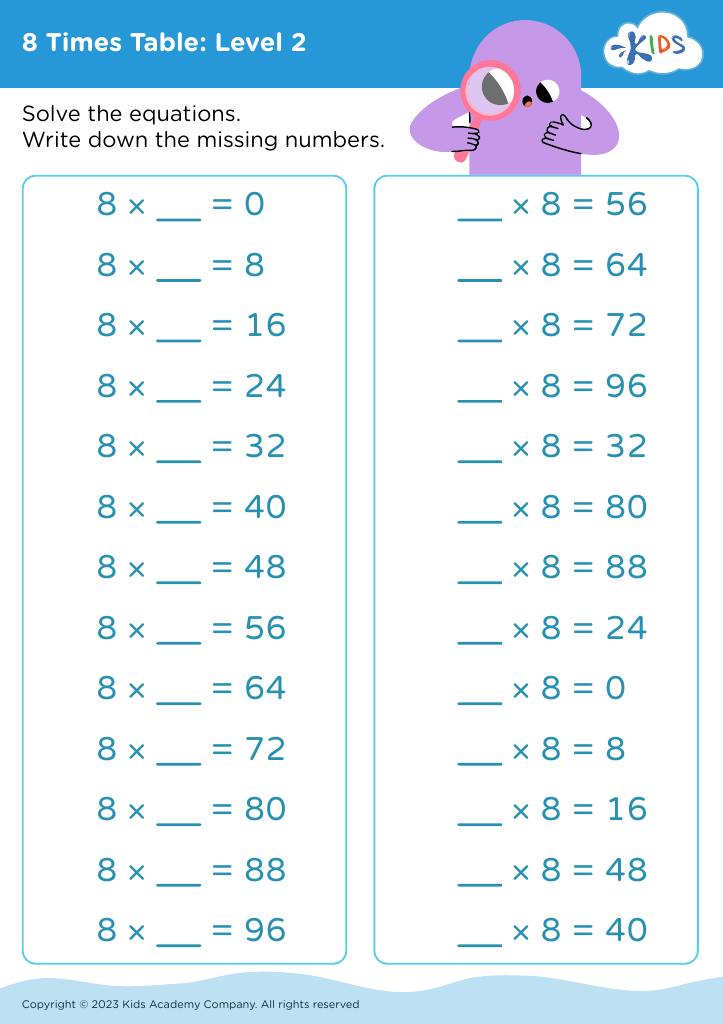
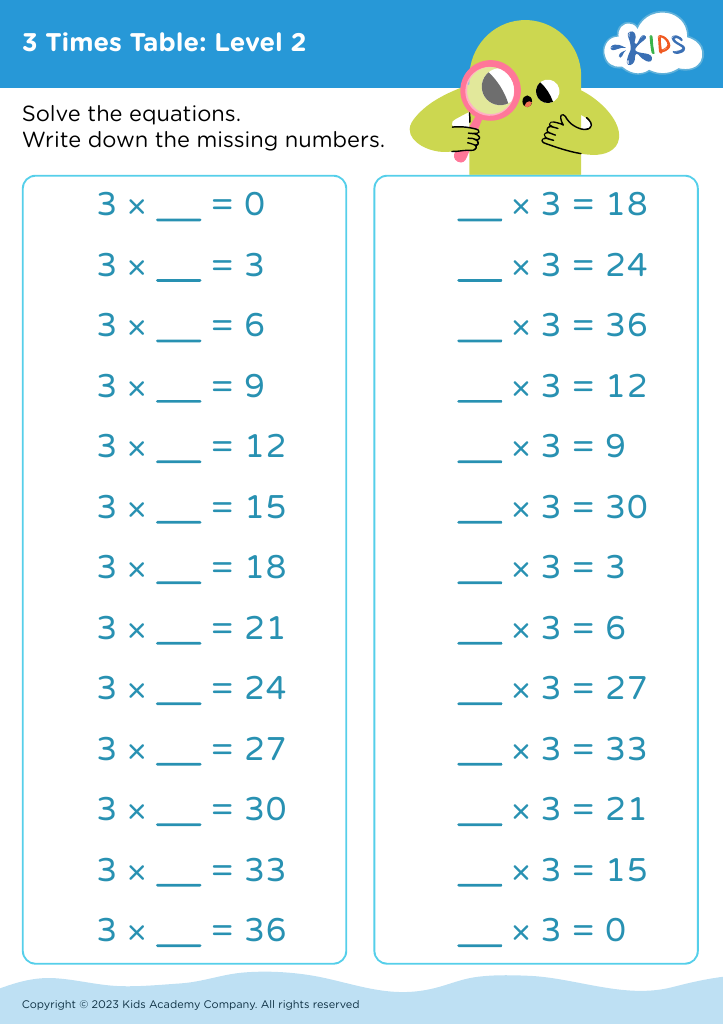
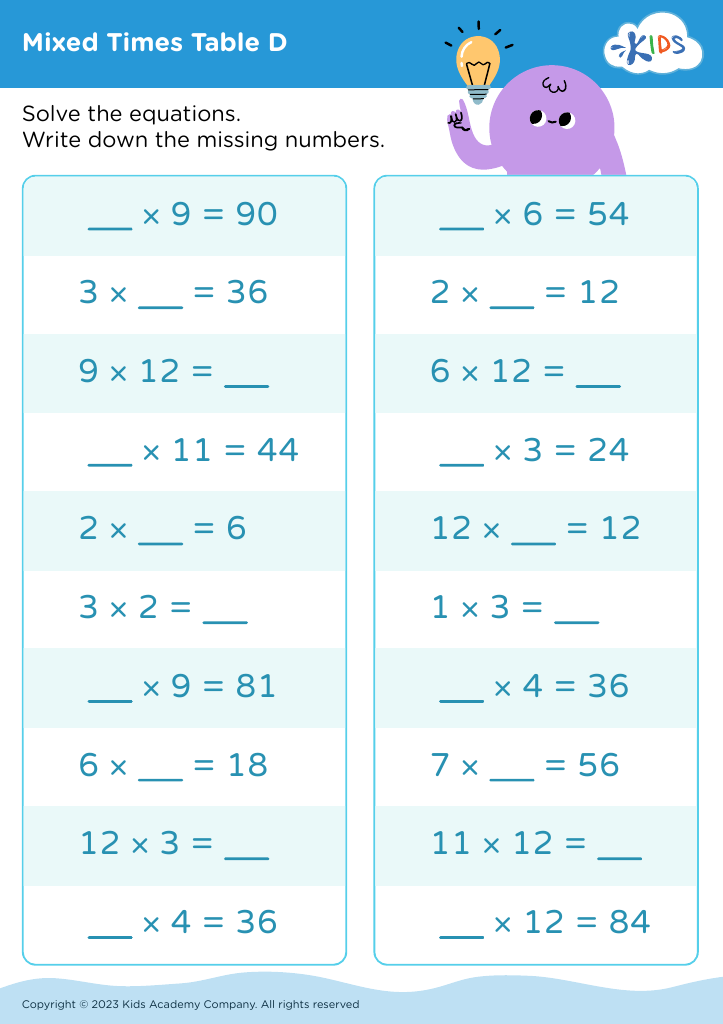
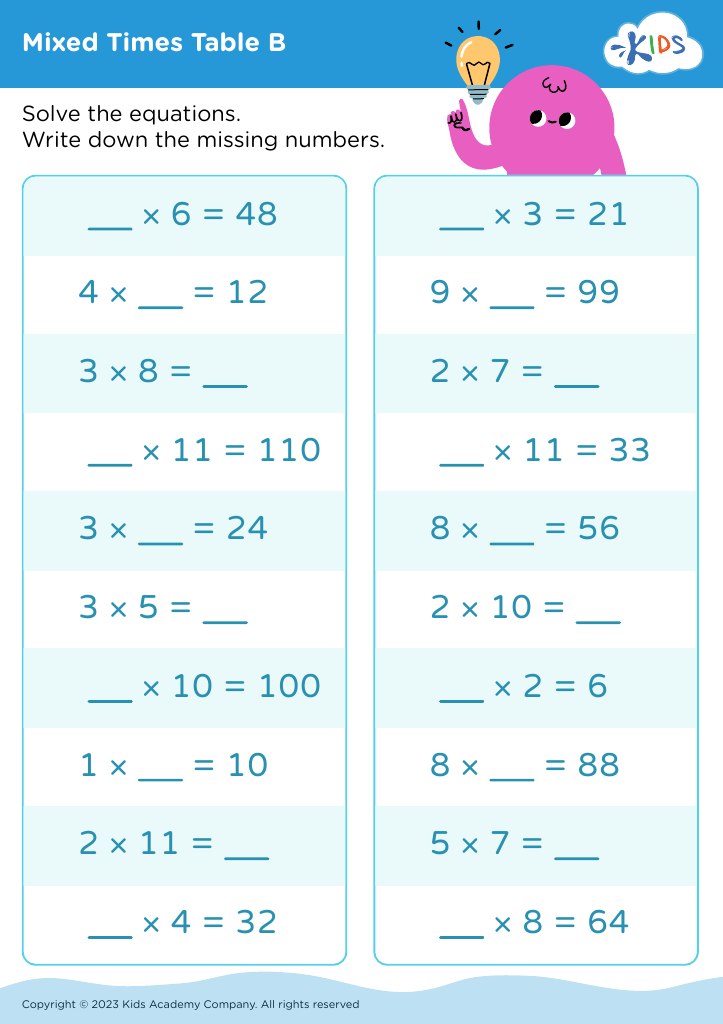
Boost your child's multiplication skills with our Times Table Reinforcement Multiplication Worksheets, designed for ages 5-9. These engaging and effective worksheets provide comprehensive practice with times tables, helping young learners master the basics with ease. Perfect for reinforcing classroom learning or extra practice at home, our worksheets cover essential multiplication facts through fun challenges and activities. With colorful illustrations and interactive problems, kids will stay motivated and excited to learn. Build a solid foundation in math for your child and watch their confidence grow with our expertly crafted multiplication worksheets!



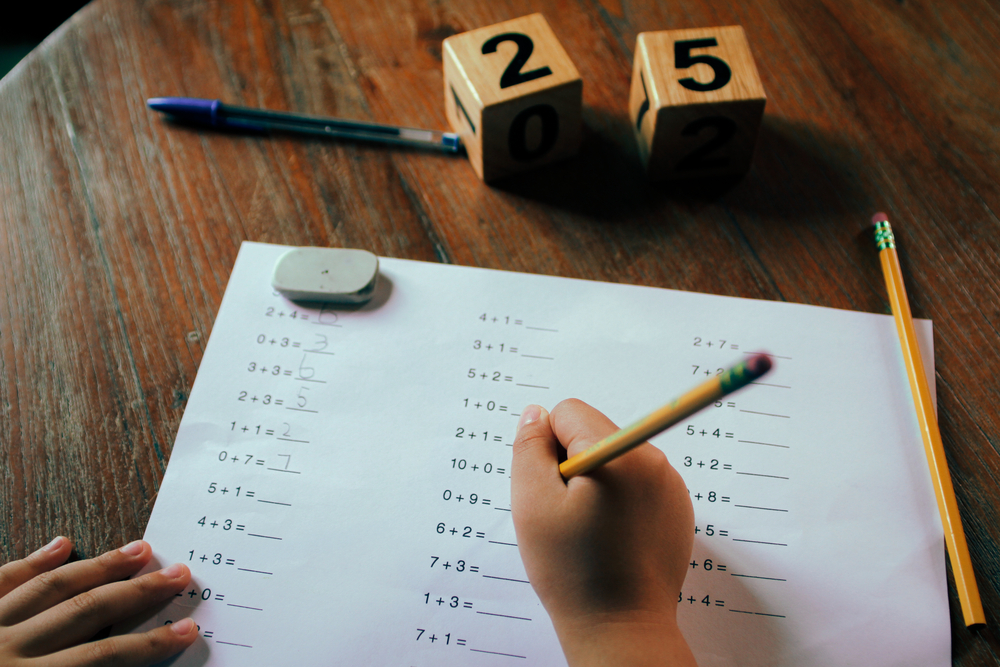



Reinforcing times tables for children ages 5-9 is crucial for their foundational math skills and overall cognitive development. During these early years, children's brains are highly adaptable and capable of absorbing new information efficiently. Mastering times tables builds essential arithmetic proficiency, which is key to tackling more complex math problems in the future.
Times tables serve as the building blocks for various mathematical concepts, including division, fractions, and algebra. By ensuring children have a strong grasp on multiplication, parents and teachers enable them to approach these advanced topics with confidence and competence. Moreover, memorizing times tables enhances memory, concentration, and pattern recognition skills, which are valuable in other subjects and everyday situations.
Beyond academics, learning multiplication helps develop a child's problem-solving abilities and logical thinking. This not only boosts their self-esteem as they achieve academic success but also instills a positive attitude towards learning and perseverance. Additionally, repeated practice and reinforcement promote a strong work ethic and patience, qualities that are beneficial throughout life.
In conclusion, parents and teachers play a vital role in ensuring that young learners have ample opportunities to practice and reinforce their times tables. This foundational knowledge equips children with the necessary skills for future academic challenges and fosters overall mental growth and development.








