Hand-eye Coordination Numbers 11–20 Worksheets for Ages 5-9
3 filtered results
-
From - To
Enhance your child's learning journey with our Hand-eye Coordination Worksheets for Numbers 11–20, designed specifically for ages 5-9! These engaging and interactive worksheets focus on developing crucial motor skills while reinforcing number recognition and counting. Children will enjoy fun activities that involve connecting dots, coloring, and tracing, all centered around the numbers 11 to 20. Perfect for home or classroom use, our worksheets make learning enjoyable and effective. Help your child build confidence in their math skills while improving their hand-eye coordination. Explore our collection today to support your child's growth in both numeracy and fine motor skills!
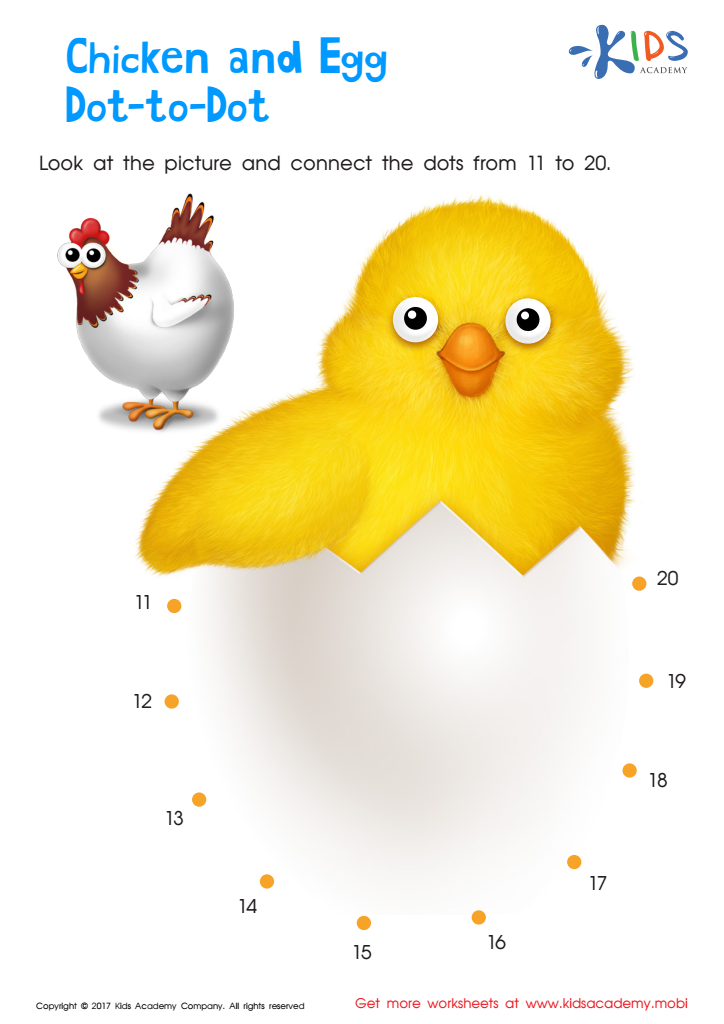
Ordering 11–20: Chicken & Egg Dot–to–dot Worksheet
 Assign to My Students
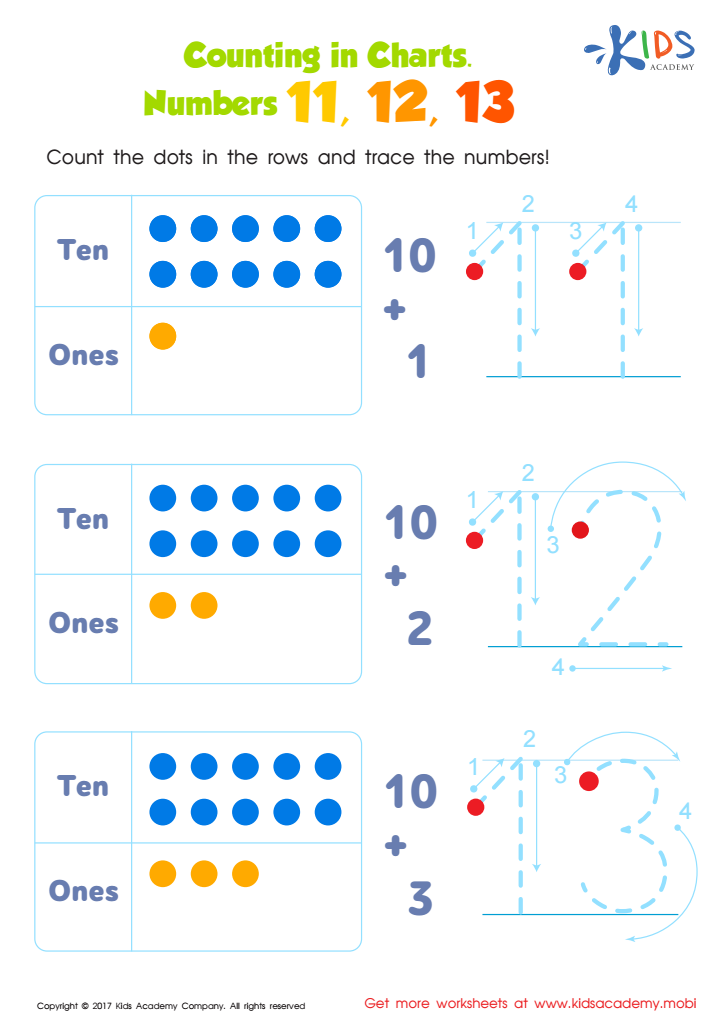
Number Tracing Worksheet For Kindergarten
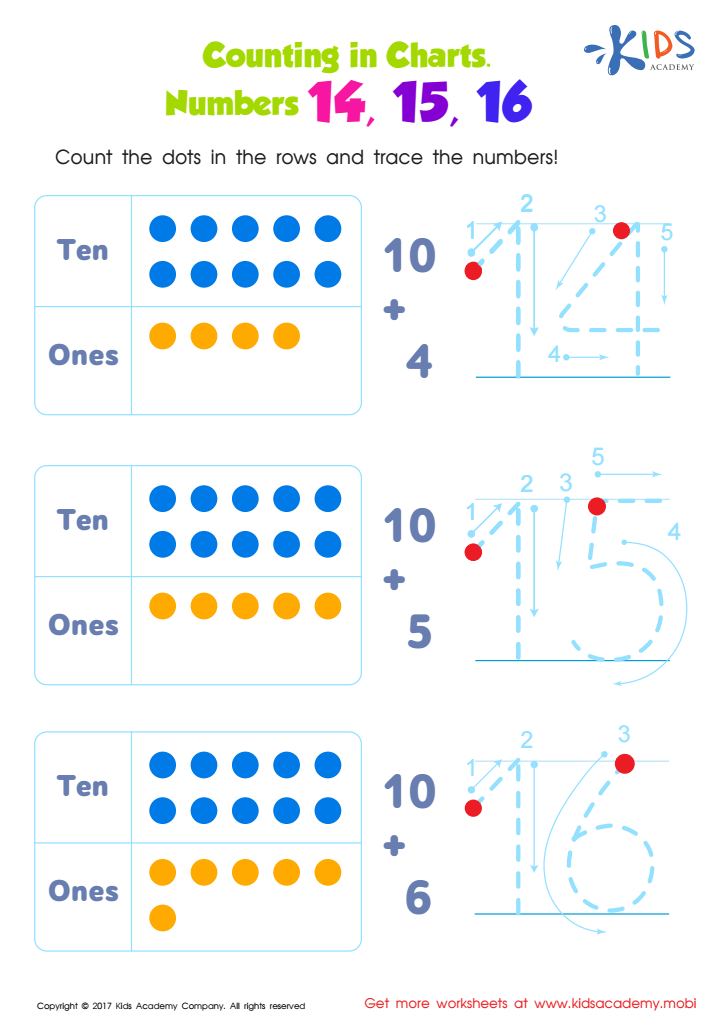
Number Tracing Worksheet



Hand-eye coordination is crucial for children aged 5-9 as it directly impacts their ability to engage in various activities and learn foundational skills. The development of hand-eye coordination, particularly with numbers 11-20, enhances a child's ability to recognize and manipulate these figures. This is vital for mastering tasks such as writing, drawing, and performing basic arithmetic.
Moreover, improving hand-eye coordination encourages engagement in play-based learning, fostering motor skills necessary for activities like sports, drawing, and typing. Utilizing numbers during such activities sharpens spatial awareness and reinforces numerical concepts, helping children build confidence and competence in their academic skills.
Parents and teachers should also prioritize hand-eye coordination development because it shapes children's overall learning experiences. Strong coordination can lead to better performance in school and could prevent frustration in tasks that involve fine motor skills. It nurtures persistence and problem-solving skills, encouraging a growth mindset.
Incorporating activities that focus on hand-eye coordination, such as counting games or math-related crafts using numbers 11-20, not only makes learning enjoyable but also provides a holistic approach to promoting benefits that extend beyond the classroom. Thus, prioritizing this aspect of development helps ensure well-rounded skill growth in children.