
Basic Math Skills Sorting Worksheets for Ages 5-9
4 filtered results
Difficulty Level
Grade
Age
-
From - To
Subject
Activity
Standards
Explore our engaging Basic Math Skills Sorting Worksheets designed specifically for children aged 5 to 9! These worksheets provide a fun and interactive way for young learners to enhance their math skills while sorting and categorizing numbers, shapes, and objects. With vibrant illustrations and age-appropriate activities, kids will develop critical thinking and problem-solving abilities. Perfect for classroom settings or at-home learning, our sorting worksheets align with educational standards to ensure effective learning. Help your child gain confidence in math as they enjoy hands-on sorting exercises that make learning fun! Start your adventure in mastering basic math skills today!
Favorites
With answer key
Interactive
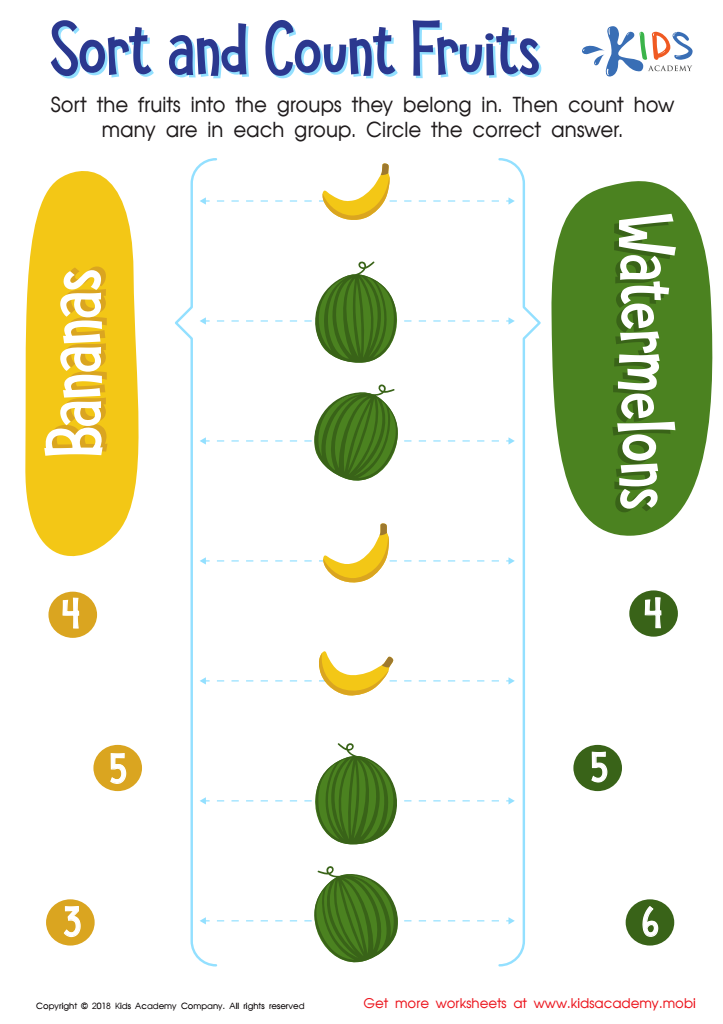
Sort and Count Fruits Worksheet
Allow your children to hone their critical thinking and number reasoning skills with this free worksheet. They'll sort, count, and trace fruits while learning basic number sense. A fun, delicious learning experience with familiar pictures they'll love.
 Assign to My Students
Sort and Count Fruits Worksheet
Worksheet
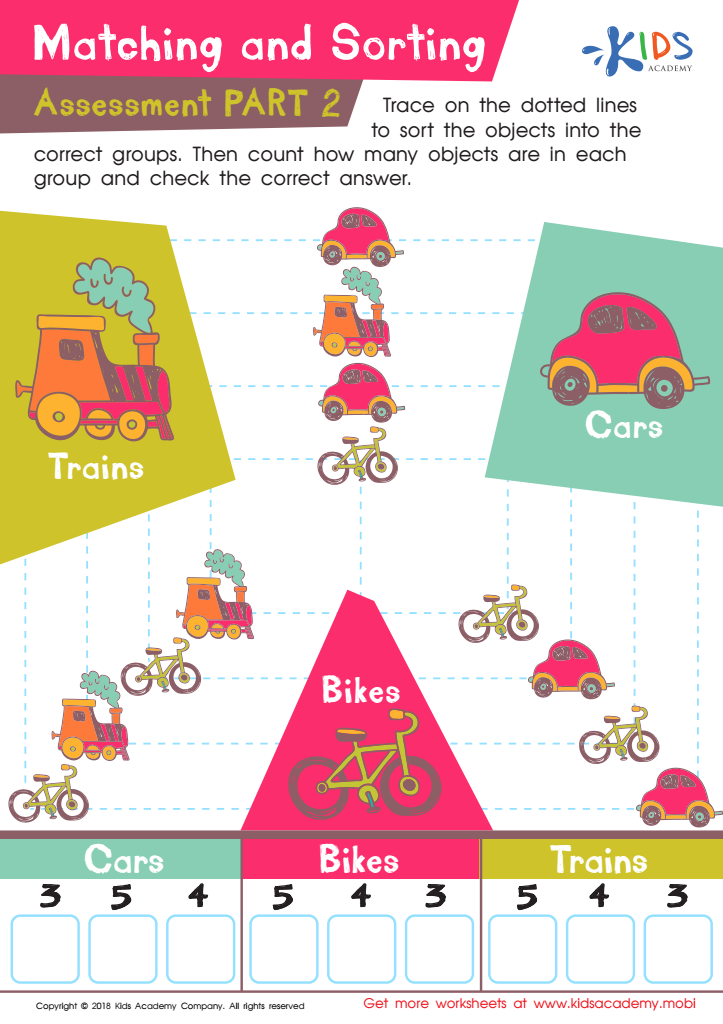
Matching and Sorting for Kindergarten: Assessment 2 Worksheet
This assessment tests matching, sorting and fine motor skills. It challenges kids to identify properties and attributes of pictures, trace guidelines and count the types of vehicles. It's a great way to practice basic number sense and hone in on important foundational skills.
Matching and Sorting for Kindergarten: Assessment 2 Worksheet
Worksheet
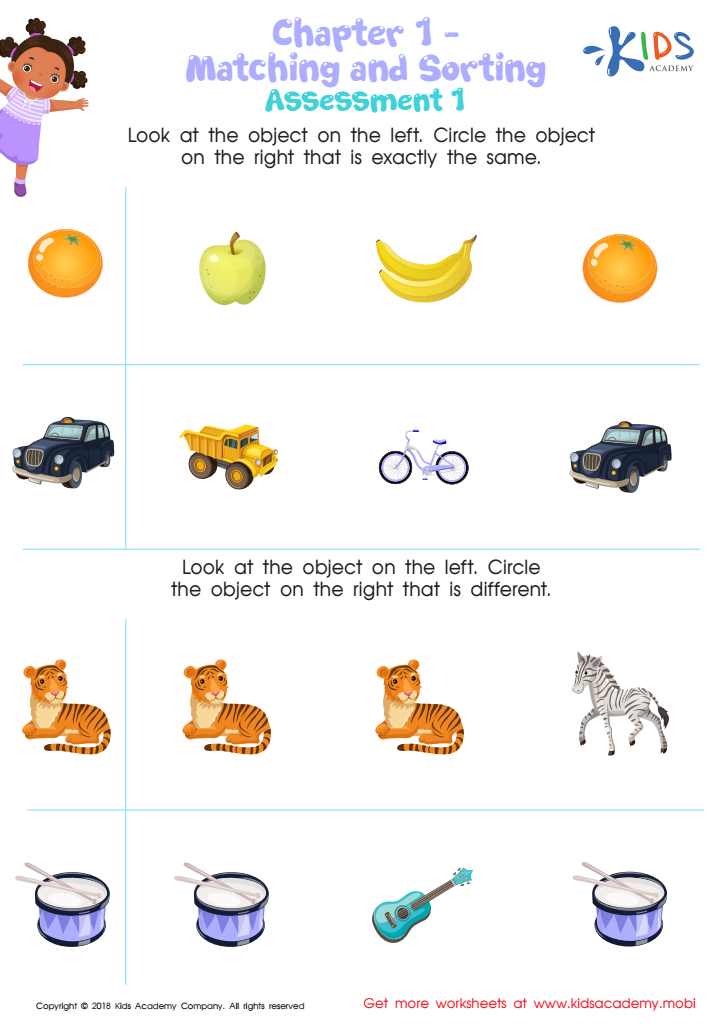
Matching and Sorting for Preschool: Assessment 1 Worksheet
Test your child's matching skills with this worksheet! Ask them to name each of the objects pictured, then circle the ones that are the same. Repeat for the second task. It's a great way to assess their skills and have fun at the same time!
Matching and Sorting for Preschool: Assessment 1 Worksheet
Worksheet
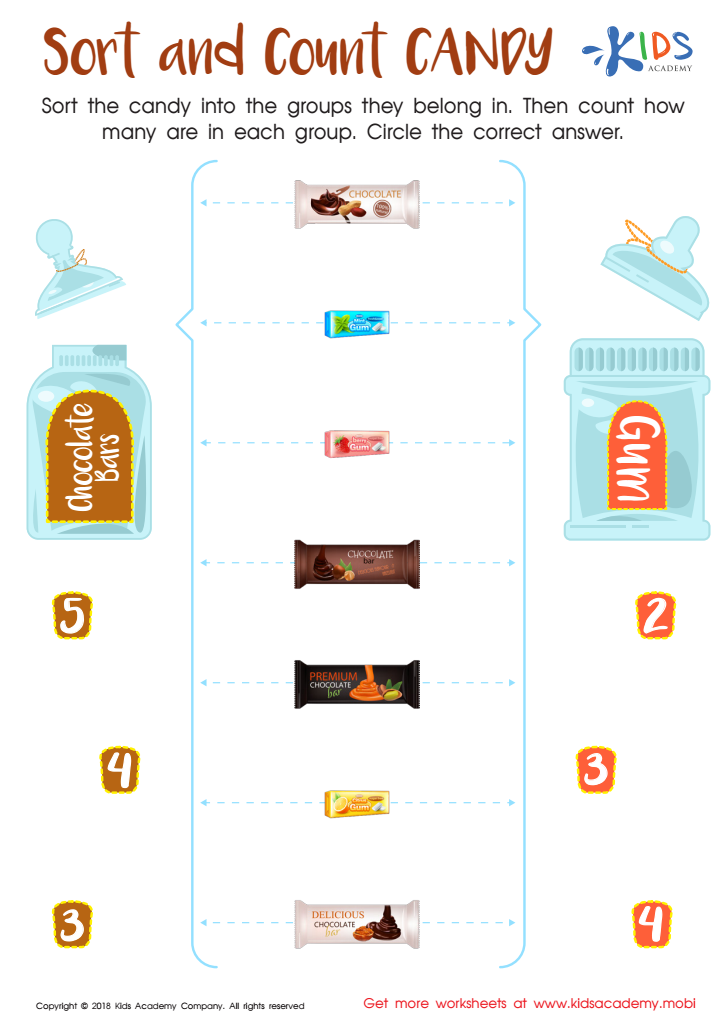
Sort and Count Candy Worksheet
Sort chocolate and candy with your kids! Help them use recognizable items and pictures to sort, practice counting with one-to-one representation, and develop their fine motor skills with the traceable lines. Download this free worksheet to get started. Yum!
Sort and Count Candy Worksheet
Worksheet
Join Kids Academy for Free
Who is primarily going to use this learning content?








Basic math skills, such as sorting, are foundational for children aged 5-9 as they pave the way for more complex mathematical concepts and critical thinking abilities. Sorting encourages children to categorize objects based on attributes like size, color, or shape, helping them develop important cognitive skills. This seemingly simple activity enhances their ability to recognize patterns and make comparisons, laying the groundwork for skills needed in later math and science lessons.
Additionally, sorting promotes organizational skills and encourages attention to detail. When children can systematically group items, they're learning to focus on specifics, which is crucial for problem-solving in various disciplines. This capability also boosts their confidence as they master new concepts—a success that motivates them to embrace more challenging material.
Parents and teachers play a crucial role in facilitating sorting activities both at home and in the classroom. Through games, everyday tasks, or structured activities, they can create rich learning environments that foster a love for learning. Investing time in developing these basic math skills ensures that students have the tools they need for academic success, thereby setting a positive trajectory for future learning experiences. Ultimately, nurturing sorting skills in young learners lays the foundation for lifelong mathematical understanding and problem-solving skills.








