Cognitive Development Subtraction Worksheets for Ages 5-9
5 filtered results
-
From - To
Enhance your child's cognitive development with our engaging subtraction worksheets designed for ages 5-9. These thoughtfully crafted resources focus on improving critical thinking and problem-solving skills while reinforcing basic subtraction concepts. Each worksheet is tailored to challenge young minds, blending fun activities with meaningful learning experiences. Children will enjoy a variety of exercises, from simple arithmetic problems to engaging puzzles that keep them motivated and eager to learn. Perfect for homeschool settings or supplemental practice, our cognitive development subtraction worksheets will help your child build confidence in mathematics and develop essential cognitive abilities that are vital for their future academic success.
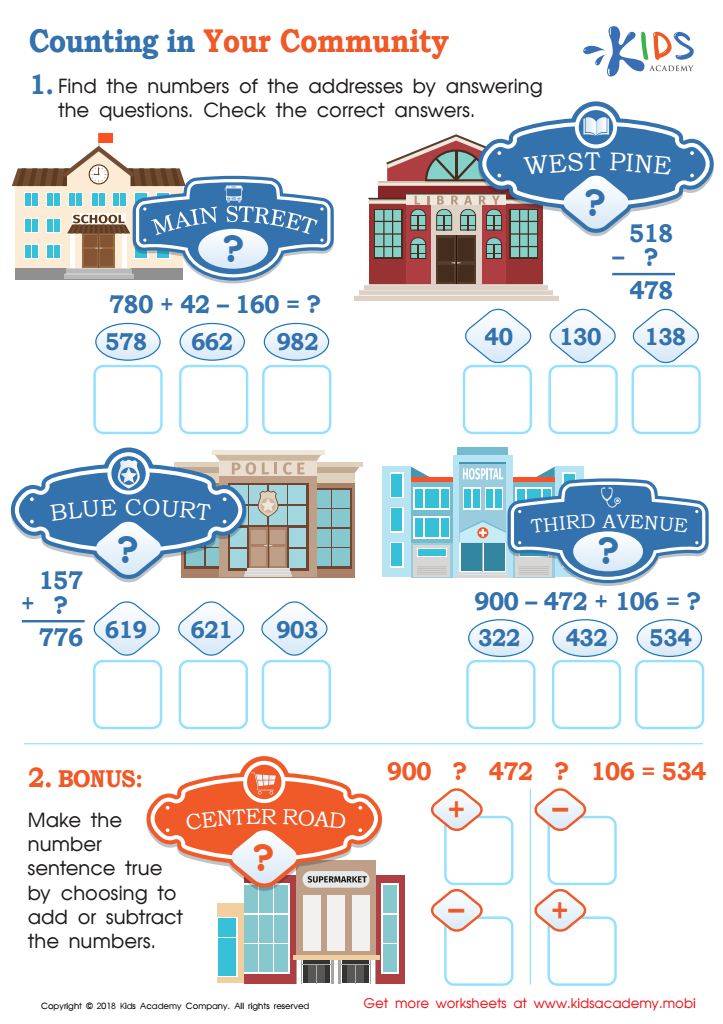
Counting in Your Community Worksheet
 Assign to My Students
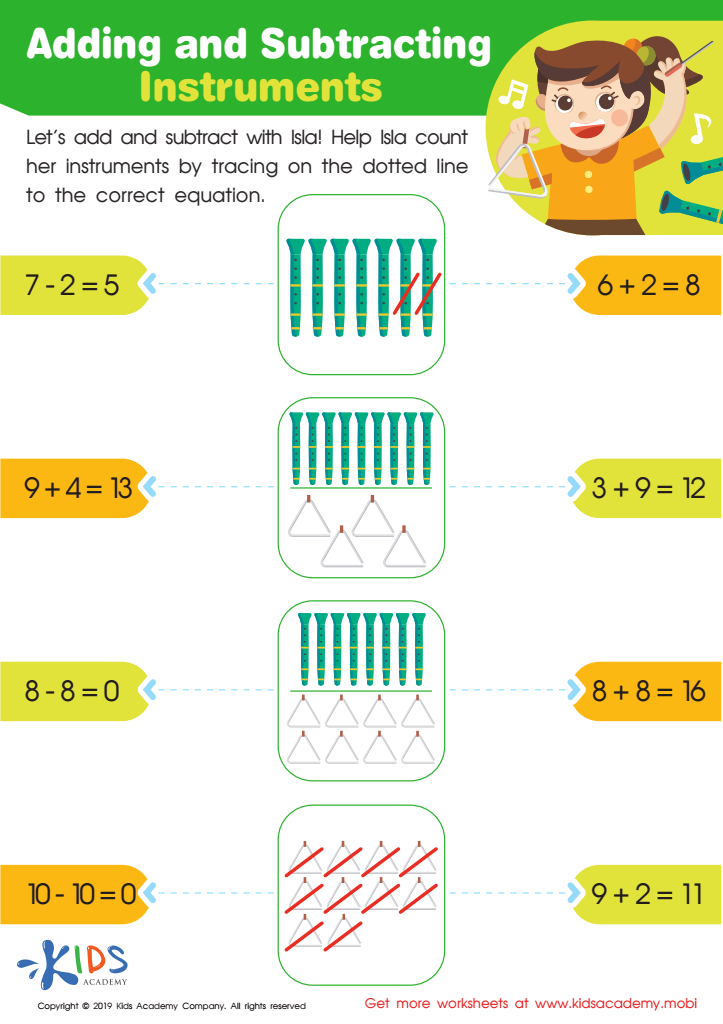
Adding and Subtracting: Instruments Worksheet
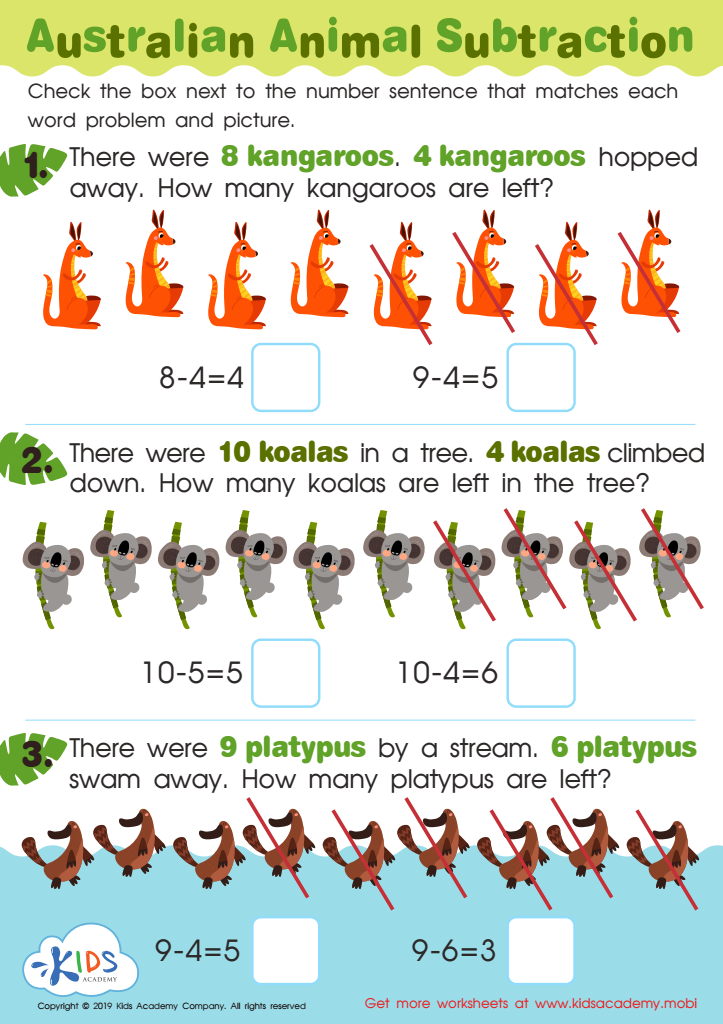
Australian Animal Subtraction Worksheet
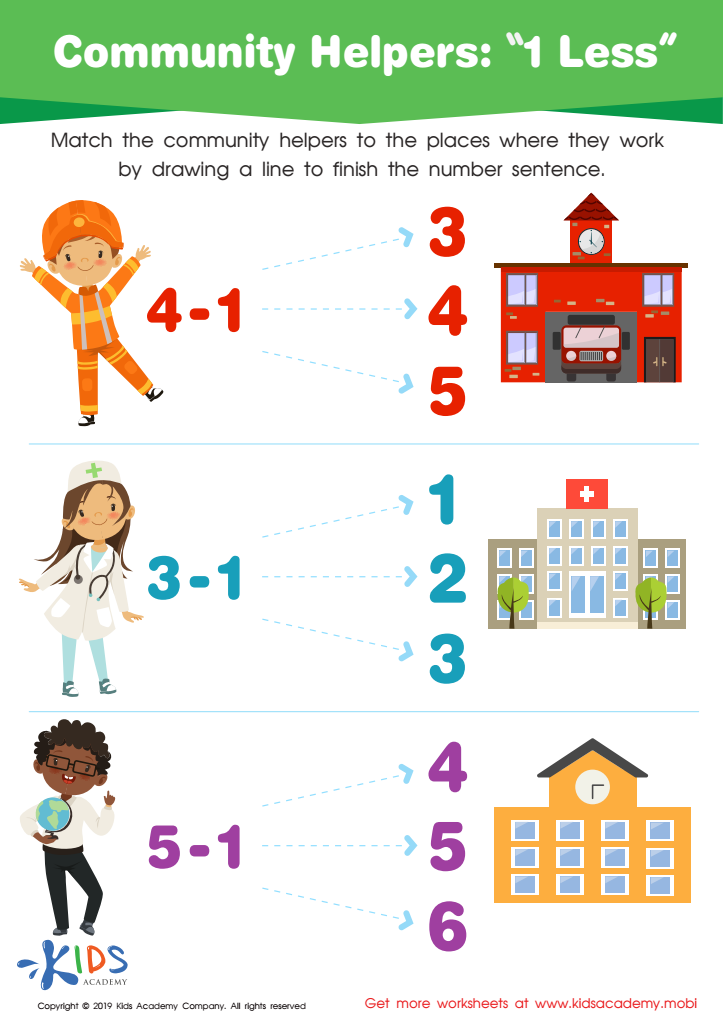
Community Helpers: 1 less Worksheet
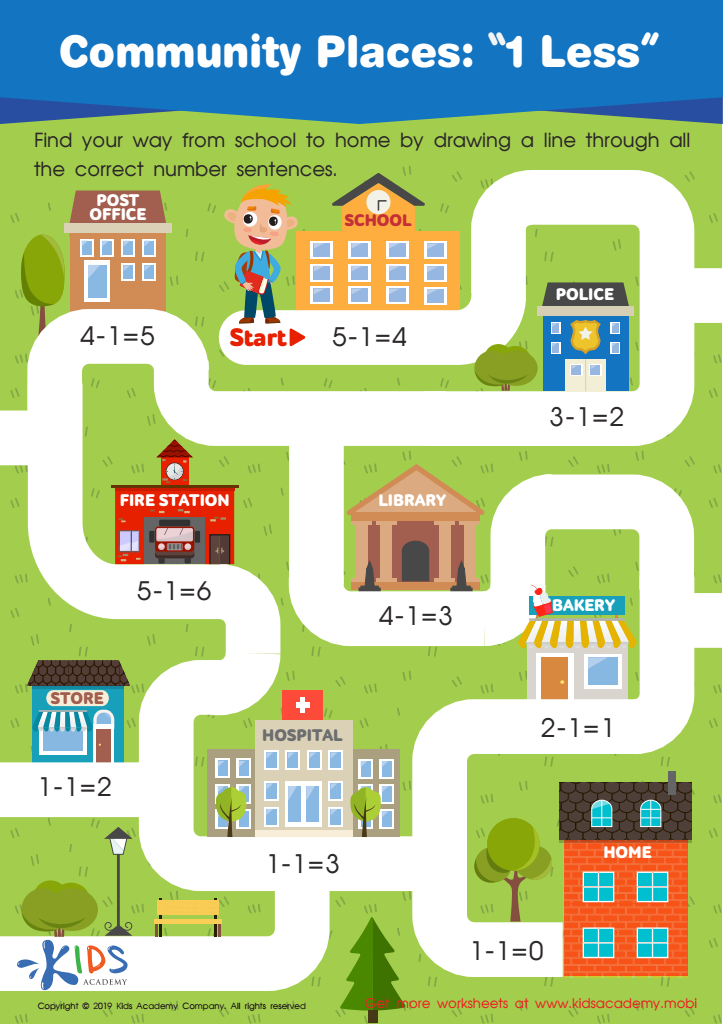
Community Places: 1 Less Worksheet








Cognitive development in early childhood, particularly in relation to subtraction, is crucial for several reasons. During ages 5-9, children move from concrete to more abstract thinking, laying the groundwork for future problem-solving skills. Understanding subtraction helps children comprehend essential mathematical concepts, like number sense and relationships between quantities.
Parents and teachers should care about this period of development because mastering subtraction is linked to academic success. It fosters not just arithmetic skills but also logical reasoning, critical thinking, and decision-making abilities that are applicable across various subjects.
Developing a strong foundation in subtraction enhances children's confidence and eagerness to engage with mathematics, making them more likely to pursue advanced concepts later on. Additionally, difficulties with subtraction can lead to broader challenges in mathematics, potentially resulting in a lack of interest or anxiety towards the subject.
Finally, teaching subtraction in a meaningful context can reinforce social and emotional skills, such as patience and perseverance. By nurturing these cognitive abilities from an early age, parents and teachers play an essential role in helping children become competent, enthusiastic learners who are well-equipped for future educational challenges.








