
Counting practice Subtraction Worksheets for Ages 5-9
5 filtered results
Difficulty Level
Grade
Age
-
From - To
Subject
Activity
Standards
Explore our engaging Counting Practice Subtraction Worksheets, designed specifically for children aged 5 to 9. These interactive worksheets provide exciting opportunities for young learners to enhance their subtraction skills while reinforcing counting techniques. With colorful illustrations and age-appropriate exercises, these worksheets promote a fun learning environment. Kids will love practicing subtraction through various activities that make math enjoyable! Ideal for home or classroom use, our resources support key developmental milestones in early math education. Download today to give your child a solid foundation in subtraction while bolstering their counting abilities. Empower their learning journey with hands-on practice and creative challenges!
Favorites
With answer key
Interactive
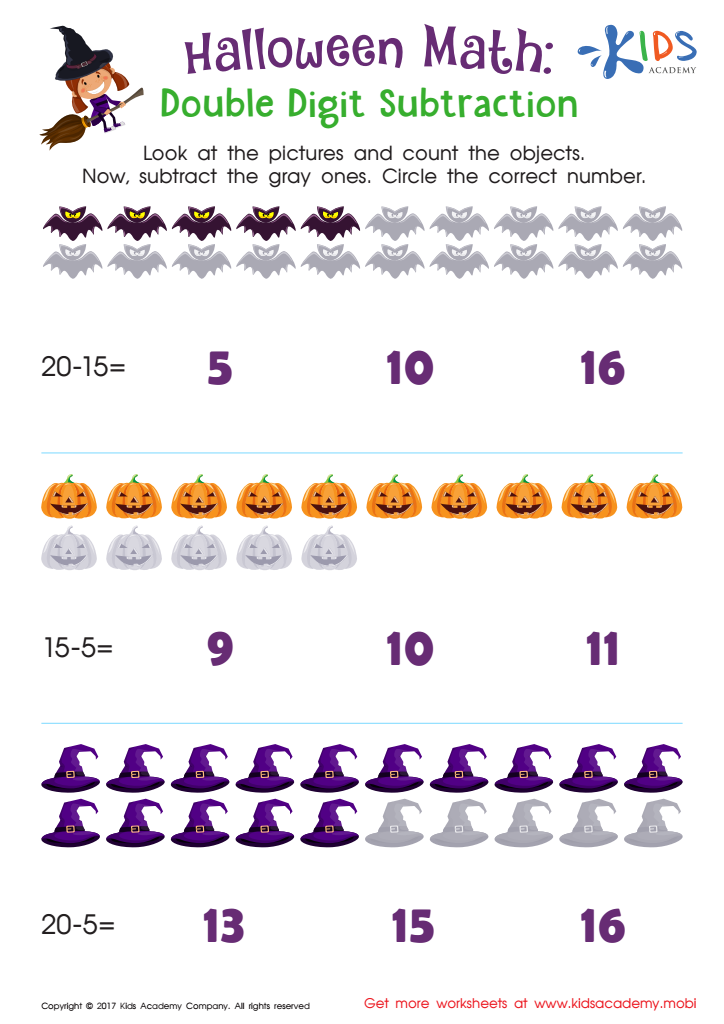
Halloween Math Subtraction Worksheet
Kids can easily understand subtraction by using the visuals provided in this worksheet. Get ready for some fun math!
This Halloween math worksheet uses spooky images to help kids understand subtraction. With it, they can count and solve double digit problems more easily. Get ready for some fun and engaging math practice!
 Assign to My Students
Halloween Math Subtraction Worksheet
Worksheet
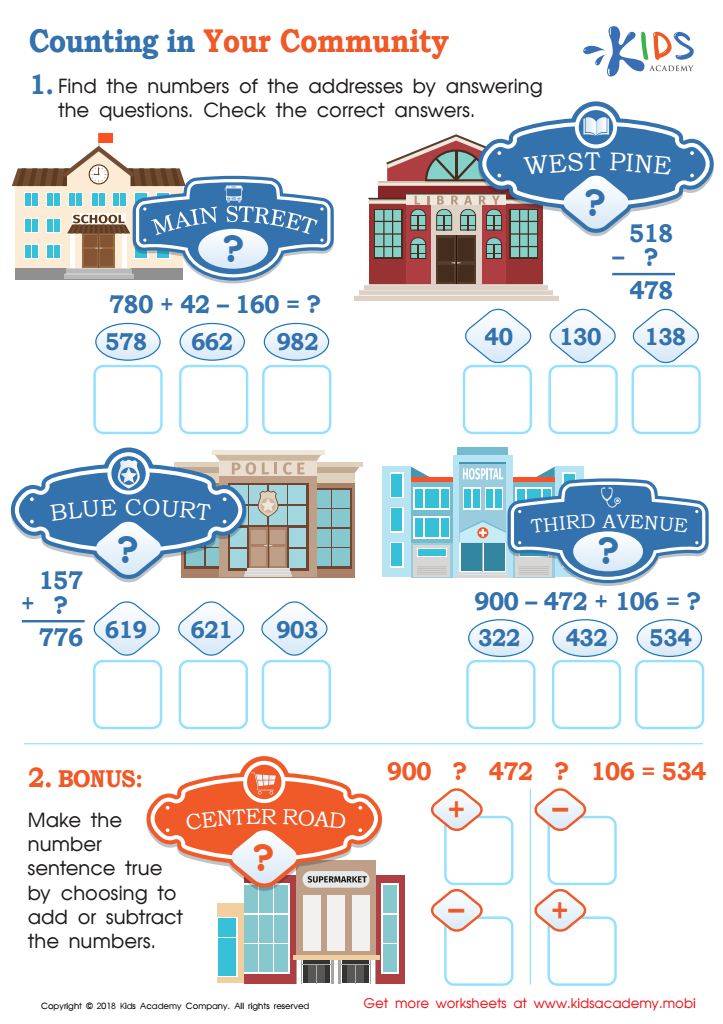
Counting in Your Community Worksheet
Introduce your kids to the idea of a community, where different people and buildings co-exist, each playing their part for the community's progress. Ask them to name the buildings they see in their community. Then work through this worksheet to find the numbers of the addresses by answering the questions. Check the answers once they've solved the equations.
Counting in Your Community Worksheet
Worksheet
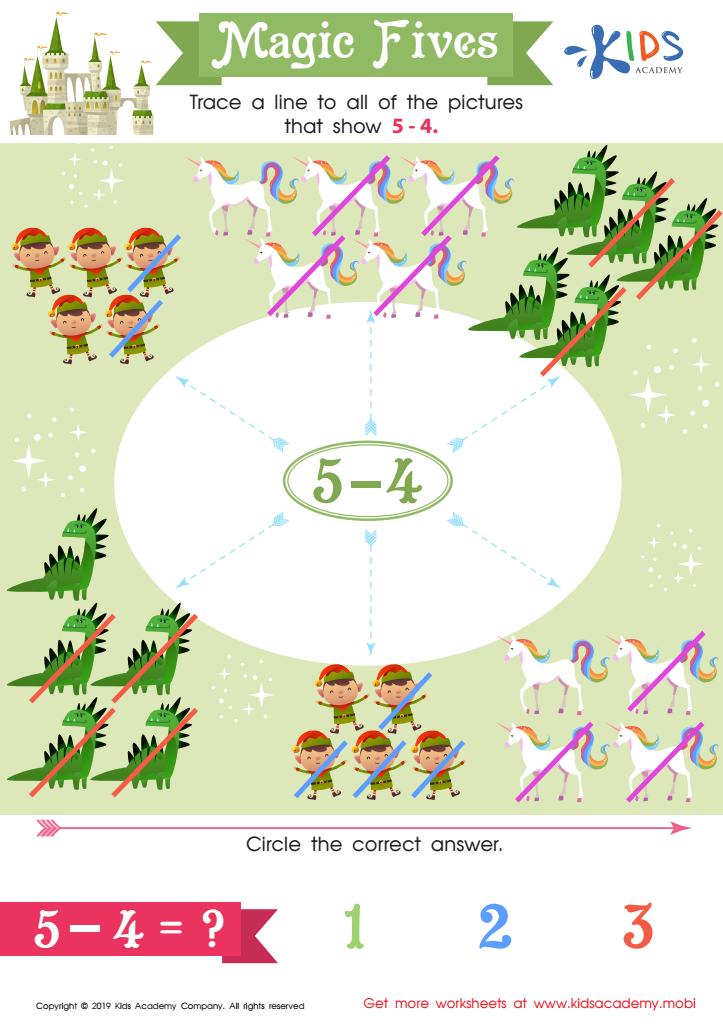
Magic Fives Worksheet
Help your students identify the objects & people in the worksheet. Point to the equation 5 -4 in the center, then get them to count the items and trace a line connecting those that add up to 5 - 4.
Magic Fives Worksheet
Worksheet
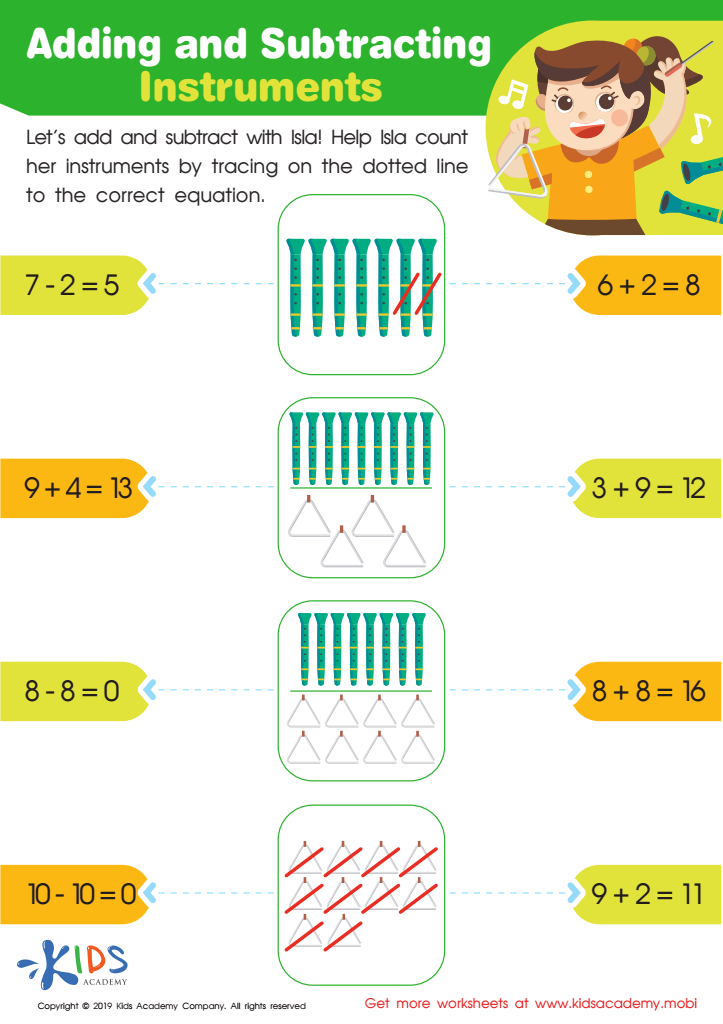
Adding and Subtracting: Instruments Worksheet
Children can help Isla count her musical instruments with this fun worksheet. The downloadable PDF gives them a chance to practice addition and subtraction by connecting pictures to equations. It's also a great way to learn the order of operations.
Adding and Subtracting: Instruments Worksheet
Worksheet
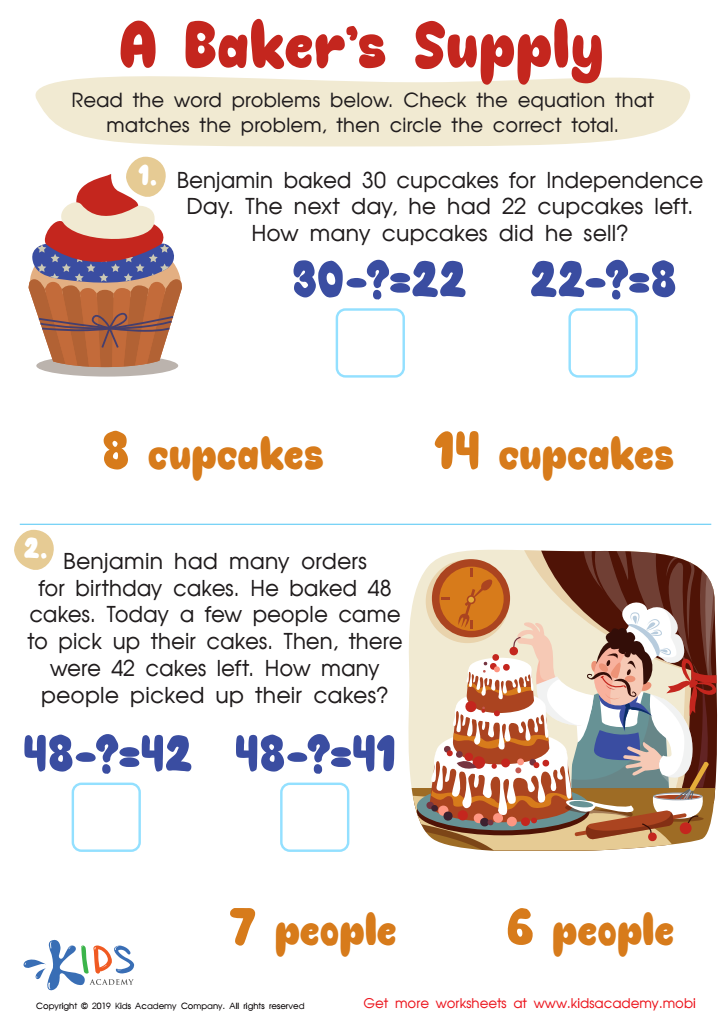
A Baker's Supply Worksheet
A visit to the baker's shop is thrilling! Your kids will love it! From scrumptious goodies to the mouthwatering aroma, it's a magical experience. Ask your kids what they're most eager to see and do. Now, read the word problems in this worksheet to them. Help them choose the correct answer for each problem and circle the correct total.
A Baker's Supply Worksheet
Worksheet
Join Kids Academy for Free
Who is primarily going to use this learning content?








Counting practice and subtraction are fundamental skills for children aged 5-9, which form the cornerstone of their mathematical understanding and overall academic success. During these formative years, children are developing critical cognitive skills, and mastering counting and subtraction can significantly enhance their problem-solving abilities.
Parents and teachers should care about counting practice for subtraction because it builds a strong numerical foundation. Counting helps children understand the relation between numbers, while teaching them subtraction shows the concept of taking away, leading to comprehension of basic arithmetic operations. Additionally, these skills foster logical thinking and pattern recognition, essential for their future learning.
Engaging children in regular counting and subtraction practice can also enhance their confidence in mathematics. Children who experience struggles with these concepts may develop math anxiety, which can hinder their enjoyment of the subject and impact their overall academic motivation. Consistent practice not only improves proficiency but also encourages a positive attitude towards learning.
Furthermore, integrating counting and subtraction into everyday activities, such as cooking, shopping, or playing games, makes learning relevant and enjoyable. This approach deepens understanding and allows children to see the practical applications of math in daily life, instilling lifelong skills vital for their education and personal development.








