Multiplication practice Times Tables Worksheets for Ages 5-9 - Page 2
33 filtered results
-
From - To
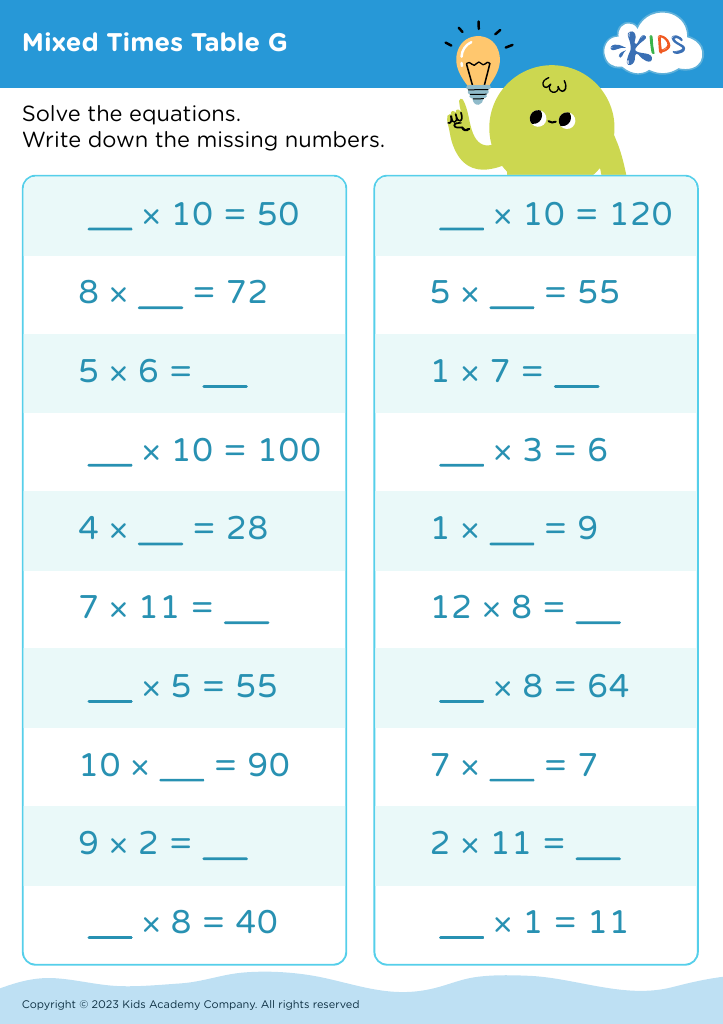
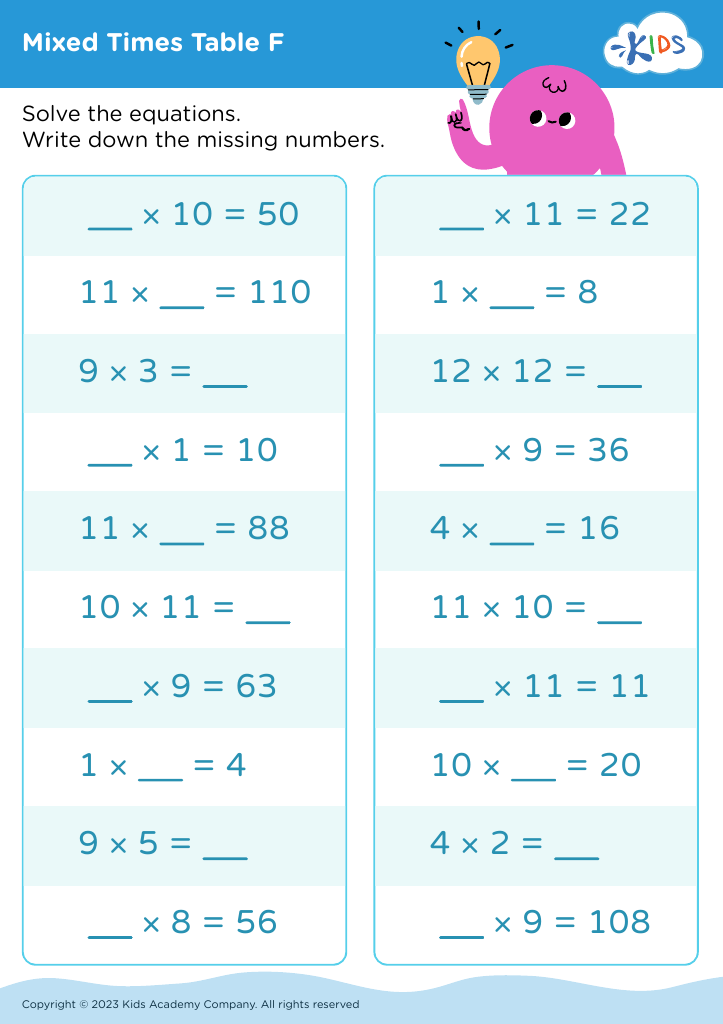
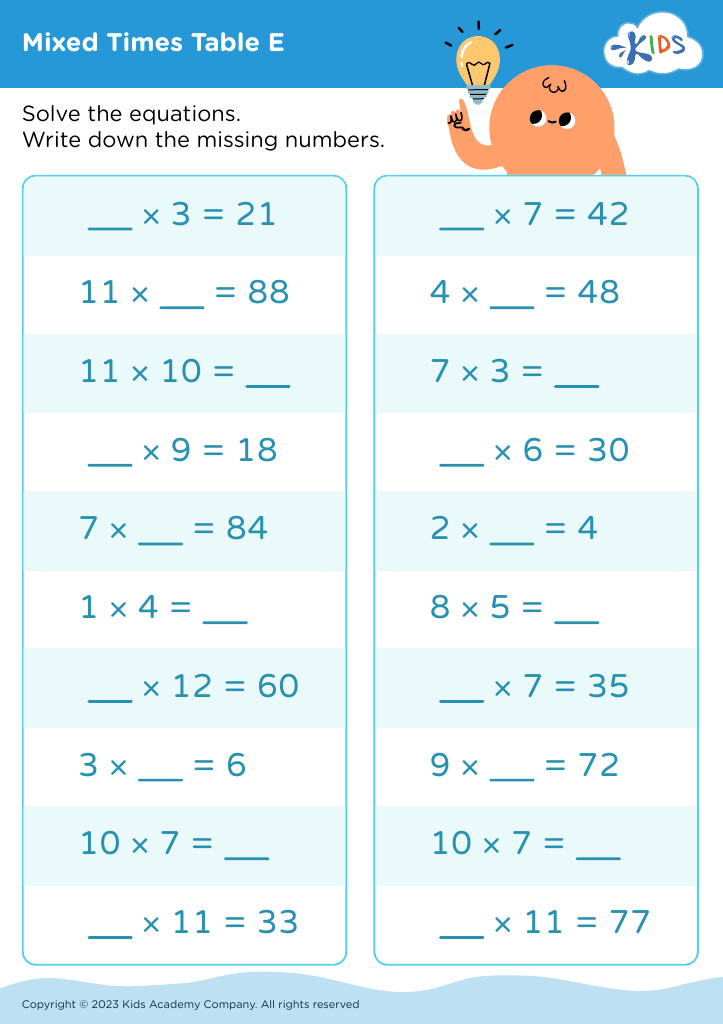
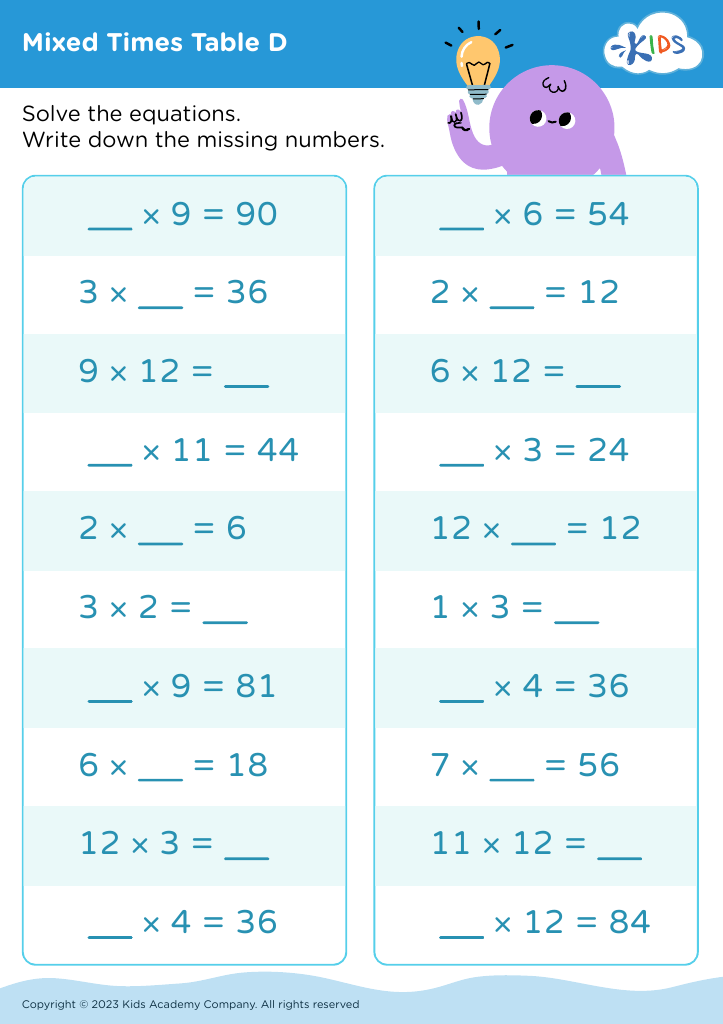
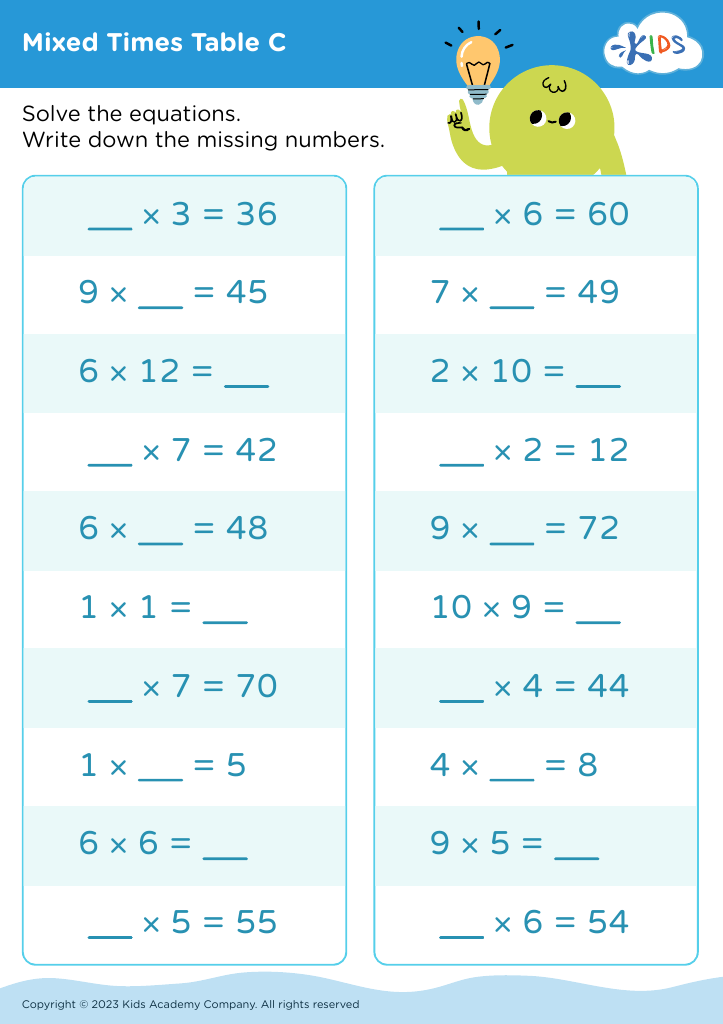
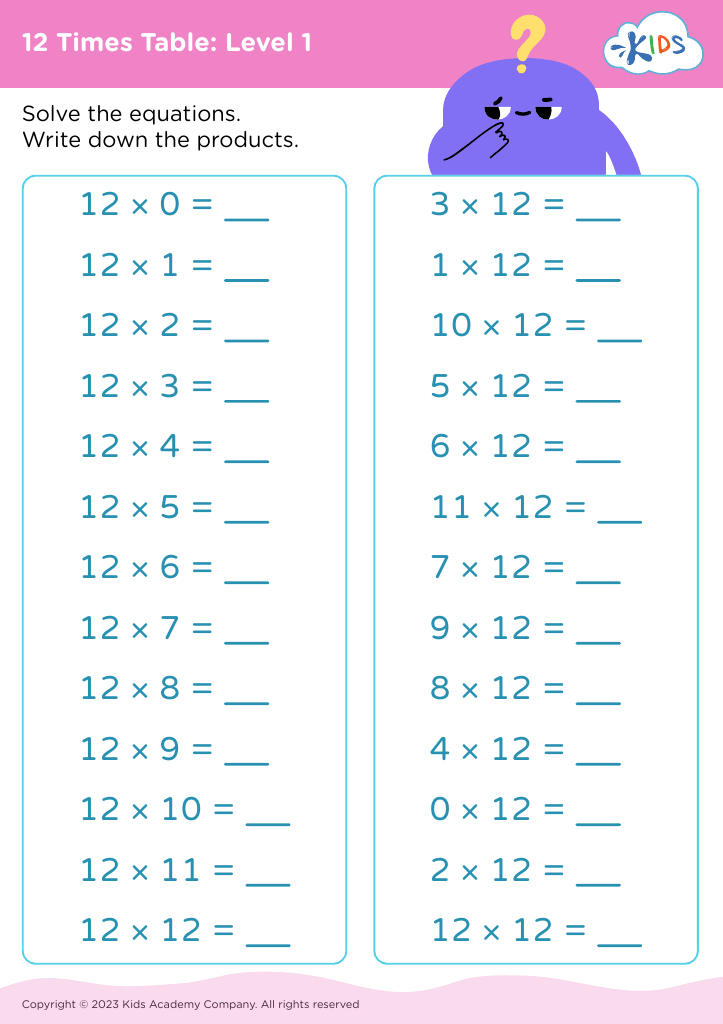
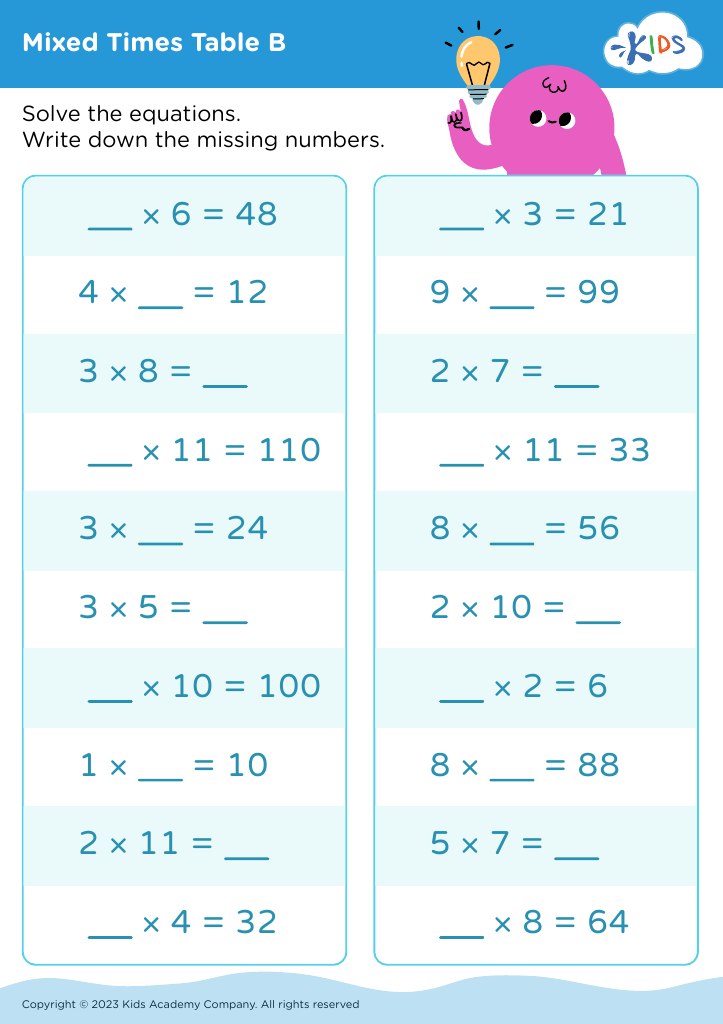
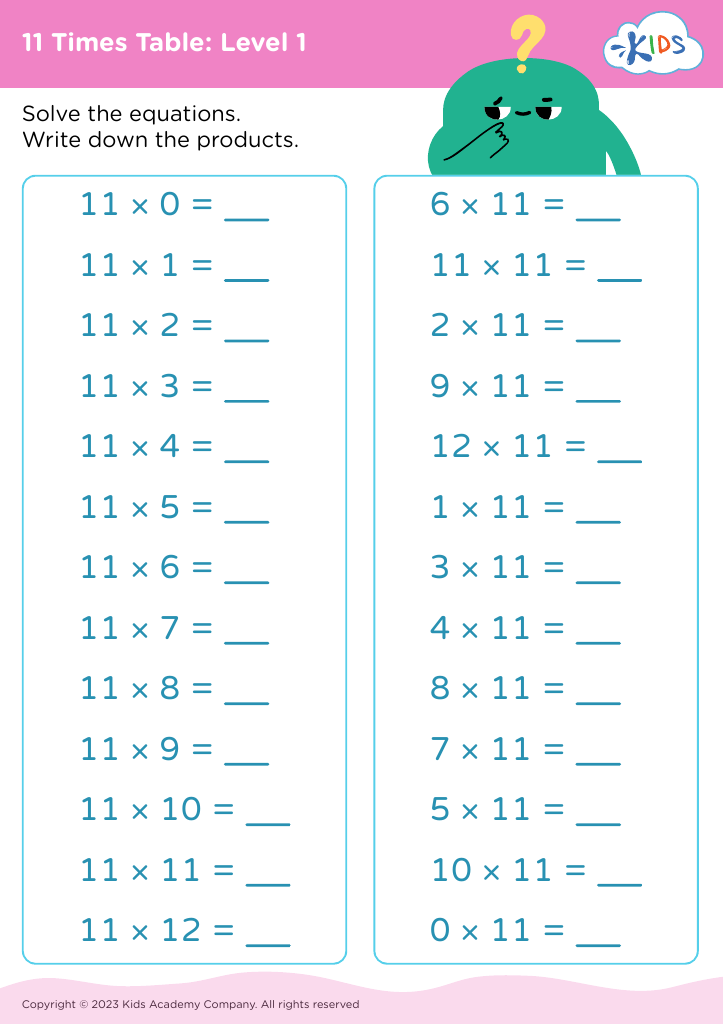
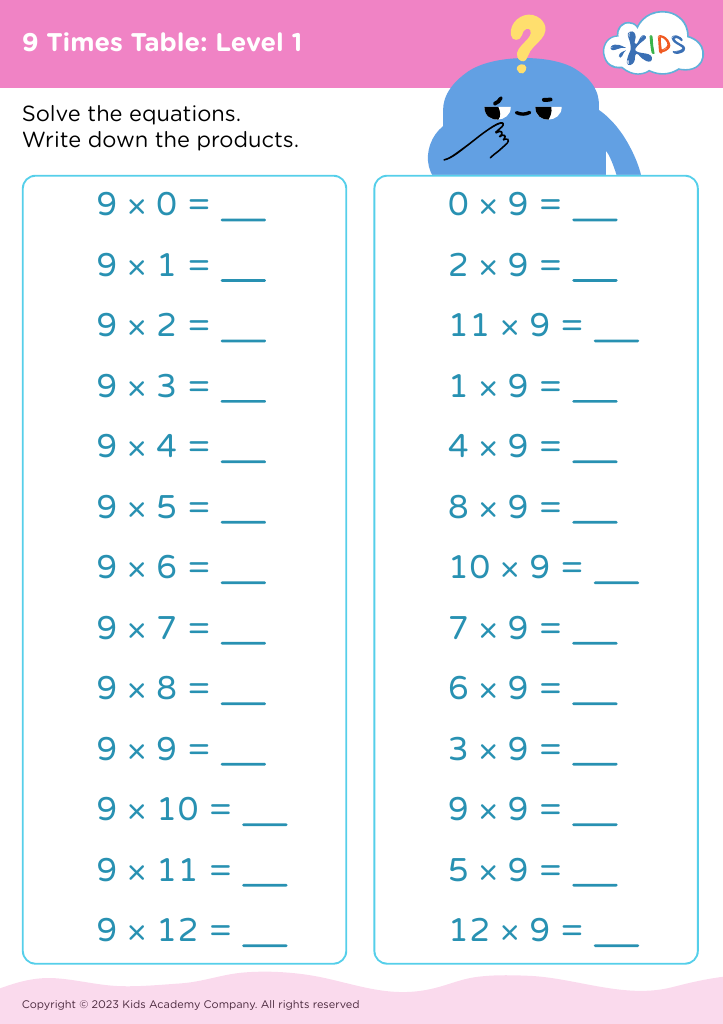





Multiplication practice, particularly Times Tables for ages 5-9, is crucial for children's mathematical development and overall cognitive growth. At this stage, children are honing their essential number sense and starting to navigate more complex mathematical concepts. Mastering Times Tables lays a solid foundation for future learning in math; it helps with addition, subtraction, division, and eventually, algebra.
Regular practice of multiplication encourages children to develop their memorization skills, work on their mental math abilities, and build confidence in their mathematical capabilities. Moreover, knowing the Times Tables by heart allows children to solve problems quicker and more efficiently, alleviating math anxiety often associated with complex operations. This smooth transition into higher-level math is vital as they progress through school.
Parents and teachers play a pivotal role in this early stage. Engaging children with fun, interactive methods such as games, songs, or daily challenges can make learning enjoyable and reinforce concepts. By showing interest and actively participating in multiplication practice, adults can foster an appreciation for math, laying an enduring foundation for academic success and real-life problem-solving skills that extend far beyond the classroom.








