Mental math practice Word Problems Worksheets for Ages 5-9
3 filtered results
-
From - To
Boost your child's mental math skills with our engaging word problems worksheets designed for ages 5-9! These expertly crafted activities encourage critical thinking and problem-solving. Each worksheet presents age-appropriate scenarios that children can relate to, making math fun and relatable. Your little learners will practice addition, subtraction, and even basic multiplication while enhancing their ability to comprehend and solve realistic problems. Ideal for teachers and parents aiming to reinforce classroom learning, our mental math practice worksheets help build confidence and proficiency in young mathematicians. Explore a variety of problems that develop both their math abilities and independent thinking skills today!
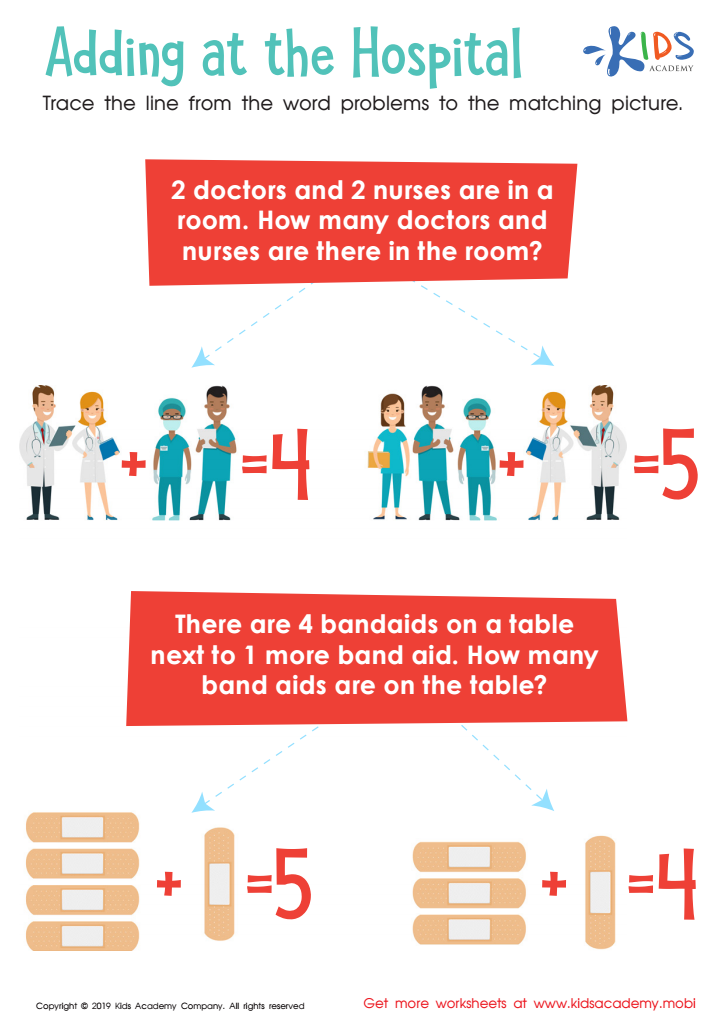
Adding at the Hospital Worksheet
 Assign to My Students
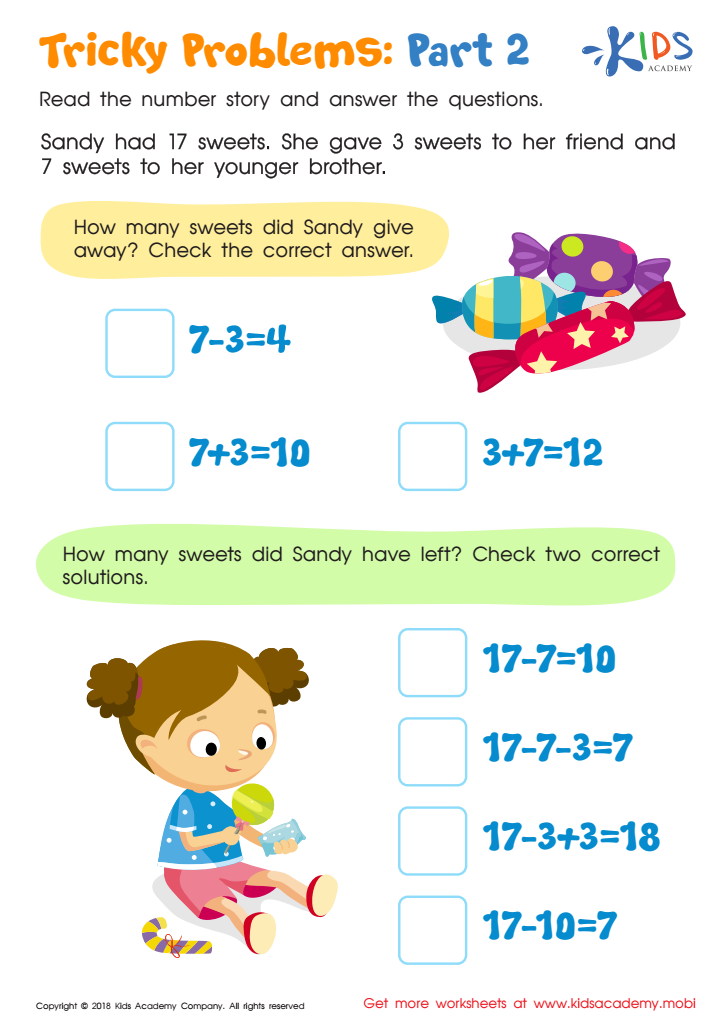
Tricky Problems Worksheet: Part 2
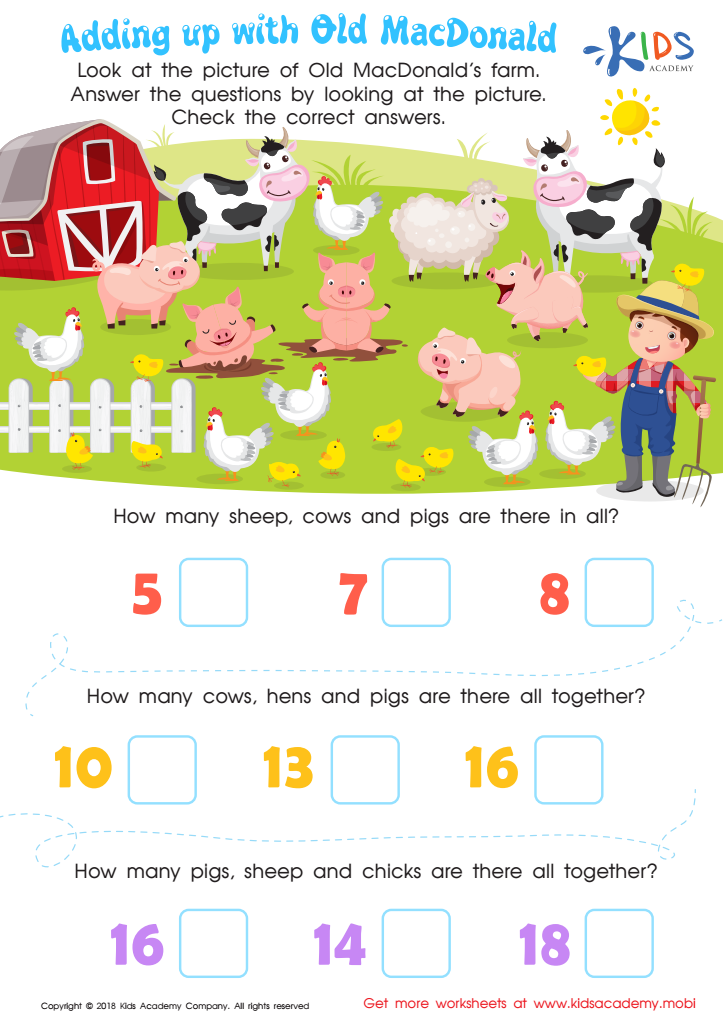
Adding Up with Old MacDonald Worksheet







Mental math practice, particularly through word problems, is crucial for children aged 5-9 as it supports foundational cognitive skills essential for their overall development. Firstly, mental math enhances critical thinking and problem-solving abilities. As children decipher word problems, they learn to identify key information, devise a strategy, and arrive at solutions, which nurtures their logical reasoning skills.
Moreover, word problems develop reading comprehension and language skills. Children must read and interpret instructions accurately to solve these problems, promoting literacy alongside mathematical understanding. Engaging with word problems also helps to make mathematics relatable and relevant to their everyday lives, fostering a positive attitude toward the subject.
Furthermore, consistent mental math practice bolsters numerical fluency, allowing children to perform calculations quickly and efficiently. This confidence can lead to a greater interest in math and improved performance in future academic levels.
Parents and teachers play a vital role in incorporating word problems into daily activities, reinforcing skills in a fun and meaningful way. By prioritizing mental math and word problem practice, adults can help children build a strong numerical foundation that awakens curiosity and sets the stage for lifelong learning. Ultimately, this investment fuels both academic success and a harmonious approach toward mathematics.








