Attention to Detail Building Vocabulary Worksheets for Ages 5-9
5 filtered results
-
From - To
Boost your child's vocabulary with our engaging "Attention to Detail Building Vocabulary Worksheets" designed for ages 5-9. These worksheets foster essential reading skills while helping young learners enhance their attention to detail. Through fun-filled activities, children will explore new words, discover meanings, and reinforce their understanding in an interactive way. Tailored to keep young minds captivated, our resources blend creativity with education, making learning enjoyable. Perfect for classroom use or at-home practice, these worksheets support early literacy development, encouraging children to observe, analyze, and articulate effectively. Give your child the tools to excel in language with our comprehensive vocabulary-building resources today!
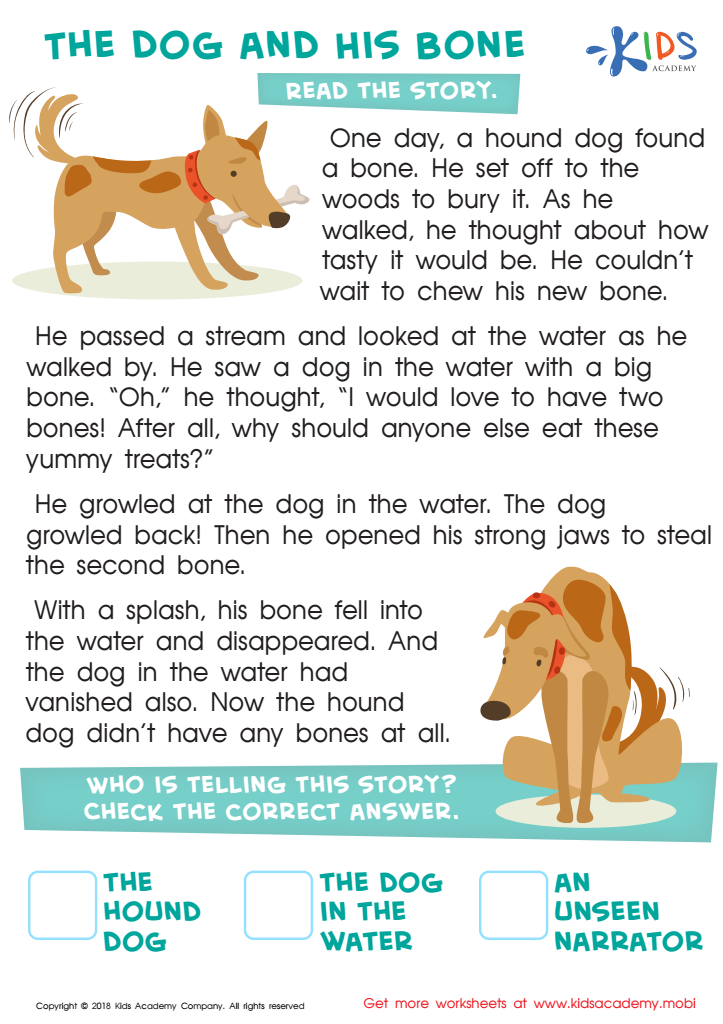
The Dog and His Bone Worksheet
 Assign to My Students











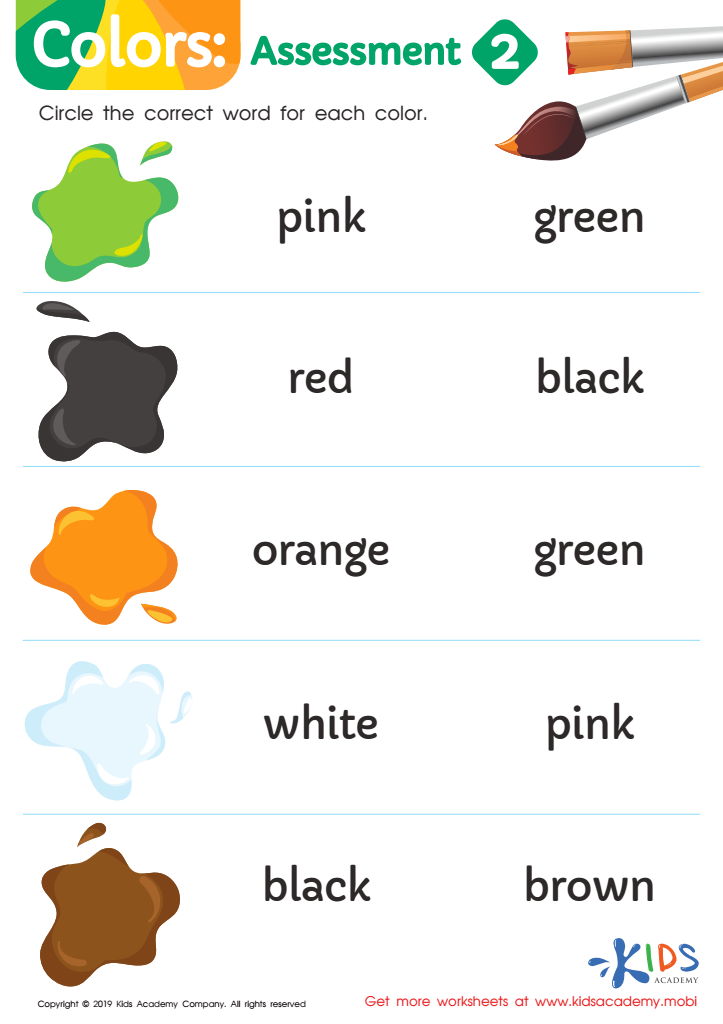
Colors: Assessment 2 Worksheet
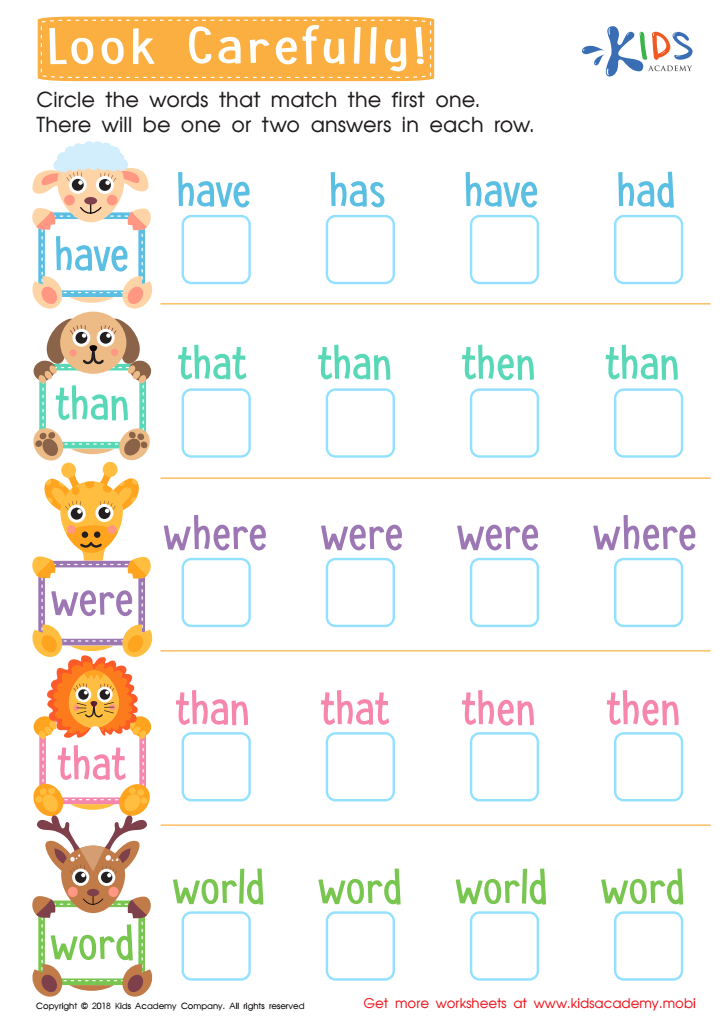
Look Carefully Worksheet
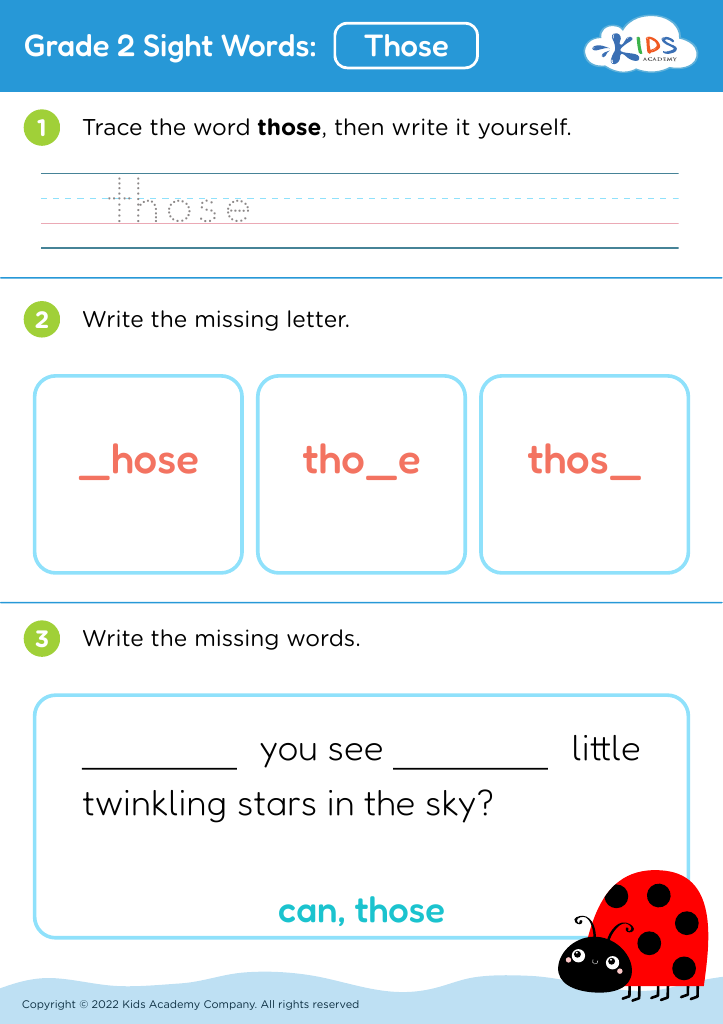
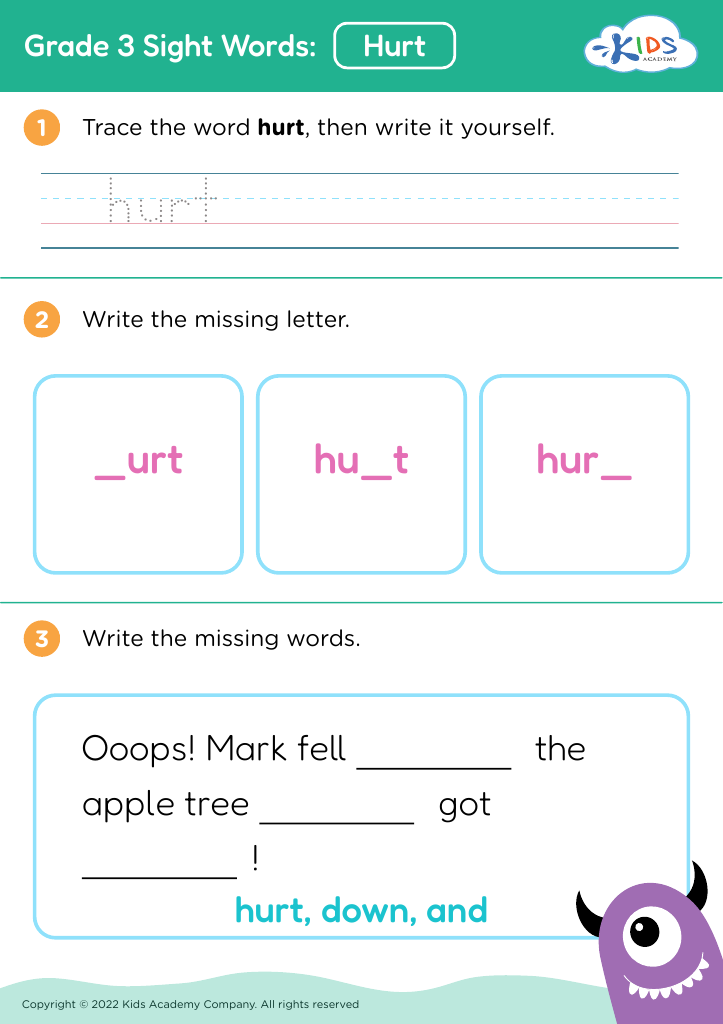







Attention to detail is a crucial skill that significantly impacts a child’s vocabulary development between the ages of 5 and 9. At this formative stage, children are eager to explore language through reading, writing, and conversation. Parents and teachers should care about fostering this skill, as it facilitates more effective communication and enhanced understanding of complex concepts. Attention to detail allows children to notice nuances in words, such as prefixes, suffixes, and context, which can help them decode unfamiliar words and expand their vocabulary.
Moreover, an enriched vocabulary fosters creativity and critical thinking. When children pay attention to details in language, they become more adept at expressing their thoughts and feelings, which is vital for their emotional development. Encouraging this practice supports long-term academic success, as a robust vocabulary is linked to higher reading comprehension and writing skills.
Additionally, fostering attention to detail in vocabulary-building activities can help children become more observant in their surroundings, enhancing their overall learning experience. Engaging in games, discussions, or reading practices that emphasize this skill not only makes learning enjoyable but also promotes cognitive growth, ensuring children become effective communicators and learners ready to tackle future challenges.








