Phonics recognition Building Vocabulary Worksheets for Ages 5-9
5 filtered results
-
From - To
Enhance your child's reading skills with our Phonics Recognition Building Vocabulary Worksheets, carefully designed for ages 5-9. These engaging worksheets make learning fun by combining phonics recognition with vocabulary development, encouraging young learners to connect sounds with letters and words. With interactive activities, colorful illustrations, and a variety of exercises, children will practice decoding and blending sounds while expanding their word bank. Perfect for home or classroom use, these worksheets promote essential literacy skills and boost confidence in early readers. Start nurturing your child's love for reading today with our captivating phonics worksheets that support language acquisition and literacy fun!
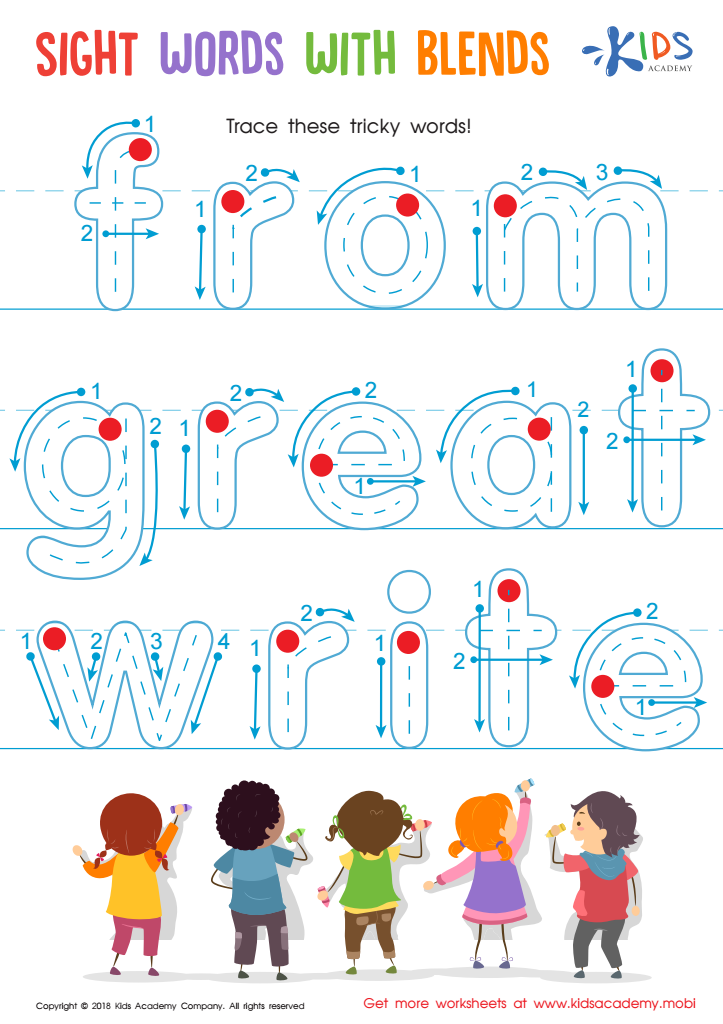
Sight Words with Blends Worksheet
 Assign to My Students











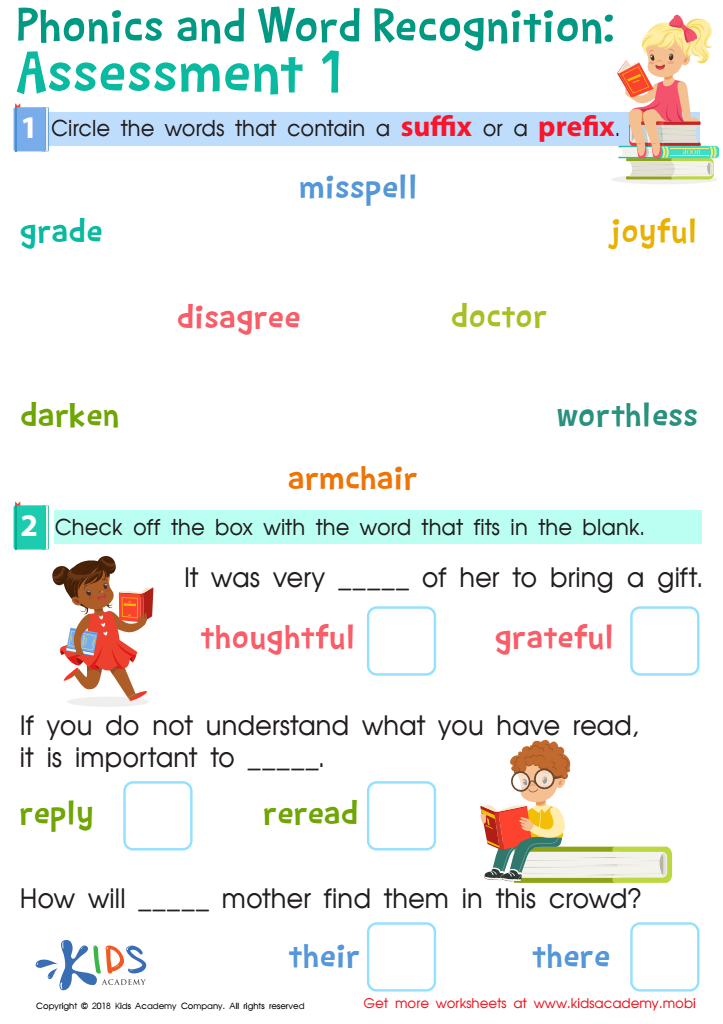
Phonics and Word Recognition: Assessment 1 Worksheet
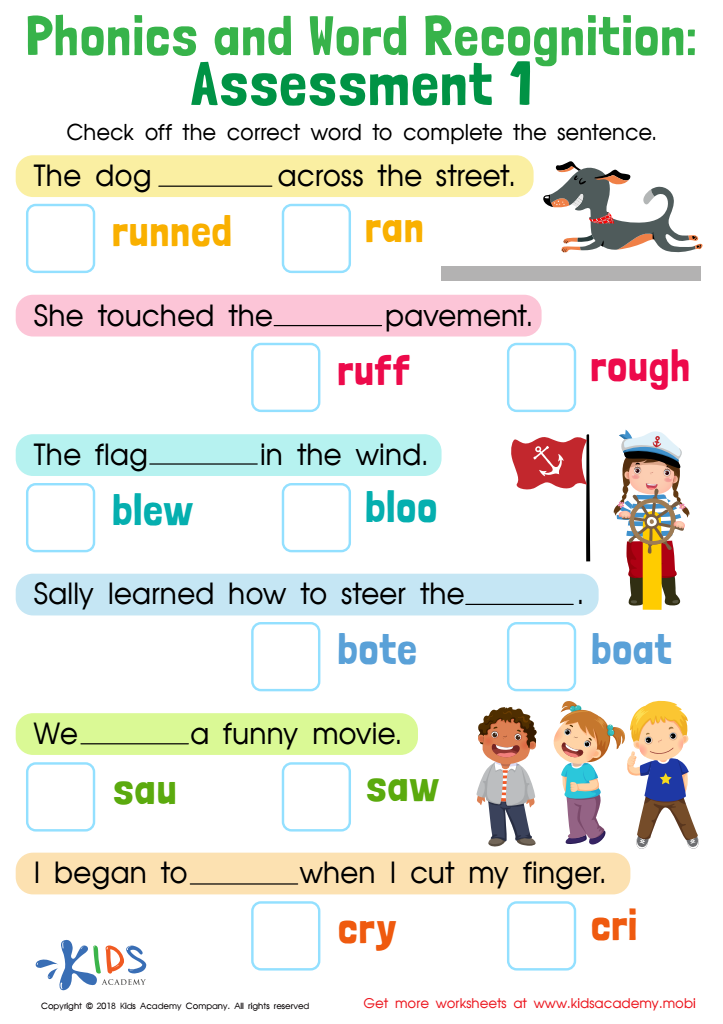
Phonics and Word Recognition: Assessment 1 Worksheet
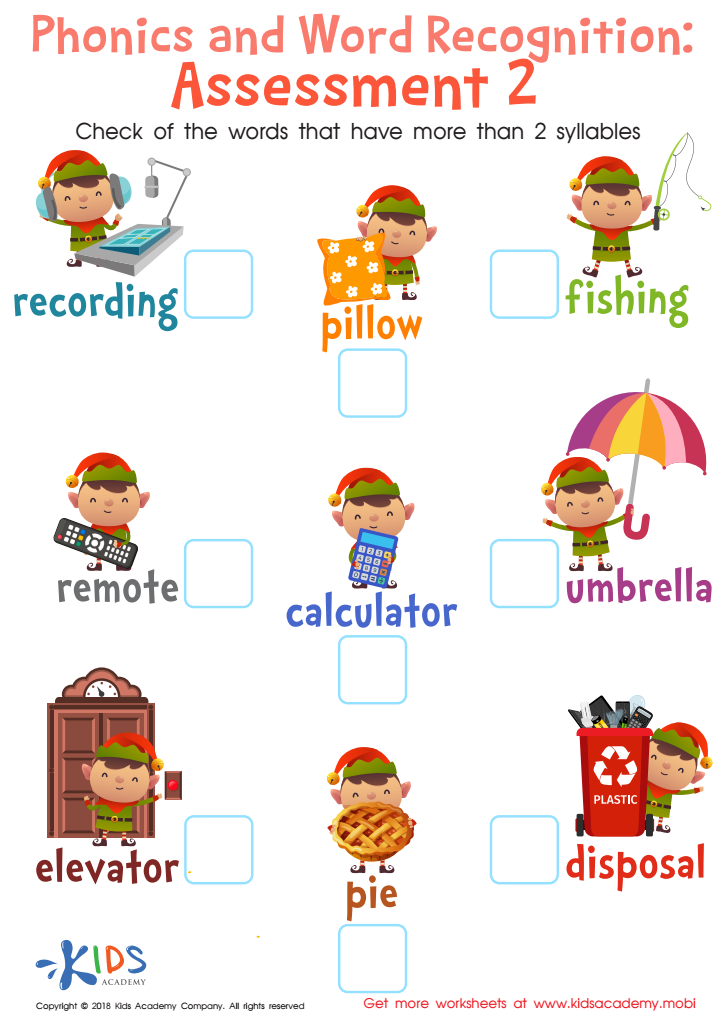
Phonics and Word Recognition: Assessment 2 Worksheet
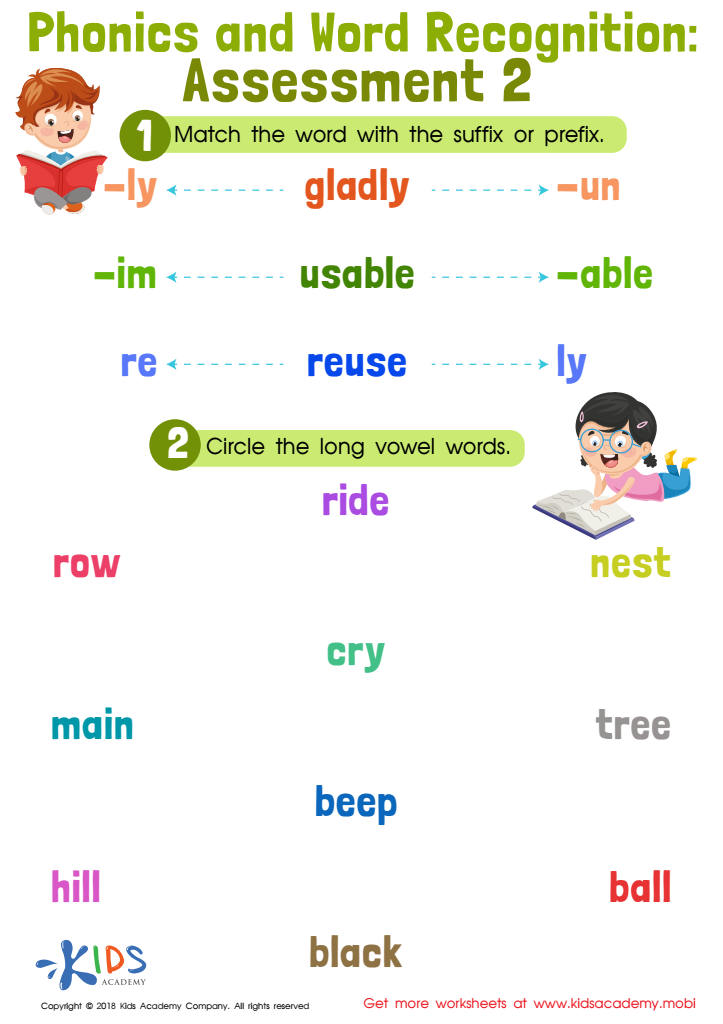
Phonics and Word Recognition: Assessment 2








Phonics recognition and vocabulary building are critical components of early literacy for children aged 5-9, influencing their overall academic success and lifelong learning. Phonics provides children with the foundational skills needed to decode words, which is essential for reading fluency. When students understand the relationship between letters and sounds, they gain the ability to read unfamiliar words independently, fostering confidence and encouraging a love for reading.
Moreover, a strong vocabulary is essential for comprehension. As children encounter new words, their ability to understand and communicate ideas expands, enhancing their critical thinking skills. A rich vocabulary supports children in expressing themselves clearly and understanding others, which is vital for social interactions and academic discussions.
However, the responsibility to foster these skills lies with both parents and teachers. Engaging children in activities that promote phonics and vocabulary—such as reading together, using word games, and discussing stories—can stimulate their curiosity and pave the way for successful literacy development. Ultimately, a strong foundation in phonics and vocabulary equips children not just to read, but to thrive in their educational journeys and navigate the complexities of the world around them. Fostering these skills now sets the stage for future academic achievement.








